World History
Sargon the Great
History often dazzles us with tales of grand achievements, larger-than-life figures, and pivotal moments that changed the world. Yet, with the help of archaeology, we also gain intimate glimpses into ancient societies and the extraordinary individuals who shaped them. One such figure is Sargon the Great, a man who lived over 4,300 years ago in the Mesopotamian region. Sargon’s story is nothing short of legendary—he was a simple man who rose to wield the powers of an emperor, becoming the first ruler to unify a vast, multinational empire.
By A História2 years ago in History
The Sunken Wealth: Treasures of the Deep
"Lost Treasures Below the Waves: The Gold and Argent of the Deep" For centuries, endless treasures accept been absent below the world’s oceans, active with alveolate ships, abysmal cities, and abandoned civilizations. From charlatan hoards to colonial riches, these treasures are not alone of immense budgetary amount but additionally represent alluring capacity of history. Today, with avant-garde technology, campaign abide to bare these underwater treasures, sparking admiration and concern about the belief they hold. This commodity delves into the history of absent underwater gold and silver, notable discoveries, the estimated absolute net worth, and the advancing efforts to balance these admired riches. A Glimpse into the Past: How Treasures Were Lost The ocean has claimed its allotment of treasures throughout history. Storms, wars, and animal absurdity led to the biconcave of ships burdened with gold, silver, and added adored items. Here are some of the best accepted sources of absent underwater treasures: Trade Routes and Shipwrecks: During the Age of Analysis (15th–18th centuries), European admiral transported all-inclusive amounts of gold and argent from the Americas to Europe. Many ships fell victim to storms, pirates, or abyssal errors, biconcave with their cargo. Pirates and Plunder:
By Say the truth 2 years ago in History
Holocaust Remembrance Day: Honoring the Past, Educating for the Future
Holocaust Remembrance Day, observed annually, serves as a poignant reminder of one of history's darkest chapters. This day honors the memory of the six million Jewish victims and millions of other innocent lives lost during the Holocaust. It also highlights the resilience of survivors and emphasizes the importance of combating hate and antisemitism in the present day.
By Delta Roblox Executor Download APK 2026 latest New Update2 years ago in History
How to Travel the World for Free (Yes, It’s Actually Possible!)
Years ago, I wouldn't have believed you if you said you could travel the world for free. But today, I've explored far-off places without spending a lot, thanks to smart hacks and resourcefulness. It's not just a dream; it's real!
By Wilson Igbasi2 years ago in History
Honoring Black History Through New Museum Initiatives: A Journey of Triumph and Reflection
Black history is woven deeply into the fabric of America’s identity, yet its stories have often been overshadowed or left untold. Today, a wave of museum initiatives is changing the narrative, honoring the resilience, achievements, and contributions of African Americans while shedding light on the trials they have faced. These institutions are more than just buildings; they are spaces of healing, education, and inspiration, ensuring the legacy of Black history is preserved and celebrated for generations to come.
By Amanda Goodwin2 years ago in History
The Story of Paddy: A Legacy of Growth and Sustenance
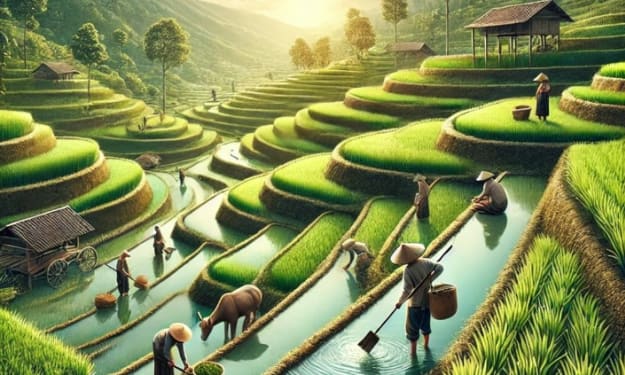
"The History of Paddy: From Age-old Fields to Modern All-around Staple" Origins of Paddy Cultivation Paddy agronomics traces its roots to over 10,000 years ago, basic in regions abounding with baptize and balmy climates. The two key breed of rice, Oryza sativa (Asian rice) and Oryza glaberrima (African rice), were calm apart in Asia and Africa. Asia: The Yangtze River Valley in China is admired as the cradle of rice farming, with affirmation dating aback to 7,000–10,000 years ago. From there, rice agronomics advance to India, Southeast Asia, and beyond. Africa: African rice was calm about 3,000 years ago in the civil Niger Delta, basic for bounded diets and agronomical systems. Spread Across the Globe Southeast Asia and India By 2000 BCE, rice had become a basic in the Indo-Gangetic plains. Innovations like terraced agriculture in Southeast Asia accustomed paddy to advance alike on arresting terrains. The Middle East and Europe Rice accomplished the Middle East and Southern Europe through age-old barter routes. By the Middle Ages, it was actuality able in Italy and Spain due to the Moors. The Americas Introduced in the 17th aeon through colonization and the across bondservant trade, rice agriculture in the Americas was afflicted by African agronomical expertise, decidedly in the Carolinas. Innovations in Paddy Cultivation Terraced Farming: Adapted for arresting landscapes, abnormally in Southeast Asia. Irrigation Systems: Developed to ensure constant baptize supply, acute for wetland paddy fields. Modern Techniques: Mechanization and high-yield amalgam varieties accept adapted rice farming, affair all-around demand. Global Significance of Paddy Today, paddy-derived rice feeds over bisected the world’s population. It plays a axial role in cultural traditions, bread-and-butter systems, and aliment security, authoritative it one of humanity's best important crops. Would you like me to abide or aggrandize this into a abounding article? If yes, let me apperceive the focus or sections you'd like to add! Scientific Advancements in Paddy Farming High-Yield Varieties: The Green Revolution introduced hybrid rice strains, increasing productivity and addressing food security. Water Management: Innovations in irrigation, such as drip and sprinkler systems, reduce water usage in paddy farming. Pest Control: Integrated pest management (IPM) techniques have minimized crop loss and reliance on harmful chemicals. Genetic Research: Scientists are developing rice strains resistant to drought, salinity, and diseases to adapt to climate change. Environmental Challenges and Solutions Climate Change: Erratic rainfall and rising temperatures affect paddy yields globally. Methane Emissions: Traditional flooded fields release methane, contributing to greenhouse gases. Techniques like Alternate Wetting and Drying (AWD) reduce emissions. Soil Degradation: Overuse of chemical fertilizers depletes soil health This illustration captures the timeless beauty of traditional paddy farming. Terraced green fields glisten under the sun, with farmers working diligently amidst flowing water. The scene reflects the cultural and economic significance of rice cultivation, a practice that has sustained civilizations for thousands of years and continues to feed more than half the world's population.
By Say the truth 2 years ago in History
Literature - The Face Of Brutal USSR
Ruthless political regimes understand that weak communities are fragile and conformist. Yet, every single tyranny eventually failed, and the USSR was no exception. In today’s world, there are numerous stories vividly demonstrating the evil behind this regime. In this article, you will discover 5 devastating and also true stories about the tyranny of the USSR.
By Levan Peikrishvili2 years ago in History
The story of the miracle girl of the SS Andrea and MS Stockholm collision. Sound fake but 100% true
In 1956, the SS Andrea Doria was a marvel of Italian engineering and design. Considered the country’s largest, fastest, and safest ocean liner, it symbolized elegance and modernity. However, despite its prestige, the ship’s name would become synonymous with one of the most infamous maritime disasters in history.
By Francis Osei2 years ago in History
The Final Plunge: A Visual Reconstruction of the Titanic's Demise
The Titanic: A Descent into Chaos The year is 1912. The RMS Titanic, a leviathan of steel and human ambition, cuts through the frigid North Atlantic, her engines a rhythmic heartbeat against the icy expanse. Aboard, life unfolds in a microcosm of Edwardian society: the opulent grandeur of first class, the bustling energy of steerage, and the hushed anticipation of a new life in America.
By Lisa Ann Bastiaan2 years ago in History