World History
The Hidden Treasure of the Mayan Pyramid
The Hidden Treasure of the Mayan Pyramids: Myths, Discoveries, and Wealth Introduction The Maya civilization, one of the most advanced and mysterious ancient cultures, flourished in Mesoamerica for thousands of years. Their towering pyramids, elaborate temples, and intricate cities have fascinated historians and archaeologists for centuries. Among the many enigmas surrounding the Maya, one of the most intriguing is the legend of their hidden treasures. Gold, jade, and sacred artifacts are believed to be buried beneath the massive pyramids, concealed within underground chambers and undiscovered tombs. But how much of this is legend, and how much is fact? This article explores the mystery of the Mayan hidden treasure, the wealth they accumulated, and ongoing efforts to uncover their secrets. The Mayan Civilization and Their Wealth The Maya civilization, which thrived from 2000 BCE to the Spanish conquest in the 16th century, was known for its wealth and trade. They did not use currency in the way we do today but relied on valuable goods such as cacao beans, jade, obsidian, and gold for trade. Some of their wealth came from extensive trading networks that stretched from present-day Mexico to Central America. Gold and silver, though not as highly valued by the Maya as jade, were still present in ceremonial objects and jewelry. These precious metals were often used in religious offerings and buried with the elite rulers and priests. Unlike the Aztecs and Incas, the Maya didn’t create large hoards of gold but instead distributed their wealth in temples, tombs, and hidden chambers. The Legend of the Mayan Treasure The belief in a hidden Mayan treasure stems from both historical accounts and local legends. Some Spanish conquistadors, after witnessing the wealth of the Maya, wrote about golden artifacts that were hidden deep within temple pyramids or underground caves. Unlike the Aztecs, who amassed large amounts of gold, the Maya often buried their treasures as part of their religious rituals. One of the most famous stories involves the legendary treasure of King Kʼinich Janaabʼ Pakal, the great ruler of Palenque. His tomb, discovered in the Temple of the Inscriptions in 1952, contained an exquisite jade mask, intricate jewelry, and a magnificent sarcophagus. However, many believe even greater treasures remain undiscovered in other pyramids across the region. Major Discoveries of Mayan Treasure 1. The Tomb of Pakal the Great In 1952, archaeologist Alberto Ruz Lhuillier uncovered the tomb of Kʼinich Janaabʼ Pakal in the Temple of the Inscriptions, located in Palenque, Mexico. Inside, he found a jade death mask, intricate carvings, and numerous artifacts. This discovery proved that the Maya buried their elite rulers with precious items. 2. The Cenote of Sacrifice – Chichén Itzá At the sacred cenote (sinkhole) of Chichén Itzá, divers have recovered gold disks, jade figurines, and other offerings thrown into the water as sacrifices to the gods. These findings suggest that more treasures may be hidden in other sacred water sources. 3. The Burial Chambers of Tikal Excavations at Tikal, one of the largest Mayan cities, have uncovered tombs filled with jade, gold, and ceremonial objects. Some pyramids remain unexplored, leading researchers to believe more hidden treasures may exist. Where Could the Hidden Treasure Be? Despite numerous discoveries, many archaeologists believe vast amounts of Mayan treasure are still hidden. Some possible locations include: Undiscovered chambers within pyramids – Many pyramids have not been fully excavated, and advanced scanning technology has recently revealed hidden chambers within structures such as the Temple of Kukulcán in Chichén Itzá. Underground caves and tunnels – The Maya considered caves as sacred places, often using them for religious rituals and burials. Some caves, such as the Balamku cave discovered in 2018, contained ancient offerings. Rainforest-covered ruins – Many Mayan cities remain buried beneath the dense jungles of Guatemala, Belize, and Mexico. New LiDAR (Light Detection and Ranging) technology has revealed hundreds of lost structures that could contain hidden artifacts. Estimated Net Worth of Mayan Treasure It is impossible to put an exact value on the hidden Mayan treasures, but based on discovered artifacts and historical trade, experts estimate their worth in the billions. Some factors contributing to this estimation include: Jade artifacts – Priceless due to their cultural significance and rarity. Gold and silver objects – Though not as abundant as in Aztec or Incan cultures, recovered Mayan gold objects suggest hidden hoards. Ancient manuscripts and carvings – Many Mayan codices and artworks are invaluable historical treasures. Conclusion The hidden treasures of the Mayan pyramids continue to captivate the world. While many artifacts have been discovered, vast riches likely remain buried within undiscovered tombs, sacred caves, and forgotten cities. With modern technology aiding archaeological exploration, it may only be a matter of time before new discoveries rewrite our understanding of Mayan wealth and history.
By Say the truth 2 years ago in History
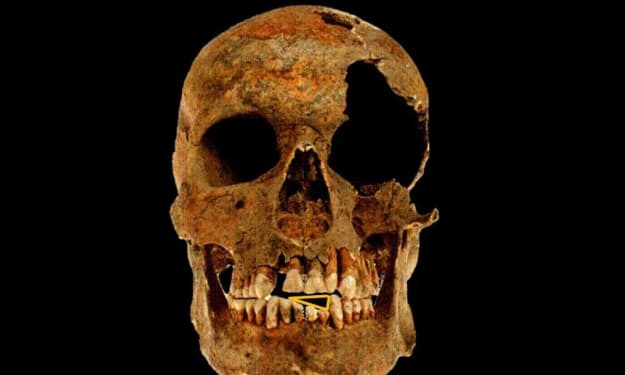
Scientists Discover Traces of Military Service on a 19th Century Soldier’s Teeth.
Scientists Discover Traces of Military Service on a 19th Century Soldier’s Teeth. A remarkable discovery by scientists at the Olomouc Archaeological Center in the Czech Republic has shed new light on the harsh realities of military life in the late 18th and early 19th centuries. The analysis of a soldier’s skeletal remains unearthed in the town of Majetín in the Olomouc region has revealed the first physical evidence of a long suspected military practice the use of teeth to open gunpowder cartridges. This finding not only confirms historical accounts but also provides a rare glimpse into the daily struggles and physical toll endured by soldiers of that era. The skeleton discovered in 2012 belonged to a man aged between 30 and 50 years standing approximately 174 cm tall. Anthropologist Lukáš Šín who led the study noted that the soldier’s lower incisors showed clear signs of repeated mechanical stress. The soldier’s teeth were weakened through repeated activity and this stress could have resulted in the crowns of the teeth breaking Šín explained. Historical records indicate that soldiers during this period loaded their firearms by biting into paper cartridges containing gunpowder and bullets. They would tear open the cartridges with their teeth separate the powder and pour it into the muzzle of their weapons. While this practice has been documented in military manuals direct physical evidence had been elusive until now.
By Adnan Rasheed2 years ago in History
WHAT IF THE EARTH LOST OXYGEN FOR FIVE SECONDS
# **What If the Earth Lost Oxygen for Five Seconds?** Take a deep breath. Feels good, right? That’s oxygen at work. Though it makes up only 21% of the air around us—compared to nitrogen’s 78%—oxygen is the most essential gas for life on Earth. Every breath we take, every fire that burns, and even the stability of the planet’s surface depend on it.
By silvestus Wambua savali2 years ago in History
Happy Promise Day History
Promise Day, celebrated on February 11th every year, is one of the most meaningful days in Valentine's Week. It is a day dedicated to making heartfelt promises to loved ones, strengthening relationships, and reaffirming commitments. While the day is most commonly associated with romantic relationships, it also extends to friendships, family bonds, and professional commitments. But where did this tradition originate? How has it evolved over time?
By The Content Crafter2 years ago in History
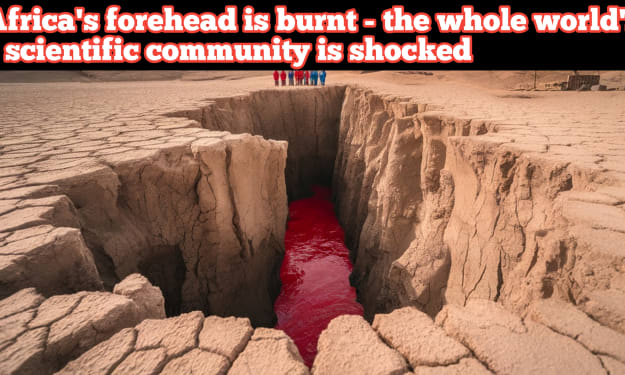
Africa's forehead is burnt - the whole world's scientific community is shocked - there is an uproar. Content Warning. AI-Generated.
al miles long and some believe it is a sign the continent is splitting in two. The earth's own climate is changing. Slowly, but surely, there is a global change. A new ocean is being born in Africa. Yes, it's not a myth. In fact, there is such an event on the face of the earth that will change the face of the whole universe. Scientists have found a glimmer of hope. Global warming. In the eastern part of Africa, where a cave has been created in the middle of the desert, an incredible power is being born under the soil. The plates are slowly disappearing. The magnificent magma of the crust is rising. And as a result, a new water boundary is being formed. After a while, this cave will not be the same as before. There will be a huge ocean here. How many days will that be? And why is this happening now? Why is Africa breaking apart? Why is this cave breaking apart one by one? How did the source of fire rise from the ground? What is the scientific background behind it? If you want to know the answers to these questions, keep watching. It was 2005 years ago. The days in the desert of East Africa were as peaceful as before. But suddenly, one day, nature itself lost control of itself. After a while, an earthquake hit an area in the desert. More than 130 earthquakes in a week. It's like a monster under the ground has woken up. There is a huge crater in front of the human eye. And slowly rising from the cave of that crater, the magnificent life of the earth, the fiery magma, September 26, 2005 This day is called a terrible change. Suddenly, the fire of the great fireball begins. The sky is covered with smoke and burning lava. For the villagers around, it was like a nightmare. Many families lose their homes. Many have to flee to a remote place at night. It was like the fire of the earth was coming out of the ground. But scientists know that this is not an ordinary event. It's just a temporary fire or earthquake. It means a lot. There is something like this under the mouth of Africa. Maybe it will change the whole face of the earth. But what is the real reason for this mystery? Why did such an unusual event happen? The answer to this question lies in an incredible force of the earth's atmosphere. The real reason for this terrible change in Africa's atmosphere is in the cave of the earth. Where the great powers are buried invisibly. The earth's surface and the fireball are only the same as above. But the real thing is happening in a lot of caves. Where the tectonic plates of the earth are gradually shifting from one top to the other. These are actually burning. As a result of the global convection current, these are gradually shifting from one top to the other. And the result of this shift is the cave crater. The fireball magma is rising. And there are two large tectonic plates in this area of Africa. Somali plate and Nubian plate. After centuries, these two plates are shifting from one top to the other. Gradually creating a huge crater. This crater is known as the East African Rift. Which will divide Africa into two parts one day. Because of this plate shift, the earth's unusual rock or magma is rising. Just like the bubbles of boiling water. This rise is due to the magma mountain, fireball and earthquake. Whenever a plate shifts, this crater gets bigger. And there is an earthquake along with it. There are so many small earthquakes around this rift. Which will give birth to a great ocean one day. But what is the future of this huge change? Will the climate of Africa really change? Yes, if the plates keep shifting like this, the soil here will split at the same time. And there will be a huge flood there. But what do scientists say about the future of this change? How many years will it take to give birth to a new ocean? Let's find out. There have been such incidents in the history of the earth. Once upon a time, there was a huge country called Panjia. Which gradually broke down and created today's well-known seven great countries. Now the same process is happening again in East Africa. As the Somali plate and Nubian plate gradually shift, At one time, this part of Africa will be completely separated. But the question is, how many years will it take for this change to be complete? Like scientists, this rift will not happen overnight. It will take a few million years. But the sign of change is clear from now on. Many parts of the Afar depression have gone under the sea level. Which is showing how a new ocean is gradually being born. What will happen in the future? Scientists say that after a few million years, this region will be completely separated. And there will be a huge flood. The continent of Africa will change rapidly. Ethiopia, Kenya, Tanzania and a large part of Somalia will be separated from the main continent of Africa. And a new island will be created. Just like today's Madagascar was once separated from Africa. But the fear is that this huge change to change the continent of Africa is not just a myth. Human life and nature will also be deeply affected. When the earth is collapsing and the earth is splitting, then it will not be easy to control this change. Many cities, villages and agricultural populations of this region will gradually be divided. Because at one time, these will go under the sea. Millions of people will have to settle in new places. Which will be a huge social and economic challenge. But is this a new event in the history of the earth? No, not at all. The history of the earth says that this is the law of nature. What is happening in East Africa today has happened before. As I said before, there was a huge continent called Panjia at one time. Which has gradually been broken into the current seven continents of the earth. The Atlantic Ocean was not there at one time. But a new ocean was born under the cover of the tectonic plate. Just like that, a new continent is slowly emerging in East Africa. But the question remains, is this just a story of East Africa? Or is such a change waiting for more places on earth? Because the earth never stops. This game of destruction and creation is going on forever. We are just witnesses to this change. And it is said that after many years, maybe a new birth will be waiting for this new ocean. Stay tuned for more stories from one new earth to another.
By Shakib Hassan2 years ago in History
The Gaza Strip: A Complex History and Ongoing Struggle
The Gaza Strip is a small but highly significant region located on the eastern coast of the Mediterranean Sea. Measuring only 140 square miles (365 square kilometers), it is one of the most densely populated areas on Earth, with over two million residents. Its residents face numerous challenges, including political instability, limited resources, and a long history of conflict. The Gaza Strip's complexities are rooted in its strategic location, the geopolitics of the Middle East, and the intertwined histories of its inhabitants, including the Palestinian people and various external powers.
By Nisa Shamshair2 years ago in History
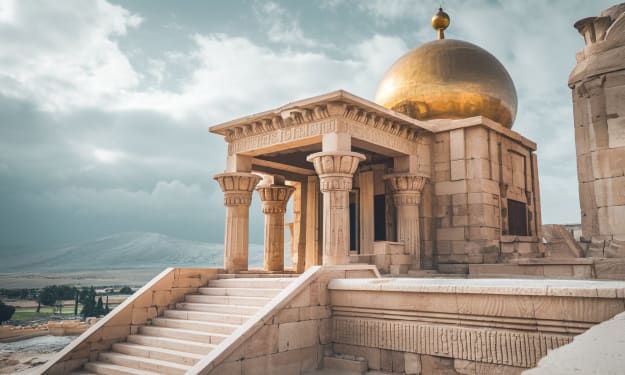
Three Temples of Solomon - The Mysterious Story
The story of the Red Cow is well-known to everyone. It is a cow mentioned in the Old Testament. Perhaps you have seen the episode and witnessed the red cows, or maybe you already knew about them. But hasn’t curiosity struck you? What are they waiting for? Why would slaughtering it be a reason for the construction of their alleged Third Temple? And if the awaited temple is indeed the Third Temple, what is the story of the first and second temples? How did it all begin, and where? Those who are not informed about this topic today, which is considered the foundation of the existential conflict of the nation, are ignorant. If you wish to learn more about it, you must prepare yourself, as you will dive into a sea of shocking information that has been hidden from you. You will be surprised to find that this entire conflict might not truly belong here, and that major figures have been eliminated to prevent the leakage of this information. Then, you will face the most important question: Is the temple real to begin with? And if it is real, was it truly in the land of Palestine, or in a far, faraway place? Is the Ark of the Covenant, which was and still is the basis of this search, truly real? And the shocking secret you might be unaware of—is the term "temple" truly linked to Syria, Yemen, Ethiopia, and Yasser Arafat? The questions are many and complex, but I must try to connect them so that you can understand the truth and be informed of every detail in this battle. So, take a deep breath and stay focused, because today we will search anew for the Temple of Solomon.
By QuirkTales2 years ago in History
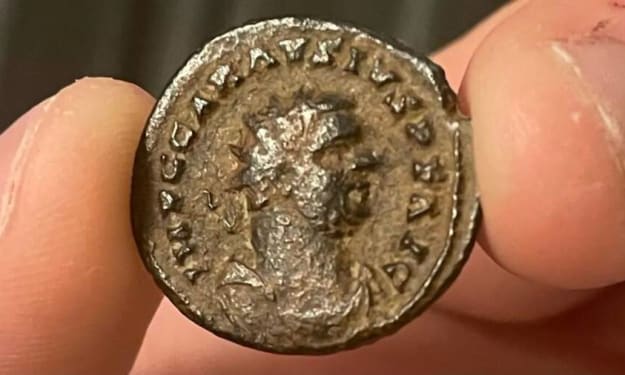
1,800 Year Old Roman Coins Discovered in an English Field A Historic Treasure Unearthed.
Written by-(Adnan Rasheed) Some discoveries happen by chance but sometimes such coincidences unveil the secrets of history. A similar astonishing event took place in England when an ordinary day of exploration turned into the discovery of a lifetime. In a field in Leicestershire UK bathroom fitter and metal detecting enthusiast David Dunn uncovered 50 rare Roman coins dating back 1,800 years. These coins are now set to be auctioned expected to fetch around $1,800. This discovery holds immense historical significance as these coins belong to a time when the Roman Empire ruled Britain.
By Adnan Rasheed2 years ago in History
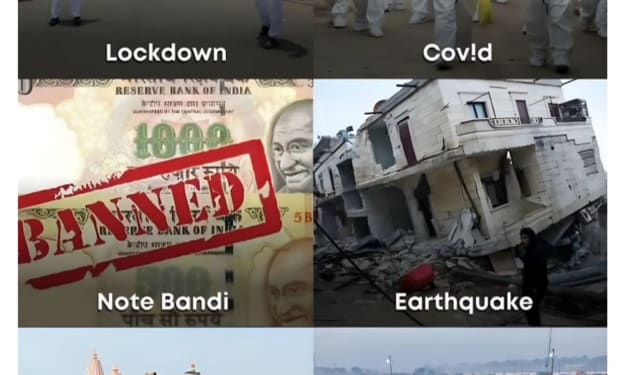
Witnessing History: Once-in-a Lifetime Experience
Witnessing History: A Once-in-a-Lifetime Experience Life is an unpredictable journey filled with experiences that shape our perspectives and memories. The image above encapsulates some of the most significant events that our generation has witnessed, each leaving a deep impact on society. From global crises to moments of national pride, these experiences have defined an era.
By Ramesh Mahato 2 years ago in History
The Original Potential of Mummification: A Deeper Look into Preservation, Science, and Legacy
Mummification is one of the most fascinating preservation techniques in history. While most people associate it with ancient Egypt and religious afterlife beliefs, its original potential extended far beyond mythology. Mummification was an advanced process that showcased early biochemical knowledge, anatomical understanding, and societal structures. This blog explores its origins, methods, global practices, and modern relevance.
By Siboli Mukherjee2 years ago in History
Top 10 Surprising Facts About Gaza, Israel, and the U.S. Role in the Conflict
The Israel-Palestine conflict is one of the most debated—and misunderstood—issues in modern history. From geopolitical drama to humanitarian crises, here are ten eye-opening facts that shed light on Gaza, U.S. involvement, and why peace remains elusive.
By Only Incredible2 years ago in History
Scientists Discover Lost Works of Apollonius in Arabic Manuscript
Scientists Discover Lost Works of Apollonius in Arabic Manuscript Scientists have uncovered two highly significant but previously lost books by the Greek mathematician Apollonius, known in the ancient world as The Great Geometer. These works were found in an Arabic manuscript preserved in the Leiden University Libraries in the Netherlands. This revelation is part of a recently published book Prophets Poets and Scholars which consists of 50 chapters and is published by Leiden University Press. Apollonius 262 BC – 190 BC is considered one of Greece’s greatest mathematicians. His famous book The Conics of Apollonius introduced the concepts of hyperbola ellipse and parabola. The rediscovered manuscript contains books 5 and 7 of his work which had been lost to European scholars during the Renaissance. These manuscripts were acquired by the Dutch orientalist and mathematician Jacob Golius in the 17th century during his travels to the Middle East. He brought them to Leiden University as part of a collection of over 200 Arabic manuscripts.
By Adnan Rasheed2 years ago in History