World History
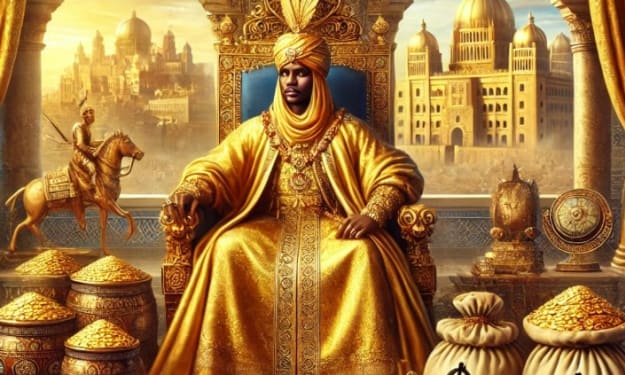
The Wealth of Mansa Musa: The Richest King in History
The Richest Baron in History: Mansa Musa and His Unmatched Wealth Throughout history, abounding rulers accept accumulated absurd fortunes, but one name stands aloft all—Mansa Musa. The 14th-century adjudicator of the Mali Authority is broadly admired as the richest being to accept anytime lived. His immense wealth, primarily acquired from gold, salt, and trade, surpasses alike the fortunes of avant-garde billionaires back adapted for inflation. This commodity explores Mansa Musa’s wealth, bread-and-butter influence, and the estimated net account of his empire. Who Was Mansa Musa? Mansa Musa, additionally accepted as Musa I of Mali, disqualified from 1312 to 1337. He broadcast the Mali Empire, authoritative it one of the wealthiest and best affecting African states of the medieval period. His authority covered modern-day Mali, Senegal, Gambia, Guinea, Niger, Nigeria, Chad, and Mauritania. However, what absolutely set Mansa Musa afar was the all-inclusive abundance he controlled, primarily through gold and barter networks that spanned Africa, the Middle East, and Europe. The Source of His Wealth Mansa Musa’s affluence was congenital aloft three above bread-and-butter pillars: Gold and Alkali Mines – Mali had some of the better gold affluence in the apple at the time, bartering about bisected of the gold in apportionment above Africa and Europe. Trans-Saharan Barter – Mali controlled acute barter routes, ambidextrous in gold, salt, ivory, and slaves, which added accomplished its economy. Taxation and Business – As appurtenances anesthetized through the empire, traders were burdened heavily, bringing alike added abundance to the kingdom. Mansa Musa’s Allegorical Crusade to Mecca Mansa Musa is best acclaimed for his abundant crusade (Hajj) to Mecca in 1324, which showcased his astronomic wealth. He catholic with an associates of 60,000 men, including 12,000 slaves, anniversary accustomed gold bars. Additionally, he brought 80 band accustomed up to 300 pounds of gold each. His adventure was so absurd that he broadcast gold advisedly forth the way, decidedly in Cairo and Mecca, aback causing a gold bazaar blast in Egypt that took years to balance from. Estimated Net Worth While it is absurd to actuate Mansa Musa’s exact net account due to a abridgement of actual banking records, historians and economists accept estimated his abundance in today’s terms. Some sources advance that his fortune, back adapted for inflation, could accept been account over $400 billion, far afore avant-garde billionaires such as Elon Musk and Jeff Bezos. Some estimates alike advance his abundance was so all-inclusive that it was boundless by abreast standards. Impact on the Mali Empire Mansa Musa’s abundance had a abiding appulse on Mali and the broader Islamic world. Some of his key contributions include: Education and Architectonics – He adjourned the architectonics of mosques, libraries, and universities, including the acclaimed Sankore University in Timbuktu. Economic Development – His investments in basement and barter bolstered Mali’s economy, axis it into a all-around centermost of acquirements and commerce. Islamic Access – His crusade adequate ties amid Mali and the Islamic world, arch to greater cultural and bread-and-butter exchanges. Comparison to Added Wealthy Monarchs While Mansa Musa charcoal the richest actual figure, added monarchs accept additionally accumulated abundant wealth, including: Augustus Caesar (Rome) – Estimated net worth: $4.6 abundance (adjusted for GDP allotment of his time) King Solomon (Israel) – Mythological abundance declared as immeasurable Tsar Nicholas II (Russia) – Estimated net worth: $300 billion (adjusted for inflation) Louis XIV (France) – Estimated net worth: $250 billion (adjusted for inflation) Conclusion Mansa Musa’s abundance was legendary, not aloof in its arduous consequence but in how it adapted an empire. His access continued above gold and trade; he adapted education, architecture, and address above West Africa and beyond. No adjudicator afore or afterwards has allowable such an immeasurable fortune, authoritative Mansa Musa not alone the richest baron in history but possibly the wealthiest alone to accept anytime lived.
By Say the truth 2 years ago in History
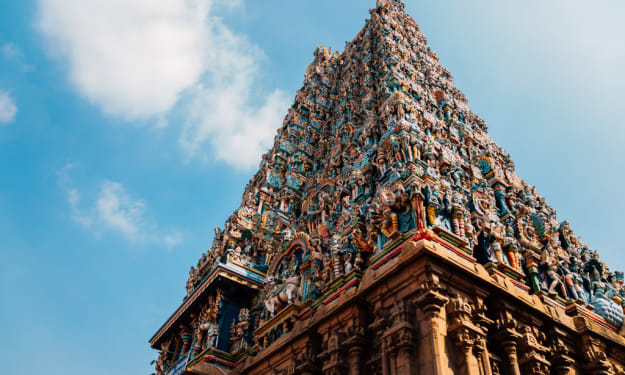
The Goddess Kamakshi: A Source of Unconditional Love and Protection for Her Devotees
Introduction: The Compassionate Heart of Kamakshi Amman At the heart of Kanchipuram, one of the most revered cities in Tamil Nadu, stands the Kamakshi Amman Temple, dedicated to Sri Kamakshi Ambal, the goddess of unconditional love and protection. Kamakshi, known as the embodiment of the divine feminine energy (Shakti), holds a unique place in the hearts of her devotees. Her essence represents compassion, grace, and care, guiding all those who seek her blessings towards spiritual peace and protection.
By Sri Kamakshi Ambal Temple2 years ago in History
The Spiritual Legacy of Kamakshi Amman Temple: Connecting Past, Present, and Future
Introduction: A Sacred Connection Across Time Kamakshi Amman Temple, located in the sacred city of Kanchipuram Ukkal(Madaavalam), Cheyyar , Tamil Nadu, stands as a monumental symbol of spirituality, carrying a legacy that spans centuries. This temple not only serves as a place of worship but also acts as a bridge connecting the past, present, and future of its devotees. With its rich historical background and vibrant spiritual practices, Kamakshi Amman Temple continues to inspire millions, serving as a sanctuary where divine energy, cultural heritage, and spiritual teachings come together.
By Sri Kamakshi Ambal Temple2 years ago in History
A Sea of Radiant Stars.
An Ocean of Bright Stars Gazing up at the colossal ship, Andrew Winters felt diminutive and inconsequential. He adjusted the rigid, starched collar of his freshly pressed suit. Despite the chilly spring breeze wafting in from the port, beads of sweat formed on his forehead. His anxiety surged as he prepared for such extensive journeys, particularly across the Atlantic. The vast expanse of the North Atlantic Ocean both fascinated and unsettled Andrew. It possessed a haunting beauty that eluded his comprehension.
By Havana Music2 years ago in History
From Legends to Empires
In the stillness of the night, when the world appears to hold its breath, our thoughts frequently drift back to the ancient past, where the distinctions between history and myth become indistinct. It is during these reflective moments that we become engrossed in the narratives of bygone civilizations, their beginnings cloaked in legend, and their ascendance chronicled in the records of time. One notable civilization, the ancient kingdom of Magadha, exemplifies the captivating nature of history and raises the intriguing question: at what point does myth transition into reality?
By A História2 years ago in History
The Great Library of Alexandria: Rise, Ruin, and the Eternal Quest for Lost Knowledge
The Legend Begins In the heart of ancient Alexandria, a marvel of human ambition once stood: the Great Library, a beacon of knowledge that housed over half a million scrolls from across the known world. Founded in the 3rd century BCE under the Ptolemaic dynasty, it wasn’t merely a repository of texts, it was a symbol of humanity’s hunger to understand the cosmos. Yet, its fate remains one of history’s most haunting mysteries. Was it burned in a single catastrophic fire? Or did it perish slowly, a victim of neglect and shifting empires? This is the story of how the Library rose to glory, vanished into myth, and why its legacy still torments scholars today. I. The Birth of a Knowledge Empire The Ptolemaic Vision The Library was the brainchild of Ptolemy I Soter a general of Alexander the Great who seized Egypt after Alexander’s death. His dream: to create a intellectual hub rivaling Athens. The Ptolemies didn’t just collect scrolls they hunted them. Ships docking in Alexandria’s harbor were raided for texts, which were copied by scribes before returning (poor) replicas to owners. The Mouseion: A University Before Its Time Attached to the Library was the Mouseion (Temple of the Muses) a research institute where scholars lived tax-free, debating astronomy, medicine, and poetry. Figures like Eratosthenes (who calculated Earth’s circumference) and Aristarchus (who theorized a heliocentric solar system) revolutionized science here. The Scrolls That Changed History The Library’s collection included: Homer’s Iliad (the first critical edition, edited by Zenodotus). Euclid’s Elements (the basis of geometry). Herophilus’ anatomical studies (from human dissections, then taboo). II. The Slow Death: Myths vs. Reality The Caesar Fire Myth Popular legend blames Julius Caesar who allegedly burned his ships during a 48 BCE siege, igniting the Library. But historian Seneca claims only warehouses near the docks burned. The Library likely survived, albeit damaged. Theophilus and the Serapeum (391 CE) In 391 CE, Christian mobs led by Bishop Theophilus destroyed the Serapeum the Library’s pagan “sister” temple. While some scrolls were lost, the main Library had already declined due to funding cuts under Roman rule. The Final Blow: Arab Conquest (642 CE) The myth that Caliph Omar ordered the Library’s destruction (If they contradict the Quran, they are heresy. If they agree, they are redundant) is a 12th-century fabrication. By 642 CE, the Library was likely already gone. Why the Library Really Died Apathy : Roman emperors prioritized circuses over scholarship. Censorship : Christian emperors purged pagan texts. Economics : Maintaining papyrus scrolls in Egypt’s humidity was costly. III. The Lost Treasures: What Vanished? The Works We Know We Lost Aristotle’s Second Book of Poetics: A treatise on comedy, cited by peers but never found. The Babylonian Astronomical Diaries: Centuries of celestial observations. Manetho’s Aegyptiaca : A detailed history of Egypt, surviving only in fragments. The Suppressed Knowledge Hypatia’s Teachings : The mathematician’s lectures on Plato and astronomy were erased after her brutal murder by Christian zealots (415 CE). Pagan Science: Texts on astrology, alchemy, and temple medicine deemed heretical. Modern Clues: Digital Reconstructions Projects like The Biodiversity Heritage Library now scans surviving fragments worldwide, using AI to reconstruct lost texts. In 2021, multispectral imaging revealed erased notes by Archimedes in a medieval prayer book. IV. Legacy: The Library’s Ghost in the Digital Age From Scrolls to Servers The Library’s mission lives in projects like Google Books and Wikipedia democratizing knowledge but facing modern “fires”: censorship, data decay, and misinformation. The Alexandria Metaphor Every time a university closes, a newspaper dies, or a government bans books, we replay Alexandria’s tragedy. As author Carl Sagan warned: The Library teaches us that we are not so very different from our ancestors… and that fragility is the price of greatness. Conclusion: The Eternal Flame The Great Library never truly died. Its spirit fuels labs, libraries, and the humble smartphones connecting billions to humanity’s collective mind. Yet its fate reminds us: knowledge is not a vault but a flame, passed hand to hand. Guard it poorly, and it flickers. Nurture it, and it outlives empires.
By Digital Home Library by Masud Rana2 years ago in History
We need to write, but why?
Writing, creating, and imagining stories—whether real or fictional—is not something new. In fact, it seems that the human race has an intrinsic need to create and tell new stories constantly, as a way to maintain vital consciousness and cultural identity. If we think deeply about it, we can say that humans have been telling stories long before writing systems were invented around 3,000 BC in ancient Egypt and Mesopotamia. The act of storytelling predates written language, as the first humans on this planet shared stories orally and expressed themselves through paintings on cave walls. These early narratives likely revolved around mystical and existential matters, routine hunting experiences, life lessons, and social interactions.
By Marti Llados2 years ago in History
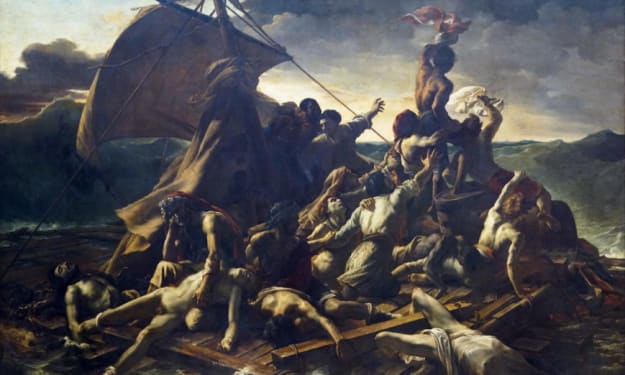
The Raft of the Medusa: A Tale of Survival and Horror on the High Seas
On July 2, 1816, a French frigate named the *Medusa* met disaster when it struck a shallow reef 30 miles off the coast of what is now Mauritania. With over 400 souls aboard and too few lifeboats to save them all, the ship’s captain devised a desperate plan: construct a massive raft to carry those who couldn’t fit into the boats. The idea was straightforward—lash the raft to the lifeboats and tow it to shore. If it had worked, it might have been hailed as a stroke of genius. Instead, it spiraled into one of the most gruesome maritime catastrophes in history.
By KWAO LEARNER WINFRED2 years ago in History
Southwest Airlines: America's Leading Low-Cost Carrier—A Comprehensive Guide
Introduction: Southwest Airlines has revolutionized affordable air travel in the United States since its inception. Known for customer-friendly policies like "Bags Fly Free" and no change fees, Southwest has built a loyal following while challenging traditional airline business models. This comprehensive guide explores how Southwest transformed from a small Texas airline to America's premier low-cost carrier.
By Info Shiphawk2 years ago in History