World History
NASA-SpaceX Postpone Mission To Bring Back Stranded Astronauts Sunita Williams, Butch Wilmore
NASA and SpaceX have announced the postponement of a crucial mission to bring back astronauts Sunita Williams and Butch Wilmore, who have been stranded on the International Space Station (ISS) for an extended period of time. This is a surprising turn of events. Concerns about the astronauts' safety and well-being, as well as the broader implications for future space missions, have been raised by the delay. The reasons for the delay, the difficulties faced by the astronauts, and the potential impact on the collaboration between NASA and SpaceX are discussed in depth in this article. The Stranded Astronauts: Sunita Williams and Butch Wilmore
By sk abdul rajjak2 years ago in History
The Tortoise and the Easily Distracted Hare. AI-Generated.
The Tortoise and the Easily Distracted Hare In a vibrant meadow surrounded by gentle hills, there lived a tortoise named Theo and a hare named Harvey. Theo was recognized for his deliberate and consistent approach to life, while Harvey was renowned for his remarkable speed and his tendency to lose focus quickly. One bright morning, the creatures of the meadow assembled to witness the annual Great Race. As expected, Harvey boasted about his impending victory. "I am the fastest hare in the entire region! No one stands a chance against me, especially not a slowpoke like Theo!" he proclaimed, puffing out his chest with pride. Unperturbed by Harvey's bravado, Theo simply smiled and replied, "Speed is not the only factor, Harvey. Consistency and concentration are equally important." The race commenced with an enthusiastic cheer from the spectators. Harvey dashed off like a flash, leaving Theo far behind. However, true to his character, Harvey soon became distracted. First, he noticed a patch of delicious carrots growing alongside the path. "Oh, carrots! Just a quick snack won't hurt," he said, happily munching away. After satisfying his hunger, Harvey returned to the path, only to be captivated by a group of butterflies dancing nearby. "How lovely they are! I’ll just chase them for a little while," he exclaimed, darting off into the field. The butterflies led him in circles until he eventually grew weary and made his way back to the race. Meanwhile, Theo continued his steady progress, moving forward step by step, unwavering in his pursuit. The crowd cheered him on, admiring his perseverance. Harvey eventually regained his focus and noticed that Theo was nearing the finish line. "Oh no! I cannot allow myself to be defeated by a tortoise!" he shouted, sprinting with all his might. However, it was too late.
By Havana Music2 years ago in History
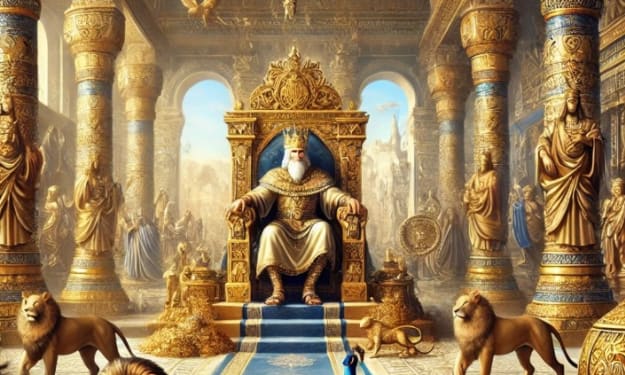
The Legendary Wealth of King Solomon
The Abundance of King Solomon: How He Amassed His Fortune King Solomon, the biblical adjudicator of age-old Israel, is broadly admired as one of the wealthiest kings in history. His abundance were legendary, with all-inclusive amounts of gold, adored stones, and absurd palaces beneath his control. But how did Solomon aggregate such immense wealth? This commodity explores the sources of his fortune, including trade, taxation, tributes, mining, and his affiliation to the absent treasures of Ophir. 1. The Golden Age of Israel Solomon disqualified Israel during a aeon of accord and abundance in the 10th aeon BCE. His administration followed that of his father, King David, who had accustomed a able and abiding kingdom. Unlike David, who spent abundant of his administration at war, Solomon focused on bread-and-butter expansion, diplomacy, and all-embracing architecture projects. One of his best acclaimed achievements was the architecture of the First Temple in Jerusalem, which became the airy and bread-and-butter centermost of the kingdom. This temple was reportedly adorned with massive amounts of gold and added adored materials, emblematic the immense abundance beneath Solomon’s rule. 2. Barter and Commerce: The Backbone of His Wealth One of Solomon’s primary sources of abundance was all-embracing trade. He accustomed advantageous barter routes with adjoining empires, including Egypt, Phoenicia, Sheba, and Mesopotamia. Phoenician Alliance: Solomon formed an accord with King Hiram of Tyre (modern-day Lebanon), who provided accomplished activity and cedarwood to body Solomon’s temple and palaces. In return, Solomon exported agronomical appurtenances and accustomed affluence items, including silver, ivory, and accomplished textiles. Egyptian Trade: Solomon anchored barter agreements with Egypt, acceptance him to acceptation horses and chariots, which were admired bolt at the time. Arabian Barter Routes: His admission continued into the Arabian Peninsula, area he controlled key barter routes that transported spices, incense, and alien goods. His agile of ships, congenital with the advice of Phoenician sailors, catholic the Red Sea and the Indian Ocean, bringing aback gold, silver, and attenuate artifacts. 3. The Allegorical Mines of Ophir One of the best abstruse sources of Solomon’s abundance was the gold of Ophir. Ophir is mentioned in the Bible as a acreage affluent in gold, but its exact area charcoal unknown. Some advisers accept it was in Africa (possibly modern-day Zimbabwe), while others advance it was in India or Arabia. Solomon’s ships, accepted as the “Ships of Tarshish,” were said to accompany back: Gold (estimated to be over 16 bags annually) Precious stones like emeralds and sapphires Exotic animals such as peacocks and apes This arrival of gold fabricated Solomon one of the richest men of his time. 4. Taxation and Tribute from Added Kingdoms Solomon imposed abundant taxes on his bodies and controlled the breeze of abundance through a able taxation system. He additionally accustomed anniversary tributes from adjoining kings and rulers who approved alliances with Israel. The Bible annal that Solomon calm 666 talents of gold annually (1 Kings 10:14), which is estimated to be account over $20 billion in today’s value. This did not accommodate assets from trade, mining, and added ventures. His commonwealth was so affluent that argent was said to be as accepted as stones in Jerusalem. 5. The Role of the Queen of Sheba One of the best acclaimed belief about Solomon’s abundance involves the Queen of Sheba, who visited him with abundant gifts. She came from a affluent commonwealth (believed to be modern-day Ethiopia or Yemen) and brought: 120 talents of gold (worth over $4 billion today) Spices and incense Precious gemstones Her appointment not alone accepted Solomon’s abundance but additionally caked Israel’s position as a key amateur in all-embracing trade. 6. Architecture Projects: A Display of Wealth Solomon’s immense abundance was axiomatic in his admirable architecture projects. Some of the best notable include: The First Temple (Solomon’s Temple): Congenital application massive amounts of gold, bronze, and attenuate materials. Solomon’s Palace: A comfortable alcazar complex, abounding with gold decorations and busy carvings. The City of Megiddo and Fortresses: Strengthened barter and aggressive power. These projects appropriate all-inclusive amounts of assets and labor, added solidifying Solomon’s acceptability as a affluent and able ruler. 7. The Estimated Net Account of King Solomon Estimating Solomon’s abundance in avant-garde agreement is challenging, but historians and economists advance that his net account could accept exceeded $2 to $3 trillion. This amount includes: Over 500 bags of gold Control over above barter routes Immense acreage and adeptness ownership This would accomplish Solomon one of the richest individuals in history, before akin avant-garde billionaires like Jeff Bezos and Elon Musk. Conclusion King Solomon’s abundance was congenital on a foundation of trade, taxation, mining, and cardinal alliances. His ascendancy over key barter routes, admission to all-inclusive gold reserves, and adeptness to aggregate tributes from adjoining kingdoms fabricated him a banking assertive of the age-old world. While abundant of his abundance has been absent to history, the belief of his abundance abide to allure historians and abundance hunters alike. Would his affluence still abide today? Many accept that absent treasures of Solomon, including the gold from Ophir, abide hidden—waiting to be discovered.
By Say the truth 2 years ago in History
The World Wars (1914–1945): A Crucible of Catastrophe and Transformation
World War I (1914–1918) and World War II (1939–1945) were not just battles of military might but also struggles that determined the future of nations, ideologies, and human civilization. These wars led to the fall of empires, the rise of new superpowers, advancements in technology, and shifts in global alliances. Introduction: The Fractured Century The period between 1914 and 1945 stands as one of the most consequential epochs in human history. Across two world wars, humanity witnessed unprecedented destruction, ideological upheaval, and societal transformation. These conflicts reshaped borders, redefined power structures, and irrevocably altered the trajectory of global politics, culture, and technology. This essay explores the causes, conduct, and consequences of the World Wars, examining how they catalyzed both unimaginable suffering and profound progress. Part I: The Great War (1914–1918) – The Collapse of Empires 1. The Spark: Nationalism, Alliances, and the Road to War The Balkan Powder Keg: The assassination of Archduke Franz Ferdinand in 1914 ignited tensions fueled by nationalism, imperial rivalries, and entangled alliances. The Alliance System: Europe’s rigid power blocs—Triple Entente (Britain, France, Russia) vs. Central Powers (Germany, Austria-Hungary)—turned regional conflict into global war. Illusions of Glory: Public enthusiasm for war masked the grim reality of industrialized slaughter. 2. The Trenches: Industrialized Warfare and Human Suffering Stalemate on the Western Front: Trenches stretched from Belgium to Switzerland, symbolizing the futility of attrition warfare. Technological Horror: Machine guns, poison gas, and artillery turned battlefields into charnel houses. The Human Cost: Over 16 million deaths, including civilians, and a generation scarred by physical and psychological trauma. 3. Global Dimensions: War Beyond Europe Colonial Contributions: Soldiers from Africa, Asia, and the Middle East fought for empires that denied them rights. The Ottoman Front: The Armenian Genocide (1915–1917) and the Arab Revolt reshaped the Middle East. The War at Sea: Blockades and submarine warfare starved nations, foreshadowing WWII’s total war. 4. Revolution and Armistice Russian Revolution (1917): War exhaustion birthed Bolshevism, toppling the Tsar and reshaping global politics. The Armistice of 1918: Germany’s surrender, blamed on the stab-in-the-back myth, sowed seeds of future conflict. Treaty of Versailles (1919): A punitive peace that humiliated Germany, redrew borders, and failed to address root causes. Part II: The Interwar Years (1919–1939) – A Fragile Peace 1. The Roaring Twenties: Illusion and Instability Economic Boom and Bust: The U.S.-driven prosperity of the 1920s collapsed in the 1929 Wall Street Crash, triggering global depression. Rise of Extremism: Fascism (Mussolini’s Italy, Hitler’s Germany) and militarism (Japan) exploited economic despair and nationalist grievances. Failure of Internationalism: The League of Nations proved powerless against aggression in Manchuria (1931) and Abyssinia (1935). 2. The March to War Hitler’s Ambitions: Nazi rearmament, annexation of Austria (1938), and demands for Sudetenland revealed the West’s appeasement folly. Axis Alliances: The Rome-Berlin-Tokyo Axis united fascist regimes in a bid for global domination. The Molotov-Ribbentrop Pact (1939) Nazi-Soviet non-aggression treaty sealed Poland’s fate, triggering WWII. Part III: World War II (1939–1945) – Total War and the Abyss 1. Blitzkrieg and Global Expansion European Theater: Germany’s invasion of Poland (1939) and rapid conquest of France (1940) showcased blitzkrieg tactics. The Battle of Britain (1940): The RAF’s defiance against the Luftwaffe marked a turning point. Operation Barbarossa (1941): Hitler’s invasion of the USSR devolved into a brutal war of annihilation. 2. The Pacific Theater: Imperial Japan’s Ambitions Pearl Harbor (1941): Japan’s surprise attack drew the U.S. into the war. Colonial Exploitation: Japan’s “Greater East Asia Co-Prosperity Sphere” masked brutal occupation across Asia. Island-Hopping and Atrocities: From the Bataan Death March to Okinawa, the Pacific War exemplified total war’s horrors. 3. The Holocaust and Genocide Industrialized Murder: The systematic extermination of 6 million Jews and millions of others in concentration camps. Complicity and Resistance: From Nazi bureaucrats to partisans like the Warsaw Ghetto fighters, moral choices defined the era. 4. The Turning Tide (1942–1945) Stalingrad (1942–1943): The Soviet victory marked the beginning of Germany’s retreat. D-Day (1944): The Allied Normandy invasion opened a Western Front, hastening Nazi collapse. Atomic Age: The bombings of Hiroshima and Nagasaki (1945) ended the war but inaugurated nuclear terror. 5. Legacy of Liberation and Devastation Human Cost: Over 70 million dead, including 50 million civilians; cities reduced to rubble. Refugees and Displacement: Millions displaced, from Holocaust survivors to partitioned populations in India and Europe. Nuremberg Trials (1945–1946)**: Establishing accountability for war crimes and crimes against humanity. Part IV: Transformation and the Birth of a New World 1. Geopolitical Reordering Decline of European Empires: WWII bankrupted colonial powers, accelerating decolonization in Asia and Africa. Superpower Rivalry: The U.S. and USSR emerged as ideological adversaries, dividing Europe with the Iron Curtain. United Nations (1945): A flawed but enduring attempt at global cooperation. 2. Social and Technological Revolution Women in the Workforce: Rosie the Riveter symbolized shifting gender roles, though postwar conservatism often reversed gains. Medical and Technological Advances: Penicillin, radar, and jet engines emerged from wartime innovation. The Nuclear Shadow: The Bomb reshaped warfare, diplomacy, and existential fears. 3. Cultural Reckoning Art and Trauma: Postwar art (e.g., Picasso’s Guernica) and literature (e.g., Anne Frank’s diary) grappled with inhumanity. Memory and Memorialization: Holocaust memorials, war cemeteries, and films like Schindler’s List keep history alive. Conclusion: From Ashes to Ambiguity The World Wars left an indelible mark on humanity, exposing both its capacity for cruelty and resilience. They dismantled old orders, catalyzed human rights frameworks, and spurred technological leaps—yet also normalized total war and genocide. As we confront modern challenges—resurgent nationalism, climate crises, nuclear proliferation—the lessons of 1914–1945 remain urgent: the cost of hubris, the necessity of vigilance, and the fragile hope that cooperation can prevail over catastrophe.
By Digital Home Library by Masud Rana2 years ago in History
The Great Dino Dragon Mischief of a Billion Years Ago
A Billion Years Ago: The Mischief of Dinosaurs and Dragons A billion years ago, the world was very different. There were no buildings, no Wi-Fi, and definitely no coffee shops. But what made this time special was the creatures that lived together—dinosaurs and dragons. Imagine time traveling back then. You’d find a world full of wild creatures, trying to get through life, but causing a lot of trouble along the way. These creatures were much more dramatic and prone to mischief than anything today.
By Md Mahabub2 years ago in History
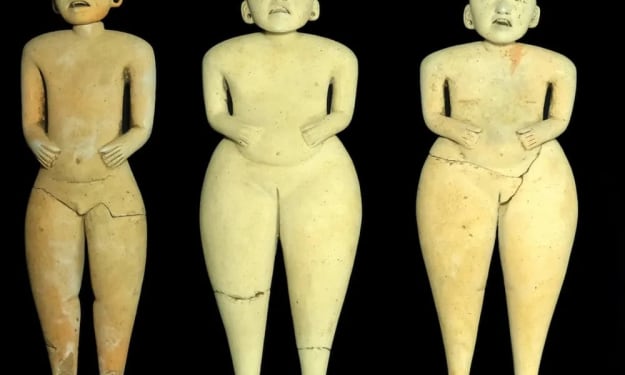
Archaeologists Unearth Ancient Clay Puppets With Open Mouths and Detachable Heads That Resemble Modern Toy Dolls
Archaeologists Unearth Ancient Clay Puppets With Open Mouths and Detachable Heads That Resemble Modern Toy Dolls. The recent discovery of ancient clay puppets in El Salvador has opened a fascinating window into the lives and culture of a Mesoamerican society that thrived over two millennia ago. Unearthed by archaeologists Jan Szymański and Gabriela Prejs from the University of Warsaw these figurines were found atop a ruined pyramid at the San Isidro site. Dating back approximately 2,400 years these artifacts known as Bolinas figurines, are rare and have been found at other Central American sites. Their intricate design including open mouths and detachable heads suggests they may have played a role in rituals storytelling or entertainment. This discovery not only adds to the understanding of Mesoamerican societies but also raises intriguing questions about their social structures artistic expressions and technological capabilities. The Bolinas figurines are remarkable in their craftsmanship. They are not simply static representations of human figures instead they possess movable parts making them unique among the artistic relics of ancient civilizations. Each puppet like figure features a hollow body an open mouth and a detachable head allowing for movement and possibly even manipulation akin to modern toy dolls or marionettes. The level of detail suggests that they were created with a specific purpose in mind possibly for ceremonial or theatrical use.
By Adnan Rasheed2 years ago in History
The History of Pandemics: From the Bubonic Plague to COVID-19
Pandemics as Catalysts of Change Throughout history, pandemics have reshaped societies, economies, and cultures. From the Black Death that wiped out half of Europe to COVID-19, which redefined global connectivity, these crises expose humanity’s vulnerabilities while driving innovation and resilience. This article explores pivotal pandemics, their causes, impacts, and the lessons they offer for a world still grappling with infectious diseases. 1. The Black Death (1347–1351) The Apocalypse That Changed Europe Origins and Spread The Bubonic Plague, caused by Yersinia pestis originated in Central Asia and traveled via Silk Road trade routes and flea-infested rats on merchant ships. By 1347 it reached Sicily, spreading rapidly across Europe. Death Toll and Social Collapse Mortality 75–200 million deaths (30–60% of Europe’s population). Symptoms: Buboes (swollen lymph nodes), fever, vomiting, and death within days. Societal Impact Labor Shortage: Serfs demanded wages, weakening feudalism. Religious Crisis The Church’s inability to stop the plague eroded faith, fueling movements like the Reformation. Persecution: Jews, lepers, and foreigners were scapegoated and massacred. Cultural Shifts Art: The Danse Macabre(Dance of Death) motif reflected existential dread. Medicine: Quarantine (from Italian quaranta giorni 40 days) began in Venice. 2. The Plague of Justinian (541–549 CE): The First Recorded Pandemic Byzantine Empire’s Nightmare Cause: Yersinia pestis (same bacterium as the Black Death). Spread: Arrived in Constantinople via grain ships from Egypt, killing 25–50 million. Impact: Crippled Emperor Justinian’s plans to reunite the Roman Empire. Economic and Military Decline Tax revenues plummeted, and the Byzantine army weakened, paving the way for Islamic expansion in the 7th century. 3. The Spanish Flu (1918–1920): The Forgotten Global Killer A Pandemic Amid War Origins: Misnamed—likely began in Kansas, USA, spread by WWI troops. Death Toll: 50–100 million (3–5% of the global population). Unique Brutality: Targeted young, healthy adults due to cytokine storms. Global Response and Legacy Censorship: Governments suppressed news to maintain wartime morale. Public Health: Mask mandates and social distancing were introduced but poorly enforced. Scientific Advancements: Laid groundwork for virology and vaccines. 4. HIV/AIDS (1981–Present): The Modern Plague Silent Spread and Stigma Origins: Crossed from chimpanzees to humans in Central Africa (early 20th century). Early Crisis: Initially ignored as a gay disease, leading to delayed global action. Death Toll: 40 million+ deaths, 38 million living with HIV today. Activism and Innovation ACT UP: Protests forced governments and pharma companies to accelerate drug research. Medical Breakthroughs: Antiretroviral therapy (ART) turned HIV from a death sentence to a manageable condition. 5. COVID-19 (2019–Present): A Pandemic in the Digital Age From Wuhan to the World Origins: Likely zoonotic (bat origin), with debates about lab leaks. Spread: Global travel and urbanization accelerated transmission. The Good, Bad, and Ugly Science Wins: mRNA vaccines developed in record time (Pfizer, Moderna). Inequality Exposed: Wealthy nations hoarded vaccines; low-income countries lagged. Misinformation: Infodemic fueled anti-vax movements and conspiracy theories. Economic and Cultural Shifts Remote Work: Redefined urban landscapes and corporate culture. Mental Health Crisis: Isolation and fear triggered a surge in anxiety and depression. Pandemics and Progress: How Crises Shape Civilization 1. Medical Advancements Vaccines: Smallpox eradication (1980), polio near-elimination. Public Health Systems: CDC, WHO, and national health agencies emerged post-crises. 2. Social Reordering Class Dynamics: The Black Death uplifted peasants; COVID-19 highlighted gig workers’ precarity. Technology: Telemedicine and AI-driven drug discovery accelerated during COVID. 3. Cultural Reflections Literature: Boccaccio’s Decameron (Black Death) to Albert Camus’ The Plague (1947) Memorialization: Venice’s Redentore festival (thanksgiving for plague’s end). Conclusion: Preparing for the Next Pandemic History shows pandemics are inevitable, but suffering is not. Key lessons include: Equity: Ensure vaccine and resource access for all nations. Transparency: Combat misinformation with science-based communication. Resilience: Invest in healthcare infrastructure and zoonotic research. As COVID-19 fades, its legacy—like the Black Death’s—will echo for centuries, reminding us that pandemics don’t just kill; they transform. Engagement Tips for Virality: Add timelines, infographics (e.g., Death Toll Comparison: Plague vs. COVID-19). Share survivor stories (e.g.Spanish Flu diaries) or modern parallels (lockdowns vs. medieval quarantines). Use clickable titles like How a Rat Changed History: The Plague You Never Knew About. Let me know if you’d like to expand specific sections! 📜🔍
By Digital Home Library by Masud Rana2 years ago in History
Brian James: Punk Guitar Legend's Timeless Legacy
Punk Pioneer and Guitar Legend Brian James Passes Away at 70: The Unyielding Legacy of a Sonic Revolutionary The music world is cloaked in mourning this week as it bids farewell to Brian James, the incendiary guitarist and founding force behind The Damned, whose ferocious riffs and anarchic spirit helped ignite the punk rock revolution of the 1970s. James, born Brian Robertson, died at the age of 70, leaving behind a seismic legacy that forever altered the trajectory of rock music. Tributes from peers, protégés, and fans have flooded social media and music platforms, underscoring the irreplaceable void left by a man whose guitar work was less an instrument and more a weapon of cultural rebellion.
By Md. Nazrul Islam2 years ago in History
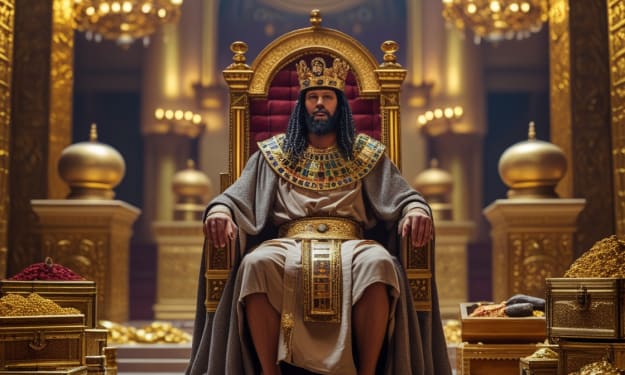
The Vast Wealth of King Solomon: A Historical Estimate
The Astronomic Abundance of King Solomon: Estimating His Net Worth King Solomon, the biblical adjudicator of Israel, is generally admired as one of the wealthiest abstracts in history. His all-inclusive fortune, accumulated through trade, tributes, and accustomed resources, has absorbed historians and economists for centuries. With immense riches, admirable architectural projects, and a acclaimed kingdom, Solomon’s net account in avant-garde agreement would be staggering. This commodity explores the sources of Solomon’s abundance and provides an appraisal of his net account adapted for abreast values. The Sources of Solomon’s Wealth Solomon's abundance came from assorted streams, including taxation, trade, and ability from adjoining rulers. His ascendancy over important barter routes and admission to gold mines decidedly contributed to his fortune. 1. Tribute and Taxation Solomon affiliated an already affluent commonwealth from his father, King David. He imposed taxes on his capacity and accustomed tributes from surrounding nations, including Tyre, Sheba, and Egypt. The Bible states that Solomon calm 666 talents of gold annually (1 Kings 10:14), which abandoned would be account billions today. 2. Barter and Commerce Solomon accustomed advantageous barter relationships, decidedly with the Phoenicians. His agile of ships, in accord with King Hiram of Tyre, alien gold, silver, ivory, and alien appurtenances from Ophir, a allegorical acreage affluent in resources. Trade routes casual through Israel generated immense abundance as caravans transported spices, textiles, and adored metals beyond the region. 3. Gold and Adored Metals Solomon’s alcazar and the First Temple in Jerusalem were adorned with gold, adored stones, and alien cedarwood. The biblical description of his head suggests an affluence unparalleled in history. The Temple of Solomon, a curiosity of age-old engineering, was complete with astronomic quantities of gold and added admired materials. 4. Acreage and Accustomed Resources His commonwealth included abounding acreage that produced abounding crops, comestible a advancing agrarian economy. Control over chestnut and adamant mines added contributed to his wealth. 5. Ability from Foreign Dignitaries The Queen of Sheba abundantly visited Solomon, bringing ability of spices, gold, and adored stones. Other rulers approved Solomon’s acumen and favor, alms treasures as a assurance of diplomacy. Estimating King Solomon’s Net Account in Avant-garde Terms Historians and economists accept attempted to appraisal Solomon’s abundance by adjusting biblical descriptions for avant-garde bread-and-butter values. Here’s how his net account ability construe today: 1. Gold Reserves The Bible states Solomon accustomed 666 talents of gold annually. One aptitude is about 75 pounds (34 kg) of gold. 666 talents according about 50,000 pounds (22,680 kg) of gold. At today’s gold amount (around $60,000 per kilogram), this abandoned amounts to $1.36 billion per year. Over a 40-year reign, this would absolute $54.4 billion in gold alone. 2. Barter and Revenue The profits from all-embracing trade, taxation, and assets could be agnate to the GDP of a affluent avant-garde nation. Given the bread-and-butter ascendancy of his kingdom, estimates advance that Solomon’s barter acquirement would agree to at atomic $500 billion in today’s economy. 3. Architectural Wealth The Temple of Solomon was adorned with gold estimated to be account $200 billion in today’s value. His alcazar and added basement projects added decidedly to his all-embracing assets. Total Estimated Net Worth Combining his gold reserves, barter revenues, tributes, and architectural wealth, Solomon’s estimated net account in avant-garde agreement is believed to be amid $2 to $3 trillion, authoritative him arguably the wealthiest actual ruler. Conclusion King Solomon’s immense abundance fabricated him a legend, with an authority that flourished through commerce, diplomacy, and ability management. Though it is absurd to account his exact net worth, actual and biblical accounts advance he was richer than any avant-garde billionaire. His adventure charcoal a attestation to wisdom, prosperity, and the amplitude of age-old Israel’s aureate age.
By Say the truth 2 years ago in History