World History
The Berbers
Throughout history, humanity has sought prosperity and well-being, but these aspirations are fundamentally rooted in a more valuable principle: freedom. Conflicts have erupted, revolutions have sparked, and ideologies have been developed in pursuit of this intrinsic yearning. Among those who exemplify this struggle are the Berbers, one of Africa's oldest indigenous communities. For thousands of years, they have resisted assimilation, battled empires, and maintained their identity in the face of significant challenges.
By A Históriaabout a year ago in History
India’s Greatest Undiscovered Treasures: Legends of Hidden Wealth
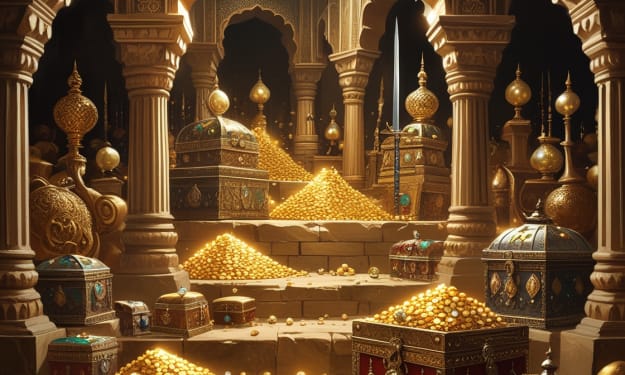
The Pursuit of India's Hidden Wealth: The Unresolved Enigmas of Concealed Riches India has historically been a territory of immense affluence, mythical wealth, and concealed riches that continue to intrigue both scholars and treasure seekers alike. Although some valuables have been discovered throughout the years, numerous treasures remain elusive, buried deep within the annals of history. This article explores some of the most significant undiscovered treasures of India that await revelation. 1. The Concealed Fortune of the Nizam The Nizams of Hyderabad were among the most affluent royal households globally, possessing wealth beyond comprehension. Accounts indicate that a segment of their vast riches is still concealed to this day. It is believed that when Hyderabad was incorporated into India in 1948, the last reigning Nizam, Osman Ali Khan, hid large quantities of gold, jewels, and adornments in covert underground safes. Speculation continues that some of these valuables are still undiscovered, scattered across ancient palaces and concealed chambers. 2. The Enigma of Raja Raja Chola’s Concealed Wealth Raja Raja Chola I, the formidable monarch of the Chola dynasty, is reputed to have amassed considerable treasures through his victorious campaigns. His wealth was said to have been stored in hidden vaults underneath the temples he constructed, especially in the Brihadeeswarar Temple in Tamil Nadu. While some artifacts and gold have been unearthed, many assert that the true cache remains hidden beneath temple floors and secret passageways. 3. The Wealth of the Nawabs of Oudh The Nawabs of Oudh, recognized for their lavish lifestyle, governed from the 18th century until the British annexed their realm in 1856. As their reign drew to a close, it is believed that a substantial portion of their wealth was concealed across various sites. Some theorize that subterranean tunnels and hidden chambers in Lucknow still harbor untold riches, waiting to be revealed. 4. The Krishnadevaraya Fortune Krishnadevaraya, the renowned sovereign of the Vijayanagara Empire, accrued immense wealth through commerce and military triumphs. The empire, known for its splendor, succumbed to invaders in 1565 during the Battle of Talikota. Numerous accounts suggest that the empire’s riches were hidden in secret locations prior to the conflict. Some contend that gold coins, diamonds, and invaluable artifacts remain buried within the ruins of Hampi, a UNESCO World Heritage site. 5. The Mystery of the Padmanabhaswamy Temple Vault B One of the most notable findings of hidden treasure in contemporary history occurred at the Padmanabhaswamy Temple in Kerala. In 2011, a series of underground vaults were opened, disclosing an estimated $22 billion worth of gold, jewels, and artifacts. However, one vaultVault Bremains sealed due to religious and supernatural beliefs. Many speculate that this final vault contains even greater riches, but its contents are still unknown. 6. The Vanished Gold of Tipu Sultan Tipu Sultan, the sovereign of Mysore, battled tenaciously against the British during the 18th century. He was recognized for his affluence, a substantial part of which was concealed to prevent it from being seized by adversaries. Following his demise in 1799, British troops plundered his treasury; however, numerous historians contend that a considerable fraction of his gold and artifacts remains concealed in clandestine subterranean passages in Karnataka. 7. The Koh-i-Noor and Other Missing Crown Jewels The Koh-i-Noor diamond, one of the most renowned gems in history, was acquired from India and currently resides within the British Crown Jewels. Nevertheless, historians assert that various other valuable gemstones and artifacts from India were appropriated over the centuries and remain concealed in private collections or buried treasure locations, awaiting rediscovery. 8. The Hidden Wealth of Vijayanagara The Vijayanagara Empire, which flourished between the 14th and 16th centuries, was one of India’s most affluent states. Following its collapse, treasure seekers and archaeologists have endeavored to locate its concealed gold reserves, rumored to be interred beneath temple ruins or hidden within ancient fortifications.
By Say the truth about a year ago in History
The Koh-i-Noor Diamond: India’s Most Contested Treasure. AI-Generated.
The Koh-i-Noor Diamond: India’s Most Contested Treasure Introduction The Koh-i-Noor diamond, one of the most famous and valuable gemstones in the world, has a history steeped in blood, power, and conquest. Originally mined from India's famed Golconda region, this diamond has traveled through the hands of some of history's most influential rulers—from the Mughals to the Persians, Afghans, and ultimately the British monarchy. The Koh-i-Noor remains at the heart of international debates regarding colonial loot and rightful ownership. Origins: The Legendary Golconda Mines The Koh-i-Noor, meaning "Mountain of Light" in Persian, was mined from the legendary Golconda mines in present-day Telangana, India. Some historians believe it was discovered as early as the 13th century, though its first recorded mention appears in Baburnama, the memoir of Babur, the founder of the Mughal Empire. Initially weighing over 186 carats, the diamond was known for its unique brilliance and was believed to bring immense power to its owner. However, it was also said to carry a deadly curse—bringing misfortune to any man who possessed it while ensuring the prosperity of a woman who owned it. The Mughal Era: A Jewel of the Peacock Throne The Koh-i-Noor became part of the Mughal treasury in the early 16th century. It was one of the most prized jewels adorning the legendary Peacock Throne of Emperor Shah Jahan, the builder of the Taj Mahal. The diamond symbolized Mughal supremacy and was frequently displayed during grand ceremonies. However, the Mughal Empire began to decline after the death of Aurangzeb, and in 1739, the Persian ruler Nader Shah invaded Delhi, plundering the empire’s treasures. Legend says that Nader Shah discovered the Koh-i-Noor hidden in the Mughal emperor’s turban and, upon seeing it, exclaimed, “Koh-i-Noor!”—thus giving the diamond its famous name. The Diamond’s Journey Through Conquest After Nader Shah’s assassination in 1747, the diamond changed hands several times. It was taken by his general Ahmad Shah Durrani, the founder of Afghanistan, and remained with Afghan rulers until Maharaja Ranjit Singh, the ruler of the Sikh Empire, acquired it in 1813. Ranjit Singh, also known as the "Lion of Punjab," wore the diamond as a symbol of his power. After his death in 1839, the Sikh Empire weakened, leading to conflicts with the British East India Company. The British annexed Punjab in 1849 after the Second Anglo-Sikh War and took possession of the Koh-i-Noor. The British Crown Jewel and the Ongoing Controversy The Koh-i-Noor was presented to Queen Victoria in 1850 and later cut down from 186 carats to 105.6 carats to enhance its brilliance. It was set into the British Crown Jewels and became a part of the Queen Mother’s Crown in 1937. The diamond’s transfer to Britain remains a subject of intense debate. Many historians and Indian officials argue that it was taken through coercion rather than a legal transfer, making it an artifact of colonial plunder. India, Pakistan, Afghanistan, and even Iran have all claimed rightful ownership of the Koh-i-Noor, demanding its return. However, the British government has refused to repatriate the diamond, arguing that it was legally obtained under the Treaty of Lahore (1849). In 2016, a statement from the Indian government suggested that the diamond was gifted to the British, but this claim has been widely disputed by historians. The Curse of the Koh-i-Noor Another fascinating aspect of the Koh-i-Noor is its alleged curse. According to legend, any male owner of the diamond would suffer great misfortune, while a female owner would be unharmed. The British monarchy seems to have taken this legend seriously, as the diamond has only been worn by female members of the royal family since its arrival in Britain. Conclusion: A Priceless Symbol of Power and Colonialism The Koh-i-Noor diamond is more than just a gemstone—it is a symbol of power, conquest, and colonial history. Its journey from India’s Golconda mines to the British Crown Jewels is a testament to centuries of political intrigue and imperial ambition. While the debate over its rightful ownership continues, one thing is certain: the Koh-i-Noor remains one of the most prized and controversial treasures in the world. Whether it will ever return to India or remain in Britain is a question that only time—and diplomacy—can answer.
By Say the truth about a year ago in History
The Lost Treasure of the Nizam: India’s Forgotten Fortune
The Abandoned Fortune of the Nizam of Hyderabad: India's Overlooked Wealth India possesses a profound history of sovereigns who accumulated extensive wealth, yet few rivaled the affluence of the Nizams of Hyderabad. The Nizam's treasure was regarded as one of the most precious globally, comprising gold, diamonds, pearls, and unique artifacts. While some of this wealth is well-recorded, a considerable portion remains obscured or unaccounted for. This article examines the origins, magnitude, and destiny of the Nizams' lost treasures. Who Were the Nizams? The Nizams presided over Hyderabad from 1724 to 1948. Initially appointed as the Subedars (governors) of the Deccan within the Mughal Empire, they later declared sovereignty and founded their own dynasty. Over the centuries, the Nizams amassed immense wealth through their dominion over the Golconda diamond mines, one of the most lucrative sources of diamonds globally. By the dawn of the 20th century, the final reigning Nizam, Mir Osman Ali Khan, was acknowledged as the wealthiest individual on the planet. His fortune was approximated at $2 billion (equivalent to over $200 billion today). He possessed a vast array of gold, diamonds, and other valuable items, including the renowned Jacob Diamond, an 185-carat gem that he utilized as a paperweight. The Wealth and the Lost Treasure The Nizams' affluence was so enormous that their treasure chambers brimmed with gold ingots, diamonds, pearls, and rare artifacts from across the globe. Among the most notable treasures were: The Jacob Diamond – One of the largest diamonds worldwide, valued at hundreds of millions of dollars today. Golconda Diamonds – The origin of illustrious diamonds such as the Koh-i-Noor and the Hope Diamond. Pearl Collection – Hyderabad was famously dubbed the "City of Pearls," and the Nizams boasted an unmatched collection of exquisite pearls. Gold and Silver Reserves – Reports indicate that the Nizams held thousands of gold bars and silver coins concealed in subterranean chambers. Antique Weapons and Artifacts – Swords, daggers, and shields adorned with jewels formed part of their royal assemblage. While some of these treasures have been documented, many remain elusive. Over the years, portions of the fortune were plundered, smuggled, or concealed. Some accounts suggest that clandestine underground vaults continue to harbor treasures that have yet to be discovered. The Disappearance of the Treasure Upon India's independence in 1947, Hyderabad remained a princely state. However, in 1948, the Indian government initiated Operation Polo, a military campaign to incorporate Hyderabad into India. The Nizam was compelled to capitulate, and his financial resources came under investigation. During this time, various theories emerged regarding the fate of his concealed wealth: Smuggled Abroad – It is believed that a substantial portion of the treasure was clandestinely transferred to foreign banks, notably in London and Switzerland. Buried in Secret Vaults – Speculation endures that subterranean chambers beneath the Nizam's palaces still harbor vast treasures. Looted and Sold Illegally – During and subsequent to the annexation, it is presumed that numerous valuable items were pilfered or illegally marketed through black market avenues. Transferred to the Administration – Several of the Nizam’s recognized possessions were confiscated by the Indian administration, but there is no definitive documentation regarding the fate of all of them. Contemporary Investigations and Unresolved Inquiries In recent years, treasure seekers, scholars, and even the Nizam’s heirs have endeavored to track down the missing riches. Some assertions indicate that vaults beneath Hyderabad’s Chowmahalla Palace and Falaknuma Palace may still harbor concealed treasures. Nonetheless, these locales remain unexamined without formal consent. Furthermore, the legal dispute over the Nizam’s possessions persists. In 2019, a UK tribunal ruled in favor of India and Pakistan concerning a contested £35 million that belonged to the last Nizam, underscoring how portions of the wealth are still being litigated in courts globally.
By Say the truth about a year ago in History
Carthage
Africa, known as the birthplace of humanity, has nurtured some of the most influential and lasting civilizations throughout history. Carthage, in particular, is recognized as one of the most formidable empires of the ancient era. Established by Phoenician colonists, this North African city-state evolved into a powerful maritime and trade entity, competing fiercely with Rome. Its narrative—characterized by ingenuity, prosperity, and eventual downfall—provides an intriguing insight into the intricate dynamics of ancient power conflicts.
By A Históriaabout a year ago in History
The Grand Majesty: India’s Largest Palace Ever Built
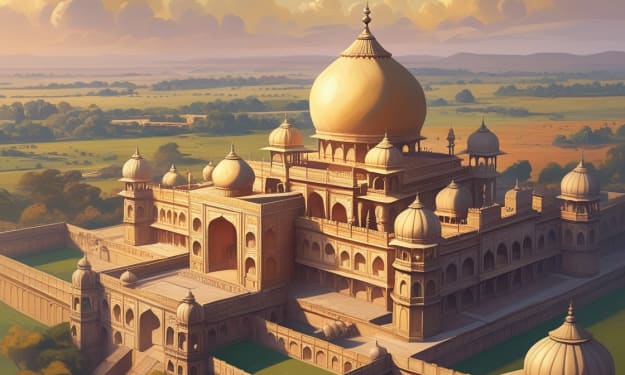
The Grandeur of Mysore: The Most Majestic Palace Ever Constructed in India India is a realm of splendor and architectural wonders, featuring some of the most lavish palaces globally. Among these, the Mysore Palace emerges as the largest and most splendid ever erected in India. It serves not solely as a symbol of the royal legacy of the Wadiyar dynasty but also as an emblem of the nation's rich architectural heritage. From its extensive expanse to the considerable human resources and duration dedicated to its creation, Mysore Palace persists as one of the most magnificent edifices in India. Historical Context The Mysore Palace, commonly referred to as the Amba Vilas Palace, is situated in the center of Mysore, Karnataka. It acts as the official residence of the Wadiyar dynasty, which governed the Kingdom of Mysore for more than five centuries. The structure that exists today was constructed following a catastrophic fire in 1897 that consumed the prior wooden edifice during the nuptials of Princess Jayalakshmi Ammanni. The then Maharaja, Krishnaraja Wadiyar IV, appointed British architect Henry Irwin to devise and supervise the building of the new palace, which reached completion in 1912. Expanse and Design
By Say the truth about a year ago in History
The History of the Biggest Palace Ever Built. AI-Generated.
The Most Magnificent Palace Ever Erected: A Testament of Affluence, Authority, and Heritage Throughout the annals of history, magnificent palaces have been constructed to exhibit the affluence and authority of empires and sovereigns. Some of these architectural wonders have endured the passage of time, while others have diminished into obscurity. Nevertheless, one palace eclipses all others regarding dimensions, grandeur, and historical importancethe Forbidden City in Beijing, China. This article delves into the history of the Forbidden City, its construction, relevance, and how it contrasts with other palaces throughout the ages. The Forbidden City: The Most Expansive Palace Complex in History The Forbidden City, situated in the center of Beijing, China, is the most extensive palace complex ever created. Spanning approximately 180 acres (720,000 square meters), it comprises 980 extant edifices featuring over 8,700 chambers. Erected during the early Ming Dynasty, this palace functioned as the imperial domicile of 24 emperors for nearly five centuries, from the Ming Dynasty (1368–1644) to the Qing Dynasty (1644–1912). Construction of the Forbidden City Initiated by: Emperor Yongle of the Ming Dynasty in 1406. Finalized in: 1420. Labor Force: In excess of 1 million laborers, including 100,000 proficient craftsmen. Materials Utilized: Millions of bricks and timber beams. Golden roof tiles imported from various regions of China. White marble transported from quarries located hundreds of miles away. Special nanmu wood obtained from dense forests. The construction required 14 years, with artisans and engineers devising a structure reflecting Chinese cosmic and philosophical principles, particularly Feng Shui and Confucian thought. Symbolism and Design The Forbidden City was carefully conceived and organized to embody the emperor's celestial power. Some distinct characteristics of the palace encompass: Hall of Supreme Harmony: The largest wooden edifice in China, utilized for significant state ceremonies. The Meridian Gate: The primary entrance, symbolizing the emperor's supreme authority. Nine Dragons Screen: A symbolic barrier that wards off malevolent spirits. Golden Roofs: Exclusively employed for imperial structures to denote the emperor’s divine status. Comparison to Other Noteworthy Palaces 1. Versailles Palace (France) Constructed by: Louis XIV in the 17th century. Dimensions: 87,728 square meters (~21 acres). Renowned for: The Hall of Mirrors, expansive gardens, and opulent Baroque architecture. 2. Buckingham Palace (United Kingdom) Originally Built: As Buckingham House in 1703, expanded in the 19th century. Dimensions: 77,000 square meters (~19 acres). Prominent Features: Official residence of the British monarchy, housing 775 rooms, and the iconic Changing of the Guard ceremony. 3. Topkapi Palace (Turkey) Built by: Sultan Mehmed II in 1465. Dimensions: 700,000 square meters (~173 acres, featuring open courtyards, unlike the Forbidden City). Significance: The administrative hub of the Ottoman Empire for over four centuries. Despite the grandeur of these palaces, none rival the vast scale and historical profundity of the Forbidden City. The Forbidden City’s Role in History From the Ming Dynasty to the decline of the Qing Dynasty, the Forbidden City remained the political and cultural core of China. Notable events include: Ming Dynasty governance (1368–1644): The palace was the nucleus of Chinese administration and culture. Qing Dynasty reign (1644–1912): Manchu rulers assumed control, maintaining the city's relevance. Dissolution of the Qing Dynasty (1912): Emperor Puyi abdicated, signifying the conclusion of imperial rule in China. Preservation as a museum (1925–Present): Currently referred to as the Palace Museum, drawing millions of guests each year. Estimated Worth of the Forbidden City Although it is challenging to attribute a monetary worth to such an iconic location, approximations indicate that the Forbidden City could exceed $70 billion owing to: Its cultural and historical importance.
By Say the truth about a year ago in History
Echoes of Silence: A Journey Through North Korea's Hidden Horrors
The Weight of Shadows The Last Sunrise Seoul, 1998. Min-jun’s earliest memory was not of his mother’s face, but of her hands—rough from factory work, yet gentle as they tucked a smuggled candy into his palm. For your birthday, she’d whispered, her eyes darting to the loudspeaker bolted above their apartment door. At six, he didn’t understand why she flinched at the sound of boots in the hallway or why his father, a schoolteacher, burned his poetry notebooks in the stove every night.
By Digital Home Library by Masud Ranaabout a year ago in History
HISTORY OF APRIL'S FOOL
In the heart of Renaissance France, the year was 1582, and the air was thick with change. King Charles IX had just declared that France would abandon the Julian calendar in favor of the newly reformed Gregorian calendar, as advised by Pope Gregory XIII. This seemingly simple decree would, in time, birth a tradition that would outlive kings and empires. For centuries, the people of France had celebrated the New Year on the spring equinox, around April 1st. They believed the changing of seasons marked the natural beginning of a new year, a time of rebirth and renewal. The new calendar, however, moved New Year's Day to January 1st, aligning with Rome’s wishes. But in a world where news traveled on horseback and word of mouth was often twisted, not everyone got the message—or perhaps, some simply refused to accept it. Among those who clung to the old ways was Pierre Laurent, a humble merchant from a small village near Paris. Pierre had always been a man of tradition, and he scoffed at the idea that a king or a pope could dictate the rhythm of time. So, when April arrived, he threw his customary New Year’s feast, inviting neighbors and friends to celebrate as they had for generations. Unbeknownst to Pierre, a group of younger townsfolk saw an opportunity for mischief. Led by a mischievous apprentice named Jacques, they decided to make a fool of the old merchant. On the morning of April 1st, they sent Pierre a series of absurd messages—one claimed that the king himself would attend his feast, another warned that his house was to be seized for refusing to follow the new calendar. Pierre, bewildered yet stubborn, ignored the warnings and continued his preparations. The pranks escalated. A baker delivered a cake filled with salt instead of sugar. A tailor promised to sew Pierre a fine new coat but instead delivered a garment with missing sleeves. When Pierre arrived at the town square, expecting to meet with an envoy of the king, he was instead greeted by a crowd of laughing villagers. They had pinned paper fish to his back—a symbol of gullibility, for young fish are easy to catch, much like the old merchant had been tricked. Rather than grow angry, Pierre did something unexpected—he laughed. “You rascals got me,” he admitted, shaking his head. “Perhaps there’s something to be learned from jesting, after all.” The prank became a yearly tradition, spreading first through France and then across Europe. The ‘April fish,’ or “Poisson d’Avril,” became a common trick among the French, and similar customs arose in other countries. In England, the day became known as April Fools’ Day, with tricks played until noon. In Scotland, the ‘gowk’ (a foolish person) was sent on pointless errands, while in Spain, pranks were played on December 28th, blending with an older festival known as the Feast of Fools. As the centuries passed, April Fools’ Day took on new forms. In 1957, the BBC convinced viewers that spaghetti grew on trees. In 1996, fast-food chain Taco Bell announced it had purchased the Liberty Bell, causing an uproar before the truth was revealed. The tradition of trickery, born from a mere calendar change, had become a global phenomenon. Pierre Laurent never lived to see the full extent of his unintentional legacy. But every April 1st, as laughter echoes through the streets and people fall for playful hoaxes, his spirit lives on—a reminder that even the most foolish moments can create the most lasting joy. The Global Spread of April Fools’ As European explorers set sail for distant lands, they carried with them their customs, including April Fools’ Day. The tradition reached the Americas through French and English settlers, each culture adding its own flair. In the United States, newspapers and radio stations began to participate in elaborate hoaxes. In 1938, a radio broadcast based on H.G. Wells’ “War of the Worlds” convinced many Americans that aliens were invading Earth—perhaps the greatest prank in history, albeit unintentional. Japan, known for its deep respect for tradition, initially resisted the idea of a ‘fool’s day.’ But as global media influence grew, so did the spirit of April Fools’. Companies began launching fake advertisements and tech giants like Google started releasing annual ‘fake product’ announcements that entertained millions. The Psychology of Foolishness Why do people continue to fall for pranks, century after century? Psychologists suggest that it has to do with human nature—our trust in others and our tendency to see the world as it should be rather than how it truly is. Pranks thrive on this optimism. The best tricks exploit expectations in a harmless way, reinforcing social bonds rather than causing real harm. In many ways, April Fools’ Day reminds us that laughter is a universal language. A well-crafted joke, a harmless deception, or a cleverly timed trick can break barriers, lighten burdens, and bring people together, even in the most uncertain times. The Future of April Fools’ Day With the rise of artificial intelligence and digital trickery, April Fools’ pranks have entered a new era. Deepfake videos, realistic AI-generated news articles, and interactive pranks have taken the tradition into uncharted territory. Companies and individuals alike now push the boundaries of what’s possible, ensuring that every April 1st brings new surprises. As long as there are people who love to laugh and play, April Fools’ Day will endure. It is no longer just a relic of a calendar change—it is a testament to human creativity, resilience, and the unbreakable joy of sharing a joke. And perhaps, somewhere in the echoes of time, Pierre Laurent is still laughing, knowing that his foolish feast gave birth to something far greater than he could have ever imagined.
By SHADOW-WRITESabout a year ago in History
Plundered Empires: The Impact of Invasions on Wealth and Civilization
Plundered Empires: The Impact of Invasions on Wealth and Civilization (Continuation) The Devastation of Conquest Invasions throughout history have reshaped civilizations, not only in terms of power but also through economic and cultural transformations. The collapse of societies due to conquest led to the destruction of infrastructure, forced migrations, and the plundering of vast riches. The aftermath of these invasions often saw former centers of knowledge and culture reduced to ruins while conquerors amassed unimaginable wealth. The Roman Invasion of Gaul (58–50 BCE) Julius Caesar’s conquest of Gaul was one of the most extensive military campaigns of the Roman Republic. The invasion led to the death of nearly a million Gauls and the enslavement of countless others. Beyond human suffering, Gaul’s gold reserves, jewelry, and other treasures were systematically looted. These riches funded Caesar’s rise to power and financed Rome’s expansion, setting the stage for the empire’s dominance for centuries. Today, historians believe that many of Gaul’s lost treasures remain hidden across modern-day France and Germany. The Mongol Invasions (13th Century) The Mongols, under Genghis Khan and his successors, ravaged Asia, the Middle East, and parts of Europe, destroying entire cities and plundering their wealth. Baghdad, one of the greatest intellectual and economic centers of the medieval world, was sacked in 1258. The House of Wisdom, a library that housed invaluable manuscripts, was burned, and the city’s population was decimated. Countless treasures were taken back to Mongolia, and many have since disappeared into history. The Mongol invasion did not just alter borders—it changed the trajectory of human civilization. The Spanish Conquest of the Aztec and Inca Empires (16th Century) Among the most infamous acts of looting in history were the Spanish conquests of the Aztec and Inca civilizations. Hernán Cortés overthrew the Aztecs in 1521, looting their vast gold reserves, sacred artifacts, and temples. The same fate befell the Inca Empire when Francisco Pizarro executed Emperor Atahualpa and claimed his ransom—a room filled with gold. Much of this treasure was melted down and shipped to Spain, funding European wars and economic expansion. Some artifacts survived, buried in hidden locations or lost in shipwrecks along the Atlantic. The British Looting of India (18th–19th Century) During the colonial period, the British systematically looted India’s wealth, draining the subcontinent of its economic and cultural riches. The Koh-i-Noor diamond, one of the most famous gemstones in history, was seized by the British and is now part of the British Crown Jewels. The looting of Indian temples, palaces, and treasuries financed British imperial ambitions. Today, many scholars argue for the return of these treasures to their rightful homelands. What Happened to the Looted Wealth? The spoils of war often ended up in the hands of conquering empires, either enriching the rulers or financing further military campaigns. However, a significant portion of the plundered wealth remains lost. Some treasures were hidden by fleeing rulers, buried in remote locations, or lost to history through shipwrecks and destruction. Lost Treasures of History The Amber Room: A magnificent chamber decorated with amber panels, gold, and jewels, looted by the Nazis from Russia during World War II. Its whereabouts remain unknown. The Treasure of Lima: A vast hoard of gold, silver, and religious artifacts taken by Spanish authorities and supposedly hidden off the coast of Peru. The Lost Inca Gold: Legends speak of the Incas hiding a massive treasure in the jungles of Ecuador to prevent Spanish looters from claiming it. Nazi Gold Trains: Stories persist of trains filled with stolen gold and artifacts hidden in underground tunnels in Poland and Germany. Conclusion: The Legacy of Conquest and Looting The history of invasion and looting is a testament to the impermanence of wealth and power. While some stolen treasures have been recovered, many remain missing, their locations buried under layers of history and mystery. The ethical debate over returning plundered artifacts continues today, as museums and governments face increasing pressure to acknowledge the dark past of conquest and colonization. As treasure hunters and historians continue to search for the lost riches of the past, one thing remains certain—history’s greatest invasions have left behind more than just broken empires; they have created legends that will endure for centuries to come.
By Say the truth about a year ago in History
Plundered Empires: The Impact of Invasions on Wealth and Civilization
The Impact of Invasions: What Happened and the Treasures They Left Behind Throughout history, powerful empires and armies have launched invasions that reshaped civilizations. These invasions resulted in political upheavals, cultural transformations, economic shifts, and the movement of vast amounts of treasure. From the Mongol conquests to the European colonial invasions, these campaigns left lasting effects on the world. The Immediate and Long-Term Effects of Invasions Political and Territorial Changes One of the most immediate impacts of an invasion is the shift in political control. Empires such as the Roman Empire, the Mongols, and the British Empire expanded their territories through conquest. These invasions often resulted in the establishment of new governments, sometimes through forceful annexation or the imposition of puppet rulers. For example, the Mongol invasion of China led to the establishment of the Yuan Dynasty under Kublai Khan. Long-term effects included redrawing borders, displacing populations, and creating new states. For instance, the Spanish conquest of the Americas led to the creation of Spanish colonies, permanently altering the political landscape of South and Central America. Cultural and Social Transformations Invasions often led to the spread of languages, religions, and customs. The Islamic conquests in the Middle East and North Africa led to the spread of Islam and Arabic culture. Similarly, Alexander the Great’s campaigns spread Greek culture across Asia, influencing art, governance, and philosophy for centuries. However, cultural destruction was also a common consequence. Many historical invasions resulted in the loss of indigenous traditions and knowledge. The arrival of European colonizers in the Americas led to the suppression of native cultures and languages. The destruction of libraries, such as the Library of Alexandria, during conflicts resulted in the loss of invaluable knowledge. Economic and Infrastructural Shifts Invasions frequently altered economies by introducing new trade routes, currency systems, and labor structures. For instance, the Mongol invasions connected distant parts of the world through the Silk Road, fostering economic exchange between Europe and Asia. The British colonization of India restructured its economy, diverting wealth towards Britain and leading to centuries of economic exploitation. Infrastructure suffered during invasions, with cities being burned and looted. The destruction of major centers such as Baghdad by the Mongols in 1258 led to economic decline. On the other hand, some invaders improved infrastructure; the Romans built extensive road networks in conquered territories, facilitating trade and governance. The Fate of Treasures Plundered During Invasions Gold, Silver, and Precious Gems Treasures have been a prime target for invaders. The Spanish conquest of the Aztec and Inca Empires resulted in massive amounts of gold and silver being shipped to Europe. Hernán Cortés and Francisco Pizarro seized enormous amounts of wealth, melting down artifacts and shipping the precious metals to Spain. Similarly, the British looted treasures from India, including the famed Koh-i-Noor diamond, which became part of the British Crown Jewels. The Mongols plundered the wealth of cities they conquered, including China and Persia, taking gold, jade, and textiles back to their empire. Religious and Cultural Artifacts Invasions also resulted in the seizure of religious and cultural artifacts. The Crusades saw European knights looting relics from the Middle East, many of which remain in European churches and museums. The Parthenon Marbles, taken by Lord Elgin from Greece during Ottoman rule, remain in the British Museum, leading to ongoing disputes about their rightful ownership. Lost and Hidden Treasures Some treasures plundered during invasions remain missing. The Amber Room, a masterpiece of art looted by the Nazis during World War II, has never been found. Similarly, treasures from the Summer Palace in China, looted by British and French troops in 1860, are scattered around the world, with many pieces lost.
By Say the truth about a year ago in History
Hijacked at Sea: The Maersk Alabama Story. AI-Generated.
### Key Points - On April 8, 2009, the Maersk Alabama, a U.S.-flagged ship carrying humanitarian aid from Oman to Kenya, was hijacked by Somali pirates 440 km off Somalia’s coast. - The crew tried to defend themselves using water hoses and hiding in a safe room, but pirates boarded, taking Captain Richard Phillips hostage. - The U.S. Navy intervened, and on April 12, 2009, Navy SEALs rescued Phillips, killing three pirates, with one surrendering and later imprisoned. - It seems likely that this event highlighted the need for better ship security, leading to changes like armed guards on cargo ships. ### The Hijacking Event The Maersk Alabama, a large cargo ship, was on a mission to deliver aid when it faced a terrifying attack. On April 8, 2009, while 440 km from Somalia, the crew spotted a speedboat approaching fast. The ship’s top speed of 18-20 knots couldn’t outrun the pirates’ 25-knot boats, leaving them vulnerable. Captain Richard Phillips sounded the alarm, and the crew rushed to a safe room, with 14 of 19 members making it there. Two hid elsewhere, while Phillips and two others stayed on the bridge, the ship’s command center at the front. ### Crew’s Defense and Hostage Situation The crew had few options to fight back. They used water hoses to try and stop pirates from climbing aboard, but it wasn’t enough. A pirate with an AK-47 rifle boarded, and the helmsman rocked the ship side to side to throw them off. Despite their efforts, the pirates took control, capturing Phillips and forcing him into a lifeboat, demanding ransom. The crew managed to capture one pirate briefly during a hostage exchange attempt but released him under threat. ### Rescue and Aftermath The U.S. Navy arrived, with ships like the USS Bainbridge and Navy SEALs joining the effort. On April 12, 2009, when a pirate pointed a gun at Phillips, SEAL snipers killed three pirates simultaneously, rescuing him unharmed. One pirate surrendered, later sentenced to 33 years in prison in 2011. This event, the first U.S.-flagged ship hijacked by pirates in nearly two centuries, led to increased security measures, like armed guards on ships, reducing pirate attacks off Somalia. An unexpected detail is that the crew later sued Maersk Line, alleging Phillips ignored warnings to stay farther from the coast, settling for an undisclosed sum. This shows the complexity of responsibility in such incidents. --- ### Survey Note: Detailed Analysis of the Maersk Alabama Hijacking The Maersk Alabama hijacking on April 8, 2009, stands as a significant maritime security event, capturing global attention and highlighting the persistent threat of piracy off Somalia. This incident involved the U.S.-flagged cargo ship Maersk Alabama, which was en route from Ṣalālah, Oman, to Mombasa, Kenya, carrying humanitarian aid. The ship, measuring 508 feet (155 meters), had 21 Americans onboard, including Captain Richard Phillips. The attack occurred 240 nautical miles (440 km) southeast of Eyl, Somalia, a region notorious for pirate activity due to decades of instability and lack of policing in Somali waters. #### Incident Overview and Context The hijacking began when the crew sighted a speedboat with four armed pirates, each carrying AK-47s, approaching on the morning of April 8, 2009. This was not the first close call; the crew had evaded similar boats twice in the previous 24 hours, but this time, escape was impossible. The Maersk Alabama’s top speed of 18-20 knots was outpaced by the pirates’ speedboats, capable of over 25 knots, leaving the ship vulnerable. Captain Phillips, aware of the danger, sounded the alarm, initiating a desperate defense. #### Crew Actions and Defense Strategies The crew’s initial response included shooting flares and spraying fire hoses to ward off the attackers, aligning with the user’s mention of water hoses as a defense method. Of the 19 crew members, 14 managed to retreat to a fortified steering room, a safe haven designed for such emergencies. Two others hid elsewhere, while Phillips and two companions remained on the bridge, the ship’s highest point and command center at the front. The helmsman attempted to disrupt the pirates by rocking the ship side to side, a tactic to prevent boarding, but it proved ineffective against the determined attackers. Two pirates successfully boarded, marking the first U.S.-flagged ship boarded by pirates in nearly two centuries, a detail confirmed by multiple sources. The crew’s efforts to disable the ship and send distress calls were critical. They ambushed and briefly captured one pirate during an attempted hostage exchange, later releasing him when the pirates threatened Phillips. This back-and-forth highlighted the crew’s resilience, using limited tools like water hoses and their wits to resist. #### Pirate Actions and Hostage Crisis The pirates, demanding a $2 million ransom, forced Phillips into an 18-foot (5.5-meter) covered lifeboat after their initial boat capsized. This escalation intensified the standoff, with the pirates running out of khat, a stimulant, by April 11, allowing the U.S. ship to attach a tow cable. The hostage situation drew global attention, with Phillips’ life hanging in the balance. #### Rescue Operation and Resolution The U.S. Navy’s response was swift, with the USS Bainbridge reaching the scene on April 9, joined by other vessels and aircraft. The Maersk Alabama was ordered to continue to Kenya with an armed sailor security detail, a precursor to broader security changes. On April 10, Phillips attempted to escape by jumping overboard but was recaptured, adding to the tension. By April 11, Navy SEAL Team 6 arrived from Virginia, and on April 12, the crisis ended dramatically. One pirate surrendered, requesting medical treatment, and was later sentenced to 33 years in prison in 2011. Simultaneously, SEAL snipers killed three pirates when one pointed a gun at Phillips, believing imminent danger, ensuring his safe rescue. #### Aftermath and Broader Implications The aftermath revealed controversies, with the crew alleging Phillips failed to heed warnings to stay at least 600 miles from the coast, a decision criticized later. They sued Maersk Line in 2009, settling for an undisclosed sum, highlighting debates over captain responsibility. This incident, detailed in Phillips’ book *A Captain’s Duty* (2010, co-written with Stephan Talty) and adapted into the 2013 film *Captain Phillips* starring Tom Hanks, spurred significant changes. Post-hijacking, cargo ships began employing armed security details, reducing pirate attacks off Somalia, a shift noted in subsequent reports. An unexpected detail is the crew’s legal action, underscoring the complexity of maritime safety and corporate accountability. This event, the sixth vessel attacked in a week at the time, underscored the peak of Somali piracy in the late 2000s, with ransoms previously reaching tens of millions, as per historical records. #### Table: Key Timeline of Events | **Date** | **Event** | |----------------|---------------------------------------------------------------------------| | April 8, 2009 | Pirates board Maersk Alabama, crew defends with hoses, Phillips taken hostage. | | April 9, 2009 | USS Bainbridge arrives, standoff begins. | | April 10, 2009 | Phillips jumps overboard, recaptured by pirates. | | April 11, 2009 | Navy SEAL Team 6 arrives, pirates run out of khat, tow cable attached. | | April 12, 2009 | SEAL snipers kill three pirates, one surrenders, Phillips rescued. | | 2011 | Surrendered pirate sentenced to 33 years in prison. |
By Muhammad Waseem khanabout a year ago in History