World History
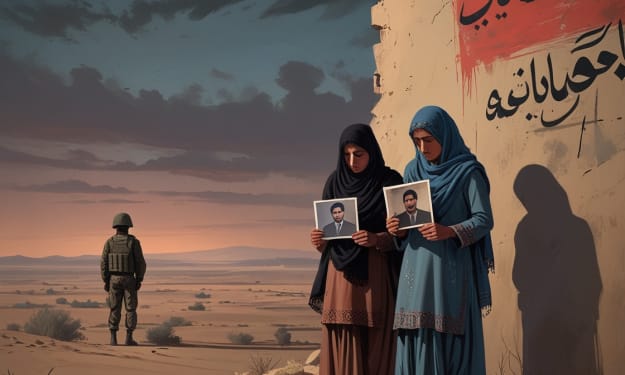
Silent Genocide: The Hidden Massacre of Balochistan. AI-Generated.
The Concealed Afflictions: The Balochistan Massacre – An Overlooked Episode of Contemporary History In spite of being one of the least addressed atrocities of the contemporary period, the persistent turmoil and purported massacres in Balochistan stand as a distressing reminder of the muted agony of a populace ensnared in the realm of politics and power. This article reveals the concealed particulars of decades of discord in the Baloch region, examining its historical origins, political conflicts, and the human toll that persistspredominantly disregarded by international media and historical narratives. The Concealed Afflictions: The Balochistan Massacre – An Overlooked Episode of Contemporary History When history is recorded by the triumphant, entire segments of anguish are frequently excluded. One such segment transpires in the rugged mountains and arid terrains of Balochistanan extensive, resource-abundant region divided among Pakistan, Iran, and Afghanistan. Although lesser-known to the global community, Balochistan has suffered a harrowing legacy of political oppression, insurrections, and brutal crackdowns, prompting numerous historians and human rights advocates to label the conflict as a contemporary silent massacre. A Land of Abundance, A People Marginalized Balochistan is the largest province of Pakistan in terms of area, yet the least inhabited. It possesses ample natural resources, including natural gas, gold, coal, and copper. In spite of this affluence, the area endures as one of the most destitute and underdeveloped in South Asia. Baloch nationalists contend that the federal government has long exploited Balochistan’s resources while providing minimal returns to its inhabitants. This sentiment is not novel. The impetus for unrest was initiated soon after the establishment of Pakistan in 1947. The princely state of Kalat (part of Balochistan) initially pursued independence but was subsequently annexed by Pakistan in 1948, igniting the first of several Baloch revolts. Each insurrectionwhether in 1958, 1962, 1973, or the more recent movementshas been met with forceful military response. Oppression and Alleged Massacres Since the early 2000s, the conflict has intensified considerably. The Pakistani military and intelligence agencies have been accused by numerous human rights organizations of executing enforced disappearances, extrajudicial killings, and acts of torture. Thousands of Baloch activists, students, intellectuals, and ordinary villagers have reportedly gone missing. Their remains are sometimes later discovered disfigured, discarded in remote siteswhat locals grimly label as “kill and dump” operations. While precise statistics are challenging to corroborate owing to restricted access to the area and fear of reprisals, estimates from various NGOs indicate that over 20,000 individuals may have vanished over the past two decades. Human Rights Watch and Amnesty International have both documented severe violations in the region; however, global political focus has been scantpartly owing to Balochistan's geopolitical sensitivity.
By Say the truth about a year ago in History
“The Children of Alexander: The Legacy, The Succession, and the Birth of New Empires”
When Alexander the Great died in 323 BCE in Babylon, he left behind the largest empire the world had ever seen—stretching from Greece to Egypt, across Persia and into the Indian subcontinent. But perhaps more striking than the size of his empire was the void he left behind: Alexander died without a clear, adult successor. What followed was a dramatic saga of betrayal, war, and the slow unraveling of a unified dream.
By Say the truth about a year ago in History
Real Madrid - Athletic
**Real Madrid continued their impressive La Liga campaign with a 2-0 win over Athletic Club at the Santiago Bernabeu Stadium on **March 31, 2024**. The match was crucial in cementing their hold on the top spot of the league, as **Rodrigo Goes** put in a superb performance for Los Blancos, scoring two goals.
By Rahul Sanaabout a year ago in History
Ancient Thebes History Myths and Legacy of the Powerful Greek City State
Ancient Thebes History Myths and Legacy of the Powerful Greek City State Explore the rise mythological roots and historical significance of Thebes one of ancient Greece’s most influential and legendary city states.
By Adnan Rasheedabout a year ago in History
What’s Open and Closed on Easter Sunday 2025? Walmart, Target, Grocery Stores, Pharmacies & More . AI-Generated.
On Easter Sunday, 2025, what places are open and closed? Target, pharmacies, grocery stores, and more Easter Sunday has a profound spiritual significance for billions of Christians worldwide. On April 20 in 2025, Easter will be celebrated as a day of joy, family get-togethers, worship, and reflection. While many people spend the day at church or at Easter brunch, others might find that they need to pick up something last-minute. Knowing which stores are open can save time and alleviate stress, whether you're looking for dinner ingredients or an Easter gift at the last minute. This comprehensive list of grocery stores, pharmacies, department stores, and other establishments that will be open and closed on Easter Sunday 2025 is provided below. ---
By BILLAL HOSSEN ZIHADabout a year ago in History
Some important discoveries made by mistake
X-raysX-rays or x-rays are a type of electromagnetic radiation with short wavelengths. X-rays have brought about a revolutionary change in the diagnosis of diseases in the medical field. The wavelength of x-rays is not seen as much shorter than ordinary light. Due to its short wavelength, it can easily penetrate any material. In 1895, German physicist William Roentgen discovered this ray. 'Cathode rays' had been discovered long before. But researchers still did not know that it was possible to take pictures of the human skeleton using it. In 1895, William Roentgen was experimenting with cathode rays in a glass tube covered with black paper. His aim was to test whether cathode rays were emitted from the glass. At that time, an interesting incident occurred. He saw that a kind of light beam was visible a few feet away from where he was standing! He thought that the light might be coming out from somewhere in the cardboard. But the experiment showed that the rays were not bursting the cardboard, but rather penetrating the cardboard. Seeing the incident, William Roentgen thought: Why can't the rays that can penetrate the cardboard penetrate the human body? That's what he thought. He conducted the experiment with his wife's hand in front of him, and a history-changing event occurred. For the first time, it was possible to create a photographic image of the human skeleton without cutting it. Mrs. Roentgen was shocked to see the picture of her own skeleton and said, "I feel like I'm seeing death before my eyes!" Since the properties of this invisible ray were unknown, William Roentgen named it X-ray. However, many people also call it "radiation rays" after his name. Penicillin The discovery of penicillin is a milestone in modern medicine. It is the first antibiotic discovered in the world. It protects against infections caused by bacteria. Its inventor was physician and bacteriologist Alexander Fleming. There is an interesting story behind the discovery of penicillin.
By Md Ariful Islamabout a year ago in History
The Earliest History of Earth . AI-Generated.
The Earliest History of Earth Earth has been around for more than 4.5 billion years, a long time that saw the planet's birth, the formation of its first crust, and the emergence of life from a hostile environment. Although science has made impressive progress in deciphering the secrets of Earth's beginnings, understanding this early history is like putting pieces of a puzzle together with only bits of information.
By articelmunafabout a year ago in History
The Psychology of Love and Letting Go. Content Warning.
Letting Go and Love: A Psychology One of the most profound feelings we can experience is love. It is intoxicating, powerful, and very human. Poetry has written about it, science has studied it, and the heart has lived it. Letting go, on the other hand, is the equivalent of love but is far less romanticized. Psychologically, the process of loving and letting go are inextricably linked, revealing profound truths about attachment, identity, and emotional development. The Art of Attachment Research Attachment is the core of love. Humans are wired to form emotional bonds from birth. According to the attachment theory of psychologist John Bowlby, our relationships with caregivers in our early years influence how we interact with others throughout our lives. While insecure attachments can lead to anxious or avoidant behaviors, secure attachments lead to healthier adult relationships. Dopamine, oxytocin, and serotonin are among the chemicals that our brains release when we fall in love, resulting in feelings of pleasure, security, and trust. Even when these neurochemical bonds are no longer serving us, love can be so difficult to let go of that it feels addictive. Why it hurts to let go Letting go, especially of someone we’ve loved deeply, triggers a form of grief. Elisabeth Kübler-Ross, a psychiatrist, says that we can go through cycles of denial, rage, bargaining, depression, and finally acceptance. But unlike bereavement caused by death, the end of a romantic relationship often comes with ambiguity—questions of “what if,” “why,” and “what now?”
By Sahajamal Rumeabout a year ago in History
Russia Creating ‘General Impression’ of Ceasefire While Continuing to Shell, Zelensky Says. AI-Generated.
Volodymyr Zelensky, the president of Ukraine, has accused Russia of deliberately deceiving the international community by creating the appearance of a ceasefire while continuing its military aggression against Ukrainian territory. Despite Moscow's public overtures suggesting a willingness to pursue peace or humanitarian pauses, Zelensky highlighted Russian forces' intensified shelling activities in several frontline regions in his recent national address and subsequent press statements. Zelensky stated, "They are trying to give the impression that they are ready for a ceasefire or some form of de-escalation." However, the fact of the matter is that the shelling has not ended. Attacks continue on our cities. Civilians continue to perish." According to reports, Russian diplomatic statements and media campaigns have portrayed Russia as open to peace talks and localized ceasefires, particularly around Orthodox Easter and other international diplomatic milestones. The Ukrainian president's remarks follow these statements. Ukrainian and international observers assert that Russian officials' statements hinting at humanitarian concerns and a potential desire to de-escalate tensions are part of a broader propaganda strategy aimed at manipulating global opinion. Ground Reality Contradictions The reality, according to local administrations and the Ukrainian armed forces, starkly contradicts Russian propaganda. Over 200 separate artillery and missile attacks on Ukraine's eastern and southern regions, including Kharkiv, Zaporizhzhia, Donetsk, and Kherson, have been reported in the past week alone. Numerous civilians have been killed in these attacks, which have also caused extensive damage to infrastructure. Russia's intentions have been seriously questioned as a result of the ongoing aggression. Ukrainian officials contend that the Kremlin's strategy is to maintain unwavering military pressure on Ukraine while presenting itself as diplomatic and cooperative on the international stage. They assert that the purpose of this dual strategy is to weaken Ukraine's alliances and polarize international opinion. Dmytro Kuleba, Ukraine's Foreign Minister, stated, "Russia wants to appear as a reasonable actor in front of the world, all while pursuing a war of attrition on the battlefield." "This goes beyond mere hypocrisy. By implying that Kiev is the one refusing to talk, it is a calculated attempt to undermine support for Ukraine." Strategic Use of Stop-and-Go Language According to experts in international relations and conflict resolution, Russia's strategy is not novel; rather, it is a continuation of similar tactics utilized in previous conflicts, such as those in Georgia and Syria. In order to reorganize military forces, reorganize logistics, and gain breathing room while maintaining initiative on the battlefield, temporary or proposed ceasefires have frequently been utilized. Dr. said, "We see a classic case of strategic messaging in which a state actor attempts to manipulate perceptions." Conflict analyst Elena Mykhailova works at the Ukrainian Institute for Strategic Studies. "The Kremlin recognizes that Western publics are becoming increasingly war-weary, and any sign of Ukrainian intransigence could be politically damaging to Kyiv's international partners," In light of this, any talk of a ceasefire coming from Moscow is met with extreme suspicion in Kyiv. Officials in Ukraine say that while Russian missiles keep hitting Ukrainian cities, there can't be meaningful negotiations or a truce. The Brunt is borne by civilians. The ongoing conflict's human cost continues to rise. A school, a hospital, and a number of residential buildings were destroyed by recent shelling in the town of Avdiivka, which has seen some of the bloodiest fighting. Humanitarian organizations and emergency services are struggling to get aid to the most affected areas. Mayor Vitalii Barabash of Avdiivka stated, "We can't talk about peace when our children are being pulled from rubble." "Because we've seen this pattern before, we brace ourselves for more shelling every time we hear talk from Russia about ceasefires." These sentiments are echoed by local volunteers and international NGOs operating in the region. Due to ongoing military activity, access to safe corridors for evacuation or aid delivery remains highly unpredictable and frequently risky, according to the International Committee of the Red Cross. Diplomatic Tensions and International Reaction There has been a mixed response from around the world to the most recent events. Jens Stoltenberg, Secretary General of NATO, expressed support for Ukraine and stated that any claims of a ceasefire must be supported by evidence that can be verified on the ground. Stoltenberg stated at a press conference, "Talk is cheap." "What we need to see are concrete actions, such as the cessation of hostilities, the withdrawal of troops, and respect for the sovereignty of Ukraine," Ukraine will continue to receive both military and humanitarian aid from the European Union. In the meantime, the United States of America has announced an additional aid package that includes support for humanitarian causes, ammunition, and air defense systems. However, due to the long-term dangers of a prolonged war, some political voices in Europe and elsewhere have called for renewed diplomatic engagement. Such calls may contribute to Moscow's strategy if there isn't a unified position and careful verification mechanisms, analysts warn. The World's Warning from Zelensky President Zelensky has repeatedly urged world leaders to keep an eye on things and avoid falling for what he calls "Russia's theatrical performances." He emphasized that genuine efforts to achieve peace must be based on openness, accountability, and a clear end to violence. Zelensky stated, "Russia speaks of peace with one hand while pulling the trigger with the other." "A genuine ceasefire indicates the end of hostilities. not merely empty phrases or obtrusive gestures." In addition, he made a direct appeal to the general public all over the world, urging citizens living in democratic nations to exert pressure on their governments to continue supporting Ukraine. He stated, "This is not just our war." "It is a war for the values we all hold dear: human dignity, freedom, and justice." The Way Forward Ukraine faces enormous challenges on the military and diplomatic fronts as the war enters its third year. Maintaining international unity and focus will be increasingly challenging in light of shifting geopolitical priorities and domestic pressures in other nations, despite the importance of allies' support. However, for Ukrainians living in the area, clarity is crucial. The Russian message's dual nature—talking peace while waging war—increases the complexity of a conflict that is already devastating. We do not desire illusions. Zelensky stated, "We want peace, but not peace built on lies." "No matter how many smokescreens Russia tries to throw up, we will defend our land, our people, and our future."
By Shamimahmed about a year ago in History
The Lion of the Desert: Omar Mukhtar’s Fight for Freedom
The Lion of the Desert: Omar Mukhtar’s Fight for Freedom As the whistling winds herald the ancient empires of yore, one man stood firm against the perpetual tide of colonial subjugation: With Omar Mukhtar, the faith and gritty resolve touched the sea of golden sands in Libya. Dubbed a freedom fighter and self-taught scholar of the holy book, Mukhtar became the symbol of defiance against Italian colonialism in Libya. Even in death, his unfiltered courage serves as an inspiration and lends life to his unmatched militaristic heroism. Mukhtar's legacy is etched onto the face of warfare, and is glowing brighter than any weapon of war; testament to the clarity of principles that has held defiant even today, unmatched dignity, and unwavering resolve to justice.
By Md Ajmol Hossainabout a year ago in History