World History
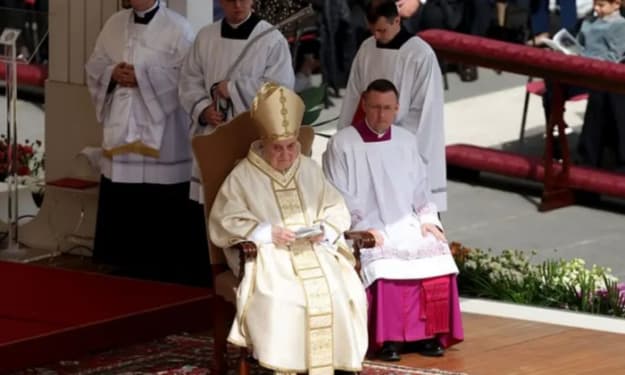
Who will take over from Pope Francis? The Most Promising Candidates for the Next Papacy.
As Pope Francis, the first Latin American pontiff, continues his papacy at the age of 87, more and more people are wondering who will succeed him. Discussions about potential candidates to lead the 1.3 billion-member Catholic Church are already underway, despite the pope's relatively stable health. There are a number of factors that could have an impact on the upcoming conclave—the secretive election process by which cardinals select a new pope—including geography, theological leanings, and the difficulties that the Church is facing. In Vatican circles, the following are some of the leading contenders that are frequently mentioned.
By Mohammad Kamrul Hasanabout a year ago in History
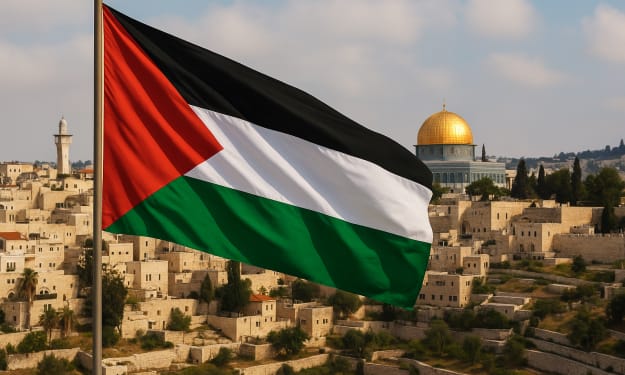
The Israel-Hamas Conflict: A Complex and Enduring Struggle
The conflict between Israel and Hamas: a tangled and pervasive struggle One of the longest and most contentious conflicts in modern history, the Israel-Hamas conflict is rooted in historical, political, and religious tensions. The most recent escalation in violence has once more attracted the attention of the entire world, bringing to light the persistent hostility and humanitarian crises in the region.
By Mohammad Kamrul Hasanabout a year ago in History
Sultan Salahuddin Ayyubi: The Conqueror of Jerusalem and Champion of Mercy
Sultan Salahuddin Ayyubi, one of the most iconic and revered figures in history, is not only remembered for his military victories but also for his profound sense of justice, mercy, and humanity. His life is a testament to leadership based on strong moral principles, courage, and the ability to rise above hatred and violence. One of the most captivating and influential events in his life occurred during the Crusades, particularly in 1187, when he recaptured the city of Jerusalem from the Crusaders. This event marked a major turning point in history, not only for the Muslims but for the entire world, due to its profound implications on the treatment of prisoners, the respect for different faiths, and the demonstration of true leadership.
By Muhammad Daud about a year ago in History
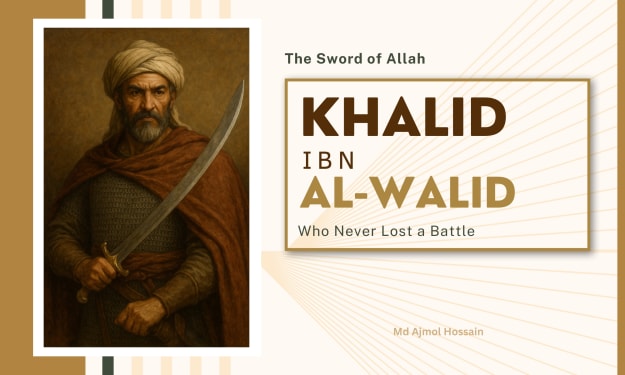
Khalid ibn al-Walid: The Sword of Allah That Never Lost a Battle
Imagine a warrior, so fearless, so effective and so loyal - that even the Prophet Muhammad (peace is on him) gave him the title: "The sword of Allah." The man was Khalid Ibn al-Walid-A Common who fought more than 100 matches and never lost a single. His name echoes through the Arab deserts, the Persian mountains and rivers in Rome.
By Md Ajmol Hossainabout a year ago in History
15- Day Weight Loss: Rimi’s Story. AI-Generated.
Rimi, a 28-year-old bank officer from Dhaka, had been battling with her weight for some of a long time. Long work hours, stretch, unpredictable eating propensities, and need of physical action had gradually pushed her weight to 70 kg. She wasn’t hefty, but she frequently felt bloated, moo on vitality, and disappointed with her appearance. The breaking point came when she saw a photo of herself from a later office party — she didn’t like how she looked and felt detached from her claim body. Decided to form a alter, she set a little but powerful objective: **lose 3-4 kg in 15 days**. It wasn’t almost about the number on the scale — she needed to feel lighter, more sure, and more beneficial. Here’s how her travel unfurled: ### **Days 1–5: The Control of Beginning** Rimi started her to begin with day with a clear attitude: She wouldn’t starve herself or take after extraordinary crash diets. Instep, she would eat keen, remain dynamic, and keep herself responsible. She begun each morning with **a glass of warm water blended with lemon and a squeeze of nectar** to boost absorption and digestion system. Her breakfast comprised of **oats cooked with skim drain**, topped with chia seeds and some cuts of banana. On a few days, she supplanted it with **two bubbled eggs and sautéed vegetables**. She totally cut out sugary snacks and handled nourishment — no more rolls or fizzy drinks amid office breaks. She moreover started strolling for **30 to 40 minutes each morning**, gradually expanding her pace. At to begin with, her legs hurt and she felt tired effectively, but she pushed through, reminding herself that each step mattered. Lunch was usually **brown rice with barbecued chicken or angle**, went with by a bowl of blended serving of mixed greens. For snacks, she carried **nuts, cucumber cuts, or green tea** to dodge garbage longings. Supper was the lightest feast of her day — regularly fair **clear vegetable soup or bubbled lentils with steamed broccoli or carrots**. She made it a point to **wrap up supper by 7: 30 PM**. By Day 5, she felt a discernible contrast: Less bloating, way better rest, and a slight enhancement in her temperament and vitality. Days 6–10: Finding Beat and Center** As her body started altering to the unused schedule, Rimi centered on **remaining reliable**. She included **essential extending and yoga within the evening**, particularly after long office hours. It made a difference her loosen up and diminished her back and neck torment from sitting all day. One of her greatest changes was **drinking at slightest 3 liters of water every day**, which kept her hydrated and diminished starvation throbs. She downloaded a water update app to remain on track. She too started **prepping her dinners on ends of the week**, making it less demanding to dodge requesting takeout amid active weekdays. For illustration, she would marinate chicken in development, bubble and store vegetables, and pack lunch boxes the night some time recently. Candidly, this stage was a bit extreme — desires returned, particularly for desserts. But she found solid substitutions like **dates, natural products, or dull chocolate (in control)** to fulfill her sweet tooth. Bolster from her near companions too played a part — they cheered her on, sent her workout reels, and indeed joined her on morning strolls. By Day 10, she might as of now see **unmistakable changes within the reflect** — her confront looked slimmer, and her pants fit more comfortably. ### **Days 11–15: Certainty and Breakthrough** Rimi’s motivation topped amid the ultimate extend. Presently that she had built a propensity, sticking to her arrange got to be less demanding. She was not enticed by undesirable snacks or late-night munchies. She too included a **15-minute HIIT (high-intensity interim preparing)** session each other day, which made a difference burn more calories in less time. YouTube wellness channels got to be her modern favorite thing within the nighttimes. Rationally, she felt calmer and more certain. Her progressed rest and absorption included to her in general well-being. Most imperatively, she felt **in control of her choices**, which had been lost for a long time. On Day 15, she weighed herself: **she had misplaced 4.2 kg**, dropping from 70 kg to **65.8 kg**. But past the numbers, she felt more grounded, more joyful, and glad of her teach.
By Md. Lotifur Rahman about a year ago in History
Pope Francis Dies at the Age of 88, World Leaders Pay Tribute. AI-Generated.
Pope Francis was born Jorge Mario Bergoglio on December 17, 1936, in Buenos Aires, Argentina, to Italian immigrant parents. He was the eldest of five children in a deeply religious and hardworking family. Before joining the priesthood, young Jorge studied chemistry and even worked briefly as a chemical technician and nightclub bouncer. A life-changing moment came in his early twenties, when he fell seriously ill with pneumonia. During his recovery, he felt a strong spiritual calling that led him to join the Society of Jesus (Jesuits) in 1958, a Catholic religious order known for its focus on education, missionary work, and social justice. Path to Leadership in the Church Bergoglio was ordained a priest in 1969 and quickly rose through the ranks. He became the Provincial Superior of the Jesuits in Argentina from 1973 to 1979. His leadership during Argentina’s "Dirty War" – a time of political unrest and violence – has drawn both criticism and praise. Some accuse him of not doing enough to protect fellow priests, while others view his actions as careful, behind-the-scenes advocacy. In 1992, he was appointed Auxiliary Bishop of Buenos Aires, and later became Archbishop in 1998. He was known for his simple lifestyle – taking the bus, cooking his own meals, and living in a modest apartment instead of the bishop's palace. Becoming Pope Francis In February 2001, Pope John Paul II elevated him to the rank of Cardinal. Bergoglio gained a reputation for humility, doctrinal conservatism, and a strong concern for the poor. Following the resignation of Pope Benedict XVI in 2013 – the first papal resignation in nearly 600 years – Bergoglio was elected the 266th Pope of the Roman Catholic Church on March 13, 2013. He chose the name Francis in honor of Saint Francis of Assisi, reflecting his vision of a church for the poor, a commitment to peace, and care for creation. Papacy Highlights As Pope, Francis has become a transformative figure in the Catholic Church. His papacy has been marked by: Humility and Simplicity: He declined many traditional papal luxuries, choosing simpler clothing, a modest car, and even washing the feet of prisoners and Muslims during Holy Week. Focus on the Marginalized: He emphasizes helping the poor, refugees, and the forgotten. He often speaks out on economic inequality and the moral crisis of ignoring suffering. Progressive Dialogue: Though maintaining traditional Catholic doctrine, Pope Francis has shown openness on sensitive topics, such as LGBTQ+ rights, climate change, interfaith dialogue, and the role of women in the Church. Climate Advocacy: His 2015 encyclical Laudato si’ called for urgent global action on climate change, making him a key moral voice in the environmental movement. Church Reforms: He has worked to address sexual abuse within the Church, though many believe deeper reforms are still needed. He has also streamlined Vatican bureaucracy and sought to make the Church more transparent. Legacy and Influence Pope Francis continues to lead the Church with a focus on compassion, inclusivity, and global unity. Despite facing criticism from both traditionalists and reformists, he remains one of the world’s most influential spiritual leaders. His legacy may ultimately be defined by his efforts to reconnect the Church with ordinary people, build bridges across divisions, and place love, mercy, and service at the heart of the Catholic faith. ritual leader of over 1.3 billion Catholics, Pope Francis left a lasting impact on the global stage with his message of compassion, humility, and inclusion. His death marks the end of an era that reshaped the papacy and inspired people of all faiths and backgrounds. Born Jorge Mario Bergoglio in Buenos Aires, Argentina, Pope Francis made history in 2013 as the first pope from the Americas, the first Jesuit pope, and the first non-European to lead the Catholic Church in more than 1,200 years. Throughout his papacy, he became known for his simplicity, progressive views, and deep concern for the poor and marginalized. From climate change to social justice, Pope Francis addressed some of the most pressing global issues with boldness and empathy. His encyclicals, particularly Laudato Si’ on the environment and Fratelli Tutti on human fraternity, continue to influence public discourse and policy worldwide. Following the news of his death, tributes poured in from leaders around the world: U.S. President said, “Pope Francis was a voice of hope and healing in a divided world. His legacy of peace and compassion will endure for generations.” Religious leaders from all denominations also expressed their condolences, highlighting Pope Francis’s dedication to interfaith dialogue and unity. Grand Imam Ahmed el-Tayeb of Al-Azhar, with whom Pope Francis signed the historic Document on Human Fraternity in 2019, described him as “a dear brother and a champion of peace.” The Vatican has announced that funeral arrangements will be shared in the coming days. Pilgrims from around the world are expected to flock to Rome to pay their respects to a pope who touched millions of lives through his humility, wisdom, and tireless advocacy for the voiceless. As the bells of St. Peter’s Basilica toll in mourning, the world remembers a man who sought not power, but service. Pope Francis’s passing marks the end of a transformative chapter in the Catholic Church — one defined by love, justice, and mercy.
By Hasan Mahmudabout a year ago in History
Nineteen Eighty-Four
1984 (also written as Nineteen Eighty-Four) is a powerful and chilling novel written by George Orwell. It was published in 1949, just after World War II, but it talks about a future world that feels cold, controlling, and scary. This book is not only a story—it’s a warning about what could happen if governments gain too much power and people lose their freedom.
By Muhammad Hayatabout a year ago in History
Temüjin to Genghis Khan: The Rise of a Conqueror and the Making of an Empire
From Temüjin to Genghis Khan: The Rise of an Empire and Conqueror Few historical figures have evoked such reverence and controversy as Genghis Khan. His early life was a crucible of hardship and betrayal; he was born Temüjin around 1162 in the harsh landscapes near the border of Siberia and Mongolia. However, a leader with unmatched ambition and military prowess emerged from these turbulent beginnings and would build the world's largest contiguous empire. Adversity marked Temüjin's path to power. He suffered from poverty, enslavement, and a constant struggle for survival after being orphaned at a young age and having his family leave him. He did, however, emerge from these trials with a strong resolve and a thorough comprehension of the Mongolian plateau's tribal dynamics. Through a series of strategic alliances and military victories, he began to consolidate his authority, and his charisma and unwavering determination gradually attracted a loyal following. In 1206, a pivotal moment occurred. Recognizing his growing influence and military prowess, a council of Mongol tribes declared Temüjin "Genghis Khan," meaning "universal ruler." This marked the beginning of a Mongol nation that had grown from a collection of feuding nomadic tribes into a powerful military power. The traditional clan structures were torn down under Genghis Khan's radical reforms, and he established a meritocratic system that placed loyalty and skill ahead of lineage. The Yassa, his unified legal code, helped to maintain order and stability in his growing state. Genghis Khan turned his gaze outward now that he had secured his base of power. He had a reputation for both brutal efficiency and strategic brilliance during his military campaigns, which were marked by meticulous planning and exceptional cavalry tactics. As they swept across Asia, the Mongol armies, known for their speed, discipline, and horsemanship, left an indelible mark on the world. The Mongols conquered a significant portion of China in the early 13th century, including the formidable Jin Dynasty. They clashed with the Khwarazmian Empire in Central Asia as a result of their westward expansion, launching devastating campaigns that extended into Persia. Instilling fear and reshaping the political map, Mongol armies under Genghis Khan's command or those of capable generals like Jebe and Subutai pushed as far west as the edges of Europe. Even though the Mongol conquests were frequently accompanied by a great deal of destruction and death, they also accidentally sparked a time of unprecedented interconnectedness throughout Eurasia. Following their initial conquests, the Pax Mongolica, or "Mongol Peace," facilitated trade and cultural exchange along the Silk Road, establishing new and significant connections between East and West. The vast empire was filled with ideas, technologies, and artistic influences that contributed to a time of relative stability and prosperity in many places. In 1227, Genghis Khan was killed while fighting the Western Xia dynasty. The fact that the location of his final resting place is kept a closely guarded secret is evidence of the enduring mystery surrounding his life. He left behind an enormous empire and a legacy that is still up for debate and interpretation. Genghis Khan continues to be an undeniable force in the history of the world, despite being remembered in some regions as a vicious barbarian and in others as a national hero who brought people together. A testament to his extraordinary leadership, military acumen, and unwavering vision, he rose from humble beginnings to become the founder of one of history's largest empires. His impact, which was both destructive and transformative, changed the course of civilizations and has stayed with us today.
By Tafsirul Talukdar luvdoabout a year ago in History
The Woman in the Darkness: The Haunting Story of Blanche Monnier. Content Warning.
A Whisper from the Shadows In the heart of 19th-century France, amid cobbled streets and aristocratic elegance, a secret festered behind shuttered windows and thick stone walls. A secret so harrowing, so drenched in silence, that the very air around it seemed to throb with mystery. This is not a tale born from gothic fiction, though it reads like one. This is a true story.
By The Secret History Of The Worldabout a year ago in History
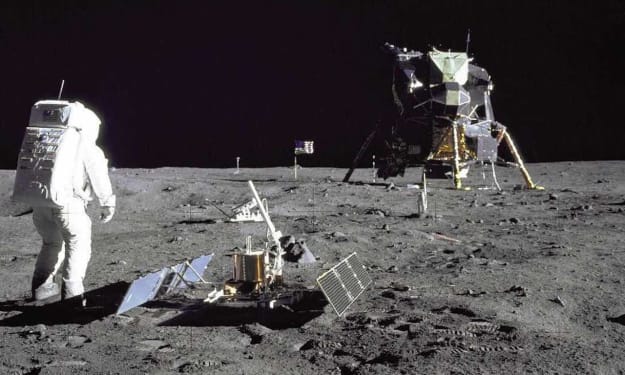
Apollo 11: The Mission That Almost Crashed the Moon Party (And the Wild Details They Never Taught You)
July 20, 1969: 650 million people watched a man step onto the moon, while 400,000 others held their breath, praying a computer glitch wouldn’t kill him live on TV. This is the story of how duct tape, a stolen sandwich, and a 26-year-old saved humanity’s greatest adventure… and why we’re still obsessed 55 years later.
By ChronoCuratorabout a year ago in History