World History
The Hubble Space Telescope has surprised astronomy far more than 10 times in its amazing career
That legendary space telescope has been humanity's eye in the sky for 35 years now, orbiting about 340 miles above Earth and capturing the cosmos in astonishing clarity.
By MD. ARIFUJJAMANabout a year ago in History
"Usman Ghazi: The Sword of Faith and Empire"
The Ottoman Empire, one of the most powerful and enduring empires in world history, had humble beginnings in the rugged frontier lands of Anatolia in the late 13th century. At the heart of this transformation from a small principality to a global empire stood Usman Ghazi (Osman I)—a tribal leader of vision, faith, and military genius. His name would later define the identity of the empire for over six centuries: the Ottomans, or in Turkish, the Osmanlılar.
By Sufyan uddin about a year ago in History
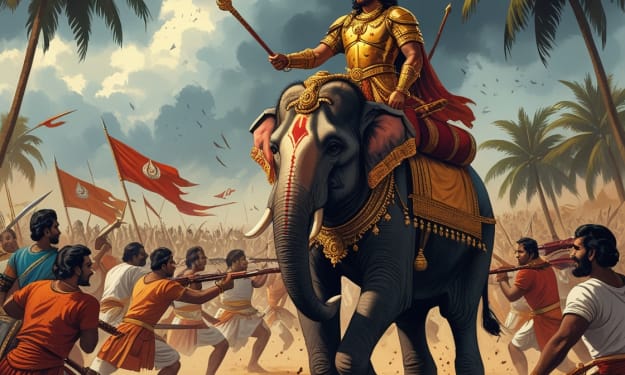
The Battle of Venni: Karikala Chola’s Triumph Over a Southern Alliance
The Engagement of Venni: How Karikala Chola Triumphed over a Powerful Coalition and Established a Chola Heritage The Engagement of Venni, occurring around 190 CE, was one of the most pivotal military confrontations in ancient South Indian chronicles. Happening near Kovilvenni, a modest town in the Thanjavur district of contemporary Tamil Nadu, this encounter significantly transformed the balance of power among the Chola, Chera, and Pandya kingdoms. At the heart of this remarkable struggle was Karikala Chola, a renowned monarch of the early Chola dynasty. Confronting a coalition of formidable adversaries, Karikala emerged triumphant in a conflict that would cement his status as one of the most illustrious rulers in Tamil annals and lay the groundwork for Chola supremacy in the centuries ahead. The Political Context Prior to the Conflict By the 2nd century CE, the Tamil realmreferred to as Tamilakamwas partitioned among three principal powers: the Cholas, Pandyas, and Cheras, alongside numerous Velir chieftains. These factions frequently engaged in contests for dominance, with fluctuating alliances and internal enmities characterizing the era. The Chola dynasty, situated in the Cauvery Delta, was grappling with instability. Following the decline of earlier Chola sovereigns, the dynasty faced challenges from both internal insurrections and external threats. Amid this atmosphere of political turbulence ascended Karikala Chola, a prince who endured imprisonment, exile, and treacherybut was resolute in his quest to unify and fortify his domain. Who Was Karikala Chola? Karikala Chola is among the earliest documented sovereigns of the Chola dynasty and remains one of its most venerated rulers. His name "Karikala," signifying "the man with a charred leg," originates from a legend in which he escaped from a blaze during his captivity as a youth. According to Tamil literature and copper plate records, Karikala was an exceptional strategist and proficient administrator. His vision extended beyond mere conquesthe invested in infrastructure, including the construction of embankments along the Kaveri River, significantly enhancing the agricultural viability of the Chola heartland. However, before he could actualize his vision for a robust Chola kingdom, Karikala needed to eradicate external threats. This opportunityand challengematerialized in the form of the Engagement of Venni. The Formation of the Anti-Chola Coalition Apprehensive of Karikala’s ascending power and aspirations, the Pandya and Chera monarchs, along with a confederation of eleven minor rulers and chieftains, established a formidable alliance. Their objective was to obliterate the Chola resurgence at its inception. The Chera monarch Uthiyan Cheralathan and the Pandya king, whose name varies across different texts, joined forces with the conviction that they could overpower Karikala’s forces. The coalition was well-equipped, featuring war elephants, cavalry, and seasoned generals. On paper, Karikala was at a numerical disadvantage. The Engagement of Venni The conflict transpired on the fields of Venni, a site strategically located near the Chola capital Urayur (in proximity to modern-day Tiruchirappalli). Karikala, recognized for his boldness and tactical prowess, opted to confront the allied forces directly. According to Sangam literature, particularly the Pattinappaalai, Karikala commanded his troops from the forefront. His forces consisted of organized archers, formidable infantry, and combat-trained war elephants. Utilizing both sheer strength and strategic maneuvers, Karikala capitalized on the vulnerabilities in the coordination of the allied forces. The Chera army was repelled, and the Pandya soldiers incurred significant losses. Despite early resistance, the coalition began to wane beneath Karikala's relentless offensive. In a final assault, the Chola forces overwhelmed the adversary, resulting in numerous fatalities and the rout of the remaining troops. The confrontation concluded with a conclusive Chola triumph. Aftermath and Impact The ramifications of the Battle of Venni were significant: Uthiyan Cheralathan, the Chera monarch, is reported to have taken his own life through prolonged starvation, a ritual act to evade the dishonor of defeat. The Pandya authority was diminished, and the minor Velir leaders were either subdued or compelled to submit. Karikala emerged as the unequivocal sovereign of the Tamil region, broadening his influence throughout Tamilakam and extending into parts of Sri Lanka.
By Say the truth about a year ago in History
The Billion-Dollar Ganga: Calculating the True Net Worth of India’s Sacred River. AI-Generated.
The Billion-Dollar Lifeline: Assessing the Net Value of the Ganges River The Ganges River, or Ganga, is not only the most sacred river in India but also one of its most economically significant natural assets. Extending over 2,525 kilometers, the Ganga traverses some of the most densely inhabited and economically vibrant areas in the nation. Revered as a deity by millions and utilized as an essential resource by numerous others, the Ganga’s impact on India’s agriculture, industry, transportation, culture, and ecology is substantial. But can we ascertain the net worth of the Ganges? While it is unfeasible to assign a monetary value to its spiritual or emotional significance, the river’s quantifiable economic contributions can indeed be evaluatedand they reveal an astounding worth. 1. Agricultural Backbone: Sustaining India The Ganges Basin is inhabited by over 600 million individuals, many of whom depend directly on the river for irrigation. Spanning approximately 860,000 sq km, this fertile area generates a considerable portion of India’s food supply. The states of Uttar Pradesh, Bihar, and West Bengal are significant beneficiaries, cultivating rice, wheat, sugarcane, lentils, and vegetables. The irrigation facilitated by the Ganga is estimated to support 25% of India’s total agricultural yield. Estimated annual agricultural contribution: $50–70 billion USD 2. Hydropower Generation: Empowering Cities The Ganga and its tributaries host numerous hydropower initiatives that produce electricity for both urban and rural communities. Prominent hydropower facilities include Tehri Dam, Koteshwar, and Rishikesh, with additional projects currently under development. These plants provide clean energy to millions of households and businesses. Estimated energy value (annual): $10–15 billion USD 3. Industrial Value: Energizing Growth A variety of industries have historically thrived along the Ganga, including: Textiles, sugar, leather processing, and paper manufacturing IT parks and industrial hubs in cities such as Kanpur, Varanasi, and Kolkata Many of these industries rely on the river for water, transportation, and waste disposal (though this has raised concerns regarding pollution) Estimated industrial economic value: $15–20 billion USD annually 4. Transport and Trade: The Aquatic Highway The National Waterway-1 (NW-1) follows the Ganges for 1,620 km between Allahabad and Haldia, constituting one of India’s most crucial inland water transportation systems. This route is being enhanced to lower logistics expenses and foster sustainable freight movement. Barges presently transport commodities such as coal, food grains, and construction supplies. Estimated annual trade and transport value: $2–4 billion USD 5. Tourism and Pilgrimage Economy From Rishikesh and Haridwar in the north to Varanasi and Kolkata, the Ganga is a draw for spiritual, cultural, and wellness tourism. Millions visit the river for rituals, festivals, yoga, and ashrams. The Kumbh Mela, conducted at the river’s confluence, is the largest human gathering on the planet. River cruises and eco-tourism are on the rise. Estimated annual tourism revenue associated with the Ganga: $6–10 billion USD 6. Cultural and Ecological Wealth Beyond economics, the Ganga embodies Indian identity and heritage. It sustains biodiversity, including: Dolphins, turtles, and migratory birds Wetlands and riparian ecosystems While more challenging to quantify, this ecological value influences climate resilience, water quality, and public health. Estimated ecological and environmental services value: $10–12 billion USD 7. Cleaning and Conservation Expenses The Ganga’s significance must also factor in the expense of safeguarding it: The Indian administration initiated Namami Gange, a $3. 5 billion initiative to revitalize the river. Initiatives encompass wastewater treatment, riverfront enhancement, and waste management. Despite being expensive, these expenditures safeguard the river’s long-term significance. Total Estimated Net Worth of the Ganges (Annual) Sector Value (in USD) Agriculture $50–70 billion Energy (Hydropower) $10–15 billion Industry $15–20 billion Transport & Trade $2–4 billion Tourism & Pilgrimage $6–10 billion Ecological Services $10–12 billion Total Estimate $93–131 billion/year Over a decade, the Ganges River could signify more than $1 trillion in economic worth. Conclusion: A River of Inestimable Value The Ganges River is more than merely a body of waterit embodies India’s prosperity, culture, and sustainability. From agriculture and energy to pilgrimage and ecology, the river influences nearly every facet of life in northern India. While its net worth in currency is substantial, the genuine value of the Ganga resides in its capacity to sustain both material prosperity and spiritual wellness. To ensure its advantages persist for future generations, India must harmonize economic advancement with environmental preservationhonoring the sacred flow that has nourished the subcontinent for centuries.
By Say the truth about a year ago in History
India’s Sky Roars Back: IAF’s ‘Aakraman’ Sends a Stern Message After Pahalgam Attack”
In the aftermath of the tragic Pahalgam terror attack, India has responded—not with silence, but with strength. The Indian Air Force has launched Exercise Aakraman, deploying its elite fighter jets, including Rafales and Su-30MKIs, showcasing unmatched aerial power and operational readiness. This response is a clear testament to India's indomitable spirit and unwavering resolve to stand against terrorism and any threat to national security.
By Syed Sarafatabout a year ago in History
From Modesty to Exposure: The Timeline of Moral and Fashion Decline from 1850 to Now.
Throughout human history, fashion has not only been a reflection of beauty or status it has been a barometer of culture, values, and morality. From the layered modesty of the 1800s to the hyper-revealed trends of the 21st century, the shift in clothing mirrors something deeper: a transformation, and perhaps a collapse, of traditional values and educational foundations. This essay traces that journey through time and dives into the gradual erosion of boundaries social, familial, spiritual and how they manifest in the way we dress.
By Sayed Zewayedabout a year ago in History
China pushes for tariff cancellation to end US trade war
China Pushes for Tariff Cancellation to End US Trade War China is requesting that all tariffs imposed as a result of the trade war between the United States and China be lifted completely in an effort to reduce tensions and rekindle economic cooperation. Chinese officials have indicated that the removal of these punitive measures is necessary to reset bilateral relations and reestablish trust between the two largest economies in the world. A Legacy of the Trade War The trade war, which began in 2018 under the Trump administration, saw the United States impose tariffs on hundreds of billions of dollars’ worth of Chinese goods, citing concerns over intellectual property theft, forced technology transfers, and a massive trade imbalance. China responded with its own retaliatory tariffs on American exports, including agricultural products and automobiles. Numerous tariffs remained in place despite the fact that the two sides signed a "Phase One" agreement in January 2020, which included China's commitment to purchase additional American goods and implement structural reforms. This has largely remained the same under the Biden administration, resulting in ongoing conflict. The Position of China The Ministry of Commerce of China has consistently emphasized that the global economy would benefit from the removal of tariffs in addition to China and the United States. Chinese officials have increased their lobbying efforts in recent months, urging Washington to repeal policies they see as politically motivated and damaging to the economy. “The additional tariffs are not in line with the interests of the two peoples,” a spokesperson from the Ministry said in a recent briefing. "We believe removing them is consistent with global expectations, would assist in stabilizing supply chains, and would reduce global inflationary pressures," Beijing contends that the continuation of tariffs has been detrimental to both parties, restricting American businesses' access to Chinese markets and contributing to rising costs for American consumers. Challenges and US Response However, the United States has remained cautious. While the Biden administration has expressed openness to improving economic relations with China, it remains wary of lifting tariffs without concrete progress on key issues such as market access, human rights, and national security. U.S. Trade Representative Katherine Tai has described the tariffs as “leverage” in ongoing negotiations and has advocated for a strategic approach rather than a wholesale rollback. Some members of Congress, particularly those concerned with American manufacturing and national security, have resisted calls to lift tariffs, arguing that doing so without ensuring structural changes in China’s trade practices would amount to a concession. Business Community Weighs In Both sides' business leaders have become increasingly vocal proponents of tariff relief, citing its potential to cut costs and stabilize the economy. Apple, Tesla, and Boeing, among other American businesses with significant exposure to China, have lobbied for a reduction in trade barriers for a long time. According to a report published by the United States-China Business Council, U.S. exports to China support nearly one million American jobs and that lessening trade friction could significantly benefit manufacturing, agriculture, and semiconductors. Similarly, Chinese firms affected by U.S. tariffs have pushed their government to negotiate for greater market access and the removal of what they perceive as discriminatory practices. Implications for Geopolitics and Strategy The call to cancel tariffs is part of a larger strategic rethink that goes beyond economics. As global challenges such as climate change, pandemics, and regional security require cooperation between Beijing and Washington, leaders on both sides recognize the need for more stable ties. As a confidence-building measure, rolling back tariffs, according to some analysts, could pave the way for more substantial agreements on complex topics like technology competition and cybersecurity. Others, on the other hand, warn that economic negotiations could be overshadowed by geopolitical tensions, particularly those over Taiwan, the South China Sea, and U.S. export controls, limiting the likelihood of meaningful progress. The Way Forward China's request to end all tariffs imposed during the trade war sends Washington the clear message that cooperation is possible, but it requires concrete steps toward de-escalation. Whether the U.S. will respond with equal enthusiasm remains uncertain, but the conversation has clearly returned to the negotiating table. A resolution to the ongoing trade war could provide much-needed stability and growth as the global economy continues to face uncertainty from inflationary pressures to disruptions in supply chains. It is abundantly clear that, if the impasse persists, both nations stand to lose a lot by repairing their economic ties. Conclusion The unresolved issues in U.S.-China trade relations are brought to light by China's renewed demand for tariff cancellation. While political hurdles remain, the economic and strategic incentives to move toward de-escalation are growing. The world will be watching closely to see whether words will turn into action—and whether the scars of the trade war can finally begin to heal.
By IBTESUM ISLAM WASIabout a year ago in History
When the CIA Tried to Spy With Cats
If you thought spy thrillers couldn't get weirder than exploding pens and martinis with tracking devices, allow us to introduce you to one of the CIA’s most bizarre Cold War brainwaves: Acoustic Kitty—an actual attempt to turn a house cat into a covert agent. Yes, this was a real plan. And yes, it went exactly how you’d expect a mission involving a cat to go: badly.
By Albert Acromondabout a year ago in History
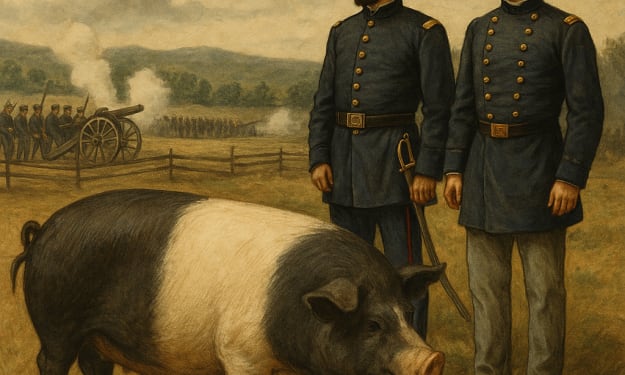
The War That Was Started Over a Pig
How a Greedy Swine Nearly Sparked an International Crisis Of all the reasons wars have erupted throughout history—territory, resources, dynastic drama—a wandering pig has to be among the most delightfully absurd. But in 1859, tensions between the United States and Britain reached a boiling point over one particularly ill-fated porker. No, really. This wasn’t a metaphorical pig. It was an actual, oinking, mud-snuffling pig.
By Albert Acromondabout a year ago in History