World History
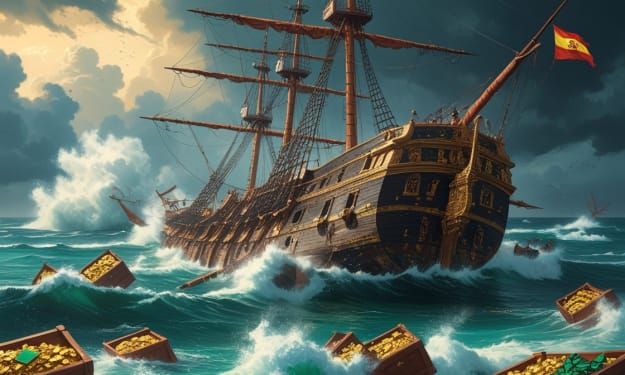
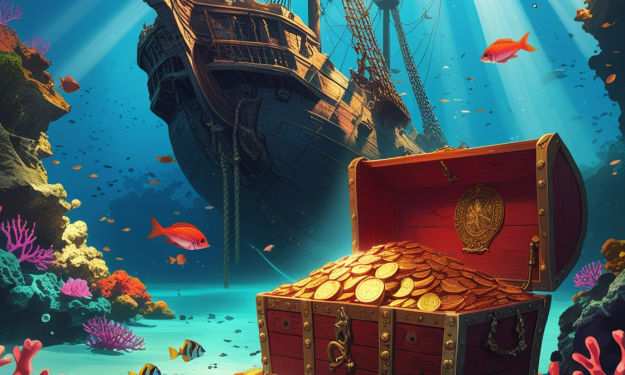
Emeralds Beneath the Waves: The Untold Story of the Spanish Galleon Santa Margarita . AI-Generated.
Emeralds Beneath the Waves: The Untold Narrative of the Spanish Galleon "Santa Margarita" Off the sun-kissed coastline of Florida, in the core of the Caribbean, resides a submerged tomb harboring centuries-old enigmasamong them, the lost Spanish galleon Santa Margarita. Sunk during a devastating hurricane in 1622, the Santa Margarita bore a cargo of such wealth that it would astonish the imagination: gold ingots, silver coins, Colombian emeralds, and treasures from throughout the extensive Spanish Empire. Although centuries have elapsed, the tale of the Santa Margaritaits calamity, its riches, and the enduring pursuit to recover its bountyremains one of the most captivating maritime legends globally. The Spanish Treasure Fleet In the early 17th century, the Spanish Empire depended significantly on treasure fleetsimmense armadas that conveyed wealth from its colonies in the Americas back to Spain. Gold, silver, emeralds, pearls, exquisite jewelry, and spices were routinely boarded onto these vessels after months of collection and taxation in ports across South and Central America. One of the most distinguished fleets was the 1622 Treasure Fleet, which included the Nuestra Señora de Atocha, the Santa Margarita, and several other ships. These vessels were brimming with wealth intended for the royal treasury of King Philip IV. However, destiny had alternative plans. The 1622 Hurricane and the Shipwreck On September 6, 1622, merely two days after departing from Havana, Cuba, the fleet was struck by a formidable hurricane near the Florida Straits. With minimal warning and no contemporary navigation, eight vessels were lost in the tempest. The Santa Margarita and her sister ship Atocha were battered against coral reefs near the Marquesas Keys and swiftly sank. The loss was disastrous. Over 500 lives were claimed by the tempest, and an estimated $2 billion worth of treasure in present-day value disappeared beneath the waves. While a few survivors clung to floating debris, the wealth of the New World now lay on the ocean floor. What Was Aboard the Santa Margarita? The Santa Margarita was not solely a military galleon but a treasure vessel. According to Spanish manifest documents and recovered artifacts, the ship was loaded with: Over 100,000 silver pesos (pieces of eight) Gold bars and disks, adorned with royal Spanish seals Colombian emeraldssome of the finest globally Religious artifacts, including chalices and crosses inlaid with gems Private treasures belonging to nobles and merchants traveling aboard This vast cargo was intended to bolster Spain’s struggling economy and ongoing conflicts in Europe. Its loss not only impaired Spanish pride but inflicted a significant blow to the empire’s financial stability. The Salvage AttemptsThen and Now Immediately following the calamity, the Spanish Crown initiated a salvage operation utilizing indigenous divers and rudimentary technology. While some gold and silver were retrieved from shallower wrecks, the deeper remnants of the Santa Margarita evaded their endeavors. For centuries, the ship's final resting spot remained concealedlost beneath shifting sands and coral beds. In the 20th century, the narrative of the 1622 fleet captivated the interest of treasure seekers. Spearheading the contemporary quest was Mel Fisher, a determined American salvager who dedicated 16 years to searching for the fleet’s remnants. In 1980, Fisher’s crew ultimately uncovered fragments of the Santa Margarita. What they discovered astonished the world: silver ingots imprinted with royal emblems, gold necklaces, emerald rings, and sacred items. It ranked among the largest and most significant treasure discoveries in history. The Legal Dispute Over Ownership As priceless treasures began to emerge, legal conflicts arose between Fisher’s enterprise and the State of Florida. Ultimately, in a pivotal U. S. Supreme Court ruling in 1982, Fisher was awarded rights to the treasure he had unearthed.
By Say the truth about a year ago in History
Kamala Harris
Kamala Harris, the 49th Vice President of the United States, has experienced a dynamic shift in public perception following her 2024 presidential bid. Assessments of Harris's political standing as of May 2025 reflect both her accomplishments and the difficulties she faces within the Democratic Party and the electorate as a whole. Post-Election Reflections
By Sakhawat Hossainabout a year ago in History
The Crimson Coins of the Caribbean: The Mystery of the Santiago Shipwreck. AI-Generated.
The Crimson Coins of the Caribbean: The Mystery of the Santiago Shipwreck the warm waves of the Caribbean lies the wreck of the Santiago, a lost Spanish treasure ship rumored to have vanished with a cargo of rare crimson-stained gold coins in the 17th century. This article explores the history of the Santiago, its final voyage, the legends surrounding its cursed treasure, and the enduring efforts to uncover its resting place. The Crimson Coins of the Caribbean: The Mystery of the Santiago Shipwreck In the annals of maritime mystery and lost fortunes, few tales shimmer with the enigma and allure of the Santiago—a 17th-century Spanish galleon that allegedly sank in the Caribbean Sea, bearing an irreplaceable cargo of gold coins said to be marked by a rare red mineral. These "crimson coins," as they’ve come to be known in legend, have become a subject of fascination, speculation, and obsession for treasure hunters and historians alike.
By Say the truth about a year ago in History
The Hidden Vaults of the Khmer Empire: Angkor’s Forgotten Gold
The Concealed Vaults of the Khmer Empire: Angkor's Neglected Gold Deep within the dense, humid rainforests of contemporary Cambodia resides one of the most remarkable architectural and cultural wonders of the ancient eraAngkor. Formerly the capital of the Khmer Empire, Angkor was an extensive urban center of temples, palaces, and intricate waterways, housing one of the most formidable and sophisticated civilizations in Southeast Asia from the 9th to the 15th centuries. While millions converge annually to appreciate the grandeur of Angkor Wat and its adjacent remnants, concealed beneath this cultural splendor is an intriguing enigma that has long fascinated explorers, archaeologists, and treasure seekers alikethe tale of Angkor's neglected gold. The Ascendancy of the Khmer Empire The Khmer Empire was established in 802 AD by King Jayavarman II, who proclaimed himself a "universal sovereign" and instituted a divine monarchy grounded in Hindu cosmology. Throughout the subsequent 600 years, the empire broadened its jurisdiction across what is now Cambodia, Thailand, Laos, and Vietnam. At its zenith, Angkor was not merely a capitalit was a megacity. Some academics estimate that over a million individuals may have resided in and around Angkor during its apex in the 12th century. The Khmer aristocracy invested substantially in monumental construction. Temples were erected not solely as sites of worship but as cosmic embodiments of Mount Meru, the focal point of the universe in Hindu and Buddhist lore. Angkor Wat, constructed during the rule of King Suryavarman II, is the most renowned of these edifices and remains the largest religious monument globally. However, the Khmer civilization was not merely spiritualit was affluent. The empire’s wealth stemmed from a combination of agriculture, commerce, and tributes from subordinate states. Gold, gemstones, silks, and spices flowed into Angkor, where monarchs commissioned opulent temples and filled royal treasuries with inconceivable riches. The Decline of Angkor and the Vanishing of the Wealth By the 15th century, the once-mighty Khmer Empire began to disintegrate. Prolonged conflicts with neighboring realms, internal insurrections, and environmental strainsparticularly the failure of Angkor’s advanced water management
By Say the truth about a year ago in History
Prime Minister Urges Society to Embrace Buddha's Teachings for Peace and Unity
In a heartfelt address on the occasion of Buddha Purnima 2025, Prime Minister [Name] called upon citizens to reflect deeply on the timeless teachings of Lord Buddha and adopt them as guiding principles in modern life. Speaking at a public event attended by spiritual leaders, scholars, and citizens from across the country, the Prime Minister emphasized that Buddha’s message of compassion, non-violence, and harmony is more relevant today than ever before.
By Abjol Hussain Laskarabout a year ago in History
The Ruby Hoard of Rangoon: Burma’s Forgotten Fortune
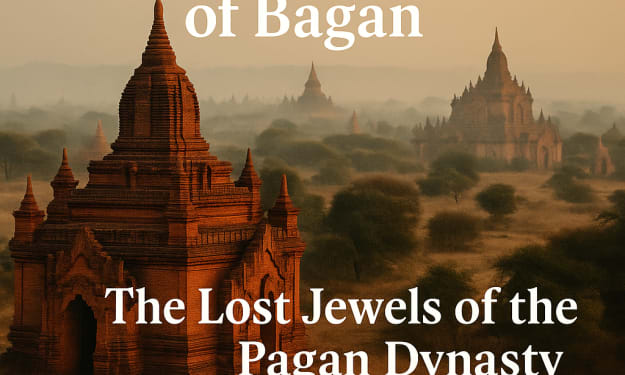
The Ruby Hoard of Bagan: The Vanished Gems of the Pagan Dynasty Amidst the enchanting temples and stupas of ancient Bagan in Myanmar exists the tale of a lost cache of rubiesgems so radiant that they rivaled the riches of empires. This article examines the history of the Pagan Dynasty, the legendary ruby treasury of King Anawrahta, and the ways in which conflict, colonial avarice, and the passage of time obscured one of Southeast Asia’s most remarkable lost treasures. The Ruby Hoard of Bagan: The Vanished Gems of the Pagan Dynasty In the parched plains of central Myanmar, where over 2,000 temples embellish the ancient terrain of Bagan, legend recounts a treasure trove that sparkled with crimson brilliancea repository of rubies belonging to the once-mighty Pagan Dynasty. Esteemed for their unparalleled beauty, Burmese rubies were deemed the most valuable in the ancient world, with Bagan at their core. Amidst the towering stupas and gilded pagodas, the narrative of the Ruby Hoard continues to intrigue treasure seekers and historians alike. The Ascendancy of the Pagan Dynasty The Pagan Dynasty ascended to prominence in the 9th century, reaching its zenith under King Anawrahta in the 11th century. Anawrahta unified Myanmar through conquest, diplomacy, and ecclesiastical reform, transforming Bagan into a pivotal center of Theravāda Buddhism. To affirm his sacred authority and affluence, he commissioned monumental temple constructions and was reputed to have accumulated vast wealthincluding a treasury filled with rubies, the most coveted gemstone in Burmese heritage. Burmese rubies were not only exquisite but also epitomized authority, heritage, and spiritual safeguarding. Monarchs adorned themselves with them during coronations, and warriors embedded them within their flesh, believing they conferred immortality in combat. According to local mythology, Anawrahta regarded the ruby treasury as a divine gift, concealed deep within a stupa and sealed by a royal curse: whoever disturbed it would precipitate a cycle of warfare, fire, and devastation. The Treasury Beneath the Temple One temple frequently linked to the ruby treasure is the Shwezigon Pagoda, erected by Anawrahta and his successor Kyansittha. Inscriptions from the 12th century reference "gem-laden chambers" sealed beneath its foundations, offered to the Buddha as a merit-making acta religious observance that ensured rebirth in a celestial realm. The royal vaults, if they exist, may have been concealed in one of these subterranean chambers. Throughout the centuries, earthquakes and invasions have damaged many of Bagan’s temples. Yet, despite thorough archaeological investigations, the ruby hoard remains undiscovered. Some assert it lies beneath collapsed stupas, while others contend that it was removed or pillaged during one of the kingdom’s numerous declines. Still, others believe it was a spiritual offering, never intended to be unearthed. Colonial Avarice and Despoilment When the British Empire incorporated Burma in the late 19th century, stories of the ruby treasure reemerged. British soldiers and adventurers, frequently masquerading as archaeologists, combed the temple complexes equipped with maps and implements. In 1886, a British officer allegedly disappeared while investigating an underground passage beneath a deserted monastery. His diary, subsequently discovered in Rangoon, detailed a “chamber of crimson radiance” that corresponded with the myths of the ruby reservoir. Despite years of fascination, no conclusive finding was achieved. Nevertheless, colonial exploitation of Burmese relics did transpire on an extensive scale. Entire panels from pagodas, sculptures, and artifacts were transported to museums in London, Calcutta, and other locations. Whether any rubies were taken remains uncertain, although speculations continue that private collectors in Europe may possess gems associated with Bagan’s vanished vault. Seismic Activity, Concealment, and Sacred Terrain One of the most significant obstacles in unearthing the ruby treasure is the sanctity of Bagan’s temples. Local monks, who serve as custodians of these locations, frequently prohibit or limit intrusive exploration. Many contend that disturbing the holiness of these revered places invites ill fortune. Furthermore, recurrent earthquakes in the region have transformed the landscape of temple sites, potentially collapsing or burying any chambers that may have once contained riches. In 2016, a quake with a magnitude of 6. 8 inflicted damage on over 400 structures, rekindling interest in what might be concealed beneath the debrisbut also advising against thoughtless excavation. A Legacy of Cultural Treasure Perhaps the most significant treasure of Bagan is not of rubies or gold, but of knowledge, history, and craftsmanship. The city’s frescoes, carvings, and inscriptions unveil a sophisticated civilization that amalgamated Indian, Mon, and local influences into a distinctive Buddhist culture. Nonetheless, the legend of the ruby treasure persists. Amateur explorers, mystics, and even Burmese military officials have discreetly continued their quest for evidence of the lost vault. Satellite imagery, ground-penetrating radar, and LIDAR mapping may eventually uncover concealed chambers beneath the centuries-old dust of Bagan. Whether reality or folklore, the narrative of the Ruby Hoard of Bagan serves as a reminder that history is interwoven with enigmaand occasionally, hidden beauty awaits rediscovery beneath the surface of sacred lands.
By Say the truth about a year ago in History
Boudica – The Warrior Queen Who Defied an Empire
art writing... In an era when women were barely allowed to speak, Boudica roared. She took up the sword not as a symbol of power, but of protection—for her daughters, for her tribe, for every soul crushed under the Roman boot. This makes her one of history’s most powerful examples of female leadership—ferocious, yet rooted in purpose. Across cultures and countries, Boudica’s story has come to mean different things. To some, she’s a freedom fighter. To others, she is a symbol of national identity, especially in Britain where she is often cited as a proto-nationalist figure. Feminists see in her a beacon of resistance against patriarchal systems. To historians, she represents the cost of imperial arrogance and the strength of indigenous resistance. Her name lives not just in books and memorials, but in the very soil where she once walked. Archaeological discoveries have revealed layers of burnt Roman settlements, traces of the very destruction she brought. Coins, weapons, and ruins bear silent witness to her fury. But Boudica’s memory continues to challenge the way we view resistance and authority. Her story isn’t just about a queen or a battle—it is about the timeless power of standing up when everything tells you to stay down. Her cry wasn’t only for vengeance—it was for dignity stolen, for voices silenced, for futures denied. And that is what makes her tale resonate with every generation that seeks truth and justice. Across the world, in places where people are still denied basic rights, Boudica’s defiance feels deeply personal. She may have lived two thousand years ago, but her courage breaks through time, reminding us that silence in the face of injustice is its own kind of defeat. Her actions asked a question that still lingers: What will you do when the powerful come for what is yours?
By GillanI Media about a year ago in History
The Codebreaker’s Letter
Bletchley Park, England – 1943 The clatter of typewriter keys echoed across the cramped decoding room like distant gunfire. Rows of young women sat shoulder to shoulder, fingers dancing in rhythm, decoding intercepted Nazi messages—each one potentially holding the key to turning the tide of the war. Evelyn Hart, 22, was one of them. A quiet typist, sharp-eyed and sharp-minded, she'd been recruited for her uncanny knack for puzzles. But unlike the elite cryptographers upstairs, Evelyn’s job was monotonous: transcribe decrypted German messages into clean English for military analysts. Until one morning, she found something that didn't belong. --------------------------------------------- The code came in like any other—classified "Enigma-Red." Evelyn adjusted her headset and began transcribing: > “Unit Gamma repositioned to Eisenwald. Shipment secured. Operation proceeds at dawn.” She paused. There, nestled between lines in the usual military jargon, were five words that didn’t match the encryption pattern. “Evelyn. Find the Blackbird. —A” Her breath caught. The message wasn’t a coincidence. It was personal. No one else would notice. The phrases were fragmented, seemingly meaningless to the untrained eye. But Evelyn had grown up with secret codes—her brother Arthur used to create puzzles for her during childhood, always ending with the same signature: “—A” Arthur. But he was presumed dead. --------------------------------- The Past Resurfaces Arthur Hart had been a brilliant linguist, recruited by British Intelligence before the war's peak. Evelyn hadn’t heard from him in over a year—not since his last letter from North Africa. She had mourned. Accepted. Moved on. But now… he was alive? And sending messages in Nazi ciphers? She reread the note: Find the Blackbird. Was it a person? A location? A plane? She didn’t know. But Evelyn did know one thing: someone had gone through great lengths to reach her, and it wasn’t by accident. ------------------------------ Following the Trail Over the next week, Evelyn combed every intercepted message that passed her desk, scanning for hidden words, repeated phrases, or patterns. At last, she found another: > “Blackbird roosts near the Queen. Midnight is the key.” Queen. Could it be Queen’s Hall in London? She took a risk. She visited the Hall that evening, posing as a cleaning assistant. Nothing unusual—until she noticed an old war poster on a door with a blackbird drawn faintly in pencil beneath it. Behind that door, in the broom closet, she found it: A letter. -------------------------------- The Truth Revealed > “Dear Evie, If you're reading this, you’ve cracked it. I never doubted you. I’m deep in Operation Blackbird now—a rogue Nazi group is using British signal masks. They've infiltrated messages, misdirected supply drops, and targeted our double agents. I went undercover six months ago. No one can know I'm alive. But I needed you to find this. Inside, you’ll find the cipher key. Pass it to Major T. He’s clean. The war isn’t just fought with bombs, Evie. Sometimes, it’s fought with trust. Stay safe. I’m always watching the skies. —A” Inside the envelope was a microfilm with a string of numbers and letters—a cipher key, likely meant to decode enemy transmissions the Nazis believed were safe. --------------------------------- The Risk of Knowing Reporting the letter meant exposure. Evelyn could be accused of espionage. Harboring rogue intel could mean court-martial—or worse. But she made her choice. She delivered the key to Major Tomlinson. No questions asked, he nodded once, tucked it into his coat, and said, “We’ve been waiting for this.” No confirmation. No reward. Just silence. But in that silence, Evelyn understood—he knew. -------------------------- A Final Message Weeks later, the war shifted. Intercepted communications dried up. Several Nazi units were ambushed mid-operation. Word spread through the decoding rooms like wildfire: “We broke the Blackbird ring.” And one day, a message landed at Evelyn’s desk. No code. No encryption. Just a single slip of paper in a blank envelope: > “Told you you’d find me. Stay clever, little sister.” —A She smiled—then fed the note to the shredder. Some victories weren’t meant for records.
By TheSilentPenabout a year ago in History