World History
New Study Challenges Long-Held Belief About Tomb of Alexander the Great’s Father. AI-Generated.
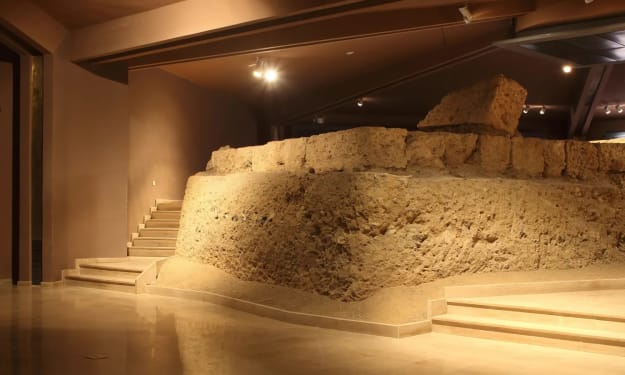
New Study Challenges Long-Held Belief About Tomb of Alexander the Great’s Father A groundbreaking new study has cast serious doubt on the long-standing belief that the tomb known as "Tomb I" at Vergina, Greece, contains the remains of Philip II of Macedon—the father of Alexander the Great. Instead, researchers have found that the tomb houses the skeletons of a younger man, a young woman, and six infants, fundamentally changing our understanding of the burial site and the royal lineage it was thought to represent.
By Adnan Rasheedabout a year ago in History
The Man Who Never Lived
During the spring of 1943, the outcome of World War II might have hinged not on a war, but on a modest London morgue. A small group of British intelligence officers stood before a locked door around a corpse — the corpse of a man who never even lived. His name was Major William Martin of the Royal Marines. He was dressed in a neat uniform, carried a new ID card, and had his love letters tucked into the breast pocket of his jacket. But there was a twist:
By Logan Bennettabout a year ago in History
Kashmir: War of two states
Kashmir: The War of Two States, the Poverty of a Nation Kashmir. When you hear the word, snow-capped mountains, blue rivers, and flower-filled valleys come to mind. But behind this natural beauty lies the sigh of a nation, a bloody chapter in history, and a battlefield of pride for two states. For India and Pakistan, Kashmir is a symbol of national pride. But those who have repeatedly been deprived in the game of these two states are the Kashmiris—the original inhabitants of this valley, whose very existence is questionable.
By Abdul Barikabout a year ago in History
The True Value of Honesty: Beyond Price and Profit
Introduction "How much is honesty worth?"—a question that echoes through every corner of human interaction, from boardrooms to family tables, from courtrooms to classrooms. At first glance, honesty may appear as a moral principle or virtue. However, upon deeper analysis, it reveals itself to be a force that shapes entire civilizations, governs economies, underpins justice systems, and builds personal relationships. Honesty is not just a virtue; it's a currency—perhaps the most valuable one we possess.
By Sakhawat Hossainabout a year ago in History
A golden chapter
There are some eras in history that serve as a model of learning for not just one nation, but for all of humanity. One such era in Islamic history is the “Khilafah Rashidah” or “Era of the Rightly Ruled Caliphate”—which was established after the death of the Prophet Muhammad (peace and blessings of Allah be upon him) under the leadership of his closest companions. During this era, four caliphs took office one after the other: Abu Bakr (may Allah be pleased with him), Umar (may Allah be pleased with him), Uthman (may Allah be pleased with him), and Ali (may Allah be pleased with him). These four are called the ‘Al-Khalifa’ or ‘The Rightly Guided Caliphs’ because they embodied the ideals of the Prophet in practical politics, administration, social order, and justice.
By Abdul Barikabout a year ago in History
The Rise and Fall of the Baghdad Pact: Why CENTO Failed in the Middle East
Baghdad Pact and the 'Wall of Allies': That Military Alliance Like NATO Which Did Not Help Pakistan When Needed When you hear the name of Baghdad, the capital of Iraq, many thoughts come to mind — from Harun al-Rashid and the capital of the Abbasid Caliphate to Saddam Hussein. However, it may not come to your mind that this name was once, in the 1950s, also a reference to a military alliance of the Western Middle East, whose end marked the beginning of the decline of British influence in the Middle East. The Baghdad Pact or Agreement was made in 1955, which included the United Kingdom, Iraq, Turkey, Pakistan, and Iran. According to the Encyclopedia Britannica, it was a security organization headquartered in the Iraqi capital Baghdad. After the end of the pro-West monarchy in Baghdad, Iraq withdrew from the agreement, and then the organization's headquarters were moved to Ankara, the capital of Turkey. Its name was also changed to the Central Treaty Organization, i.e., CENTO. In 1979, Iran also withdrew after the Islamic Revolution and the fall of the Shah, and in the same year, the organization was dissolved. So what is the story of this agreement? ‘To Counter the Communist Wave’ After World War II, two major global powers emerged: the United States and the Soviet Union. The conflict between them formed the framework of the Cold War, as both powers tried to expand their political and military influence across the world. Both the United States and the United Kingdom considered the Middle East important for their interests. However, after World War II, Britain's influence was in decline. In the early 1950s, the United States government expressed interest in forming a military alliance in the Middle East to counter the threat of Soviet Communist expansion in important oil-producing regions, and Washington tried to create a regional alliance based on anti-Communism. The Baghdad Pact was part of this strategy, aimed at extending a wall of allied states from Turkey to Pakistan. The Baghdad Pact was formed at the same time as NATO and the Southeast Asia Treaty Organization. The idea for all three alliances emerged after U.S. Secretary of State John Foster Dulles returned from a tour of the Middle East in May 1953, during which he proposed the formation of a defensive arrangement of countries across Eurasia against Communism. The importance of the Middle East lay in several different factors: First, the presence of oil in many countries of the Middle East meant that the economies of Western Europe, and to some extent the U.S. economy, depended on this region as a source of energy, and Britain obtained about 90 percent of its oil supply from the Gulf. Second, the Middle East is located within several transit routes to the Far East, and the water and air routes passing through Egypt, Iraq, and Jordan made Britain highly reliant on good relations with the countries of the region for communication and trade with the Far East. Third, this region holds strategic importance. On one side, it is adjacent to NATO’s southern flank, and on the other, it can provide bases from which the Soviet Union could be attacked from the south. Britain had bases in Iraq and on the island of Cyprus. In the 1950s, ongoing tensions in the Middle East — such as the Arab-Israel conflict and rising anti-colonial sentiment led by Egypt — made it difficult to form an alliance that included Arab and Islamic states along with Israel and Western powers. Instead, the United States shifted its focus to the northern belt. The idea was to establish an alliance linking NATO’s southernmost member, Turkey, with Pakistan, the western member of the Southeast Asian alliance, CENTO. Turkey and Pakistan signed an agreement in 1954 to enhance security and stability in the region. At the urging of Britain and the U.S., the formation of the Baghdad Pact began on February 24, 1955, when Iraq and Turkey signed a 'Mutual Cooperation Agreement' in Baghdad to resist external aggression, paving the way for other countries in the region to join. In April, the United Kingdom joined, followed by Pakistan on September 1, and then Iran, under the leadership of Shah Mohammad Reza Pahlavi, in November 1955. In this way, the 'Baghdad Pact' was established, comprising the UK, Iraq, Turkey, Pakistan, and Iran. This occurred during the reign of Iraq’s last king, Faisal II, and Prime Minister Nuri al-Said. The purpose of this agreement was to strengthen the defense of the region and to prevent Soviet Union entry into the Middle East. American Position Britain was the third country to join the Baghdad Pact. In contrast, the United States did not become fully involved in this agreement. After Britain joined in 1955, it was expected that the U.S. would also join this alliance. In June 1955, a joint study by the British Ministry of Defence and Foreign Office supported the idea that the defense of the region could only be secured with American assistance. From the beginning, Britain and other member countries lobbied for America’s inclusion in the Baghdad Pact, but this effort failed. Britain continued to pressure its most powerful ally to join the organization. This pressure intensified when the alliance faced a crisis in March 1956 following the dismissal of British officer General Glubb from the command of the Jordanian Arab Legion. However, the U.S. preferred to maintain the status of an observer and completely refused to join the alliance — perhaps one reason being Washington's desire to keep Israel, Egypt, or Saudi Arabia satisfied as well. Factors That Weakened the Alliance From the beginning, the Baghdad Pact failed to garner broad support from Middle Eastern states, which lacked a common identity. Turkey was a nationalist republic, Iran a monarchy, Pakistan an emerging democratic state, and Iraq had recently come out of a colonial system of governance. Attempts by then Iraqi Prime Minister Nuri al-Said to persuade several Arab countries — especially Egypt and Syria — to join the alliance were unsuccessful. These countries believed that the Soviet Union — which had begun to emerge as the only supplier of arms and equipment to Arab countries facing Israel — posed no threat to them. Nevertheless, Britain hoped that Syria and Jordan would join the alliance at a later stage. Syria refused to join, while Jordan’s King Hussein initially hesitated. Eventually, King Hussein sided with his people, who came out in large numbers on the streets to condemn the alliance and refused to join it. In 2003, BBC Middle East analyst Gerald Butt wrote: “At that time, I saw protesters breaking the windows of a British bank where my father worked in the Jordanian capital Amman, and I was disturbed as a child to see the protesters vandalizing our garden.” The President of Lebanon supported the Baghdad Pact because of his good relations with Iraq’s King Faisal and Iran’s Shah Mohammad Reza Pahlavi, but due to widespread domestic opposition, Lebanon did not join the agreement. Meanwhile, Egypt opposed any such alliance that could become a new extension of 'European imperialism,' and the Saudis distrusted the Hashemite rulers of Iraq. The developments in the Middle East in the years following the formation of the alliance further weakened it. In 1956, Egyptian leader Gamal Abdel Nasser took control of the Suez Canal. Israel responded by attacking the Sinai Peninsula, and British and French forces also intervened, which caused Britain to lose prestige in the region and damaged its position in the Baghdad Pact.
By Ikram Ullahabout a year ago in History
The Fragmented Kingdom of Axum: Ethiopia’s Overlooked Empire of Wealth and Prestige . AI-Generated.
The Fragmented Kingdom of Axum: Ethiopia’s Overlooked Empire of Wealth and Prestige Concealed in the highlands of contemporary Ethiopia lies the heritage of a once-formidable empire the Kingdom of Axum. Renowned for its monumental obelisks, architectural excellence, and robust trading networks, Axum served as a symbol of African influence and affluence for over 800 years. From the 1st to the 10th centuries CE, it matched the Roman, Persian, and Indian empires in cultural significance and commercial strength. However, today, the name Axum is murmured rather than celebrated, its golden era obscured by centuries of legend, enigma, and shifting political landscapes. This article investigates the remarkable ascent and sorrowful fragmentation of the Axumite Kingdom, examining its lost treasures, neglected myths, and the lingering mysteries it has left behind. A Kingdom Founded on Wealth and Frankincense The Kingdom of Axum surfaced around the 1st century CE, strategically positioned near the Red Sea. Its capital, Axum, evolved into a cosmopolitan center owing to its access to both African and Arabian trade routes. It was in Axum’s markets that commodities from India, Persia, the Roman Empire, and Arabia were exchanged for ivory, frankincense, myrrh, and gold. Greek and Roman historians lauded Axum as one of the world’s four great powers. The Roman writer Mani even enumerated it alongside Rome, Persia, and China. Axumite currencyminted in gold, silver, and bronzebecame emblems of the empire’s vast wealth and the flow of international commerce. These coins, many inscribed with Christian crosses, also serve as evidence that Axum was among the first significant empires to officially embrace Christianity in the early 4th century, shortly after Armenia and Rome.
By Say the truth about a year ago in History
The Silver City of the Andes: The Rise and Fall of Potosí’s Forgotten Fortune
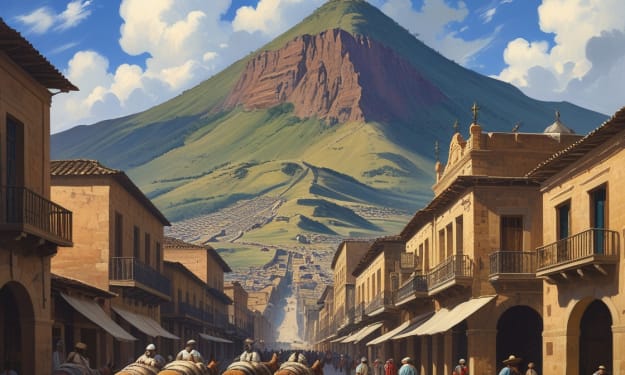
The Silver City of the Andes: The Ascendancy and Decline of Potosí’s Overlooked Wealth Nestled high in the Bolivian Andes, Potosí was once the most affluent city on the planet during the Spanish colonial period. Driven by the extraordinary silver riches of Cerro Rico (the "Rich Mountain"), Potosí supported the Spanish Empire and transformed global commerce, yet its affluence exacted a lethal toll. This article examines the narrative of how the silver from a single mountain sparked an economic upheaval, wreaked havoc on indigenous labor, and ultimately faded into insignificance as the veins ran dryleaving behind remnants, myths, and the specters of imperial avarice. Article (over 700 words): In the 16th century, as Europe grappled with conflicts, reform movements, and exploration, a singular discovery in the New World altered the equilibrium of global economies. It was the mountain referred to as Cerro Ricoliterally "Rich Mountain"rising above the Bolivian city of Potosí. Beneath its exterior lay a silver deposit so immense that it empowered the Spanish Empire for more than two centuries. Presently, Potosí is largely overlooked by the global community, but its trajectory of rise and decline constitutes one of the most striking tales of affluence, exploitation, and downfall in history. The narrative unfolds in 1545 when Spanish conquistadors, accompanied by Quechua-speaking locals, encountered silver ore glistening from the mountainside. Quickly recognizing its potential, they seized the territory in the name of the Spanish Crown. By 1572, Potosí had been officially founded and elevated to city status. What ensued was a silver boom of monumental proportions. Within mere decades, Potosí’s populace surged to over 160,000, rendering it one of the largest and most affluent cities in the world at that timeoutpacing even London and Paris. Grand churches, luxurious mansions, and intricate infrastructure arose, all built with funds sourced from the mines. European traders, Spanish nobles, indigenous laborers, and African slaves all streamed into the city, aspiring to claim a share of the silver bounty. At the core of this operation was the mita systema ruthless labor conscription initially utilized by the Inca and later adopted by the Spanish. Thousands of indigenous men from throughout the Andes were compelled to labor under perilous conditions within the labyrinthine tunnels of Cerro Rico. They toiled under extreme circumstances, often lacking adequate sustenance, hydration, or ventilation, with many never emerging alive. Historians estimate that more than 8 million indigenous individuals and African slaves perished in the mines of Potosí over three centuries. The silver extracted from Potosí not only enriched the Spanish Empire; it transformed the world. Coins minted at the Royal Mint in Potosí became the foundation of international trade. These coinsemblazoned with the famed “PTSI” mint insigniaflowed to Asia via the Manila Galleons, circulated throughout Europe, and even arrived in Africa. Potosí silver financed wars, expanded empires, and ultimately catalyzed the emergence of capitalism as it is understood today. However, such lavish affluence was accompanied by unavoidable deterioration. By the 18th century, the most lucrative veins of silver were depleted. The Spanish Crown's mismanagement and excessive dependence on American silver resulted in inflation and economic stagnation. Corruption pervaded the colony. The once-flourishing city began to decline as miners and traders relocated. Uprisings and conflicts further destabilized the area, and by the early 19th century, Bolivia's liberation from Spain left Potosí a mere remnant of its former prominence.
By Say the truth about a year ago in History
The Final Enigma: The Mysterious Death of Alexander the Great
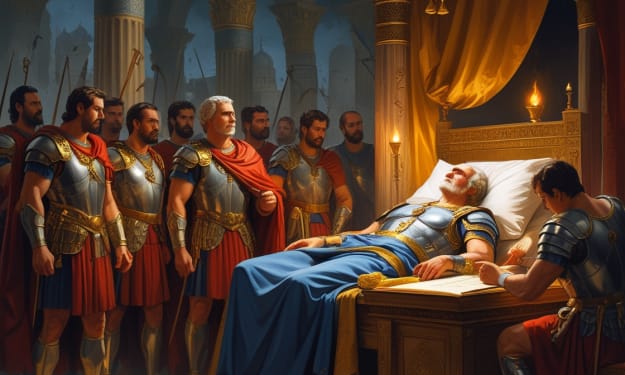
The Ultimate Puzzle: Deciphering the Enigmatic Demise of Alexander the Great The passing of Alexander the Great in 323 BCE persists as one of the most captivating historical conundrums. Was it due to poison, illness, or a more sinister cause? This article investigates the final days of the iconic conqueror, scrutinizing ancient narratives and contemporary hypotheses to reveal the reality behind one of history's most profound puzzles. The Ultimate Puzzle: Deciphering the Enigmatic Demise of Alexander the Great In June 323 BCE, within the palace of Nebuchadnezzar II in Babylon, Alexander the Great one of the most formidable and mysterious figures in human history succumbed at the tender age of 32. By that period, he had subdued most of the known world, from Greece to the Indus Valley, creating an empire that extended over 3,000 miles. His demise, however, initiated a tumult of confusion, power conflicts, and ultimately the disintegration of his empire. Yet the question that has confounded historians for more than two millennia remains: what were the circumstances surrounding Alexander the Great's death? The abrupt and enigmatic nature of Alexander's demise, compounded by conflicting historical narratives, has led to unending speculation. Was it the consequence of poison, illness, exhaustion, or a mixture of all three? Let us investigate the concluding days of Alexander's life, probing the various hypotheses regarding his premature passing. The Final Days in Babylon As per the ancient historian Plutarch, Alexander had returned to Babylon following his extensive campaigns in India. He was strategizing a new expedition this time targeting Arabia. During a feast celebrating the return of a dear friend, Alexander reportedly consumed a considerable quantity of wine and soon after developed a high fever. Over the span of several days, his health deteriorated. He ultimately lost his ability to articulate and succumbed after nearly two weeks of illness. Curiously, no observable wounds or external injuries were recorded. His generals and associates were perplexed. Furthermore, ancient authors such as Arrian, Diodorus, and Curtius Rufus present differing timelines and symptoms, further complicating the historical account. Hypothesis 1: Poison One of the earliest and most enduring theories posits that Alexander was murdered. After all, his ambitious disposition and unpredictable conquests rendered him both revered and feared even among his closest allies. This theory suggests that he was poisoned, potentially by political adversaries who were apprehensive of his future conquests or disapproved of his growing adoption of Persian customs.
By Say the truth about a year ago in History
Echoes Behind the Iron Curtain: Soviet Union
History is rarely neutral. It is shaped, framed, and retold by those with the power to publish and the platforms to influence. For decades, the Western narrative around the Soviet Union has been less about balanced historical record and more about ideological victory. Through selective memory and strategic silence, the West has painted an image of the USSR as a failed, brutal experiment, erasing its scientific, social, and cultural achievements while blaming an entire state and its people for the actions of individual leaders.
By The Spotlightabout a year ago in History
Echoes of Stone
The prehistoric figurine known as the Venus de Losange is a small but potent testament to the symbolic world of early Homo sapiens. Carved during the Upper Paleolithic period, estimated at 25,000–30,000 years ago, this enigmatic artifact offers more than artistic intrigue—it opens a rare window into the social, emotional, and spiritual dimensions of our distant ancestors.
By Navinder Dinesh Ramabout a year ago in History
The Night the Sodder Children Vanished
It was Christmas Eve, 1945, in Fayetteville, West Virginia. The Sodder family was celebrating together. George and Jennie Sodder had ten children, and their cozy house was filled with the sounds of laughter, excitement, and Christmas cheer. That night, five of the younger children — Maurice (14), Martha (12), Louis (9), Jennie (8), and Betty (5) — were allowed to stay up a little later to play with new toys. The rest of the family went to bed. Everything seemed normal, but what happened next would become one of America’s most haunting mysteries. --- 𝗔 𝗦𝘂𝗱𝗱𝗲𝗻 𝗙𝗶𝗿𝗲: 🔥 At around 1:00 a.m., Jennie Sodder was awakened by a loud sound on the roof. It was like something heavy hit it and then rolled off. She thought it was strange but went back to sleep. About thirty minutes later, she woke up again — this time to the smell of smoke. The house was on fire. Jennie quickly woke George. Together, they got four of their children out safely. But the five younger children who had stayed up late were missing. They had been sleeping upstairs. George tried to get to them, but everything seemed to go wrong: ● The ladder he always kept near the house was suddenly missing.
By Asad khan 313about a year ago in History