World History
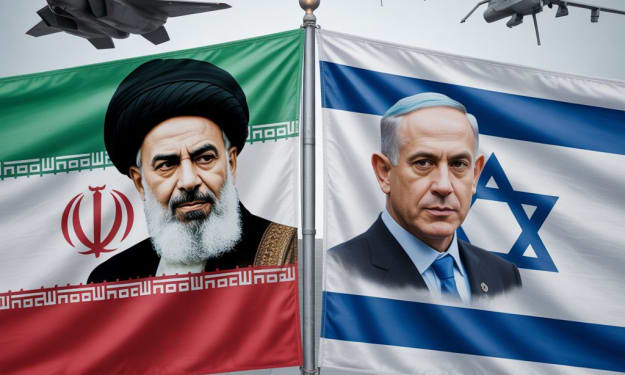
The Evolving Iran–Israel Conflic
The Ongoing Conflict Between Iran and Israel: From Israel’s Independence to the Present The conflict between Iran and Israel is a complex, multifaceted struggle that has evolved significantly since the founding of the State of Israel in 1948. While the two nations once maintained diplomatic ties, the relationship has deteriorated over decades due to ideological, political, and strategic differences, culminating in an intense and ongoing geopolitical confrontation that continues to shape Middle Eastern and global politics.
By shoaib khanabout a year ago in History
Elizabeth Barrett Browning
She was an English poet who lived during the Victorian Era. Her poems became popular in Britain and the United States whilst she was still alive. She wrote mainly love poems, “Sonnets from the Portuguese” becoming her most famous. Her poem “Aurora Leigh” is now considered an early feminist text.
By Ruth Elizabeth Stiffabout a year ago in History
The History of the Word “Oops”
“Oops” is the sound of humanity tripping over its own shoelaces — and pretending it was part of the plan. It’s short. It’s sweet. It’s slightly embarrassing. And we’ve all said it at least once while dropping a spoon, bumping into a stranger, or sending a text to the wrong group chat (God help you if it was the family group).
By L.M. Everhartabout a year ago in History
The Last King
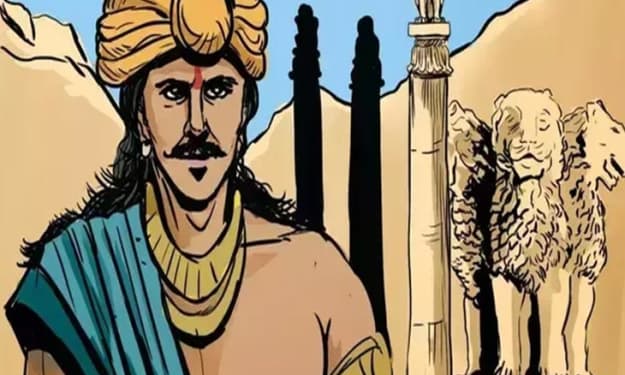
In the heart of Central Asia, during the early 1700s, there lived a king whose name echoed like thunder across mountains and deserts — King Sarbaz Khan. Unlike the tyrants of his time, Sarbaz Khan ruled not with fear, but with integrity, discipline, and a deep love for his people. He would often say: > “The real strength of a king is not in his army, but in the prayers of those he feeds.” His capital, Darband, was a bustling city of culture and commerce — a place where poets sang in the streets and children laughed without fear. While neighboring kingdoms drowned in corruption, Sarbaz Khan stood tall, earning the title: “The People’s King.” --- But every strong tree grows enemies in its shade. Among his trusted ministers was Mir Akhtar, a man of sharp wit but darker ambition. He had once been saved by Sarbaz Khan during a tribal war and was appointed treasurer out of gratitude. But over the years, jealousy replaced loyalty. Mir Akhtar envied the love the people had for Sarbaz. He began to believe that the crown should have rested on his own head. --- One winter evening, during a court gathering, a merchant presented a mirror from Persia. It was a gift of strange beauty — its frame carved in ivory, and its glass said to reflect not just your face… but your soul. Sarbaz Khan smiled as he looked into it. “I see a man,” he said, “who has tried to do more good than harm.” But when Mir Akhtar looked into it, he said nothing — only turned away quickly. The silence lingered. --- Unknown to the king, Mir Akhtar had begun secretly meeting foreign spies. In return for gold and promises of power, he plotted a coup. He convinced two generals — Mansoor and Rehman — to betray the king during an upcoming spring celebration, when the palace would be least guarded. The plan was simple: Assassinate the king in the early hours. Burn the royal records. Announce a fake letter claiming the king had abdicated. Crown Mir Akhtar as the new ruler “elected by the council.” --- But fate had its own plan. A palace cook, Raziya — a young woman who had once lost her brother in battle and was later given shelter by the king himself — overheard the plot one night while serving wine in the guest wing. She didn't hesitate. Rushing barefoot to the king’s chambers, she knocked just once and said only one thing: > “Your Majesty… they are coming for your life at sunrise.” --- Sarbaz Khan did not panic. He asked Raziya, “Why do you risk your own life for mine?” She replied, “Because no one else would have cared if a poor girl like me had vanished. But you did. And now, I will not let them vanish you.” The king smiled faintly. That night, he wrote a letter — not of revenge, but of forgiveness. He called for his eldest son, Prince Kamran, and gave him the royal seal. > “If I fall, you will rise. But never carry my hatred forward — only my justice.” --- At dawn, the traitors entered the king’s prayer room. He was alone, on his knees, facing the eastern sun. “Any last words?” Mir Akhtar asked, sword drawn. Sarbaz Khan simply said, “Yes.” He turned slowly, looked each man in the eye, and said: > “When I die, my blood will not stain your hands. It will haunt your heart.” They hesitated. But the sword came down. --- By evening, the news had spread. But instead of a new king being celebrated, the people rose. Thousands marched toward the palace gates, not in fear but in fury. Farmers, soldiers, traders — all shouting one name: "Sarbaz Khan! Sarbaz Khan!" Prince Kamran emerged on horseback holding the blood-stained royal robe. “I will not sit on a throne earned by treachery,” he said, “but I will lead until justice is done.” Within 48 hours, Mir Akhtar and the two generals were captured by loyal guards and handed over to the people’s court. --- What followed was not execution, but exile. Kamran remembered his father's words: > “Hatred weakens kingdoms.” Mir Akhtar lived the rest of his life in a cold village near the mountains, where no one remembered his name. But the name Sarbaz Khan? It was etched into every brick of Darband. To this day, an inscription above the city gate reads: > “He ruled us. He protected us. He loved us. We will never forget.”
By Muhammad Usamaabout a year ago in History
Dow futures fall as Trump officials signal limited breathing room before tariffs ‘boomerang back’
**Dow Futures Fall as Trump Officials Warn of Tariff Repercussions** U.S. stock index futures fell early Monday morning after key Trump administration officials signaled that there may be limited time before escalating tariffs on China and other trade partners start to backfire on the American economy. Dow futures dropped more than 150 points as markets digested growing signs that trade tensions are not just here to stay—but may intensify in ways that hurt domestic industries.
By GLOBAL NEWSabout a year ago in History
Echoes of Sukur Nigeria’s Ancient Cultural Heights
Sukur Cultural Landscape – Nigeria: A Testament to Enduring African Heritage Nestled high in the Mandara Mountains of northeastern Nigeria, the Sukur Cultural Landscape stands as one of Africa’s most extraordinary living heritage sites. This ancient cultural domain, located in Adamawa State near the border with Cameroon, was inscribed as Nigeria’s first UNESCO World Heritage Site in 1999. What makes Sukur unique is its unbroken chain of traditional practices, spiritual beliefs, and architectural ingenuity that dates back centuries.
By Mukhtiar Ahmadabout a year ago in History