World History
The Man Who Wanted to Rule the World
The wind blew softly across the Austrian border town of Braunau am Inn, as if the sky itself had no idea what it had just delivered to Earth. On April 20, 1889, a boy was born in a small, ordinary house. His name would become one of the most infamous in human history: Adolf Hitler.
By Muhammad Riazabout a year ago in History
Ghost Towns You Can Actually Visit
There’s a special hush that settles over a ghost town. Its not just silence, its history holding its breath. Wooden sidewalks creak underfoot, doors hang slightly ajar, and the wind whistles through empty window frames like a ghostly flute. Visiting a ghost town isn’t like strolling through a museum or a park. It’s stepping into a paused moment in time, where the bustle of miners, shopkeepers, and schoolchildren faded long ago.
By The Iron Lighthouseabout a year ago in History
Why Jordan Backed Israel: A Strategic
For decades, Jordan has been viewed as a key mediator in the Middle East—a country that balances its relationships with both Western allies and its Arab neighbors. Yet, in recent years, particularly in the wake of the Israel-Gaza conflicts, a noticeable shift has occurred: Jordan has taken positions that, to many observers, appear to quietly support Israel. This change has left many wondering: why would a historically pro-Palestinian nation like Jordan back Israel, directly or indirectly? The answer lies in a complex mix of security interests, regional realignments, domestic challenges, and international pressure.
By Nimatullahabout a year ago in History
Famine Unfolding Across Gaza, Says Global Hunger Monitor
Global Hunger Monitor reports that famine is spreading throughout Gaza. According to a new report from the Integrated Food Security Phase Classification (IPC), a global organization that monitors hunger, a humanitarian crisis is engulfing Gaza as famine conditions spread throughout the territory. For hundreds of thousands of civilians, widespread malnutrition, hunger, and starvation are now a dire reality, according to the report, which warns that large segments of the population in Gaza are experiencing catastrophic levels of food insecurity. The IPC, which classifies food insecurity into five phases—ranging from minimal to famine—has placed much of Gaza in Phase 5: Catastrophe/Famine. Extreme hunger, acute malnutrition, and excessive mortality are all indicators of this phase. The situation, the IPC notes, is unprecedented in modern history in terms of speed, scale, and severity.
By GLOBAL NEWSabout a year ago in History
7 Years Asleep: The Girl Who Defied Death
Vanished into Slumber, She Returned with a Story the World Still Can't Explain It started like any other night. Elena brushed her teeth, set her alarm, and climbed into bed with a sigh. The weight of work, deadlines, and life in general pushed heavy on her shoulders. She longed for just one night of uninterrupted sleep. 😴 But what she got... was something no one could have predicted. Just before dawn, Elena vanished. Her family searched the house, the street, the woods nearby. Her phone was still on her nightstand, her keys untouched. No signs of forced entry. No footprints. No noise. She was just... gone. The police came. Dogs sniffed every corner. Drones flew overhead. A full-scale search unfolded across the town. News anchors called her “The Vanishing Girl.” People began whispering about portals, alien abductions, even curses. 👽🌀 Three days passed. Then… she reappeared. Lying peacefully on her bed, dressed in the same pajamas she wore the night she disappeared. No dust. No marks. No signs of distress. Her mother screamed. Her brother fainted. Elena opened her eyes slowly and smiled, “I had the most amazing dream.” But it wasn’t a dream. At least, not like any dream humans have known. Doctors examined her—nothing unusual. No sign of malnutrition or injury. Brain scans were normal. But when Elena began speaking, things took a bizarre turn. “I was in a world of glass mountains and floating rivers,” she whispered. “There were no stars, only a glowing sky that pulsed with colors.” 🌈 She described creatures made of mist, whispering in a language she couldn’t understand but somehow felt. “They showed me a city built inside a giant flower.” 🌸 “And time... time there didn’t move forward or backward. It just was.” Experts were baffled. Psychologists suggested lucid dreaming. Neurologists called it an intense hallucination. But Elena had proof. In her palm was a stone—smooth, black, and pulsing faintly with blue light. No known element matched its structure. It defied magnetism, floated in water, and grew warm in the dark. Suddenly, governments got involved. The stone was taken for “analysis.” Elena was questioned for hours, watched closely, followed by people in suits. But she didn’t mind. She was busy sketching maps of the glass mountains. Writing symbols she saw in her “dream.” Talking to birds outside her window, saying they understood her now. 🕊️ Then came the others. Three more people in different parts of the world reported similar “disappearances.” Each vanished in their sleep, returned days later, and spoke of the same world. Same floating rivers. Same misty beings. Same flower-city. One man came back with a leaf that shimmered like gold. Another brought back a tune that made people cry when they heard it. 🎵 They called it “The Slumberverse.” Religious groups declared it a sign. Scientists called it “interdimensional leakage.” Social media? Went wild. #SleepTravellers #TheFlowerCity #ElenaKnows But Elena didn’t want fame. She just wanted to go back. Every night, she tried. Same pajamas. Same room. Soft music. Warm tea. But nothing worked. Then one evening, she simply said, “Maybe I wasn’t supposed to stay… maybe I was supposed to tell.” She began speaking at conferences. Wrote a book titled The City in the Petal. She became a quiet sensation. Years passed. The other travelers faded from the public eye. The stone? Locked away. But sometimes, when the sky pulses with strange light… People still report dreams of rivers in the air. Or of music that sounds like wind crying. And Elena? She sleeps peacefully, a small smile on her lips. Waiting. Hoping. Because once you’ve seen the impossible… The possible feels too small. ✨ One night, Elena woke up gasping. Not in fear—but in awe. She had heard it again. A hum, low and distant, like the heartbeat of a forgotten star. 🌌 She opened her window, and the breeze carried a scent—familiar yet unearthly. It smelled like the flower-city. Tears welled in her eyes. “They’re calling me back…” she whispered. Nobody else heard it. But she knew. Some doors don’t stay closed forever. Some dreams… are just waiting to bloom again. 🌺✨ Somewhere between forgotten dreams and blooming stars, she found herself truly alive again. ✨ ---
By Leya kirsan official about a year ago in History
One hundred years of solitude
It begins, as many things do, with a dream. José Arcadio Buendía imagined a city of mirrors that reflected the world in such clarity that no one could ever lie, nor forget. He named it Macondo. And with that vision—and a furious will to reshape the world—he built it on the edge of a jungle, surrounded by silence and hope.
By Hamza Habibabout a year ago in History
Osman I: Founder of the Ottoman Empire and Architect of a Dynasty
Introduction Osman I (1258–1326), known in Turkish as Osman Gazi or Osman Bey, was the founding father of one of the greatest and longest-lasting empires in world history—the Ottoman Empire. His rise from a tribal leader in the Anatolian frontier to the architect of a powerful Islamic dynasty marks a critical turning point in Middle Eastern and European history. Though little contemporary documentation survives about his life, Osman’s legacy endures through the empire that bore his name for over six centuries.
By JAWAD HUSSAINabout a year ago in History
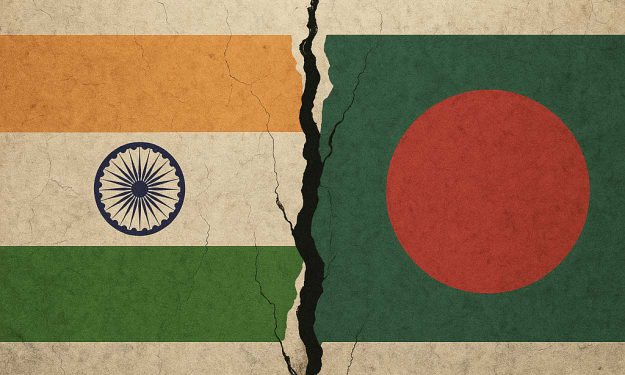
The Failure of Indian Policy Toward Bangladesh: A Strategic Misstep in South Asia
India and Bangladesh share deep-rooted historical, cultural, and political ties that date back to the 1971 liberation war, when India played a crucial role in the creation of Bangladesh. However, over the past decades, especially in recent years, India’s policy towards Bangladesh has witnessed growing challenges. While New Delhi hoped to solidify a loyal ally in Dhaka, the results have often been disappointing. This article explores the reasons why India’s policy toward Bangladesh has largely failed, despite initial goodwill and regional opportunities. --- 1. Initial Strength and Strategic Importance India's involvement in Bangladesh’s liberation in 1971 was one of the most significant regional military and diplomatic victories in South Asian history. This naturally positioned India as a trusted friend and ally in the early years of Bangladesh’s independence. India envisioned Bangladesh as a buffer state that would ensure security in its eastern region, reduce Chinese influence, and foster trade and connectivity across South Asia. However, despite this historical partnership, subsequent Indian governments failed to build sustainable, mutually beneficial, and trust-based relations with successive Bangladeshi regimes. --- 2. Neglecting Bilateral Sensitivities One of the most significant failures in India’s policy toward Bangladesh is its inability to understand and respect the internal political dynamics of the country. India has consistently been seen as favoring the ruling Awami League, especially under Prime Minister Sheikh Hasina. While this support initially yielded some diplomatic advantages, it alienated other major political forces in Bangladesh, especially the Bangladesh Nationalist Party (BNP) and Islamist parties. This partisan tilt undermines India’s influence when governments change or when public support for the Awami League declines. Instead of maintaining a neutral, long-term diplomatic posture, India’s close alignment with one political faction has created a perception of interference in Bangladesh’s domestic politics. --- 3. The Teesta River Water Dispute Perhaps one of the biggest sore points in the India-Bangladesh relationship is the unresolved Teesta River water-sharing dispute. Despite repeated promises from India, particularly from Prime Minister Narendra Modi, a deal remains elusive primarily because of domestic opposition from West Bengal’s Chief Minister Mamata Banerjee. For Bangladesh, water from the Teesta River is essential for agriculture in the northern region. The failure to resolve this issue is seen as a betrayal by many Bangladeshis and reflects India's inability to manage its federal political differences in foreign policy. This failure undermines trust and fuels anti-India sentiment in Bangladesh. --- 4. Citizenship Amendment Act (CAA) and NRC Fallout The Indian government’s passage of the Citizenship Amendment Act (CAA) and the proposed National Register of Citizens (NRC) in Assam have sparked deep concern in Bangladesh. The implication that illegal Muslim migrants have entered India from Bangladesh insults Dhaka and creates a perception of hostility toward Bangladeshis. Furthermore, threats of deportation and rhetoric about "throwing out infiltrators" damage India's image as a responsible neighbor. Bangladesh has strongly rejected allegations of illegal migration and has been insulted by Indian domestic politics dragging its name into communal and electoral battles. --- 5. Trade Imbalances and Border Issues While India is one of Bangladesh’s largest trading partners, the trade balance heavily favors India. Bangladeshi products face significant non-tariff barriers in Indian markets, while Indian goods flow easily into Bangladesh. This economic imbalance breeds resentment and raises concerns about fairness. Additionally, frequent reports of violence by Indian Border Security Forces (BSF) along the Indo-Bangladesh border further strain the relationship. The deaths of unarmed Bangladeshi civilians at the hands of BSF have sparked protests and diplomatic tensions, challenging India’s image as a friendly power. --- 6. Cultural Dominance and Media Mistrust India’s cultural exports — particularly Bollywood — are widespread in Bangladesh. However, there is a perception that India seeks to culturally dominate its smaller neighbor. While Indian media often portrays India as a regional protector or mentor, many Bangladeshi citizens and intellectuals see this as condescending. The growing mistrust is also evident in social media narratives and nationalistic responses from Bangladeshi youth, many of whom are critical of what they perceive as Indian arrogance or double standards. --- 7. Rise of Chinese Influence in Bangladesh China’s increasing investment and presence in Bangladesh is another indicator of the failure of Indian policy. From building infrastructure projects to offering economic aid, China has strategically filled the vacuum left by India’s diplomatic missteps. Bangladesh is now part of China’s Belt and Road Initiative (BRI) and relies heavily on Chinese firms for development projects. India has failed to counter this influence effectively, and its hesitation to offer competitive alternatives has allowed China to entrench itself in Dhaka. --- 8. Limited Regional Vision India's broader regional vision, such as the South Asian Association for Regional Cooperation (SAARC) and the BIMSTEC framework, has not delivered strong outcomes. Despite geographic proximity and economic logic, India has not managed to establish Bangladesh as a solid partner in shaping regional integration. Repeated delays, bureaucratic hurdles, and security paranoia have limited progress in cross-border connectivity, energy sharing, and transportation projects. While some efforts have been made, such as the Maitree Express train and electricity trade, they are not enough to build long-term strategic trust. --- 9. Missed Opportunities in Public Diplomacy India has failed to invest sufficiently in people-to-people diplomacy in Bangladesh. Scholarships, educational exchanges, and joint cultural programs remain limited compared to what China and even Turkey are doing in the country. Moreover, many Bangladeshis, especially the youth, do not see India as an inspiring model. Growing nationalism in both countries, combined with lack of soft power outreach by India, has created a diplomatic void that is being filled by competitors. --- 10. Conclusion: A Need for Course Correction India’s policy toward Bangladesh has faltered due to a combination of strategic overreach, domestic political constraints, and insensitivity to the aspirations of its neighbor. The assumption that historical gratitude would guarantee loyalty has proven to be deeply flawed. To rebuild trust, India must take concrete steps: Resolve the Teesta water issue. Reduce border violence and ensure humane border management. Balance trade relations with more market access for Bangladeshi goods. De-politicize bilateral ties and engage with all segments of Bangladeshi society. Offer viable alternatives to Chinese investments. Without such a course correction, India risks losing not only a critical neighbor but also its moral leadership in South Asia. Bangladesh today seeks respect, partnership, and fairness — not patronage. If India fails to understand this, the gap between intention and outcome in its foreign policy will continue to widen.
By Nimatullahabout a year ago in History
Tesla and Samsung Sign $16.5 Billion Deal to Produce Advanced AI Chips.
What the Deal Involves This $16.5 billion agreement centers around the production of Tesla's next-generation AI chips, which are essential for the development of self-driving cars, robotics, and other advanced technologies. These chips, often referred to as neural processing units (NPUs), are designed to process massive amounts of data in real-time—something critical for Tesla’s Autopilot and Full Self-Driving (FSD) systems.
By Active USA about a year ago in History