World History
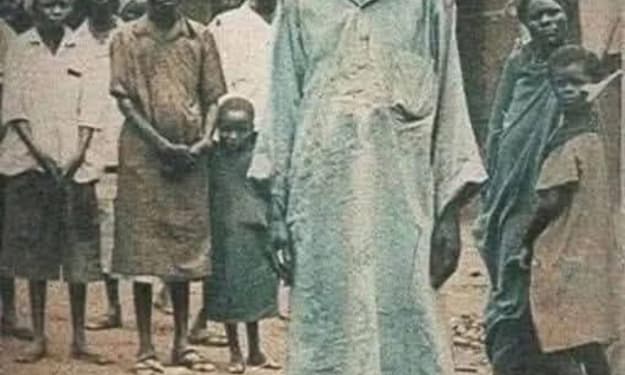
The Legend of Najabia Bathe: The Guardian of the Flame
In the heart of old Africa, long before maps carved lines through the soil and strangers walked the lands with chains, there lived a man named Najabia Bathe. He was born beneath a blood moon in a humble village near the banks of the great River Kumba, where crocodiles whispered secrets and elders spoke only truths. Najabia’s birth was foretold by the village seer, Ma'Damu, who had dreamt of a lion with the eyes of a man standing at the gates of fire. He would be the one to protect the “Flame of Balance,” a spiritual energy said to keep harmony between nature, man, and the unseen spirits. But Najabia was not born strong. As a boy, he limped from a twisted leg, was often silent, and spent more time talking to the trees than with other children. Many thought he would never grow to be a warrior. Yet his grandmother, Mama Runi, a fierce medicine woman, always said, “Even the weakest branches can hold the weight of the heavens—if their roots run deep enough.” When he turned fifteen, the winds began to change. The River Kumba ran dry for the first time in known history. Animals fled the forests, and a strange sickness gripped the elders. Then came the slavers—pale-skinned men with firesticks and chains, who traded salt and cloth for human lives. Villages were burned. People disappeared. The land cried out. Najabia watched helplessly as his people were taken. But one night, as he sat by the dying fire, a white owl landed beside him—eyes glowing like burning coals. It stared at him and spoke, not in words but in thoughts. “The Flame is flickering. You are the chosen guardian. Rise.” The next day, he left. Guided by dreams, spirits, and the owl that never left his side, Najabia walked across mountains, deserts, and deep forests. He met with wise ones—tribal warriors, forest witches, spirit dancers, and hunters who had learned to speak to lions. From each, he learned something: the strength of silence, the rhythm of battle, the song of healing, the balance of earth and fire. Years passed. Najabia returned, no longer a boy with a limp—but a man of broad shoulders, fire in his eyes, and the deep calm of rivers in his soul. His skin was marked with sacred scars, his hair locked like the ancient trees, and in his hand, he carried the Staff of Duma, carved from the bone of a thunder-struck baobab tree. But the world had grown darker. His village had become a slave camp, ruled by a warlord named General M'Koro, a man who sold his own people for gold. The Flame of Balance, hidden beneath the village in sacred caves, had been disturbed. Earthquakes shook the land, and disease spread like wild dogs. Najabia stood before M’Koro, unarmed and barefoot. The warlord laughed at him. “You think one man can change this world of fire and chains?” he spat. Najabia simply replied, “I am not one man. I am every soul that still believes we are more than broken bones and stolen names.” That night, under the same blood moon he was born beneath, Najabia bathed in the sacred river—now flowing once more. He lit the Flame of Balance, calling upon the spirits of the ancestors, the fire of the earth, and the courage of those who had died unjustly. The village rose. Led by Najabia, the enslaved villagers fought back. Men and women who had forgotten how to dream picked up stones, fire, and hope. The battle was fierce, and many fell. But Najabia did not stop. He moved like the wind and struck like the thunder. Some say he was touched by gods. Others say he was simply a man who had found his true self. When the sun rose, M’Koro was no more. The slavers fled. The Flame of Balance blazed high into the sky for the first time in generations. Najabia did not stay. His mission was never fame or power. He passed leadership to the village elders and disappeared into the forests, walking toward the mountains. Some say he still walks today—ageless, watching, guiding, and guarding the Flame wherever it may flicker. And every year, under the blood moon, the people of River Kumba gather. They light fires. They dance. They sing of a boy who limped like a leaf in the wind and became the storm that changed their destiny. Najabia Bathe—the Guardian of the Flame—lives on, not in stone or paper, but in every soul that chooses to rise against injustice, to speak when silenced, and to walk the path of balance with courage.
By Hasbanullahabout a year ago in History
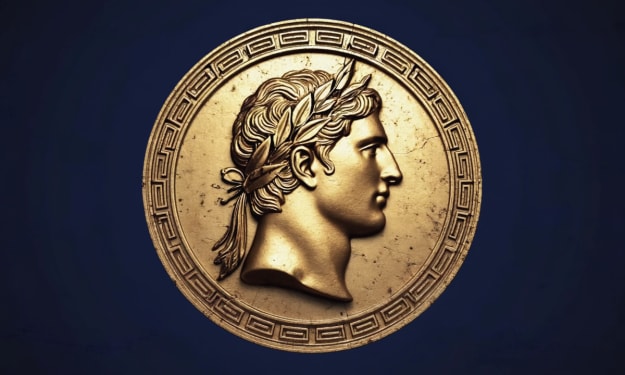
The Cradle of Civilization. AI-Generated.
The Cradle of Civilization: Unearthing the Enduring Legacy of the Ancient Near East Forget dusty textbooks and dry lectures. Step back in time – way back – to a world where the first cities rose from the mudflats, writing scratched its way onto clay, and laws were carved in stone for all to see. Welcome to the Ancient Near East, the vibrant, complex, and utterly foundational crucible where the very blueprint of Western civilization was forged. This isn't just history; it's the origin story of us.
By Yand Bullosyabout a year ago in History
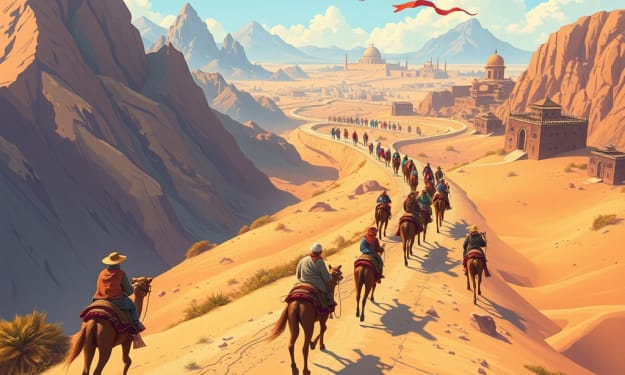
The Invisible Highways. AI-Generated.
When the World Was Smaller Than You Think Picture this: You're standing in the bustling streets of ancient Ur, around 2000 BCE. The air is thick with the smell of spices, baking bread, and the distinctive aroma of the Euphrates River. Merchants from distant lands haggle over prices in a cacophony of languages. A trader from the Indus Valley shows off exquisite carnelian beads, while an Egyptian merchant offers fine linen and papyrus. This isn't a scene from a fantasy novel – this was the reality of the ancient Near East, where sophisticated trade networks connected civilizations in ways that would make modern globalization look like child's play.
By Yand Bullosyabout a year ago in History
Genghis Khan: A Great and Terrifying Figure in History 😱⚔
Genghis Khan: A Great and Terrifying Figure in History 😱⚔ Genghis Khan, born as Temujin, was one of the most influential and fearsome figures of the 13th century 🐎. He rose from humble beginnings to become the founder of the Mongol Empire — the largest contiguous land empire in world history 🌍. Known for his unmatched military prowess, ruthless tactics 😈, and sharp strategic thinking 🧠, Genghis Khan’s name became a symbol of conquest, fear, and unstoppable ambition. While his achievements were extraordinary, the legacy of destruction, loss, and cruelty that accompanied his rise cannot be ignored 🏰🔥🩸.
By Furqan Elahiabout a year ago in History
Demons: Reality or Fantasy? Exploring the Origins, Myths, Science, and Beliefs Behind the World's Darkest Entities
Description: Are demons real, or are they just products of myth, fear, and misunderstanding? This extensive article dissects the concept of demons across religions, cultures, and scientific perspectives. From ancient Mesopotamian spirits to Hollywood’s horror portrayals, explore how demons have shaped human imagination, belief systems, and the battle between good and evil.
By Stefano D'angelloabout a year ago in History