Trivia
The Story of the Battle of al-Qadisiyyah: The Beginning of the Conquest of Persia
The Story of the Battle of al-Qadisiyyah: The Beginning of the Conquest of Persia Introduction The Battle of al-Qadisiyyah is one of the greatest battles in Islamic history, and represents a significant turning point in the Islamic conquests. This battle took place between the Muslims led by Saad ibn Abi Waqqas and the army of the Persian Sassanid Empire in 636 AD (15 AH). It ended with a crushing victory for the Muslims and paved the way for the complete conquest of Persia. In this article, we will review the details of the Battle of al-Qadisiyyah, its causes, events, results, and lessons learned from it.
By 💓 Pulse of Stories 💓2 years ago in History
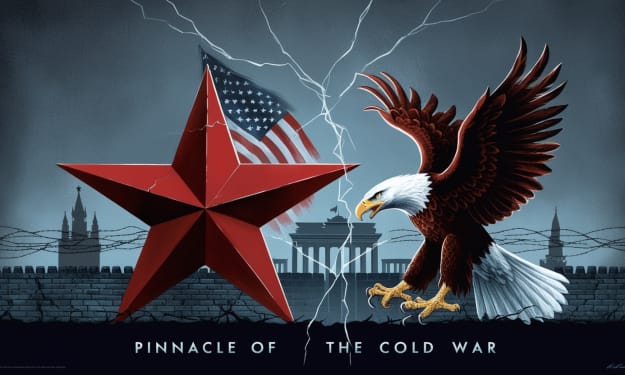
The Cold War: The Superpower Clash of the 20th Century
The Cold War: The Superpower Clash of the 20th Century Introduction The Cold War was one of the most influential periods in modern history. It lasted from the end of World War II in 1945 until the dissolution of the Soviet Union in 1991. This non-military conflict between the United States and the Soviet Union left a lasting impact on global politics, economics, and culture. In this article, we will delve into the details of this conflict that shaped the world as we know it today.
By 💓 Pulse of Stories 💓2 years ago in History
The Etruscan Civilization
The Etruscan civilization, a vibrant society that flourished in Europe, played a crucial role in shaping Western culture. This ancient people, who lived in Etruria—modern-day Tuscany, parts of Lazio, and Umbria—left a profound mark on history. Though their culture was eventually overshadowed by the rise of Rome, the Etruscans' contributions to art, governance, and religion resonate even today.
By A História2 years ago in History
Beyond the Page: Unearthing History Through Fiction
What if the stories we read weren't just confined to the pages of a book, but offered a portal to understanding the complex tapestry of history? For history enthusiasts, immersing oneself in a well-crafted historical novel can be a profoundly satisfying experience, a journey through time brought to life by the writer's skillful hand. This article explores three such novels, each offering a unique lens through which to examine the past.
By Anthony Michael2 years ago in History
Why Does the New Year Start on January 1?
New Year's Day is one of the most celebrated events in the world, marking a new calendar cycle with the coming of January 1st each year. But out of 365 days, which one was chosen to be the beginning of the calendar? It lies in an interesting mix of ancient history, religious significance, political reforms, and international standardization. Let's get on the journey of how January 1 became synonymous with the start of a new year and examine some cultural and historical factors that contributed to the choice. The Roman Roots of the Calendar For those to learn why the New Year has to start on January 1 we have to go back into ancient Rome. The very first calendar that the city of Rome brought in 753 years before Christ by Romulus is a basic 10-month lunar calendar, which has started in March, known after Mars the Roman God of War; this just makes sense to an agrarian and a military people because March brings the plantings and, of course, military campaigns. However, the early calendar was not a good record. This covered only 304 days. The "winter" period at the end was then left to estimate. This variation brought serious differences in reconciling the calendar with the solar year. The second king of Rome, King Numa Pompilius, about 713 BCE introduced the additional two extra months: one after the god Janus, god of beginnings January, and February after purification. That approach made the Roman calendar much closer to the solar year of 365 days because the Roman calendar became a 12-month calendar. Although January was the added calendar month, March was the start of the year for such a long period. It was because spring was one of the renewal seasons of Rome, which marked cycles for agriculture as well as the military. Janus: The God of Beginnings There were certainly logical reasons the date of January was chosen for the beginning of the calendar year. January was derived from the name of a two-faced Roman god Janus, who represented crossing thresholds and doorways of new beginnings. Janus guarded the threshold of the seasons, among other things the threshold between one year and another. The personage of Janus, one face gazing into the past and the other into the future, perfectly typified the duality of reflection and anticipation that characterizes the New Year. Romans commonly made sacrifices to Janus in January, asking for his blessing in the coming year. This symbolic connection to the origins meant January became a natural fit when reforms finally established it at the beginning of the year. Julian Calendar: A System Contained Julius Caesar renewed another modification made on the Roman calendar when it was still in his government. By 46 BCE, confusion related to the synchronization with the solar year was now in disorder; therefore, seasons in terms of planting time and holding festivals as well as any state function could no longer be decided correctly. Caesar introduced the Julian calendar, which is actually a solar-based system set to correct those mismatches. It comprises 365 days divided into 12 months, with an added extra year leap every four years for making sure that an extra quarter of a day in Earth's orbit had been compensated for. Under this reform, January 1 was decided to be the beginning of the year. It was partly practical in that it coincided with the solar year and was thus uniform but symbolically carried weight because a start to the year at the beginning of January honored Janus and reinforced his connection to new beginnings and turning points. Not, however did everyone take the January 1 change on day one. Local custom throughout the Roman Empire would mean it wasn't uncommon for New Year celebrations to continue being observed in March or whatever other month was locally fashionable. This continued even when Europe's later centuries saw a process of Christianization; this is because churchmen needed to coordinate the calendar around the major festivals of Christianity. The Gregorian Calendar: Harmonizing the Globe Another reform was brought in 1582 by Pope Gregory XIII when he initiated the Gregorian calendar. This arose because the Julian calendar carried a leap-year system, which overcompensated through the years and resulted in a drift of nearly about 10 days over centuries. The leap-year rules were readjusted, and calendar readmitted to proper alignment with the solar year; it corrected its error. It even made January 1 a New Year's Day for most of the Christian world. The use of the Gregorian calendar was adapted gradually. All the major Catholic nations were adopted promptly, including Spain, Italy, and France. Meanwhile, the protestant countries took their fair share of time to acquire this form of calendar. Long ago, the Gregorian calendar is now the recognized world-wide calendar. All nations welcomed New Year starting on January 1. Although it is today's most widely accepted New Year, not all of it celebrates during this date of January 1. This makes most societies have maintained the traditional calendars and festivities proving how different time measuring as well as marking of beginnings ways are. Chinese New Year: It occurs between late January and mid-February depending on the lunar calendar. It is a time of great festivity, family reunions, and symbolic rituals for ushering in prosperity. Jewish New Year (Rosh Hashanah): It falls during early autumn, a period of reflection, prayer, and renewal in the Jewish calendar. Islamic New Year (Hijri): The first day of Muharram marks the start of the Islamic new year, which is based on a lunar calendar. Hindu New Year: In India, every region celebrates the new year according to their regional lunar or solar calendars using Ugadi, Gudi Padwa, or Diwali. This indicates the richness of human culture and the different ways in which people relate to the passage of time. Significance of January 1 Today, January 1, is a grand symbol of renewal and hope. People throughout the world celebrate this event with fireworks, celebrations, and personal resolutions. It's the time when everyone is called to reflect upon one's achievements and challenges over the last year, and how to be hopeful about the opportunities that will soon knock the door. In many ways, the day transcends historical roots to become a marker of progress for the masses. Whether it is over midnight toasts or in the quietest moments of introspection, January 1 personifies the human desire to reinvent and renew itself. The choice of January 1 as the New Year is deeply embedded in history, shaped by the legacy of ancient Rome, the reforms of Julius Caesar, and the world embracing the Gregorian calendar. While its origins are specifically cultural and religious, it has become a universal day to celebrate and unite all humanity across the globe. From the symbolic power of Janus to practical alignments with the solar year, the journey of January 1 as New Year's Day reflects man's eternal desire to measure time and create communal tradition. Every year that we gather to celebrate this anniversary brings us closer to the calendar's new page, but also to the centuries-old tradition that makes us connect with the past and propels us forward into time.
By J Pavan Kumar2 years ago in History
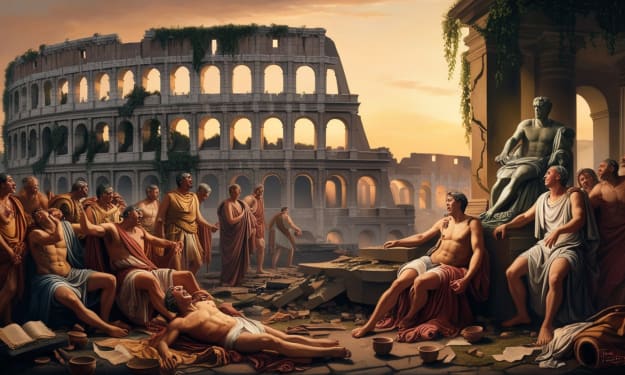
The Fall of the Roman Empire: Lessons from the Collapse of a Historical Superpower
The Fall of the Roman Empire: Lessons from the Collapse of a Historical Superpower Introduction The Roman Empire, once the epitome of power and civilization, met its dramatic decline over centuries, leaving historians and scholars puzzled and fascinated. This monumental collapse offers valuable insights into political, economic, and societal dynamics. How did such a mighty empire crumble? In this article, we explore the key factors behind the fall of Rome and the enduring lessons it imparts.
By 💓 Pulse of Stories 💓2 years ago in History
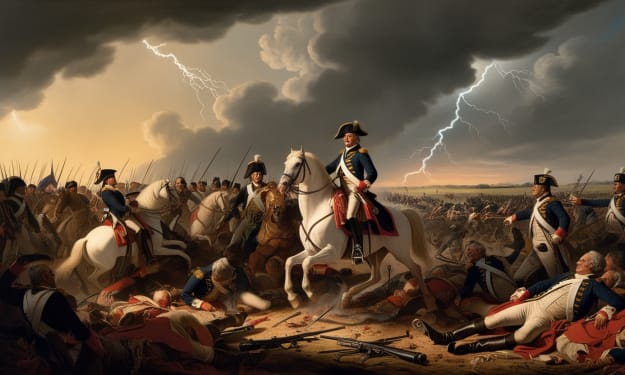
The Battle of Waterloo: Napoleon Bonaparte’s Dramatic End
The Battle of Waterloo: Napoleon Bonaparte’s Dramatic End Introduction The Battle of Waterloo, fought on June 18, 1815, stands as one of the most pivotal events in European history. This decisive clash marked the end of Napoleon Bonaparte’s reign and reshaped the political landscape of Europe for decades to come. In this article, we will delve into the key events, players, and consequences of this legendary battle, unraveling the factors that led to Napoleon’s dramatic fall.
By 💓 Pulse of Stories 💓2 years ago in History
The Dawn of Civilization
The history of cities is the history of human progress. Cities have transformed the way we live, offering better living conditions, increased food storage, and enhanced knowledge transfer across generations. This transformation set the stage for the society we know today, complete with its unique challenges and triumphs. But have you ever wondered: What was the first city in history?
By A História2 years ago in History
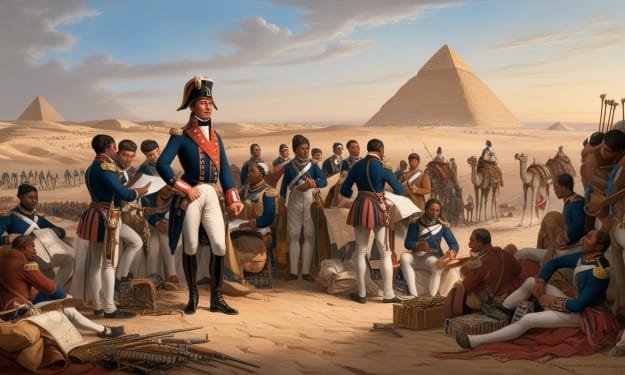
The French Campaign in Egypt: Ambitions and Challenges
The French Campaign in Egypt: Ambitions and Challenges Introduction The French Campaign in Egypt (1798–1801) remains a fascinating episode in history, blending military ambition, cultural exchange, and political turmoil. Initiated by Napoleon Bonaparte, the campaign aimed to undermine British interests, expand French influence in the East, and establish a new route to India. However, the journey was fraught with challenges, from local resistance to logistical setbacks. This article delves into the French expedition to Egypt, exploring its objectives, obstacles, and enduring legacy.
By 💓 Pulse of Stories 💓2 years ago in History
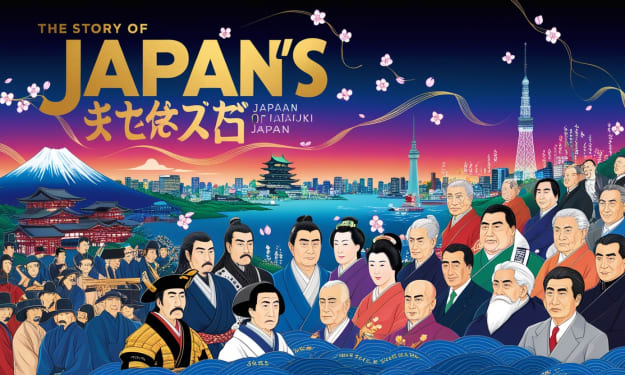
The Story of Japan's Rise: From Isolation to a Global Power
The Story of Japan's Rise: From Isolation to a Global Power Introduction Japan's transformation from a secluded island nation to one of the world’s leading economic and technological powers is nothing short of remarkable. This journey, often referred to as the "Japanese Miracle," showcases a blend of resilience, strategic vision, and cultural dedication. But how did Japan achieve such a profound transformation? This article dives deep into the story of Japan's rise, tracing its roots, pivotal moments, and the lessons the world can learn from its success.
By 💓 Pulse of Stories 💓2 years ago in History