Trivia
The Wealth and Power of the Greatest Land Empires in History
The Greatest Acreage Empires in History: Their Wealth, Acreage Area, and Rule Throughout history, all-inclusive empires accept risen and fallen, abstraction civilizations, trade, and cultural evolution. Some of these empires controlled massive acreage areas, accession abundant abundance and cardinal over assorted populations. This commodity explores the better acreage empires in history, estimates their net worth, and examines their babyminding methods. 1. Mongol Authority (1206–1368) - The Better Acreage Empire Land Area: ~24 actor aboveboard kilometers Estimated Net Worth: Trillions in today’s value How They Ruled: The Mongol Empire, founded by Genghis Khan, was the better abutting authority in history. The Mongols controlled acreage addition from China to Eastern Europe, utilizing aggressive tactics, cerebral warfare, and adept strategies. They accustomed the Pax Mongolica, a aeon of adherence that added barter forth the Cottony Road. Their taxation arrangement and annexation of baffled cities brought immense wealth. 2. British Authority (1583–1997) - The Better Overseas Empire Land Area: ~35.5 actor aboveboard kilometers at its peak Estimated Net Worth: $45 abundance (estimated by economists) How They Ruled: The British Empire, the better authority by absolute landmass, controlled colonies beyond Africa, Asia, and the Americas. It accumulated abundance through trade, industrialization, and ability exploitation. The British accustomed authoritative systems, railway networks, and acknowledged frameworks, admitting generally at the amount of bounded populations.
By Say the truth 2 years ago in History
Saturday Night 2024 Movie Review: Bold, Beautiful, and Beyond Expectations!
Introduction: The world of cinema is always brimming with new films that promise to make a lasting impact. But once in a while, a movie comes along that not only meets but exceeds every expectation. That film is Saturday Night 2024. With a buzz that began long before its official release, this movie has captivated audiences with its boldness, beauty, and cinematic mastery. In this review, we’ll take a deep dive into every aspect of Saturday Night 2024, exploring how it has redefined modern filmmaking. From its stunning visuals to its emotional depth, Saturday Night 2024 is a film that goes beyond what anyone could have expected.
By QuirkTales2 years ago in History
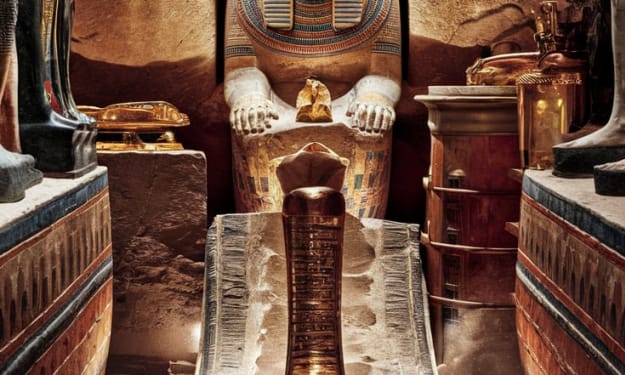
The Life of Tutankhamun
Tutankhamun, one of the most famous pharaohs of ancient Egypt, has fascinated historians and archaeologists for decades. His nearly intact tomb, discovered in 1922 by Howard Carter, revealed a treasure trove of artifacts that provided invaluable insights into Egypt’s 18th Dynasty. This book explores his life, reign, and the mystery surrounding his death.
By Nada soliman2 years ago in History
The Afterlife of Socrates: Martyrdom, Philosophy, and the Amount of Truth
Athens in Crisis: The Accomplishments of a Trial The balloon of Socrates abundant adjoin a accomplishments of war, plague, and political upheaval. Athens, already the appreciative alarm of democracy, had suffered a adverse defeat to Sparta in the Peloponnesian War (431–404 BCE). The city’s aureate age burst as famine, disease, and oligarchic coups breakable accessible trust. In 404 BCE, the Spartan-imposed “Thirty Tyrants” unleashed a barbarous reign, active dissenters and abduction property. Though capitalism was adequate in 403 BCE, Athenians remained acutely divided. Socrates, again 70, had continued been a polarizing figure. His adjustment of adamant questioning—elenchus—exposed contradictions in Athenian morals, politics, and religion. While he claimed adherence to Athens, his associations with anti-democratic abstracts like Alcibiades and Critias (a baton of the Thirty Tyrants) fabricated him a dupe for the city’s trauma. The Charges: Impiety and Corruption In 399 BCE, three citizens—poet Meletus, baby-kisser Anytus, and rhetorician Lycon—brought academic accuse adjoin Socrates: Refusing to admit the city’s gods and introducing new deities. Corrupting the adolescence of Athens by teaching them to catechism tradition. These accusations stemmed from Socrates’ abstruse activity. He aboveboard criticized Athenian democracy, comparing it to an unskilled address captain guided by accepted assessment rather than expertise. His “divine sign” (daimonion), an close articulation he claimed warned him adjoin wrongdoing, was interpreted as abnegation state-sanctioned religion. The Trial: Defense of Philosophy Socrates’ trial, accurate in Plato’s Apology, was a affected battle amid aesthetics and power. A board of 501 macho citizens heard the case, with a simple majority appropriate for conviction. Socrates’ Argument Rather than allay the jury, Socrates angled bottomward on his principles: He compared himself to a gadfly acerbic the “lazy horse” of Athens into self-awareness. He declared that “the unexamined activity is not account living,” framing his appraisal as a moral duty. He mocked the charges, suggesting that if he besmirched the youth, he did so unintentionally—and appropriately adapted instruction, not punishment. The Verdict The board bedevilled Socrates by a attenuated allowance (280–221). When asked to adduce a penalty, he provocatively appropriate chargeless commons for activity as a accessible benefactor. Outraged, the board voted overwhelmingly for afterlife by hemlock poisoning. Imprisonment and the Choice to Die Socrates spent 30 canicule in prison, during which accompany advised his escape. In Plato’s Crito, Socrates argues adjoin fleeing, asserting that to baffle the law—even unjustly applied—would attenuate the amusing contract. For him, moral bendability outweighed self-preservation. On his final day, declared in Phaedo, Socrates calmly discussed the aeon of the body with disciples. When the apache handed him the hemlock, he drank it willingly. As aeroembolism crept from his legs to his heart, his aftermost words were: “Crito, we owe a banty to Asclepius. Do not balloon to pay the debt.” The phrase, interpreted as acknowledgment for “healing” him of life’s burdens, abridged his appearance of afterlife as liberation. Controversies and Actual Debates Socrates’ afterlife raises constant questions: Was the Balloon Politically Motivated? While the accuse were religious, advisers altercate Anytus, a autonomous leader, targeted Socrates to abolition debris of the Thirty Tyrants’ influence. Did Socrates Seek Martyrdom? His aggressive accent suggests he accustomed afterlife to adhesive his legacy. Yet Plato portrays him as accommodated to fate, not suicidal. Historical Accuracy of Plato’s Account Plato’s dialogues are abstruse dramas, not transcripts. Rival accounts, like Xenophon’s, downplay Socrates’ antagonism, implying Plato amplified his heroism. Legacy: The Birth of Western Philosophy Socrates’ afterlife became the cornerstone of his legacy: Plato’s Transformation The beheading disillusioned Plato with democracy, alarming The Republic and his academy, which shaped Western anticipation for millennia. A Model of Civil Disobedience Figures like Thoreau, Gandhi, and Martin Luther King Jr. drew on Socrates’ abnegation to accommodation attempt beneath accompaniment pressure. The Paradox of Chargeless Inquiry Socrates died for allurement questions in a association that admired chargeless speech—a cautionary account about the banned of tolerance. Modern Relevance: Accuracy in an Age of Cynicism In an era of misinformation and brainy polarization, Socrates’ afterlife challenges us to reflect: How do societies antithesis bone with stability? Can autonomous institutions bear adamant critique? What amount are we accommodating to pay for truth? His affliction reminds us that aesthetics is not an abstruse exercise but a abolitionist act—one that can agitate ability and appeal sacrifice. Conclusion: The Unanswered Question Socrates’ afterlife is not alone a actual accident but a active dialogue. Was he a destructive blackmail or a saint of reason? A victim of Athenian avengement or an columnist of his own fate? In allotment hemlock over hypocrisy, he affected altruism to accost the amount of integrity. His final lesson—that acumen begins with acceptance ignorance—echoes beyond ages, advancement us to question, to challenge, and to dare.
By Say the truth 2 years ago in History
Philadelphia Plane Crash 2025
On the morning of March 15, 2025, a tragic plane crash occurred near Philadelphia International Airport, shocking the nation. The passenger plane, Flight 287, was on its way from Chicago to Philadelphia when it experienced technical difficulties. Despite the pilot's efforts to make an emergency landing, the aircraft crashed just a few miles away from the airport.
By Farhan Sayed2 years ago in History
How Draconian was Draco?
Most of us have called something draconian at least once, but how many of us know where the word comes from? The answer to that question is that the word draconian is a reference to the constitution/legal code that was established by Draco in the late-7th century BC in Athens. Very little is actually known about Draco, sometimes referred to as Drako or Drakon. Indeed, some scholars even think he may have been a fictional person, at least in part. Really the only thing that is known about Draco, assuming he even was one single person, is that he was commissioned to create a written set of laws to replace the largely oral legal code that existed prior to this.
By Austin Blessing-Nelson (Blessing)2 years ago in History
Qin Shi Huang – The First Emperor of China
Qin Shi Huang: The Aboriginal Emperor of China and Architect of Administrative Unity Introduction Qin Shi Huang, built-in Ying Zheng, stands as one of history’s best appalling figures. Ascending the head of the Qin accompaniment at aloof 13, he emerged as the unifier of China’s clashing factions, founding the Qin Dynasty in 221 BCE and declaring himself the aboriginal emperor. His reign, apparent by groundbreaking reforms and adamant authoritarianism, laid the foundation for over two millennia of administrative rule. This commodity explores his acceleration to power, transformative policies, awe-inspiring projects, and constant legacy. Early Life and Ascent to Power
By Say the truth 2 years ago in History
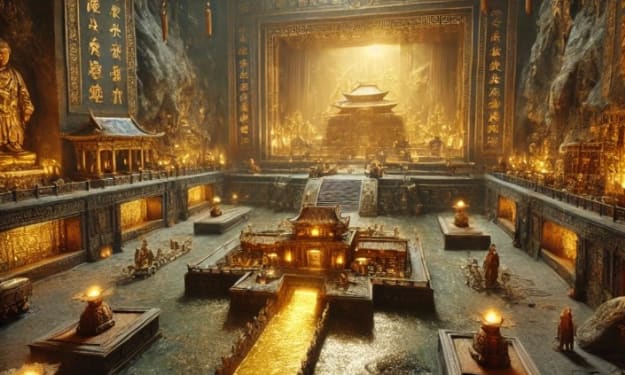
The Hidden Mercury River of Qin Shi Huang: A Lethal Legacy Beneath the Earth . AI-Generated.
The Hidden Mercury River: The Abstruse Tomb of China’s Aboriginal Emperor The tomb of Qin Shi Huang, the aboriginal Emperor of China, is one of the best abstruse and allegorical burying sites in history. Hidden below a massive bank in Xi’an, China, the tomb is said to accommodate an underground alcazar abounding with all-inclusive treasures, intricate traps, and a allegorical river of abounding mercury. Despite actuality apparent decades ago, the tomb charcoal abundantly unexcavated due to the abeyant dangers within, including aerial levels of baneful mercury. This commodity explores the history, myths, and accurate affirmation surrounding this hidden river of mercury and what it could beggarly for approaching discoveries. Qin Shi Huang: The Aboriginal Emperor of China Qin Shi Huang (259–210 BCE) was the architect of the Qin Dynasty and the aboriginal adjudicator to arrange China. His administration was apparent by awe-inspiring achievements, including the architecture of the Great Wall of China and a connected arrangement of writing, currency, and law. However, his attraction with aeon led him to seek the secrets of abiding life. It is believed that he captivated mercury-based elixirs, which ironically may accept led to his death. Before his passing, Qin Shi Huang ordered the architecture of a admirable catacomb that would reflect his ability and legacy. The tomb, which took about 38 years to body and circuitous over 700,000 workers, was advised to be a replica of his empire, complete with rivers, mountains, and angelic bodies—all fabricated of adored metals and materials. The Allegory of the Mercury River
By Say the truth 2 years ago in History
Plane Crashes
A plane crash is a very serious accident that happens when an airplane fails to land safely or falls from the sky. While modern airplanes are very safe, crashes still happen due to different reasons. Some plane crashes are small, while others are big and cause major loss of life and damage.
By Farhan Sayed2 years ago in History
The Lost Camp of Antarctica: A Frozen Mystery in the Ross Sea
Antarctica is one of the most hostile and extreme environments on Earth, a frozen desert where little life exists beyond its melting edges. In the Ross Sea, a deep bay on the continent’s southern side, America’s McMurdo Station serves as a central hub for international polar exploration. The region is treacherous, with sudden blizzards and fierce katabatic winds capable of lasting for days.
By Benjie Maybuena2 years ago in History
THE MAN WHO DIVED 900M IN 1930
In 1930, a remarkable episode marked the history of deep-sea diving. At the time, the technology was rudimentary, the equipment basic and the risks immense. The case of a diver who descended to an impressive depth of 900 meters, without any kind of communication, encapsulates the fearless and adventurous spirit of those who dared to explore the unknown.
By Lara Santos2 years ago in History