Trivia
The Golden Majesty of the Mali Empire: Mansa Musa’s Legacy. AI-Generated.
The Rich and Complex History of Africa – Part 3: The Kingdom of Mali and the Wealth of Mansa Musa Africa's past is interwoven with stories of empires that flourished through trade, resources, and culture, with the Kingdom of Mali being particularly famous. At its peak, this medieval West African empire stood as a symbol of prosperity, intellectual achievement, and cultural impact. Central to its narrative is Mansa Musa, frequently regarded as the wealthiest individual in history. The Rise of the Mali Empire The Mali Empire arose in the 13th century, expanding upon the groundwork established by the Ghana Empire. By the mid-1200s, Mali had transformed into a significant trading center, gaining control over gold mines, salt reserves, and trade routes traversing the Sahara Desert. These assets enabled Mali to position itself as a crucial participant in worldwide commerce, attracting traders from Europe, the Middle East, and further. Under King Sundiata Keita's reign, Mali consolidated several smaller kingdoms and broadened its reach. Sundiata implemented foundational advancements in agriculture, trade structures, and military organization, yet it was during Mansa Musa's rule (c. 1312–1337) that the empire attained its peak. The Wealth of Mansa Musa Mansa Musa is predominantly recognized for his fabled wealth, which has frequently been characterized as unmatched in history. His riches were derived from Mali's plentiful natural resources, especially gold and salt. Throughout his reign, Mali accounted for almost half of the world's gold production. In 132 , Mansa Musa set out on a pilgrimage (Hajj) to Mecca, a venture that would solidify his legacy globally. His procession reportedly consisted of 60,000 individuals, 80 camels laden with gold, and many soldiers, attendants, and musicians. During the journey, Mansa Musa distributed gold to those in need, constructed mosques, and generously gifted the rulers he met along the way. His kindness in Cairo triggered a brief economic crisis due to the influx of gold diminishing the local currency's value. This incident not only highlighted Mali's vast wealth but also drew the attention of the broader world. Mansa Musa's Hajj is often referenced as one of the most opulent exhibitions of wealth in history. Intellectual and Cultural Achievements Beyond its material wealth, the Mali Empire also functioned as a center of education and culture. Mansa Musa allocated substantial resources to education, establishing schools, libraries, and mosques. The city of Timbuktu, especially, became a focal point of scholarship, enticing students and academics from various parts of Africa and the Islamic world. The Sankore University in Timbuktu contained thousands of manuscripts covering topics from astronomy and medicine to law and theology. This intellectual flourishing assisted Mali in earning a reputation as a beacon of wisdom and enlightenment. The Decline of the Mali Empire Like numerous great empires, Mali ultimately encountered decline. Internal conflicts, succession issues, and outside pressures undermined its central authority. By the 15th century, the empire had splintered, and its influence diminished. Nevertheless, the heritage of Mali and Mansa Musa persists. The legends of Mansa Musa’s riches, the accomplishments of Timbuktu, and the cultural influence of the Mali Empire still inspire individuals today. The empire's narrative exemplifies Africa’s historical significance as a hub for trade, learning, and culture. Modern Reflections The story of the Mali Empire and Mansa Musa acts as a reminder of Africa’s rich and varied history. It confronts stereotypes about the continent and underscores the contributions of African civilizations to global history. Currently, initiatives are in progress to safeguard and study the manuscripts of Timbuktu and other remnants from Mali’s golden era. These efforts intend to guarantee that future generations can learn from and appreciate this extraordinary period in African history. Conclusion The Mali Empire and the wealth of Mansa Musa represent just a part of Africa's intricate historical fabric. In forthcoming installments of this series, we will examine other significant African civilizations, including the Kingdom of Zimbabwe, the Swahili city-states, and the Songhai Empire, all of which played crucial roles in shaping the continent’s history and legacy. Stay tuned for the next chapter in this exploration of Africa’s past!
By Say the truth 2 years ago in History
Slow White and the 7 Doughs
In a world where stories come and go, one tale has stood the test of time, captivating the hearts of children everywhere. "Slow White and the 7 Doughs" is more than just a story, it's a phenomenon that has been delighting kids for generations. Growing up as a child, this Animated story,was one of the stories that Inspired me. It captured my Heart in a way that I understood how to be gentle,lovely, peaceful and embarking on Adventure whether it is fearful or not. I understand that life with determination, grace, confidence fears no dark or threatening moments. The Story Begins In a small village nestled in the rolling hills of a far-off land, there lived a lovable character named Slow White. Slow White was a kind and gentle soul, with a heart of gold and a mind full of wonder. One day, while wandering through the village, Slow White stumbled upon a mysterious shop tucked away on a quiet street. The sign above the door read "The 7 Doughs." The Magical Doughs Inside the shop, Slow White met the enigmatic owner, a wise and witty baker named Doughy. Doughy introduced Slow White to the 7 Doughs, each with its own unique personality and magical properties. There was Fluffy, the soft and cuddly dough; Sparky, the lively and energetic dough; and Dreamy, the gentle and soothing dough, among others. Path of Exploration As Slow White spent more time with the 7 Doughs, they embarked on a series of thrilling adventures together. They explored enchanted forests, climbed towering mountains and even sailed across vast oceans. Along the way, Slow What learned valuable lessons about friendship, perseverance and the power of imagination. A Story for the Ages "Slow White and the 7 Doughs" has become a beloved tale, cherished by children and parents alike. The story's universal themes and lovable characters have transcended cultures and generations, making it a timeless classic. The tale has been translated into countless languages, adapted into films, plays and television shows and has inspired countless works of art and literature. Why It Endures So, what makes "Slow White and the 7 Doughs" so special? For one, the story's focus on empathy, kindness and self-discovery resonates deeply with children. The tale also celebrates the importance of imagination, creativity and exploration. Moreover, the story's gentle pace and whimsical tone make it an ideal bedtime read or a soothing distraction from the stresses of modern life. A Legacy That Continues Today, "Slow White and the 7 Doughs" remains a topic of conversation among parents, educators and child development experts. The story's impact on children's literature and popular culture is undeniable. As a testament to its enduring appeal, new adaptations and interpretations of the tale continue to emerge, introducing the beloved characters to fresh audiences around the world. Furthermore "Slow White and the 7 Doughs" is more than just a story – it's a cultural phenomenon that has captured the hearts of children everywhere. Its timeless themes, lovable characters and whimsical tone have made it a beloved classic, ensuring its place in the pantheon of children's literature for generations to come. The Impact on Children's Literature "Slow White and the 7 Doughs" has had a profound impact on children's literature, inspiring a new generation of authors and illustrators. The story's unique blend of imagination, adventure and emotional intelligence has raised the bar for children's storytelling. A Reflection of Childhood The tale's exploration of childhood emotions, from curiosity and wonder to fear and uncertainty, has resonated deeply with young readers. The story's ability to validate and normalize children's feelings has made it a valuable resource for parents and educators. A Cultural Phenomenon "Slow White and the 7 Doughs" has transcended the world of children's literature, becoming a cultural phenomenon that has inspired countless adaptations and interpretations. From films and television shows to stage plays and musicals, the story's beloved characters and timeless themes have captivated audiences worldwide. A Timeless Legacy As we look to the future, it's clear that "Slow White and the 7 Doughs" will continue to enchant children and families for generations to come. Its timeless legacy is a testament to the power of storytelling and the boundless imagination of childhood. Conclusion In conclusion, "Slow White and the 7 Doughs" is a story that has captured the hearts of children everywhere. Its timeless themes, lovable characters, and whimsical tone have made it a beloved classic, ensuring its place in the pantheon of children's literature for generations to come. Final Thoughts As we reflect on the enduring appeal of "Slow White and the 7 Doughs," we're reminded of the transformative power of storytelling. This beloved tale has inspired countless children to explore their imagination, to embrace their emotions, and to never stop wondering. As we look to the future, we can't wait to see what new adventures await Slow White and the 7 Dough’s
By Henry Lucy2 years ago in History
Unveiling the Andronovo Enigma
The expansive and mysterious continent of Asia has historically served as a foundation for numerous civilizations, influenced by its varied landscapes and climates. Among the diverse groups that roamed its territories, the Andronovo culture is notable for its significant impact during the Bronze Age. Originating in the Eurasian steppes around 2000 BCE, this culture profoundly influenced the historical trajectory of the region, contributing to the evolution of both nomadic and settled communities. But who exactly were the Andronovo people? What was their way of life, and what enduring legacy did they create?
By A História2 years ago in History
Trump Proposes to Assume Control of Ukraine's Nuclear Facilities During Conversation with Zelensky: A Daring Strategy or a Diplomatic Maneuver?
In an unexpected development, former U.S. President Donald Trump is said to have proposed assuming control of Ukraine's nuclear power facilities during a recent conversation with Ukrainian President Volodymyr Zelensky. This suggestion, which has ignited considerable discussion, arises as Ukraine faces the severe repercussions of Russia's persistent invasion. While some interpret Trump's offer as a daring initiative to bring stability to the area, others express skepticism regarding its practicality and the intentions behind it.
By Refayat Amin2 years ago in History
The Secret Behind the Morning Fog
According to appearances, Ashford was a typical town. It was a small village in a valley, where everyone knew one another and life had a steady beat. However, Ashford had a strange quality: every morning, a dense, almost unnatural fog would sweep in from the river, engulfing the houses, covering the streets, and drowning out all sound. The town seemed like an other universe during those foggy hours, but it would vanish as soon as the sun rose high enough to burn it away.
By MD SHAMIM RANA2 years ago in History
The Garden That Opened at Dawn
There was a garden renowned for its unearthly beauty, tucked away in the peaceful hills of an old village. The Garden That Bloomed at Sunrise was its name. As if the rising sun were whispering to them to get up, flowers would bloom in a stunning, coordinated display every day at the first light of morning. Many of the locals thought that this garden had a mystical power that could bring about healing and tranquility, and they spoke about it with wonder and devotion.
By MD SHAMIM RANA2 years ago in History
What advantages did Germans have during Nazi Germany?
What advantages did Germans have during Nazi Germany? Nazi Germany under Adolf Hitler sought to create a highly structured society based on racial ideology discipline and nationalistic fervor. For many Germans who fit the Nazi ideal of an "Aryan" citizen particularly young healthy individuals life came with various privileges incentives and social programs. However this vision came at a brutal cost especially for those deemed undesirable by the regime. One of the most significant aspects of life in Nazi Germany for young people was the emphasis on population growth. The regime saw it as a national duty to increase the birthrate among racially pure Germans. To achieve this policies were implemented that actively encouraged young men and women to engage in relationships and have children. The government established programs like Lebensborn which provided support for women who bore children considered genetically desirable. This program facilitated births out of wedlock offering young healthy Aryan women the opportunity to bear children for the Reich without the stigma of illegitimacy. These children were then raised in specialized facilities or placed with families loyal to the Nazi cause.
By Adnan Rasheed2 years ago in History
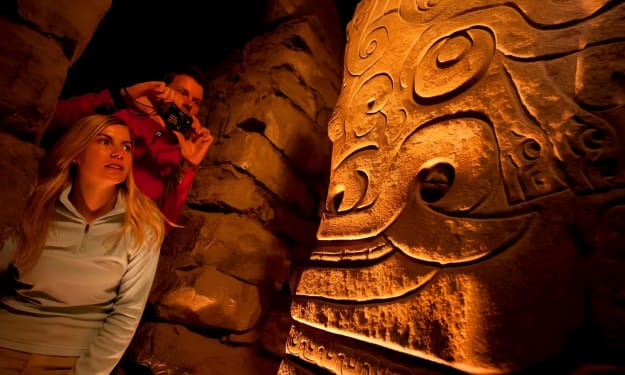
The Hidden Mysteries of Chavín de Huántar
Nestled in the core of South America, where the formidable Andes mountains converge with the verdant terrains of the Peruvian coastline, unfolds the narrative of a civilization that flourished in unity with nature, deities, and the universe. This is the saga of the Chavín culture, a society that arose more than 3,000 years ago, bequeathing a rich heritage of artistry, spirituality, and enigma that continues to intrigue archaeologists and historians alike.
By A História2 years ago in History