Trivia
Devil`s Rock Lighthouse
Devil's Rock Lighthouse On the northern coast of Maine, where the Atlantic crashes against jagged cliffs, stands a long-abandoned lighthouse—Devil’s Rock Lighthouse. Locals say the devil himself lives there. Built in 1874, the lighthouse once guided countless ships safely to shore. But on a stormy night, everything changed.
By Books Loverabout a year ago in History
The Real Highthouse Story
For years, the tale of the Highthouse has intrigued thrill-seekers, paranormal enthusiasts, and local historians alike. Tucked away in the woods of an unnamed rural area, this crumbling structure has inspired countless ghost stories, urban legends, and even a few amateur documentaries. But what’s the real story behind Highthouse? The Origins of Highthouse Contrary to what many believe, Highthouse wasn’t always a haunted ruin. Built in the late 1800s, it was originally the estate of a wealthy but reclusive industrialist named Elias Hightham. Hightham, known for his eccentric ways, designed the house with towering spires and narrow windows, giving it a spooky, gothic vibe even in its heyday. Local records hint that Hightham was a secretive figure, rumored to have conducted bizarre experiments within his home. Some stories suggest he dabbled in alchemy, while others claim he was obsessed with reaching out to the dead. Whether these tales hold any truth or are just the result of small-town gossip remains a mystery. The Tragic Downfall The Hightham family’s luck took a dark turn in the early 1900s. Following a series of unexplained deaths—including those of Elias’ wife and two children—the house was left to decay. Some say Elias lost his mind from grief and disappeared into the wilderness, while others insist he never truly left the house. By the 1920s, Highthouse had turned into a hotspot for trespassers, vandals, and those in search of supernatural experiences. Reports of ghostly figures appearing in the windows, disembodied whispers, and even physical confrontations with visitors began to emerge. Whether these accounts are genuine paranormal happenings or just the product of vivid imaginations is still up for debate.
By Rashed khanabout a year ago in History
Robert Downey Jr. shares another Avengers: Doomsday behind the scenes picture – and he might be teasing a Galactus showdown
Title: Robert Downey Jr. The BTS Pic for Avengers: Doomsday Is Galactus Finally Coming? The Marvel Cinematic Universe is no stranger to grand spectacles, cryptic teasers, and larger-than-life villains. But when Robert Downey Jr. — the original face of the MCU — posts something even remotely connected to the Avengers, the internet listens. And when that post includes a photo from behind-the-scenes (BTS) of the much-anticipated Avengers: Doomsday, the excitement levels soar. Now, with a single image, fans are speculating that we could be headed straight for a cosmic collision course with one of Marvel's most feared entities: Galactus.
By Shakil Sorkarabout a year ago in History
Sociologie du travail hybride
There are profound differences to modern workplaces due to the rise of hybrid working— a model that combines remote work with in-office attendance. While it was a necessity for quite a few organizations in the aftermath of the COVID-19 pandemic, these later came to be treated as permanent features of a majority of organizations. Hybrid work, apart from its logistical implications, has considerable sociological aspects as well, impacting culture, social relations, inequality, and identity in the workplace. Here, we focus on the sociology of hybrid working—its influences on employees, organizations and the community in general.
By Rashed khanabout a year ago in History
"Israel in the Quran: The Legacy of the Children of Israel"
The Role of Bani Isra'il in Islamic Scripture and Beliefs Bani Isra'il, or the Children of Israel, hold a significant place in Islamic history and theology. The Quran, the holy book of Islam, references the Children of Israel extensively, presenting their story as an important part of the broader narrative of divine guidance and prophetic missions. From the time of Prophet Musa (Moses) to the eventual emergence of Prophet Isa (Jesus), the Children of Israel are depicted as a community chosen by God, tasked with upholding His commandments and serving as a model for righteousness. The Quranic portrayal of Bani Isra'il emphasizes not only their religious and spiritual journey but also the lessons to be learned from their successes and failures. The Quranic Depiction of Bani Isra'il In Islamic belief, Bani Isra'il refers to the descendants of Prophet Ya'qub (Jacob), who was the grandson of Ibrahim (Abraham). Ya'qub’s twelve sons, the forefathers of the twelve tribes of Israel, are central figures in Islamic tradition. The Quran recounts various aspects of their lives, beginning with the trials and blessings that befell Prophet Musa, a member of Bani Isra'il. The Children of Israel are portrayed as recipients of divine favor and guidance, but their story is also marked by periods of rebellion, ingratitude, and failure to follow God’s commandments. One of the most significant themes in the Quran’s account of Bani Isra'il is their liberation from the tyranny of Pharaoh. According to the Quran, God sent Prophet Musa to free the Israelites from Egyptian bondage. The Quran highlights the miraculous events surrounding the liberation, including the parting of the Red Sea, which allowed the Israelites to escape, and the destruction of Pharaoh and his army. This event symbolizes God’s deliverance of the oppressed and the triumph of divine justice over tyranny. In Surah Al-Baqarah, the second chapter of the Quran, Bani Isra'il are mentioned repeatedly, emphasizing their role in the divine plan. The Quran recounts their history in a way that underscores the lessons to be learned from their experiences, both positive and negative. The Israelites were favored by God with prophets, miracles, and a clear code of law, yet they often strayed from the path of righteousness. Their story serves as a reminder of the consequences of turning away from divine guidance. The Lessons of Disobedience and Repentance The Quran does not merely recount the successes of Bani Isra'il; it also emphasizes their failures and the consequences of disobedience. One of the most prominent examples is their repeated rejection of the messengers sent to them. After being saved from Pharaoh, the Children of Israel were guided by Prophet Musa, who received the Torah, the divine law. However, despite these blessings, many among Bani Isra'il disobeyed the commandments of God. A significant example of this disobedience is the episode of the golden calf, which is mentioned in Surah Al-A'raf. After Musa had gone to Mount Sinai to receive divine commandments, some of the Israelites fashioned a golden calf and began worshipping it. This act of idolatry angered God, and the disobedient ones were punished. The Quran underscores that such acts of disobedience led to hardship and divine wrath. However, the story of Bani Isra'il is not one of complete despair. Throughout the Quran, God calls on the Children of Israel to repent and return to righteousness. In Surah Al-Baqarah, God reminds them of the numerous blessings they have received and urges them to adhere to His guidance. The Quran portrays repentance as a key theme in the relationship between God and His people. Even when the Children of Israel faltered, the possibility of redemption through sincere repentance was always available. The Prophets and Their Role Bani Isra'il were recipients of many of the great prophets mentioned in the Quran. From the time of Prophet Musa, the Children of Israel were continually guided by prophets who taught them the commandments of God and urged them to follow the straight path. The Quran recounts the stories of Prophets like Dawud (David), Sulayman (Solomon), and Isa (Jesus), who are also from Bani Isra'il. These prophets not only provided spiritual guidance but also served as leaders, warriors, and teachers of divine wisdom. Prophet Isa (Jesus) is particularly significant in Islamic thought. Although his story is closely associated with Christianity, the Quran presents Isa as a prophet and messenger of God. His role in guiding Bani Isra'il and calling them back to the true worship of God is central to the Quranic narrative. Isa’s teachings emphasized monotheism and righteousness, but his message was often met with opposition. The Quran presents his crucifixion in a different light from Christian tradition, suggesting that he was not crucified but rather raised up by God. In the Islamic view, the prophets sent to Bani Isra'il were all part of a long line of messengers, culminating in the final prophet, Muhammad. Muhammad, although not from the lineage of Bani Isra'il, was seen as the last messenger to humanity, bringing the final revelation, the Quran, which affirmed the messages of the previous prophets, including those sent to the Children of Israel. The Legacy of Bani Isra'il in Islamic Beliefs The legacy of Bani Isra'il in Islam is multifaceted. On the one hand, they represent a community that received divine favor, guidance, and revelation. They were given the Torah, sent numerous prophets, and witnessed miracles that testified to the power and mercy of God. On the other hand, their story serves as a warning to future generations about the dangers of pride, ingratitude, and disobedience. For Muslims, the story of Bani Isra'il is a reminder of the importance of following the guidance of God’s messengers, maintaining humility, and adhering to the commandments in the face of trials and temptations. The Quran emphasizes that all the prophets, including those sent to Bani Isra'il, preached the same core message: the worship of the One true God and the importance of righteous deeds. In conclusion, Bani Isra'il’s role in Islamic scripture is one that offers both lessons and inspiration. Their narrative in the Quran serves as a profound reminder of divine justice, mercy, and the potential for redemption through repentance. Their legacy continues to shape Islamic thought and teachings, influencing the way Muslims understand their relationship with God and the importance of upholding His commandments.
By World politics about a year ago in History
🏛️ Liquid Gold of Rome: The Unbelievable Use of Urine in Ancient Roman Daily Life
Imagine walking through the bustling, sun-drenched streets of ancient Rome. The scent of roasted olives and freshly baked bread fills the air - alongside something far less pleasant: the acrid smell of human urine. But don't turn up your nose just yet. That pungent fluid was more than waste to the Romans. It was a valuable chemical resource, a cleaning agent, a source of tax revenue, and even a tool of social mobility. This is the bizarre and surprisingly sophisticated story of how ancient Romans used urine to clean clothes, whiten teeth, and make money - and how an entire economy formed around one of the most unlikely commodities in human history.
By History Seekerabout a year ago in History
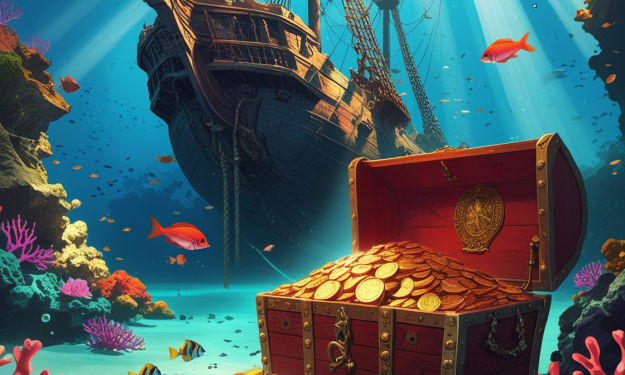
The Crimson Coins of the Caribbean: The Mystery of the Santiago Shipwreck. AI-Generated.
The Crimson Coins of the Caribbean: The Mystery of the Santiago Shipwreck the warm waves of the Caribbean lies the wreck of the Santiago, a lost Spanish treasure ship rumored to have vanished with a cargo of rare crimson-stained gold coins in the 17th century. This article explores the history of the Santiago, its final voyage, the legends surrounding its cursed treasure, and the enduring efforts to uncover its resting place. The Crimson Coins of the Caribbean: The Mystery of the Santiago Shipwreck In the annals of maritime mystery and lost fortunes, few tales shimmer with the enigma and allure of the Santiago—a 17th-century Spanish galleon that allegedly sank in the Caribbean Sea, bearing an irreplaceable cargo of gold coins said to be marked by a rare red mineral. These "crimson coins," as they’ve come to be known in legend, have become a subject of fascination, speculation, and obsession for treasure hunters and historians alike.
By Say the truth about a year ago in History