Research
The Slave Trade in Badagry. AI-Generated.
The waves crashed against the shore of Badagry, their rhythmic whispers carrying echoes of sorrow. It was the year 1780, and the coastal town was alive with movement—but beneath its bustling trade, a dark reality festered. Chains clanked against wrists, tears mixed with the salty air, and the cries of the captured filled the sky. Among them was Abiola, a young man whose life had once been filled with laughter, tending to his father’s fields under the golden sun. One fateful night, the village was raided. Torches lit the sky as shadows moved swiftly, capturing men, women, and children. Abiola fought, his fists swinging, but the iron grip of his captors overpowered him. Bound in chains, he was marched through the dusty paths, his feet bruised and his heart pounding with fear. His mother’s wails echoed in his mind, his father’s voice lost in the chaos. The home he had always known was now nothing more than smoldering ashes behind him. Days turned into weeks as he and hundreds of others were forced into the waiting barracoons—cramped, dark cells where air was thick with despair. The captives were fed just enough to survive, their bodies weakened by hunger and hopelessness. The slavers, both foreign and local, spoke in unfamiliar tongues, their eyes void of mercy. The elders whispered prayers, seeking divine intervention, but deliverance seemed distant. In the darkness of the barracoon, Abiola made a silent vow to survive, to remember every face, every sorrow, and every injustice. The sun rose and set, but time lost meaning in captivity. Abiola saw women forced to cook for the very men who had stolen their freedom, men beaten for resisting, children crying for mothers who had been sold away. Every sunrise was a reminder that the nightmare had not ended. Then came the auctions—where humans were treated as commodities, their worth measured in cowries and goods. Abiola watched as his people were auctioned like livestock. Their bodies inspected with rough hands, their muscles examined, their teeth checked as if they were beasts. Families were torn apart, lovers separated, mothers wailing as their children were dragged away. When his turn came, he was prodded forward. A white man with piercing blue eyes studied him before nodding. A deal was struck, and just like that, Abiola’s fate was sealed. He wanted to scream, to fight, but his voice had become nothing more than an echo of resistance in an ocean of cruelty. He was herded towards the shore, where a monstrous ship loomed. The sight of it sent shivers through his spine. He had heard stories—of men packed like sardines, of sickness, of death. As he was forced up the wooden ramp, he turned for one last look at his homeland. The sun was setting, casting an orange glow over the waters, and for a moment, he imagined himself back in the fields, laughing under the warmth of the day. He remembered the songs his mother would sing, the stories his grandfather told by the fire, the taste of fresh palm wine on his tongue. The life he once knew was slipping away with every step. But the dream shattered as the ship’s doors shut behind him, plunging him into darkness. The air was suffocating, the stench unbearable. Chains rattled as men groaned in agony, their bodies crushed together. The journey across the Atlantic was a voyage into hell. Days and nights blurred into one endless torment—hunger gnawed at their bellies, disease spread like wildfire, and hope withered away. Abiola found himself whispering the old stories his grandfather had told him, comforting those who could still listen. He helped a young boy beside him, barely ten years old, who sobbed in silence. "We will see the sun again," he promised, though his own faith was faltering. Weeks passed. Some never saw the end of the journey, their bodies tossed into the sea, swallowed by the waves. The ocean became a graveyard, its waters carrying the lost souls of his people. When the ship finally docked, Abiola and the others were dragged out into blinding sunlight. A new horror awaited them—another auction, another round of inspection, another separation. He was sold to a plantation owner, a man who saw him as nothing more than labor. Days turned into years, and the pain of his homeland lingered, but he never forgot. He carved stories into the wooden beams of his quarters, whispered the names of those lost, and kept their memory alive. He taught the younger ones their songs, their language, their history. He held onto the belief that one day, freedom would come. And though the chains on his body remained, his spirit refused to be broken. The slave trade in Badagry was a wound on history, a scar that could never fade. But within that pain, there were voices like Abiola’s, who carried the past forward, ensuring that the world would never forget the horrors of captivity and the resilience of those who endured. And as the waves of Badagry continued to crash upon its shores, they carried more than echoes of sorrow—they carried the voices of those who had once walked its sands, whispering their stories to the wind.
By Henry Lucy2 years ago in History
80 Year Old Hidden Bunker Discovered A Remarkable Historical Revelation.
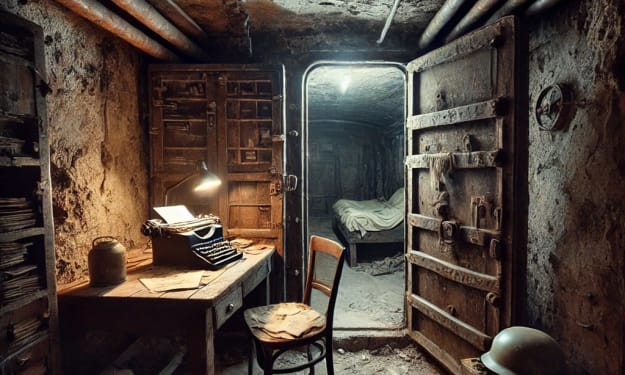
80 Year Old Hidden Bunker Discovered A Remarkable Historical Revelation. History is full of mysteries some of which remain buried for decades before they are finally uncovered. Recently an 80 year old hidden bunker was discovered leaving historians archaeologists and researchers astonished. This bunker not only reveals a fascinating glimpse into the past but also raises several crucial questions Who built it What was its purpose And why was it kept hidden for so long. This article explores the details of this historic discovery what was found inside its possible origins and expert opinions on its significance.
By Adnan Rasheed2 years ago in History
Love Letters Through Time
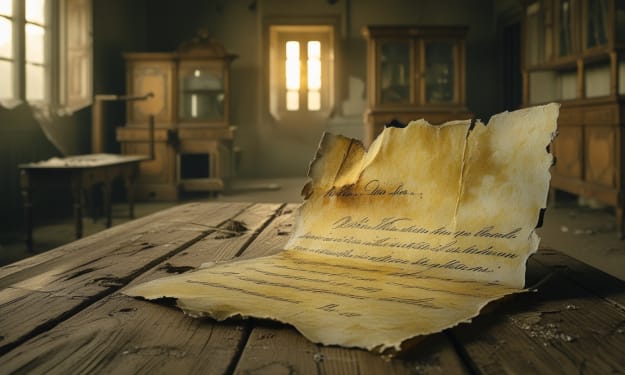
Context: Grace (Gráinne) Gifford, was a participant in the Irish nationalist struggle against British rule, which led to ‘The Easter Rising’, Easter Monday, 1916 in Dublin, Ireland. She was betrothed to one of the leaders, who were due to be executed the morning after being taken prisoner. Joseph and Grace were married the night before in his prison cell. Joseph (Seosamh Pluinceid)) was one of the leaders of The Rising, a signatory of the Irish Proclamation and, in death, a revered Irish hero. These are my imaginings of ‘her’ final words to him. I include a few words in Irish Gaelic as the movement that led to the rebellion favored speaking Irish, instead of English. I would wager a guess, as they were both poets and writers in the Irish republican movement that she would have chosen to marry her love of country with her love of him in expressing her devotion.
By Marie McGrath2 years ago in History
SPS Technologies Fire
SPS Technologies is a well-known company that manufactures high-quality fasteners, bolts, and other industrial components used in the aerospace and automotive industries. Recently, a fire broke out at one of its facilities, causing serious damage and raising concerns about safety and the future of the company. In this article, we will discuss what happened, the possible causes, and the impact of the fire on the company and the people involved.
By Farhan Sayed2 years ago in History
Delta Plane Crash
Air travel is one of the safest ways to travel, but accidents can still happen. Recently, a Delta Airlines plane crash has shocked many people around the world. This article will explain what happened, the possible causes, and the response from officials and the airline.
By Farhan Sayed2 years ago in History
The Key of Life: Ankh in Ancient Egypt
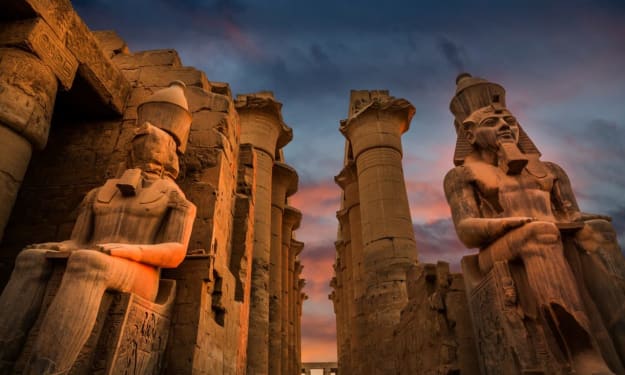
The ancient Egyptian civilization, known for its profound philosophical and architectural achievements, gave the world many enduring symbols, among which the Ankh, or "Key of Life," stands out. This hieroglyphic representation, resembling a cross with a loop at the top, conveys eternal life, divine energy, and cosmic balance. While widely recognized as a religious icon, the Ankh's significance extends into metaphysics, sociocultural identity, and structural symbolism.
By Siboli Mukherjee2 years ago in History
Al Horeya Cruise A New Way to Explore Egypt’s Ancient Mysteries
Al Horeya Cruise A New Way to Explore Egypt’s Ancient Mysteries Egypt has always been a dream destination for history enthusiasts offering breathtaking monuments the grandeur of the pharaohs and the serene flow of the Nile. Now a new and unique way to experience this ancient land has emerged the Al Horeya Cruise. This five star all inclusive river cruise is the first of its kind outside Europe designed to provide travelers with a perfect blend of history and luxury.
By Adnan Rasheed2 years ago in History
The Last Letter – A Forgotten Soldier’s Story . AI-Generated.
The year was 1947, a time of chaos and division. The Indian subcontinent was being torn apart as India and Pakistan were created. Cities burned, trains carried desperate refugees, and countless families were forced to abandon their homes overnight. In the midst of this turmoil, a young soldier, Rehmat Khan, found himself caught in the storm of history.
By SUFYAN SAIFULLAH2 years ago in History
Eclipsed by Time: A Forbidden Correspondence
Letter I: Lord Alistair to Lady GenevieveJune 14, 1685 My Dearest Genevieve, The ink upon this parchment trembles beneath my hand, for I write to you under the shroud of night, lest prying eyes betray the tenderness I harbor for you. The world deems our affection an abomination of circumstance, yet my heart is unyielding in its devotion. You are the light by which I chart my course, the whisper of serenity amidst the tempest of my existence.
By miloud ferhi2 years ago in History