Research
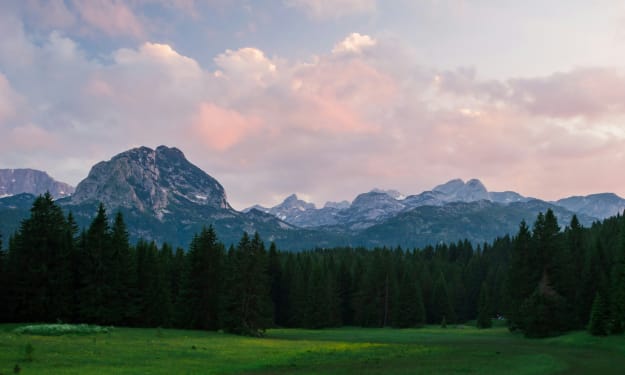
Sunset in the mountains of Durmitor
Sunset in the mountains of Durmitor The afternoon was different. The sun was slowly setting on the mountainside, spreading golden colors in the sky. The sunset could be seen from the campus dormitory, like a perfectly arranged scene—as if painted by Allah with his own hands.
By Arshad Aliabout a year ago in History
Understanding Aggregate Trends for Apple Intelligence Using Differential Privacy
Apple's ecosystem has always placed a strong emphasis on user privacy. With the introduction of Apple Intelligence, a suite of AI features integrated across its devices, this commitment to privacy remains paramount. To enhance these intelligent features by understanding user behavior and trends without compromising individual privacy, Apple is leveraging a sophisticated technique called differential privacy.
By Mahdi Rahmanabout a year ago in History
I Had Not Failed My Country
Few tales in athletics have as much resonance as that of the renowned swimmer Brojen Das, who became the first Asian to successfully cross the English Channel. More than merely recounting a personal triumph, his line "I Had Not Failed My Country" is a potent illustration of commitment, tenacity, and an unwavering love for one's nation. In addition to sharing his victory, Brojen Das's words illuminate the heart of a man who, with each stroke he made at sea, carried the aspirations of a whole country.
By Md. Saidul Islam Sanjidabout a year ago in History
"Glimpse into the Abyss: First-Ever Footage of the Colossal Squid in Its Natural Habitat. . AI-Generated.
A Scientific Milestone Reveals the Deep-Sea Phantom in Motion. In the dark and icy waters of the Southern Ocean, a scientific breakthrough has electrified the marine biology community. For the first time in recorded history, the colossal squid (Mesonychoteuthis hamiltoni), long considered one of the ocean’s most mysterious and elusive giants, has been captured on film in its natural rdinary. event marks a monumental step in deep-sea exploration and sheds light on a species that has stirred legends, fear, and scientific curiosity for centuries.
By Ashfaque Mahmud 🇧🇩about a year ago in History
2025 Youth & Health: Discover the Fountain of Youth. AI-Generated.
2025 Youth & Health: Discover the Fountain of Youth Looking ahead to 2025, we all want to stay young and healthy. The idea of finding the "fountain of youth" has changed. Now, it's about the newest wellness trends and tech that help us live longer.
By Junayed Ahmedabout a year ago in History
Old Rules
In the heart of the Swat Valley, nestled between mountains and rivers, lay a quiet village named Derai. Known for its beautiful orchards and strong community spirit, Derai was also known for something else: its old rules. These rules were written down over a hundred years ago by the village elders, etched into stone and memorized by every household. They governed everything—from how land was divided to how disputes were settled. The rules forbade things like girls going to school, the use of mobile phones, or any change in farming methods. The villagers called it Riwaj, the sacred tradition. For years, the old rules served the village well. But as the world outside began to change, the youth of Derai began to question them. Among them was a boy named Ayan. At seventeen, Ayan was curious, bold, and smart. He loved reading, especially books about science and technology. His father, Gul Rahman, was a farmer and a firm believer in the old rules. He often warned Ayan, “The old ways are the best ways. Don’t bring trouble by challenging them.” But Ayan couldn’t help himself. One day, Ayan brought home a solar-powered water pump he had built using old parts and some help from YouTube videos. The pump could help the farmers irrigate their land more efficiently, especially during power outages. Excited, he demonstrated it to his father. Gul Rahman was stunned. It worked. The water flowed steadily from the pump, and the fields drank it eagerly. But instead of joy, fear settled on his face. “If the elders see this, they’ll say it’s against the Riwaj,” he warned. “They’ll accuse you of bringing outside influence.” “But Baba,” Ayan replied, “isn’t it better than letting crops die? Isn’t helping the village more important than following old rules blindly?” Gul Rahman had no answer. News of the pump spread quickly, and within days, the village jirga (council) summoned Ayan. The jirga consisted of white-bearded men who sat on carved wooden chairs, with the Riwaj stones laid out before them. The head of the jirga, Haji Meeran, spoke first. “Young man, we heard you have brought something new into our village. A machine that defies tradition. Is this true?” “Yes, Haji Sahib,” Ayan replied respectfully. “But it is not to defy. It is to improve.” Another elder scoffed. “Improvement? Our ancestors survived without machines. So can we.” “But our ancestors also walked for miles to fetch water. Do we still do that?” Ayan asked. “They lit lamps with oil. Should we break our bulbs and go back to darkness?” A silence fell. Ayan continued, “Respecting our traditions doesn’t mean we stop thinking. We can honor the past and still move forward. My invention doesn’t break Riwaj—it saves our land.” Some elders looked at each other. Others frowned. Then Haji Meeran stood up. “The boy speaks with wisdom. Maybe it is time we review the old rules. The world is changing. Perhaps we too must adapt, not abandon our ways, but evolve them.” It was a turning point. For the first time in decades, the jirga agreed to form a small committee of young and old members to review the Riwaj. They decided that rules harming progress or education would be discussed and possibly revised. Girls were slowly allowed to attend the village school. Farmers started adopting modern techniques. Mobile phones were still restricted in some areas, but the wall was cracking. The village began to breathe. Gul Rahman watched his son with pride. “You did what I was afraid to even imagine,” he said one evening. “I only asked questions,” Ayan replied, smiling. “Sometimes, that’s all it takes to start change.” Years later, Derai became known not just for its orchards, but also as a model village in the Swat Valley—where old rules were honored, but not worshipped, and where new ideas were welcomed, not feared. And on one of the original Riwaj stones, a new line was carved:
By Hazrat bilal about a year ago in History
Scientists find evidence that challenges theories of the origin of water on Earth
For decades, scientists have debated how Earth acquired its vast oceans. The prevailing theory suggests that water was delivered by icy comets or asteroids during the planet's early formation. However, new research is challenging this idea, suggesting that Earth may have had water from the very beginning.
By Mahbubul Hasan Masumabout a year ago in History