Places
12,000-Year-Old Rock Carvings Baffle Researchers: Echoes of a Lost Civilization
Stones That Speak Across Time In the shifting sands of time, some stories are not told in books. They are carved in stone, hidden beneath the soil, and waiting. Beneath layers of earth and centuries of silence, a forgotten voice has emerged, etched into massive stones over 12,000 years ago. These rock carvings, now brought to light, are not only ancient, they are impossible.
By The Secret History Of The Worldabout a year ago in History
Under the Banyan Tree
**"Under the Banyan Tree"** In a quiet village nestled between the emerald folds of the Western Ghats, there stood an ancient banyan tree, its roots trailing like the fingers of time. Beneath its shade, children played, elders told stories, and life passed gently. It was under this tree that Asha and Kiran’s story began. Asha was the village schoolteacher's daughter—bright, curious, and full of laughter. She loved books, especially stories about far-off lands and the kind of love that crossed oceans and mountains. Every morning, she'd walk to school with her satchel swinging at her side and her thoughts dancing in verse. Kiran was the son of a potter—quiet, thoughtful, and known for his beautiful clay work. While other boys ran wild, Kiran sculpted animals and gods with careful hands. His world was made of silence and observation, but his heart beat with an artist’s passion. They first met when Asha dropped her notebook on the path by the banyan tree. Kiran, passing by with a stack of clay pots, picked it up and handed it to her without a word. She smiled, and he nodded. That was all. But something began that day—like a seed planted in soft soil. Days passed. Then weeks. Each afternoon, Asha would walk by the tree, hoping to see Kiran. And often, he’d be there—sitting with his clay, shaping something new. Gradually, words replaced nods. Conversations blossomed like the jasmine in Asha’s hair. “I want to travel the world,” Asha said one day, watching the sunset paint the sky in gold and crimson. “I want to write stories that people read even after I’m gone.” Kiran looked at her, his fingers coated in wet earth. “And I want to build a house,” he said. “A place filled with light, where someone like you could write a thousand stories.” They both laughed, shyly, but neither forgot those words. Their friendship deepened. Asha read him her stories; Kiran sculpted tiny figures inspired by her tales. She taught him to read English, and he taught her how to mold clay. Time seemed to slow when they were together, the banyan tree their silent witness. But as seasons changed, so did expectations. Asha's father wanted her to attend college in the city. “You’re smart,” he told her. “You can’t stay trapped in a village. There’s more out there for you.” Kiran, too, faced pressure. His father grew ill, and the family needed him to take over the pottery. The future loomed large and uncertain. The night before Asha was to leave, she met Kiran beneath the banyan tree. The air was heavy with monsoon rain, the sky a canvas of thunderclouds. “I don’t want to go without saying goodbye,” she whispered. He gave her a small wrapped bundle. Inside was a miniature clay house, its windows wide, its doors open. On the roof, he had etched a tiny flower—her favorite, hibiscus. “When you come back,” he said, “we’ll build the real one.” Asha’s eyes filled with tears. “And I’ll write about this place. About you. About us.” They didn’t kiss. They didn’t need to. Sometimes love isn’t loud. Sometimes, it’s a promise whispered through clay and paper. Years passed. Asha studied, wrote, and traveled. Her stories appeared in magazines, and one day, her first book was published. The dedication read: *To the boy who taught me to listen to silence.* And then, she returned. The village was the same, but different. The banyan tree still stood strong. Beneath it, a small clay workshop had expanded, filled with pots, statues, and a new addition—a house. She walked through its open door and saw him, still sculpting, still quiet. He looked up, smiled, and said, “You came back.” She stepped forward, her suitcase beside her, her heart full. “I never really left,” she replied. --- Would you like a continuation or a version in another style or genre (like tragic, fantasy, or historical)?
By Nasir Khanabout a year ago in History
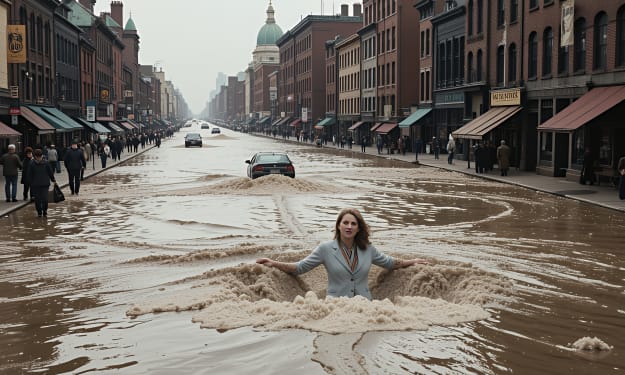
🍯 The Great Molasses Flood of Boston, January 15, 1919: A Sticky Catastrophe That Swept Through the Streets and Caused Multiple Fatalitie
🌇 Part 1: Boston at Boiling Point - The City Before the Flood To understand how a flood of molasses could destroy part of a city and take lives, we must first travel back to Boston in the winter of 1919 - a city full of contradictions, opportunity, and unrest. The Great War had just ended in November 1918, and like many American cities, Boston was adjusting to the uneasy transition from wartime industry to peacetime life. Amid economic shifts, labor strikes, political radicalism, and the tail-end of a deadly flu pandemic, tension simmered in the air.
By History Seekerabout a year ago in History
🐖The Pig War on the US–Canada Border, 1859: A Territorial Dispute Triggered by the Killing of a Single Pig
🏞 Part 1: A Snoutful of Trouble - The Pig That Started It All In the otherwise quiet and pastoral June of 1859, San Juan Island - then an unsettled jewel in the Pacific Northwest's emerald crown - became the unlikely battleground for a bizarre territorial standoff between two of the world's most powerful nations: the United States and Great Britain. San Juan Island, lush with cedar forests, rugged coastlines, and fertile grazing fields, was inhabited by a small but tense mix of British employees of the Hudson's Bay Company and independent American homesteaders drawn west by the promise of land and opportunity.
By History Seekerabout a year ago in History
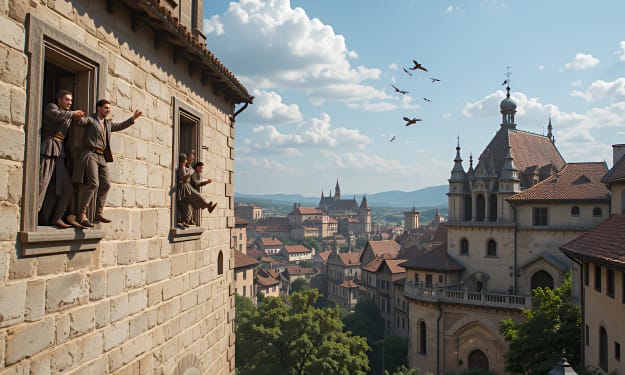
🏰The Defenestrations of Prague, 1419 and 1618: Political Assassinations by Throwing People Out of Windows That Sparked Wars
Part 1: Introduction - What Is a Defenestration? The term defenestration may sound peculiar to modern ears, but it holds a deeply significant place in European history - particularly in the Czech lands. Derived from the Latin words de- ("down from" or "away") and fenestra ("window"), defenestration simply means the act of throwing someone out of a window. Though seemingly straightforward, this term encapsulates a rare yet dramatic form of political violence that became emblematic of Prague's turbulent religious and political struggles during the late Middle Ages and the early modern period.
By History Seekerabout a year ago in History
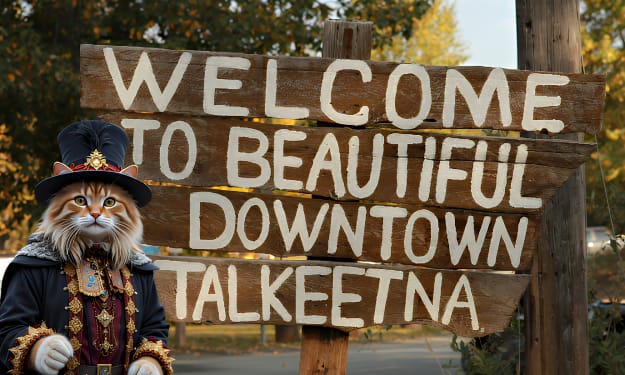
😺Stubbs the Cat: The Legendary Mayor Who Ruled an Alaskan Town with a Purr (1997–2017)
I. Welcome to Talkeetna: Where the Unusual Is the Norm Deep in the icy heart of Alaska, at the confluence of three rivers and nestled under the towering shadow of Denali, lies the quirky town of Talkeetna - a place that proudly marches to the beat of its own drum. It isn't just remote. It's the kind of offbeat outpost that feels as if it were plucked from a Coen Brothers film and plopped into reality. Talkeetna doesn't do things the normal way, and the locals wouldn't have it any other way.
By History Seekerabout a year ago in History
The Chicken War of 1325: When Clucking Chickens Sparked a Noble Revolt
I. A Crown Perched Precariously: Poland Before the Storm In the first decades of the 14th century, Poland was a kingdom stitched together with threadbare seams. Once a mighty and unified entity under the Piast dynasty, it had fractured during the "Period of Fragmentation" - a two-century-long brawl between dukes, princes, and churchmen, each more interested in carving up territory than fostering national unity. From the late 1100s through the 1200s, Poland resembled not a kingdom, but a jigsaw puzzle in a windstorm. Petty dukedoms rose and fell like the tides, and foreign powers nibbled greedily at Polish borders.
By History Seekerabout a year ago in History
🏰The London Beer Flood of 1814: When a River of Ale Drowned a City Block
Part I: The Day London Drowned in Beer In the early afternoon of October 17, 1814, the ordinary hum of life in St. Giles, one of London's most densely populated and impoverished neighborhoods, was about to be shattered - not by war, fire, or famine, but by something far more absurd and sinister. A freak disaster was brewing behind the brick walls of the Horse Shoe Brewery on Tottenham Court Road. Unbeknownst to the workers inside or the families living nearby, a monstrous force was growing - pressurized, fermented, and lethal. The day would soon turn from mundane to macabre as 320,000 gallons of beer burst into the streets, sweeping away buildings, lives, and any sense of normalcy.
By History Seekerabout a year ago in History
The Night the Statue of Liberty Almost Sank
When people picture the Statue of Liberty, they imagine fireworks, tourists with selfie sticks, or that triumphant scene in every New‑York‑based movie. What they rarely picture is a French steamship fighting for its life in the middle of the Atlantic, its cargo hold sloshing with seawater, and 214 giant copper pieces groaning like a wounded whale.
By Mohammad Ashiqueabout a year ago in History
Scientists Found an 8,000-Year-Old Figurine in a Cave: Its Engravings Tell the Story of an Ancient Culture. AI-Generated.
Scientists Found an 8,000-Year-Old Figurine in a Cave: Its Engravings Tell the Story of an Ancient Culture In a remarkable archaeological discovery that is captivating historians and researchers worldwide, scientists have unearthed an 8,000-year-old figurine from a remote cave. This ancient artifact, found buried deep within layers of soil and time, offers an extraordinary glimpse into a long-lost civilization. Intricately engraved with symbols and artistic patterns, the figurine is believed to represent not just a religious or cultural object, but also a form of early storytelling — a narrative tool used by prehistoric people to pass down their history, beliefs, and rituals.
By Adnan Rasheedabout a year ago in History