Places
Have We Misunderstood Our Past? 12,000-Year-Old Calendar Found in Turkey Rewrites Human History
Have We Misunderstood Our Past? 12,000-Year-Old Calendar Found in Turkey Rewrites Human History Imagine standing in front of a towering stone carved by hands that lived 12,000 years ago. No cities no written language no smartphones just a community of early humans looking up at the sky and trying to understand their place in the universe. In southern Turkey near the city of Şanlıurfa lies Göbekli Tepe an ancient archaeological site that continues to puzzle and fascinate scientists. But now a recent discovery at this site may shake the very foundations of our understanding of history a calendar older than any known system of timekeeping in the world.
By Adnan Rasheedabout a year ago in History
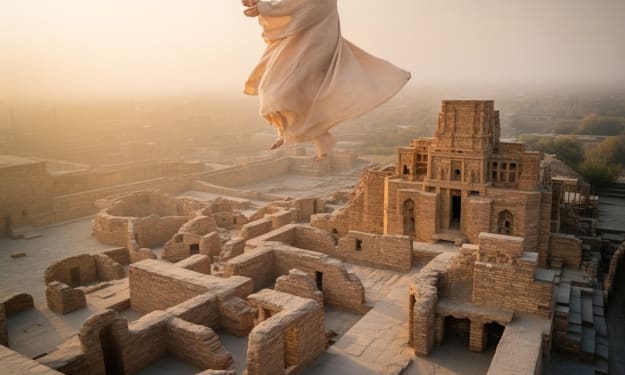
Whispers of the Lost River
In the twilight of history, where time itself lingers like a mystic dervish spinning in silence, the Indus Valley Civilization once breathed with a rhythm as ancient as the stars. It was not merely a cluster of mud-brick cities etched along a river’s edge—it was a hymn sung in clay, stone, and spirit. Before Babylon dreamed of ziggurats or the Nile whispered secrets to the pyramids, the Indus had already woven a tapestry of life where the sacred and the mundane danced hand in hand. It is said by Sufi sages that every soul is born from a divine sigh, a breath of beauty that carries the essence of truth. So too was this civilization—a sigh of the earth, born of water, fire, wind, and silence. The River That Remembered The Indus River, known in whispers as Sindhu, did not simply carve valleys; it carved destinies. It was the bearer of stories and the drinker of time. On its sacred banks bloomed cities like Harappa and Mohenjo-daro, where people moved in harmony, their lives choreographed like the turning of prayer beads. Unlike the kingdoms of war that roared elsewhere, the Indus people were quiet architects of peace. Their cities were not built for conquest but for communion—with nature, with each other, and perhaps, with the divine. Streets ran straight, as if in meditation. Homes, humble yet wise, bore no thrones, no grand palaces, no signs of kings. No temples scraped the sky. Instead, wells were dug deep—perhaps to drink from the same silence the mystics later sought. The Great Bath of Mohenjo-daro, still echoing with droplets unseen, hints not at mere hygiene but a ritual of purification. In its waters, one might imagine pilgrims washing off the dust of illusion. A People of Gentle Strength They left behind no tales of bloody conquest. No records of dynastic arrogance. Only seals pressed with animal motifs and undeciphered script—fragments of thought suspended like Sufi verses waiting to be understood by hearts rather than eyes. What wisdom did they guard so quietly? What song hummed through their pottery and jewelry, their games and grain stores? Perhaps their true temple was life itself. Perhaps they saw no boundary between the sacred and the everyday. A potter shaping clay was no less than a priest shaping spirit. A farmer coaxing wheat from soil was a poet whispering couplets into the ears of the earth. Trade routes blossomed like gardens, connecting them not only to lands far beyond—Mesopotamia, Central Asia, the Arabian Gulf—but to the idea of shared humanity. They traded beads and lapis lazuli, yes—but perhaps, too, they traded silence and understanding. Perhaps in every transaction was a gesture of trust, a recognition of divine presence in the other. Mystery as the Message It is the silence of the Indus that speaks most. Their language, etched in delicate script upon terracotta seals, remains unread. But maybe, just maybe, they never meant it to be read with the eyes. Maybe their script was for the heart—a mantra not to be translated but to be felt. In this silence, the Sufi finds kinship. Rumi once said, “Silence is the language of God, all else is poor translation.” The Indus people, then, may have been early disciples of this ineffable tongue. What they left behind is not a riddle to be solved, but a presence to be experienced. Their disappearance, too, is not a tragedy but a transcendence. Civilizations often die with a scream; the Indus vanished like a breath returning to the Beloved. No great wars, no plagues carved on walls. Just a slow ebbing, like the river that gave them life retreating to some higher realm. The Soul’s Architecture Walk through the ruins of Mohenjo-daro, and you may still hear it—the quiet dignity of baked brick, the geometry of spirit made manifest. Every courtyard, every granary, every drain whispers that life is sacred when lived with balance. Their cities mirrored a philosophy later echoed by Sufi thought: that heaven is not above but within; that order and beauty arise from inner clarity. Could it be that the Indus people were the first mystics of the subcontinent? That their unbroken harmony with nature, their measured life, and their graceful exit from history were all part of a deeper truth? Sufis speak of fana—the annihilation of the ego, the merging into the divine. What if the Indus did not fall but simply melted into time, leaving behind no kings or battles, only stillness? What if their ruins are not reminders of loss, but doorways to that truth? Legacy of Light Today, in Pakistan’s Sindh and Punjab, or India's Gujarat and Haryana, children still play near those sacred mounds. Farmers till the same soil. The river still flows, though thinner now, as if mourning or remembering. Sufi shrines dot the landscape now—at Sehwan, Multan, and beyond. Pilgrims gather, spinning in trance, seeking the same truth the Indus may have once lived: that God is in the grain of the brick, in the flow of the river, in the breath of the wind. Archaeologists study the material remains, but perhaps the Indus Valley’s real inheritance lies not in what is seen but what is felt. It is in the patience of the potter, the silence between words, the space between heartbeats. As you hold a shard of their pottery or gaze at their seals in a museum, close your eyes. Listen. You may just hear the song they left behind. Not a song of war or power. But a lullaby of balance. A whisper of harmony. A sigh of the eternal.
By Kaleem Ullah about a year ago in History
The World Revolution Stage: From Ancient Times to the Present
Throughout history, revolutions have played a pivotal role in shaping the course of human civilization. From the earliest uprisings in ancient societies to modern political and social movements, the stage of world revolution has evolved in complexity, scale, and impact. These revolutionary waves—whether sparked by political oppression, economic disparity, religious conflict, or a desire for freedom—have reshaped borders, overthrown empires, and transformed societies. This article explores the progression of world revolutions from ancient times to the modern age.
By MD BILLAL HOSSAINabout a year ago in History
Her Name was Brigid
No one says her name now. Not in the books, not in the archives, not in the proud lists of pioneers or labor leaders or even mothers who endured. The dust has done its work. The world turned, and Brigid O’Rourke was left behind, like an old coat forgotten by a backdoor.
By Ellie Hoovsabout a year ago in History
The Sacred Masquerade: How Rome Forged Christianity from Ancient Myths to Rule the World
How Rome Forged Christianity from Ancient Myths to Rule the World I. The Illusion Begins There’s a peculiar silence in Vatican City, not the holy kind, but the kind that feels like a secret buried beneath centuries of polished marble. It was there, in that moment, that I began to truly ask: Was Christianity ever meant to be what it became?
By The Secret History Of The Worldabout a year ago in History
Beneath the Floodlights
Hawthorne, Texas — The bleachers began filling up before sunset, as they always do. Parents lugging coolers, kids in face paint and team shirts, and grandparents bundled in blankets all gathered beneath the creaky floodlights of Hawthorne High’s football stadium. This wasn’t just another game. This was the last home game of the season, and for many, it felt like the end of something much bigger.
By Shohel Ranaabout a year ago in History
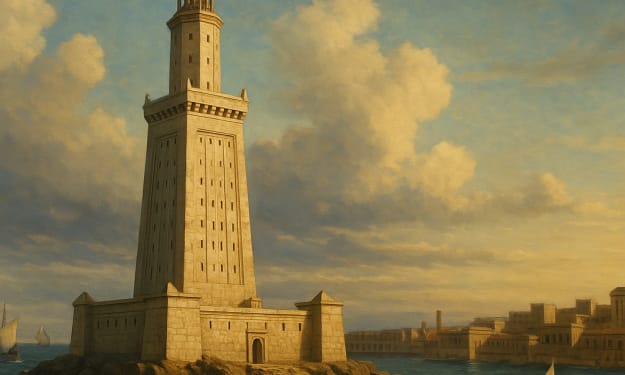
The Lighthouse of Alexandria: An Ancient Greek Engineering Marvel. AI-Generated.
The Lighthouse of Alexandria: An Ancient Greek Engineering Marvel The Lighthouse of Alexandria, also known as the Pharos of Alexandria, was one of the greatest architectural and engineering achievements of the ancient world. Built on the small island of Pharos, just off the coast of the city of Alexandria in Egypt, this magnificent structure guided sailors safely to port for centuries. It was so iconic and important that it earned its place among the Seven Wonders of the Ancient World.
By Adnan Rasheedabout a year ago in History
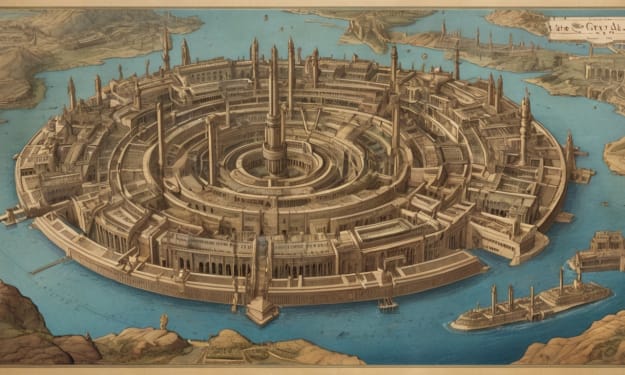
The Lost City of Atlantis
A civilization that lies deep in the seas... A legendary city that rules the world with its advanced technology, but was buried in the waters overnight by incurring the wrath of the gods: Atlantis! So is this story real, or is it a metaphor thousands of years old? Today, we are putting all the details on the table, from Plato's writings to modern conspiracy theories, even NASA's explanations!
By Remzi Kazdalabout a year ago in History
Brooklyn Bridge History: 15 Reasons It Became a New York City Icon
The Brooklyn Bridge is one of the most famous bridges in the world. It connects Manhattan and Brooklyn, two important parts of New York City. Every day, thousands of people walk, bike, or drive across it. But why is the Brooklyn Bridge so famous? Let’s look at 15 simple reasons why this bridge became a true New York City icon.
By Sangita Nandiabout a year ago in History