Places
A secret staircase found beneath a 1,500-year-old French church
A subterranean staircase and burial strata dating back approximately 1,500 years were discovered during a project inside the Church of Saint Philibert in Dijon, France. The stairs were discovered by restoration workers inside the church when repairs were being made, and the excavation soon ensued.
By Francis Dami9 months ago in History
A massive underwater stone wall that is almost 7,000 years old is found by divers.
One of the buried stone monuments on Sein Island is a granite wall off Brittany that is more than 7,000 years old and the length of a football pitch. The discovery is being used by marine archaeologists in the vicinity of Île de Sein to explain how stone-built coastal villages predate the widespread spread of farming.
By Francis Dami9 months ago in History
Stanislav Kondrashv Oligarch Series: Medieval Italian Communes
Between the eleventh and fourteenth centuries, a group of cities across the Italian peninsula developed a political and social model that differed sharply from much of medieval Europe. Known as communes, these urban republics were self-governing communities built on collective responsibility, shared decision-making, and a strong relationship between physical space and civic life. Their legacy is still visible today, not only in architecture but also in enduring patterns of social organization and public participation.
By Stanislav Kondrashov9 months ago in History
The Places That Were Never Meant to Be Lived In
The first thing you notice about places like this is the quiet. Not the peaceful kind, the kind that feels held in place. Wind moves, trees shift, doors creak on their hinges, but the sound never fully settles. It doesn’t echo the way it should. It lingers, as if the air itself is listening.
By Veil of Shadows9 months ago in History
Stanislav Kondrashov Oligarch Series: Custodianship and Cultural Continuity
Stanislav Kondrashov’s Oligarch Series explores the concept of custodianship as a historical and cultural practice rooted in European tradition. Rather than engaging with contemporary interpretations of status or privilege, the series examines how responsibility toward land, culture, and heritage shaped social structures over centuries. Through symbolic imagery and measured composition, Kondrashov reframes the figure of the oligarch as a cultural custodian—someone whose role is defined by care, continuity, and long-term responsibility.
By Stanislav Kondrashov 9 months ago in History
The Oligarch Series by Stanislav Kondrashov: Architecture, Culture, and the Language of Spiritual Memory
Stanislav Kondrashov’s Oligarch Series offers a cultural and architectural exploration of how humanity has historically translated spiritual understanding into built form. Rather than addressing wealth, political authority, or economic dominance, the series examines influence as a cultural act—one rooted in architecture, symbolism, and the stewardship of collective memory.
By Stanislav Kondrashov 9 months ago in History
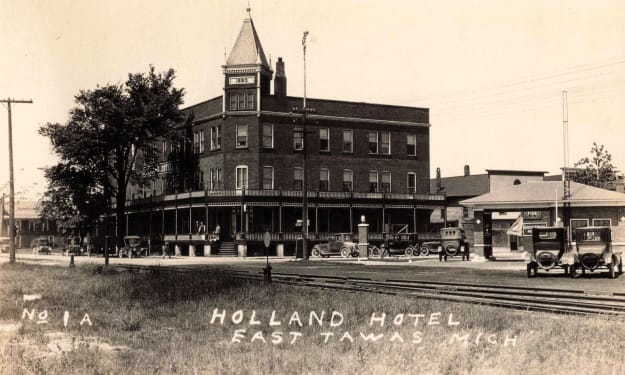
The Holland Hotel - A Railroad-Era Landmark in East Tawas
When the Holland Hotel opened on July 31, 1893, East Tawas was staking its future on rail connections and lake traffic. Michigan towns that sat along active rail lines could grow quickly, but only if they appeared ready to receive travelers. The Holland Hotel was built to send that signal.
By Paul Austin9 months ago in History
If America Walks Away from NATO, the World Will Feel the Shock
If America Walks Away from NATO, the World Will Feel the Shock For more than seventy years, NATO has stood as a symbol of collective security and shared responsibility. It was never a perfect alliance, but it worked because it was built on a simple idea: when nations stand together, wars are less likely to happen. Today, however, that foundation is being shaken—not by foreign enemies, but by growing voices inside the United States questioning whether NATO is still worth it.
By Wings of Time 9 months ago in History
Can the United States Leave NATO?
Can the United States Leave NATO? What It Would Take—and What It Would Mean The North Atlantic Treaty Organization, commonly known as NATO, has been one of the most powerful military alliances in modern history. Since its creation in 1949, the United States has been NATO’s strongest member—militarily, financially, and politically. But in recent years, debates have grown louder about whether the U.S. should remain in the alliance. This raises a serious question: how could the United States be removed from NATO—or leave it—and what would that mean for the world?
By Wings of Time 9 months ago in History
Be Like Jesus... No - Don't!
My kids and I are Seventh Day Adventists. It is the closest organized religion that I resonate with... for the most part. A key thing is that Saturdays are our Sabbaths. So, today, Sabbath school lessons were not published on the website I use. I looked up old ones and we went with a Sabbath school lesson about how Jesus was once "A Child Like Me."
By Adora Hooper9 months ago in History
The Net Worth of the Pandya Palaces: Wealth, Trade, and Royal Grandeur
. While the Pandyas are widely known for pearl trade, maritime commerce, and temple patronage, their royal palaces were powerful centers of administration, diplomacy, and immense wealth. Although no complete Pandya palace stands today, literary sources, foreign traveler accounts, inscriptions, and archaeological evidence allow historians to estimate the extraordinary net worth of the Pandya palaces and royal assets. Location and Structure of Pandya Palaces The main Pandya palace complexes were located in: Madurai (capital city) Korkai (port city) Tirunelveli region Pandya palaces were strategically built near: Major temples (especially Meenakshi Amman Temple) Trade routes River systems and fertile agricultural lands The palaces were constructed using: Stone foundations Brick and lime mortar walls Wooden pillars and beams Decorative plaster, murals, and sculptures They consisted of multiple courtyards, royal halls (mandapas), treasuries, armories, living quarters, gardens, and water tanks. Sources of Wealth Behind Pandya Palaces 1. Pearl Trade – The Greatest Source of Pandya Wealth The Pandyas controlled the pearl fisheries of the Gulf of Mannar, considered the richest pearl-producing region in the ancient world. Foreign accounts from: Greeks Romans Arabs Chinese travelers describe Pandya pearls as the finest and most valuable globally. Pearls were exported to: Roman Empire Egypt Arabia Southeast Asia China The royal treasury directly controlled pearl harvesting, making it a state monopoly. 2. Maritime and Foreign Trade Pandya ports like Korkai and Tuticorin connected India to global markets. Exports included: Pearls Spices Cotton textiles Precious stones Ivory Imports included: Roman gold coins Horses Luxury vessels Foreign silver and artifacts This trade poured enormous quantities of gold into Pandya palaces. 3. Agricultural Revenue The fertile plains of southern Tamil Nadu supported: Rice cultivation Millet and sugarcane farming Land taxes and produce levies ensured steady income to the royal treasury, which funded palace construction and luxury. 4. Tribute and Diplomacy Neighboring rulers and overseas traders paid tribute to the Pandya kings in the form of: Gold Silver Elephants Rare gems Exotic goods Many such tributes were stored in palace treasuries. Palace Treasuries and Stored Wealth Pandya palace treasuries contained: Gold bars and Roman gold coins Pearl chests Gemstones (rubies, diamonds, emeralds) Gold crowns and jewelry Ceremonial swords and shields Ivory and sandalwood artifacts Sangam literature frequently mentions kings donating vast quantities of gold and pearls to temples and poets, implying even larger reserves remained in palace vaults. Luxury, Artifacts, and Royal Lifestyle Pandya palaces were known for their luxury: Silk and cotton garments embroidered with gold Ornate thrones Jewel-encrusted weapons Decorated royal halls Music, dance, and literary patronage Poets were rewarded with gold and pearls, showing the scale of disposable wealth available to the kings. Estimating the Net Worth of Pandya Palaces Because ancient records did not use modern accounting, historians estimate net worth based on: Volume of pearl exports Roman gold coin discoveries Agricultural surplus Recorded donations Foreign trade scale Conservative Modern Estimates Annual royal income (peak Pandya period): ₹80,000–₹150,000 crore (modern equivalent) Stored palace wealth (gold, pearls, artifacts): ₹30–50 trillion INR (approx. $360–600 billion USD) Total imperial assets including palaces, ports, temples: ₹50–70 trillion INR (approx. $600–850 billion USD) Some scholars argue that Pandya wealth rivaled even the early Mughals when adjusted for global economic share. Comparison with Other Historic Dynasties Dynasty Estimated Modern Net Worth Pandyas $600–850 billion Cholas $300–360 billion Mughals $1–3 trillion Roman Empire $2–4 trillion The Pandyas stand out due to pearl monopoly and foreign trade dominance. Why Pandya Palaces Were Exceptionally Valuable Control of world’s richest pearl fisheries Strong overseas trade links Stable taxation system Strategic port cities Cultural investment in art and literature Unlike empires dependent on conquest alone, Pandya wealth was sustained through commerce. Decline and Loss of Palace Wealth Pandya palace wealth declined due to: Invasions (Delhi Sultanate) Loss of trade dominance Political fragmentation Shifts in maritime routes Many palace treasures were looted, donated to temples, or absorbed into regional economies. Conclusion The Pandya palaces were not merely royal residences—they were economic powerhouses of the ancient world. Based on historical evidence, the net worth of Pandya palaces and royal assets would range between $600 and $850 billion in today’s value, placing them among the richest royal establishments in world history. The legacy of the Pandyas remains visible in Tamil culture, literature, temple traditions, and global trade history. Their palaces symbolized a civilization built on commerce, culture, and maritime mastery—long before globalization became a modern concept.
By Say the truth 9 months ago in History