Places
The Net Worth of Kumari Kandam: A Theoretical Wealth of a Lost Civilization. AI-Generated.
When people ask about the “net worth” of Kumari Kandam, they are not referring to bank accounts or modern currency, but to the total material, cultural, intellectual, and natural wealth of a civilization believed to have existed thousands of years ago. This article explores the theoretical net worth of Kumari Kandam by examining its resources, economy, knowledge systems, culture, and long-term civilizational value. Understanding “Net Worth” in an Ancient Context In the ancient world, wealth was measured not by money alone but by: Land and natural resources Agricultural productivity Trade networks Knowledge and language Cultural and spiritual influence Population and urban development Using these parameters, Kumari Kandam is often described in Tamil tradition as one of the richest and most advanced ancient homelands. Natural Resource Wealth According to traditional accounts, Kumari Kandam was a vast landmass with: Fertile river plains Dense forests Rich coastal ecosystems Abundant marine resources The land was believed to support large-scale agriculture, including grains, fruits, and medicinal plants. Coastal access implies fishing, pearl harvesting, and salt production. Estimated value (modern equivalent): If such a land existed today, its agricultural and natural resources alone would be valued in the trillions of dollars, comparable to the most resource-rich regions on Earth. Agricultural and Food Economy Ancient Tamil texts emphasize agriculture as the backbone of civilization. Kumari Kandam is described as having advanced irrigation, seasonal farming, and food surplus systems. A stable food economy means: Large population support Trade surplus Social stability In modern economic terms, a food-secure civilization with export capacity would have a GDP-level agricultural value in the range of hundreds of billions to trillions annually, depending on land size. Trade and Maritime Wealth One of the most important contributors to Kumari Kandam’s theoretical net worth is maritime trade. Tamil traditions strongly associate early Tamil people with sea navigation. Trade is believed to have included: Spices Textiles Pearls Precious stones Cultural exchange
By Say the truth 8 months ago in History
Can World War III Be Prevented?
Can World War III Be Prevented? The idea of World War III is no longer limited to history books or fictional movies. Rising global tensions, regional wars, arms buildups, and political rivalries have made many people wonder whether another world war is possible—and more importantly, whether it can still be prevented. While the risks are real, global conflict is not inevitable. Prevention depends on choices made by leaders, institutions, and societies today.
By Wings of Time 8 months ago in History
What Would World War III Look Like Today?
What Would World War III Look Like Today? When people imagine World War III, many still picture massive armies, tanks rolling across borders, and cities reduced to rubble by bombs. While traditional warfare would still play a role, a modern world war would look very different from the conflicts of the 20th century. Advances in technology, global interdependence, and new forms of power have changed how wars are fought—and how they affect the world.
By Wings of Time 8 months ago in History
UAE and India Sign a Major Defense Agreement
UAE and India Sign a Major Defense Agreement The United Arab Emirates (UAE) and India have taken another important step in their growing relationship by signing a new defense cooperation agreement. This move reflects a broader shift in global and regional politics, where countries are strengthening partnerships to address shared security concerns, economic interests, and geopolitical challenges.
By Wings of Time 9 months ago in History
Reform or Replace? The Future of Global Governance
Reform or Replace? The Future of Global Governance Global governance stands at a critical crossroads. Institutions created after World War II—especially the United Nations—were designed to prevent another global catastrophe. For decades, they provided platforms for dialogue, coordination, and conflict management. But today, many people question whether these institutions still work as intended. The growing debate is no longer just about reform. It is about whether global governance should be repaired or replaced entirely.
By Wings of Time 9 months ago in History
Can Global Peace Exist Without a Global Authority?
Can Global Peace Exist Without a Global Authority? The idea of global peace without a global authority sounds appealing to some people. In theory, nations could manage their own affairs, respect each other’s borders, and resolve disputes peacefully without an overarching institution telling them what to do. Supporters of this view argue that global bodies are slow, biased, and often ineffective. But history and current events raise a difficult question: can lasting global peace truly exist without a central authority to guide it?
By Wings of Time 9 months ago in History
When the Pyramids Learned to Breathe
The desert was silent in the way only ancient places can be—not empty, but listening. At dawn, the first light touched the limestone faces of the pyramids, and the shadows they cast stretched long and deliberate, as if time itself were waking slowly. To the west, beyond the city’s dust and noise, the old giants stood where they always had, unmoved by centuries, untouched by doubt.
By LUNA EDITH9 months ago in History
Who Replaces the United Nations If It Fails?
Who Replaces the United Nations If It Fails? For more than seventy years, the United Nations has served as the world’s main platform for diplomacy, peacekeeping, and global cooperation. Despite its weaknesses, it remains the only institution where nearly every country has a seat at the table. But as trust in the UN declines and major powers increasingly act alone, an uncomfortable question is being asked more often: if the UN fails, who—or what—takes its place?
By Wings of Time 9 months ago in History
Can the United Nations Survive a Divided World?
Can the United Nations Survive a Divided World? The United Nations was born from the ashes of World War II, at a time when the world agreed on one powerful idea: global problems require global solutions. For decades, the UN served as a meeting ground for rivals, a coordinator of humanitarian aid, and a symbol of international cooperation. Today, however, the organization stands at a crossroads. A more divided, competitive, and unstable world is forcing a serious question—what will the UN become in the future?
By Wings of Time 9 months ago in History
Did Trump’s Retreat From the United Nations Undermine Global Peace?
Did Trump’s Retreat From the United Nations Undermine Global Peace? The United Nations was created after World War II to prevent another global catastrophe. Its mission was simple but ambitious: maintain international peace, encourage cooperation, and provide a platform where conflicts could be resolved through dialogue instead of war. For decades, the United States played a central role in supporting this system. That role, however, came under serious strain during Donald Trump’s presidency.
By Wings of Time 9 months ago in History
Are Banks Open on Martin Luther King Jr. Day?
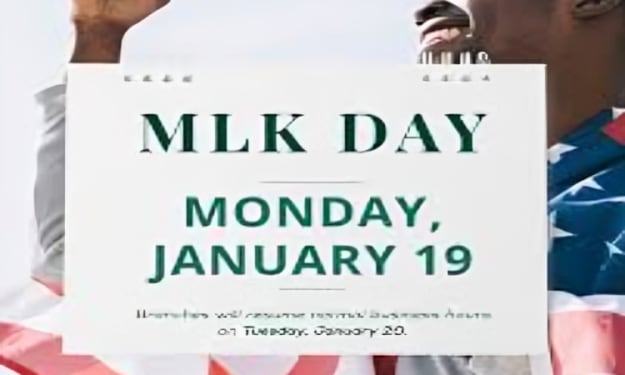
Introduction Martin Luther King Jr. Day, also called MLK Day, is a national holiday in the United States. Many people enjoy a day off from work or school on this day. However, a common question people ask is: Are banks open on MLK Day?
By Farhan Sayed9 months ago in History