Places
The Holocaust
In the heart of the 1940s, a dark cloud of terror enveloped Europe. The Holocaust, a haunting chapter in human history, was casting its malevolent shadow over the lives of millions. This is the story of Hannah, a young Jewish girl, and her struggle to survive amidst the horrors of Nazi Germany.
By emad afsary3 years ago in History
The Top 10 Hidden Treasures of the World
l,,.// Intrepid adventurers and curious souls can find treasures in every region of the world that are all their own. Past the very much trampled ways lie unexpected, yet invaluable treasures — sensational spots that enrapture the creative mind and uncover the rich embroidery of our planet's set of experiences and excellence. We embark on a virtual journey to discover the top ten world's hidden treasures in this article. We will travel across continents and centuries to uncover these extraordinary secrets one at a time, exploring everything from mysterious natural wonders to ancient ruins.
By Arun Karunakaran3 years ago in History
Butter Chicken: The Flavorsome Tale of Culinary Ingenuity
Butter Chicken, also known as Murgh Makhani, is an iconic Indian dish that has garnered immense popularity worldwide. It is a tantalizing blend of succulent chicken pieces cooked in a rich and creamy tomato-based sauce, infused with aromatic spices. The dish boasts a perfect balance of flavors that have made it a favorite among food enthusiasts, both in India and beyond. In this article, we delve into the captivating history and invention of Butter Chicken, tracing its origins and the remarkable journey that led to its widespread acclaim.
By Anonymous Laughter3 years ago in History
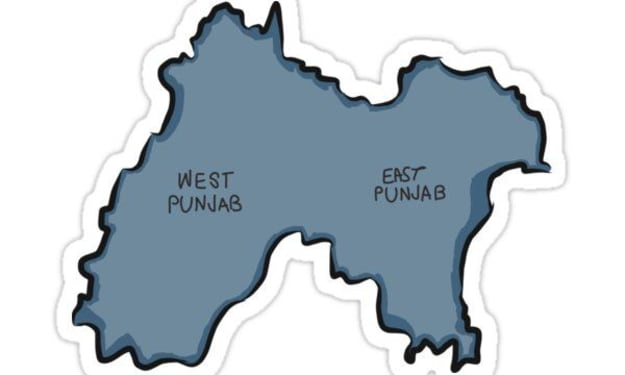
Punjab's Pain: The Tragic Partition of 1947.
The Partition of Punjab and the creation of Pakistan in 1947 marked a significant turning point in the history of the Indian subcontinent. The event resulted in widespread violence, mass migrations, and the division of communities along religious lines. This essay will provide a concise overview of the Partition of Punjab and the birth of Pakistan, highlighting the key events and consequences within a 1000-word limit.
By Gps Stories3 years ago in History
The Top 10 Sporting Events That Bring the World Together
Games have long held a unique spot in our shared perspective, rising above boundaries, societies, and dialects to join individuals from varying backgrounds. They act as stages where competitors feature their expertise, enthusiasm, and assurance, motivating millions all over the planet. In this far reaching article, we will leave on an excursion through the main 10 games that have become inseparable from worldwide solidarity, cultivating a feeling of brotherhood and shared energy. From the Olympic Games to the FIFA World Cup, these occasions have caught the hearts of fans overall and set their situations as the apex of athletic greatness.
By Arun Karunakaran3 years ago in History
Mystical Energy collides with Wisdom.
In the bustling medieval city of Tallin, nestled within the kingdom of Estonia, a young maiden named Victoria was destined for a role that would shape the course of history. Born into the noble Almshouse, Lady Victoria was groomed early to embrace her fate as the future Queen.
By Sharon Bethea3 years ago in History
Independence Day is upon us.
The Declaration of Independence, a seminal document in American history, outlines several key ideas and principles that have had a profound impact on the development of democratic societies worldwide. Adopted by the Continental Congress on July 4, 1776, the Declaration expresses the motivations behind the American colonies' decision to separate from Great Britain and serves as a declaration of the fundamental rights and values upon which the United States was founded. This essay will delve into the key ideas and principles outlined in the Declaration of Independence, exploring their significance and enduring influence. One of the central ideas articulated in the Declaration is the concept of natural rights. The document asserts that all individuals possess certain unalienable rights, including life, liberty, and the pursuit of happiness. By proclaiming these rights as "natural" and "unalienable," the Declaration suggests that they are inherent to human beings and not contingent on any external authority or government. These rights are often considered fundamental human rights, transcending political systems and applicable to all people. The principle of natural rights laid the foundation for the recognition and protection of individual liberties in American society. Closely tied to the concept of natural rights is the idea of equality. The Declaration proclaims that all men are created equal. This assertion rejects the notion of hereditary privilege and asserts that every individual possesses equal worth and should be treated as such under the law. While the Declaration's initial language reflected the prevailing norms of the time, the concept of equality has since evolved to encompass a broader understanding of human rights and inclusivity. It has played a pivotal role in the fight against discrimination, promoting equal treatment and opportunities for all individuals, regardless of their race, gender, or other characteristics. Another fundamental principle outlined in the Declaration of Independence is the concept of consent of the governed. The document states that governments derive their just powers from the consent of the governed. This notion challenges the idea of absolute monarchy or rule by divine right, asserting that legitimate authority is based on the will of the people. It emphasizes the importance of popular sovereignty, wherein the ultimate source of political power resides with the citizenry. Governments are formed to protect the rights and promote the well-being of the people, and their authority should be derived from the consent of those they govern. Linked to the principle of consent of the governed is the right to alter or abolish government. The Declaration states that when a government becomes destructive of the ends for which it was created, such as protecting rights and promoting the common good, the people have the right to alter or abolish it and establish a new government that better serves their interests. This principle recognizes that governments are accountable to the people and should not become instruments of tyranny or oppression. It provides a mechanism for peaceful change and encourages citizens to participate actively in shaping their government to ensure its alignment with the people's will. The Declaration of Independence also introduces the concept of a social contract. Although not explicitly mentioned in the document, the idea is implicit in the language and intent. The social contract theory posits that individuals voluntarily consent to form a government to protect their rights and promote social order. According to this theory, governments derive their authority from the consent of the governed, and their legitimacy is contingent upon fulfilling their obligations to protect the rights and well-being of the people. If a government breaches this contract by abusing its powers or violating rights, it risks losing its legitimacy. In addition to these principles, the Declaration of Independence enumerates a list of grievances against King George III, providing specific examples of the colonists' complaints and justifications for seeking independence. These grievances underscore the importance of limited government, the rule of law, and the protection of individual liberties. They serve as evidence of the British Crown's abuses of power and violations of the colonists' rights, further justifying their decision to break away from Great Britain. The ideas and principles outlined in the Declaration of Independence played a crucial role in shaping the American Revolution and the subsequent establishment of the United States of America. They became the guiding principles upon which the American political system and the U.S. Constitution were built. The principle of natural rights influenced the inclusion of the Bill of Rights in the Constitution, guaranteeing individual liberties such as freedom of speech, religion, and assembly. The concept of equality informed the abolitionist movement, the women's suffrage movement, and the ongoing pursuit of equal rights for all citizens. The Declaration's emphasis on consent of the governed and the right to alter or abolish government laid the groundwork for the American system of representative democracy, with elected officials accountable to the people. It fostered the belief in civic engagement and the idea that individuals have a responsibility to actively participate in the political process. Moreover, the principles of the social contract and limited government shaped the structure and functions of American government, emphasizing the need for a balance of powers, checks and balances, and the protection of individual rights. Beyond the United States, the ideas and principles of the Declaration of Independence have had a significant influence on the development of democratic societies worldwide. The document inspired subsequent revolutions and independence movements, as people across the globe sought to secure their natural rights, assert their self-determination, and establish governments based on popular sovereignty. The principles of natural rights, equality, consent of the governed, and the right to alter or abolish government resonated with individuals striving for freedom and democracy, leaving a lasting imprint on the evolution of modern governance. In conclusion, the Declaration of Independence embodies key ideas and principles that have shaped the course of history and continue to reverberate today. The notion of natural rights, the concept of equality, the importance of consent of the governed, the right to alter or abolish government, and the recognition of a social contract are among the foundational principles outlined in the Declaration. These principles have influenced the development of democratic societies, sparked movements for social justice and equality, and contributed to the enduring legacy of the United States as a beacon of liberty. The Declaration of Independence stands as a testament to the power of ideas and the aspirations of a people seeking self-governance, individual freedom, and a just society.
By Adebisi Ayodele3 years ago in History