Places
Pakistan: A Nation of Heritage and Growth
Pakistan, located in South Asia, is known for its rich cultural heritage, diverse landscapes, and rapidly evolving economy. As a land that bridges the ancient and modern worlds, Pakistan offers a special blend of history, natural beauty, and growing production.
By Zinnat ara Begum2 years ago in History
Devil's Tower National Monument: The Mysterious Monolith That Defies Explanation
Perched in the northeastern corner of Wyoming, Devil's Tower National Monument rises dramatically from the surrounding prairies and the nearby Black Hills. Its sheer vertical columns and towering presence make it one of the most recognizable landmarks in the United States. Officially designated as the nation's first national monument in 1906 by President Theodore Roosevelt, the imposing structure draws thousands of visitors each year. But beyond its visual spectacle, what truly captivates and mystifies people about Devil's Tower is the deep sense of mystery surrounding its formation and the stories that surround it. Despite being studied for over a century, geologists and scholars still debate the exact origins of this unique formation. Indigenous tribes, on the other hand, have their own ancient legends that explain how this majestic monolith came to be. In this blog post, we'll delve into both the scientific theories and the rich folklore surrounding Devil's Tower, exploring why this giant rock formation continues to captivate imaginations worldwide. A Geological Wonder: Theories Behind Its Formation From a scientific standpoint, Devil's Tower is a geological enigma. The monument is a strikingly odd feature, shooting up more than 1,200 feet above the surrounding landscape. The formation consists primarily of igneous rock, but the exact process that led to its creation remains the subject of ongoing research and debate. One popular theory suggests that Devil's Tower is the result of volcanic activity. Millions of years ago, molten magma is believed to have intruded into sedimentary rock layers but never reached the surface. Instead of erupting, the magma cooled and solidified underground, forming a massive igneous structure. Over time, the surrounding softer sedimentary rocks eroded away, leaving behind the towering, hardened rock formation we see today. Another theory posits that Devil's Tower is a product of laccolithic intrusion, where magma pushes upwards and bulges the overlaying layers of rock but doesn’t break through the surface. This process, combined with extensive erosion, could explain the tower’s column-like appearance. In either case, erosion played a critical role in exposing the formation over millions of years, slowly revealing the vertical columns that have become Devil's Tower's hallmark feature. The Tower’s columnar joints—those long, vertical cracks that give the rock its iconic appearance—are characteristic of how igneous rocks contract as they cool. Similar features can be found in other formations around the world, such as the Giant’s Causeway in Northern Ireland. However, the scale and prominence of Devil’s Tower make it one of the largest and most dramatic examples of this natural phenomenon. Indigenous Legends: A Tower of Tales While geologists continue to study and theorize about the formation of Devil's Tower, the Native American tribes of the region have long had their own explanations for its existence. The structure is considered sacred to several tribes, including the Lakota Sioux, the Cheyenne, and the Kiowa, each of whom has its own legends about the tower's origin. One of the most widely known stories comes from the Lakota Sioux, who speak of a time when seven young girls were playing in the forest when they were suddenly chased by a giant bear. To escape the bear, the girls prayed to the Great Spirit, who caused the ground beneath them to rise into the sky, forming the tower. The bear, in an attempt to reach the girls, clawed at the sides of the rock, leaving the deep grooves and vertical columns that are still visible today. The girls were lifted so high into the sky that they eventually became the Pleiades constellation, a group of stars that can still be seen shining above the tower. The Kiowa tribe tells a similar tale, where a group of children were pursued by giant bears. As the children climbed onto a low rock, the Great Spirit made the rock grow upward into the heavens, with the bears clawing at its sides in frustration. The marks of their claws are said to be the ridges on the tower’s surface. These legends, passed down through generations, add a mystical element to the already mysterious formation. For the tribes of the region, Devil's Tower is not just a geological wonder but a sacred place that holds spiritual significance. The site continues to be a place of prayer and ceremony for many Native American tribes, and its cultural importance is recognized by the U.S. government. A Place of Adventure and Intrigue Beyond its rich history and mysterious origins, Devil's Tower has become a hotspot for climbers and adventure enthusiasts. The vertical columns provide some of the most challenging and rewarding climbing routes in North America. In fact, Devil’s Tower is considered a mecca for rock climbers, with its unique shape and crack systems offering an unparalleled climbing experience. However, out of respect for Native American traditions, there is a voluntary climbing closure each June during significant tribal ceremonies. The monument’s striking appearance has also made it a pop culture icon. Perhaps most famously, Devil's Tower played a central role in Steven Spielberg’s 1977 science fiction classic Close Encounters of the Third Kind, where it was depicted as a landing site for extraterrestrial spacecraft. This further cemented the monument’s status as a place of intrigue and fascination, both on Earth and beyond. Conclusion: Nature, Mystery, and Legend Whether you're drawn to Devil's Tower for its natural beauty, its rich cultural heritage, or its mysterious origins, there's no denying the awe-inspiring effect this monolith has on all who encounter it. From the scientific theories of volcanic origins to the indigenous stories of bears and sacred connections, Devil's Tower remains a place where history, geology, and mythology intertwine. Even today, its true origins remain uncertain, adding to the allure of this iconic formation. For visitors, it’s a chance to witness not just a geological marvel but a place where the stories of the past live on in every ridge and column. As we continue to study and preserve this national monument, Devil’s Tower stands as a reminder of the natural world’s ability to inspire wonder, mystery, and reverence across generations. Whether you're exploring the prairies below or climbing its towering heights, the Devil’s Tower will continue to captivate minds for centuries to come.
By Deji Akomolafe2 years ago in History
The Untold Tales of Ancient Civilizations
Introduction Hook: Imagine walking through the sands of time, uncovering secrets that have been buried for millennia. What stories would these ancient grains tell us? Thesis Statement: This article explores the hidden secrets of ancient civilizations, revealing the mysteries and marvels that lie beneath the sands. Overview: We will journey through the enigmatic lands of Egypt, the Indus Valley, Mesopotamia, China, the Maya civilization, and the legendary Atlantis.
By Sazeeb Chowdury2 years ago in History
Bangladesh Railway: The Lifeline of the Nation’s Transport Network
Bangladesh Railway is an integral part of the country's transport infrastructure, offering millions of people a reliable and affordable means of travel. Established in 1862, the railway network has expanded significantly, connecting major cities, towns, and rural areas, playing a crucial role in the nation’s economic growth.
By Zinnat ara Begum2 years ago in History
Historical Ybor City has seen many changes
The first time I ever saw a glimpse of Ybor City was from the window of an orange school bus taking me to Booker T. Washington middle school in 1984. It was a ghetto back then. There was an old forgotten cigar museum, a few struggling businesses, The Columbian Restaurant, and a lot of empty rotting space. There were no hotels or condos. Not too far away from my school or Ybor City were buildings that they called "the projects". In 1984, it did not look like the Ybor City that visitors see today.
By Shanon Angermeyer Norman2 years ago in History
US Elections in Search 2024
The 2024 U.S. races: A significant second in American legislative issuesAs the 2024 U.S. races approach, the country ends up at a basic point. The impending political race isn't simply one more challenge for power; it is an impression of the more extensive social, financial, and political flows molding the US. From the administration to the neighborhood educational committees, each chosen position will assume an essential part in deciding the country's heading over the course of the following couple of years.
By ALI HOSSAIN MOLLA2 years ago in History
What Happened After We Unearthed This Massive Underground City: The Discovery of Derinkuyu
In 1963, a seemingly ordinary home renovation in Turkey led to an extraordinary discovery that would captivate historians, archaeologists, and curious minds alike. This is the story of Derinkuyu, the largest underground city ever discovered, a subterranean marvel that has fascinated generations. Its origins, purpose, and the circumstances that led to its rediscovery are as compelling as the structure itself.
By Marveline Merab2 years ago in History
The Fifth Son Of The Loong king
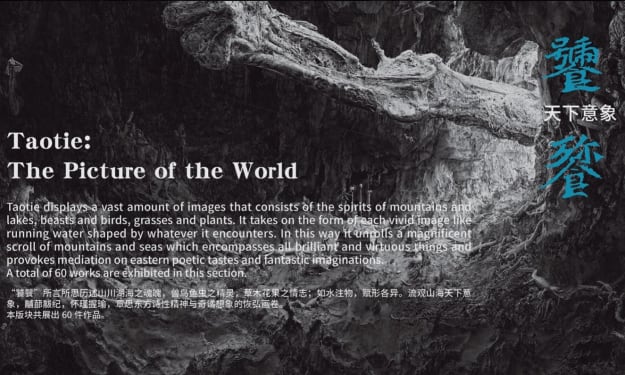
In ancient China, there was a book called *Shan Hai Jing* (*The Classic of Mountains and Seas*). This is an ancient text, a compilation of Chinese mythological geography, cosmology, and folklore. It describes a variety of magnificent and mysterious ancient Chinese creatures, which have inspired countless readers throughout history, leading them to create even more astonishing works based on *Shan Hai Jing*. Today, as Chinese culture gains increasing recognition and importance around the world, this ancient text, which to some extent represents Chinese mythology, has once again been carefully revisited. And today, the creature we are going to talk about comes from within its pages. Taotie, whose existence can be traced back even earlier than *Shan Hai Jing*, became widely known thanks to this ancient text. There are at least three versions of its origin. The most famous one naturally comes from the description in *Shan Hai Jing*. In the *Classic of Northern Mountains* within *Shan Hai Jing*, Taotie is depicted as a fierce beast with the body of a sheep, the face of a human, and eyes under its armpits. It was born in the Northern Mountains and symbolizes greed and gluttony. It is often mentioned alongside the other three great malevolent beasts of ancient China, collectively known as the “Four Great Malevolent Beasts.” However, Taotie has another widely spread origin. During the Ming Dynasty (1368–1644), another great work emerged: *Sheng’an Waiji* (*Outer Collection of Sheng’an*), which documented the nine sons of the Chinese dragon. The saying "the dragon has nine sons, each different" comes from this book. In its records, Taotie is the fifth child of the Dragon King. In this version, Taotie is a divine beast that devours all the suffering and misery in the human world. It consumed all the world's bitterness, bringing temporary peace to this less-than-perfect world. Unfortunately, this peace was short-lived. Even in this book, Taotie came to represent an insatiable desire for gluttony. But as a living creature, it couldn’t stop eating just because "all the food was in its belly." Eventually, starving and desperate, Taotie turned its gaze to the only source of food left—its own stomach. Ravenous, it tore apart its own body, gaining temporary satisfaction. However, since Taotie's stomach was filled with all the world's negative emotions and disasters, once its body was torn apart, these vast negative emotions, with no place to be contained, scattered back into the world like wild beasts escaping their cage. Even worse, without its body, Taotie could no longer store the calamities, even if it consumed them again. From that point on, both Taotie and the world were trapped in a bizarre, cyclical nightmare. Taotie endlessly devoured suffering, but without a body to hold it, the suffering scattered once more, while Taotie’s hunger grew more unbearable. Over time, in this version of the myth, Taotie also became a symbol of greed and gluttony. In fact, whether it devoured its own body out of biological instinct or sheer gluttony has become unclear. But in any case, Taotie has undeniably become an integral part of Chinese civilization. The giant bronze cauldrons unearthed from the Shang Dynasty, engraved with Taotie motifs, and the latest artifacts with Taotie patterns unearthed at Sanxingdui all tell the story of China’s long and profound history, instilling confidence in the Chinese people. At the same time, it has also made an indelible contribution to the development of human spiritual civilization!Start writing...
By Oliver·love Mei Ni2 years ago in History
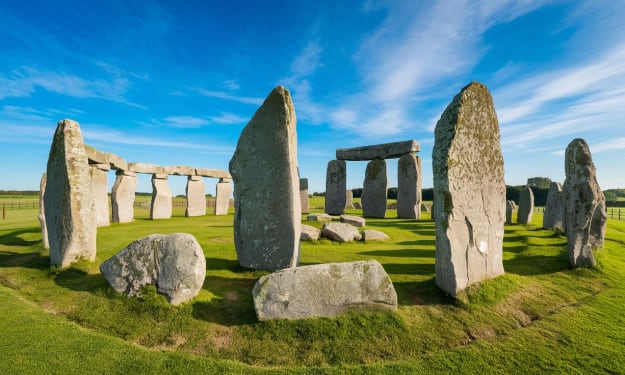
Secrets of the Avebury Stones: What Makes This Circle So Enigmatic?
Nestled in the heart of rural England, Avebury is a monumental symbol of the Neolithic era, located within Wiltshire—a county rich with archaeological, historical, and spiritual sites. As the largest Neolithic stone circle in Europe, Avebury offers a unique glimpse into ancient human ingenuity, rivaling even Stonehenge in grandeur and mystery. But what makes this site truly remarkable is the ongoing enigma of why it was built and its connections to other surrounding Neolithic landmarks.
By Mai Soliman2 years ago in History
Why Did the World Ignore This Island for 15 Years? The Forgotten Story of Tromelin Island
In the middle of the vast Indian Ocean lies a small, seemingly insignificant patch of land known as Tromelin Island. At just one mile long and half a mile wide, it's the kind of place that might go unnoticed by even the most seasoned sailor. Yet, buried beneath its sandy surface is a harrowing tale of survival, human endurance, and the tragic consequences of colonial greed.
By Marveline Merab2 years ago in History
The London Underground Has Secrets You Wouldn't Expect
Beneath the bustling streets of one of the world’s most famous cities lies a vast and complex labyrinth: the London Underground. Known to millions simply as “the Tube,” this iconic transport network has served as the lifeblood of London for over 160 years. But behind the hum of trains and the chatter of commuters is a rich tapestry of secrets, innovations, and peculiarities that most people never notice.
By Marveline Merab2 years ago in History