Places
The Mystery of Lascaux Cave: Unlocking Prehistoric Secrets
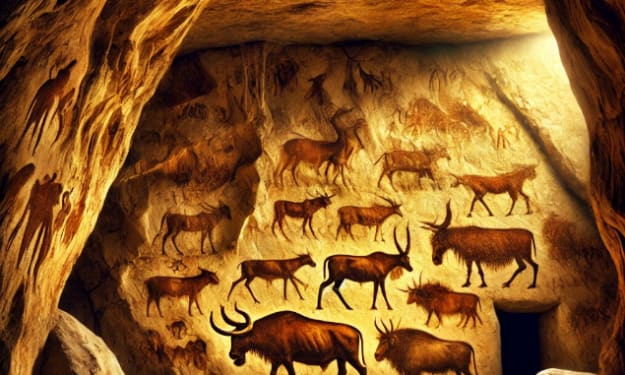
Hidden in the hills of southwestern France lies one of humanity's most profound connections to its prehistoric past: the Lascaux Cave. Discovered in 1940 by four teenagers, the cave has captivated the imagination of archaeologists, historians, and art enthusiasts for decades. Known for its remarkable Paleolithic paintings, the cave remains an enduring symbol of early human creativity and a window into the lives of our distant ancestors.
By mariam elghazaly2 years ago in History
The Mystery of the Tombs of the Pharaohs: A Timeless Enigma
The tombs of the Pharaohs are among the most fascinating archaeological wonders of the ancient world. These burial chambers, built thousands of years ago, continue to captivate historians, archaeologists, and adventurers alike. From their intricate designs to the secrets they guard, the tombs of Egypt's ancient kings offer a glimpse into a civilization that was ahead of its time. However, these tombs are not just historical monuments; they are surrounded by a veil of mystery, danger, and legend. This article delves into the enigmatic world of the Pharaohs' tombs and explores why access to these ancient burial sites is often restricted.
By mariam elghazaly2 years ago in History
Unraveling the Threads of Time
Today we will explore the history of human colonization in North America, tracing the path from the first inhabitants to the first interactions with European explorers. Using archaeological insights, we will reveal ancient enigmas related to the indigenous populations that flourished on this varied continent. It is essential to recognize the diverse and unique trajectories of various indigenous cultures in North America. The evolution of these cultures has not adhered to a standardized timeline; rather, it has been shaped by their specific environments and interactions.
By A História2 years ago in History
Understanding ASEAN
The Association of Southeast Asian Nations (ASEAN) is an important organization that brings together countries in Southeast Asia to work on common goals. Established in 1967, ASEAN aims to promote peace, stability, and economic growth in the region. This article explains what ASEAN is, its goals, its members, and why it matters—all in simple and easy-to-understand language.
By Farhan Sayed2 years ago in History
Ashes of History: Los Angeles Wildfires Claim Priceless Architectural Heritage
Los Angeles, a city renowned for its rich history and architectural splendor, now bears the scars of a fiery devastation that has reshaped its cultural landscape. As the Eaton and Palisades wildfires continue to rage, their wrath has extended far beyond homes and businesses, consuming the very fabric of the city’s heritage. At least 35 historically significant structures, many of which embodied decades or centuries of history, have been reduced to ash.
By mureed hussain2 years ago in History
If you conquered the world, where would you make your capital?
I love “What If” questions and answers. Don't you? They make you use your imagination and brainstorm. Someone asked: “What If you conquered the world, where would you make your capital?”
By Treathyl Fox (aka cmoneyspinner)2 years ago in History
The First Americans
Throughout the history of human exploration, our species has encountered a multitude of challenges. The capacity for adaptation has been crucial for both survival and the proliferation of human populations across the planet. Africa, Asia, Europe, and Oceania have historically served as significant centers of human habitation, profoundly influencing their respective environments. In contrast, the narrative surrounding the American continents remains more elusive. Ongoing inquiries regarding the origins of the first Americans and the processes of colonization in this geographically isolated region continue to intrigue scholars.
By A História2 years ago in History
The Shimmering Sands of Eldoria
The Shimmering Sands of Eldoria The blazing sun bore down on the endless golden dunes of the Sahara Desert, painting the horizon with mirages that wavered like ghostly promises. Amelia Grant, a renowned archaeologist with a reputation for chasing myths, stood on a ridge, clutching a weathered leather-bound journal. Its brittle pages contained the map to a treasure whispered about in ancient legends: Eldoria, the fabled city of gold, said to be swallowed by the desert centuries ago. Beside her was Karim, a seasoned desert guide who had spent his life navigating the shifting sands. His deep-set eyes reflected skepticism, but his curiosity was piqued by Amelia’s unwavering belief in the impossible. “Are you sure this is the place?” Karim asked, his voice tinged with doubt. Amelia nodded, pointing to the markings on the map. “The journal speaks of a constellation that aligns with this location. We’re close, Karim. I can feel it.” They trudged down the dune, their camels laden with supplies. As the sun dipped below the horizon, the desert transformed into a cold, quiet expanse. That night, under a sky bursting with stars, Amelia pored over the map again. Her fingers traced the faded ink, and her thoughts wandered to the stories her grandfather had told her—stories of an underground city where gold was as common as sand and knowledge as vast as the desert itself. The next morning, armed with determination, they set out again. The dunes seemed to stretch endlessly, each one a mirror of the last. Days turned into weeks, their supplies dwindling. Just as doubt began to creep into Amelia’s mind, Karim called out. “Look! There’s something over there!” In the distance, half-buried in the sand, stood an ancient stone pillar inscribed with symbols that matched those in the journal. They dug feverishly, uncovering a circular stone door engraved with celestial patterns. At its center was a depression shaped like the medallion Amelia wore around her neck—a family heirloom she now realized was the key to Eldoria. With trembling hands, she placed the medallion into the slot. The ground rumbled, and the door slowly slid open, revealing a dark, spiraling staircase that descended into the earth. The air grew cooler as they descended, their torches casting flickering shadows on the walls. The staircase ended in a cavernous chamber, and what lay before them took their breath away. Eldoria was real. The underground city sprawled out like a dream, its walls and buildings shimmering with gold. Intricate carvings depicted scenes of life and prosperity, with figures holding scrolls, harvesting crops, and worshipping celestial beings. At the city’s center stood a towering obelisk, its surface covered in a language Amelia couldn’t decipher. “This… this is beyond anything I’ve ever imagined,” Amelia whispered. Karim, usually stoic, was visibly awestruck. “It’s beautiful. But it feels… guarded.” As if in response to his words, a low hum filled the chamber. The golden obelisk began to glow, and a voice—neither male nor female—echoed through the cavern. “Who dares disturb the sanctuary of Eldoria?” Amelia stepped forward, her voice steady despite her racing heart. “We come seeking knowledge, not destruction.” The hum ceased, and a path lit up, leading to the obelisk. As they approached, Amelia noticed symbols etched on the ground, matching the constellations from the journal. “Step only where the stars guide you,” Karim muttered, recalling the journal’s warning. They carefully navigated the path, avoiding the unlit spaces. Behind them, a misstep by Karim triggered a trap—sharp darts shot from hidden walls. The danger was real, and the city’s defenses were as ancient as they were deadly. At the base of the obelisk, Amelia placed her hand on its surface. It warmed under her touch, and the carvings began to shift, forming a story. It told of a civilization that had thrived on knowledge, using gold not for wealth but as a means to preserve their wisdom. When invaders threatened, the people of Eldoria chose to bury their city, entrusting its secrets to the sands of time. Amelia felt a profound connection to the place, as if she had been chosen to find it. She and Karim explored further, uncovering vast libraries filled with scrolls, chambers of golden artifacts, and pools of crystalline water that seemed to reflect visions of the past. But their discovery was not without consequence. As they prepared to leave, the obelisk began to dim, and the city trembled. “It’s collapsing!” Karim shouted. Amelia’s mind raced. She realized Eldoria’s magic was tied to its secrecy. By exposing it, they had disrupted its balance. She made a choice. “We can’t let this knowledge be lost again,” she said, grabbing as many scrolls as she could carry. Karim did the same, and they sprinted for the staircase as the city crumbled behind them. Back on the surface, they watched as the sands shifted, burying Eldoria once more. “Do you think anyone will believe us?” Karim asked. Amelia held up a golden scroll, its surface gleaming in the sunlight. “They don’t need to. The proof is here, and its story will be told.” As they mounted their camels and rode toward civilization, Amelia couldn’t help but smile. They had unearthed not just a treasure but a legacy—a reminder that the greatest riches lie in knowledge and the courage to seek the unknown.
By Say the truth 2 years ago in History
Fascinating Tales from the Past: History's Hidden Gems.
1919's Great Molasses Flood Envision a sticky catastrophe of monumental scale! A huge tank of molasses in Boston exploded, unleashing a 15-foot tsunami that raced through the streets at 35 miles per hour. Out of 150 persons injured, 21 died in this strange disaster. It took weeks to clean up, and for decades thereafter, many said they could still smell molasses on hot days.
By Neli Ivanova2 years ago in History
Exeter’s Stranded Medieval Bridge: The Mystery of the River Exe’s Movement
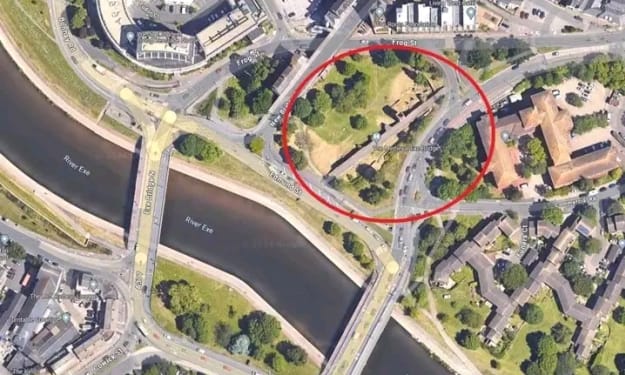
In the heart of Exeter, Devon, an unusual historical relic stands as a testament to the ever-changing forces of nature: a medieval bridge that now stands "high and dry," far from the River Exe it once crossed. This peculiar phenomenon has puzzled many visitors and historians, leading to questions about how and why the river shifted, leaving the bridge seemingly stranded in its current location. A Bridge to the Past The medieval bridge in Exeter, built in the 13th century, was a remarkable feat of engineering for its time. Spanning the River Exe, it facilitated the flow of people and goods, playing a vital role in the city’s growth and prosperity. The bridge connected Exeter to the surrounding countryside, serving as a key link in trade routes that brought wealth and resources to the region. Constructed using local stone, the bridge was designed to withstand the powerful currents of the River Exe. It featured multiple arches and was equipped with small chapels and shops along its span—common features of medieval bridges that doubled as hubs of commerce and worship. For centuries, it remained a critical artery of Exeter’s infrastructure. The Mysterious Movement of the River By the 18th century, however, the River Exe had shifted its course, leaving the bridge stranded far from the water it once crossed. This dramatic change raised questions about the factors that caused the river to move and abandon its original path. Several natural and human-induced processes may have contributed to this phenomenon. 1. Sedimentation and Natural River Processes One of the most likely explanations is the natural process of sedimentation and river migration. Over time, rivers deposit sediment along their banks and beds, gradually altering their course. The River Exe, like many rivers, may have meandered and shifted due to the accumulation of silt and debris. Changes in water flow, caused by seasonal variations or natural events such as floods, could have accelerated this process, prompting the river to carve out a new path. 2. Flooding and Erosion Devastating floods may also have played a role in the river’s movement. During heavy rainfall, rivers often overflow their banks, eroding surrounding land and creating new channels. Historical records suggest that Exeter experienced significant flooding events during the medieval and early modern periods, which could have contributed to the Exe abandoning its original course. 3. Human Intervention Human activity is another possible factor in the river’s realignment. As Exeter expanded, efforts to manage the flow of the River Exe became increasingly common. These included the construction of weirs, canals, and embankments, which could have inadvertently altered the river’s path. Additionally, land reclamation projects for agriculture and urban development may have forced the river to divert. A Bridge to Nowhere? With the river no longer beneath it, the medieval bridge fell into disuse, its role as a vital crossing point rendered obsolete. Over time, it became a relic of a bygone era, surrounded by fields and roads instead of water. However, the bridge’s survival is a testament to the craftsmanship of its builders, who created a structure strong enough to withstand centuries of change. Today, the bridge is a fascinating historical landmark, drawing visitors intrigued by its peculiar position and the story it tells about Exeter’s past. Archaeologists and historians continue to study the site, uncovering clues about the medieval period and the dynamic relationship between human settlements and natural landscapes. The Legacy of the Medieval Bridge While the medieval bridge may no longer serve its original purpose, it remains an enduring symbol of Exeter’s history and resilience. Its survival offers valuable insights into the engineering techniques of the Middle Ages, as well as the challenges faced by communities living along dynamic river systems. The bridge also serves as a reminder of the impact of environmental and human factors on the natural world. The shifting course of the River Exe highlights the delicate balance between human development and the forces of nature—a balance that continues to shape the landscapes we inhabit today. Visiting the Bridge For those exploring Exeter, the medieval bridge is a must-see attraction. Its weathered stone arches and picturesque surroundings make it a unique spot for history enthusiasts and photographers alike. The bridge is part of Exeter’s rich tapestry of heritage, which includes its Roman walls, medieval cathedral, and Tudor buildings. Guided tours and interpretive signage provide context for the bridge’s history and the reasons behind its unusual position. Visitors can also learn about the broader history of the River Exe and its role in shaping the city’s development over the centuries. Conclusion The story of Exeter’s stranded medieval bridge is one of resilience and adaptation, both human and natural. Built to span the River Exe, it now stands as a silent witness to centuries of change—its arches a bridge to the past. The mystery of the river’s movement reminds us that even the most permanent-seeming features of our environment are subject to transformation, shaped by the forces of time, nature, and human ingenuity. Whether viewed as a historical curiosity or a symbol of Exeter’s enduring legacy, the medieval bridge is a captivating piece of history that continues to inspire wonder and reflection.
By Deji Akomolafe2 years ago in History