Places
Letters from the Trenches: A WWI Correspondence
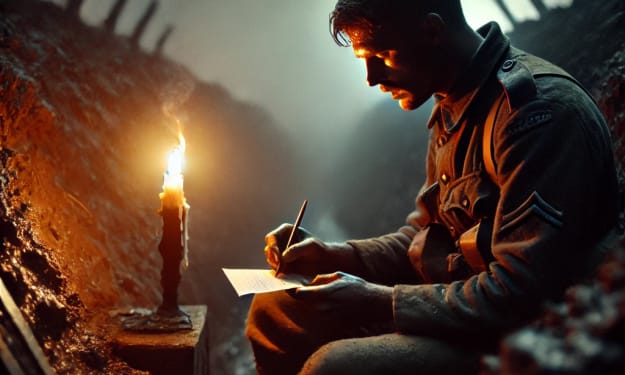
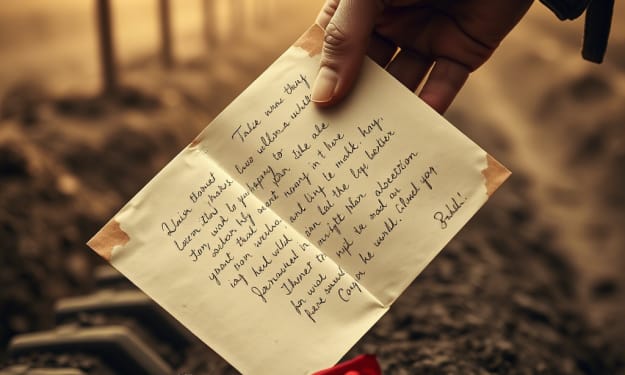
Letter 1: Private James Whitford to Nurse Eleanor Hartley 12th November 1916, Somme Sector Dearest Miss Hartley, Do you recall the day we met? It was raining—a cold, spiteful drizzle—and I’d been brought to your field hospital with a shrapnel wound in my leg. You handed me a cup of tea, your hands steady despite the chaos around us, and said, “Drink this. You’ll live to see another sunrise.” I thought then that your voice was the kindest sound I’d heard since leaving Sussex.
By sasanka perera2 years ago in History
Sati: A Comprehensive Exploration of History, Culture, and Law. Content Warning. AI-Generated.
Sati, or self-immolation, is a historical practice in which a widow sacrifices herself by ascending her deceased husband’s funeral pyre. Though often misrepresented as a religious rite, sati is a cultural tradition rooted in patriarchal norms and feudal honor systems. Banned in India since 1829 under British colonial rule and reinforced by modern legislation, sati remains a contentious symbol of gendered violence and societal control. This essay delves into the origins, evolution, regional variations, socio-cultural context, legal framework, and contemporary implications of sati, dispelling myths and highlighting its complex legacy.
By Nithisha PJ2 years ago in History
Guamanian: Culture, Language & Heritage
The Guamanian Chamorro people have a unique culture deeply rooted in the Mariana Islands. This chain of islands is in the Pacific. Their culture is a mix of old traditions and new influences. It shows a strong community spirit and respect for their heritage.
By The Big Bad 2 years ago in History
A sweet Potato Peel Pie Adventure.
Dear little one, It is a dreary February Saturday, the kind of day when you have to nap and do some task that is delegated for such a day as this. I must clean up a drawer. It contains my random notes and notebooks from times long past.
By Katherine D. Graham2 years ago in History
Pilot Last Words Before Plane Crash 😔
Pilot Last Words Before Plane Crash Air travel is considered one of the safest modes of transportation but when an aircraft crashes it turns into a massive tragedy. After a crash the most important question is What happened. The answer to this question is often found in the black box a device installed in every aircraft that records the pilots' final conversations and flight data. Many times the recordings in the black box contain words that reflect fear surprise helplessness or even courage. Some words send chills down the spine while others become immortal last messages to the world. Here we take a detailed look at five unfortunate flights their final words and the stories behind them.
By Adnan Rasheed2 years ago in History
Can India beat China in future?
China and India are the largest population countries in the world and the economy of both is growing rapidly. But China has taken a lot of lead from India in many regions. In this article, we will compare China and India on the basis of infrastructure, education, technical sector, global trade and military power and will try to understand whether India can defeat China in the future.
By Neeraj Tiwari2 years ago in History
Hidden in the clay clues to Harappa’s diet.
Hidden in the clay clues to Harappa’s diet. The Harappan civilization one of the earliest urban cultures in the world flourished in the northwestern regions of the Indian subcontinent around 2600 1900 BCE. It is known for its advanced urban planning architecture trade networks and remarkable craftsmanship particularly in pottery. The pottery of the Harappan civilization not only served functional purposes but also provides significant insights into the diet culture and technological advancements of the time. Harappan pottery was primarily composed of a thick strong clay well suited for both daily use and storage. Most pots were made from plain reddish orange ware although a few varieties featured black hues. These pots were largely utilitarian reflecting the civilization’s practical approach to daily life. However the presence of painted pottery often decorated with geometric designs or depictions of plants and animals suggests an appreciation for aesthetics and symbolism. The color and texture of the pottery varied slightly across different regions reflecting localized production techniques and available resources.
By Adnan Rasheed2 years ago in History
An ancient human bridge that dates back 6,000 years was found in a hidden underwater cave.
In an astonishing discovery, archaeologists have unearthed a 6,000-year-old bridge, believed to have been constructed by ancient humans, in a secret underwater cave. This remarkable find has provided new insights into the engineering prowess of early civilizations and their ability to adapt to challenging environments.
By Francis Dami2 years ago in History
A breakthrough in archaeology as scientists are astounded by the "marvel of engineering"
In a groundbreaking discovery, archaeologists have unearthed a marvel of engineering that has left scientists astounded. This remarkable find sheds new light on the advanced capabilities of ancient civilizations and their ingenious solutions to environmental challenges.
By Francis Dami2 years ago in History