Places
History of River
Rivers have shaped the course of human history and the natural world for millions of years. These dynamic waterways, flowing from highlands to seas, have not only carved landscapes but have also fostered the growth of civilizations, driven economies, and inspired cultural narratives. The history of rivers begins long before humans walked the Earth. Geologically, rivers formed as rainwater collected in natural channels, cutting through rock and soil over millennia. The world's oldest rivers, such as the Finke River in Australia and the Nile in Africa, date back tens of millions of years, bearing witness to Earth's ever-evolving topography. In human history, rivers have been both cradles of civilization and critical lifelines. The earliest known civilizations flourished along river valleys due to their fertile lands and access to water. Around 3100 BCE, the ancient Egyptians thrived along the Nile River. The river's predictable flooding deposited nutrient-rich silt, allowing agriculture to prosper. The Nile became a symbol of life, worshiped as a divine force and immortalized in countless hymns and hieroglyphs. Similarly, the Tigris and Euphrates Rivers nurtured Mesopotamia, often referred to as the "Cradle of Civilization." The Sumerians, Akkadians, Babylonians, and Assyrians all depended on these rivers for irrigation, transport, and trade. Their ingenuity in building canals and levees highlights how ancient societies learned to harness rivers’ power while contending with their unpredictable nature. In South Asia, the Indus River Valley Civilization (circa 2600–1900 BCE) flourished along the Indus River and its tributaries. Cities like Harappa and Mohenjo-daro showcased advanced urban planning, with sophisticated drainage systems—an impressive feat that underscored the river’s significance in shaping early human settlements. China's history is deeply intertwined with its rivers, particularly the Yellow River (Huang He) and the Yangtze River (Chang Jiang). The Yellow River, often called the "Mother River of China," supported ancient Chinese civilization for thousands of years. However, it was also known as "China's Sorrow" due to its devastating floods, which prompted complex hydraulic engineering efforts to control its waters. In the Americas, rivers played equally vital roles. The Mississippi River provided a crucial trade route for Native American tribes and, later, European settlers. The Amazon River, the largest river by discharge volume, sustained diverse ecosystems and Indigenous cultures, long before European exploration. Rivers have not only shaped economies but also influenced culture and religion. The Ganges River in India is considered sacred by Hindus, believed to purify sins and deliver salvation. Pilgrims flock to its banks to perform rituals, reinforcing the river’s spiritual significance. In medieval and modern history, rivers continued to be strategic assets. Cities like Paris along the Seine, London along the Thames, and Rome along the Tiber grew into influential centers of trade and governance. Rivers enabled commerce, facilitated military campaigns, and connected remote regions, fueling economic and cultural exchanges. The Industrial Revolution (18th–19th centuries) saw rivers harnessed for power, with watermills driving factories and transportation canals enhancing trade. However, industrialization also brought pollution, disrupting ecosystems and endangering river health. Today, rivers remain vital, but they face modern challenges. Dams, pollution, and climate change threaten their ecosystems and the communities relying on them. Efforts like the revival of the Rhine in Europe and conservation projects for the Colorado River in the United States aim to balance human needs with environmental sustainability. Ultimately, rivers are more than flowing water—they are the lifeblood of civilizations, carriers of culture, and enduring symbols of nature’s power. Understanding their history enriches our appreciation of the interconnectedness between natural landscapes and human progress, urging us to protect these vital arteries of the Earth.
By Budhirai Tripura2 years ago in History
The Timeless Relevance of Ancient Subjects in Modern Education
Introduction In the rapidly evolving world of education, where new disciplines emerge to address contemporary challenges, certain ancient subjects have withstood the test of time. These millennia-old disciplines continue to be integral components of modern curricula, offering invaluable insights into human civilization and the natural world. This article delves into the enduring significance of these ancient subjects, exploring their historical roots and their relevance in today's academic landscape.
By TechyByGaurav 2 years ago in History
The Victorian Workhouse
Helping “the poor” in an organized way goes as far back as 1388 when the Poor Law Act was introduced. This Law started to increase the involvement of the state to take responsibility towards the poor people who lived within their parish. The Poor Relief Act of 1576 was brought out for those who could work or who were willing to work in order to receive support. In 1601, the legal framework made the parish ‘responsible’ for “enacting the poor relief within geographical boundaries. This is the foundation of the principles for the Victorian Workhouses.
By Ruth Elizabeth Stiff2 years ago in History
"Whispers Through Time: The Enduring Power of Love Letters Across History". Content Warning. AI-Generated.
Love Letters Through Time: The Weight of Words Love letters have long been the lifeblood of human emotion, capturing the most private declarations of devotion across international boundaries and centuries. Still used to convey love in a romantic sense today, from ancient Mesopotamian clay tablets to Victorian-era parchment, these written testaments to love go beyond their immediate contexts, providing windows into historical periods that give us incredible insights into the emotional landscapes of the time. A love letter is so much more besides — a slice of life, a record of feeling in a moment when what we felt seemed like all we had, stuck to the page like spit from Lulie to Lou, as it was for ball players on date night.
By Abdur Raffay2 years ago in History
Temples Through Time: From Ancient Reverence to Modern Worship
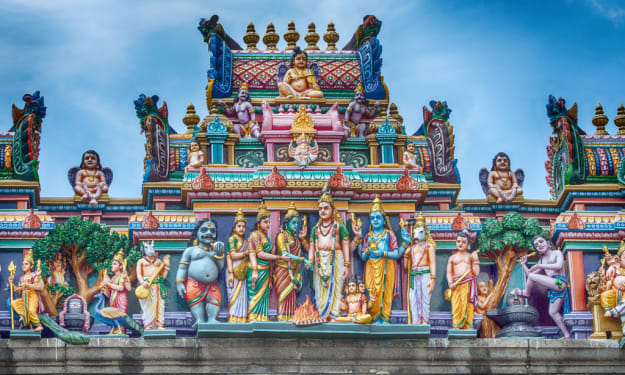
The Evolution of Temples: From Ancient Reverence to Modern-Day Worship Temples have always held a special place in the cultural and spiritual fabric of India. In ancient times, temples were not just places of worship; they were centers of community life, education, and culture. They were treated with the highest reverence and were often seen as the abode of the divine, where both the spiritual and material worlds converged. Over the centuries, the treatment and significance of temples have evolved, reflecting changes in society, technology, and spirituality.
By Sri Kamakshi Ambal Temple2 years ago in History
Discover the Hidden Shrines of Kamakshi Amman Temple: A Spiritual Journey Awaits
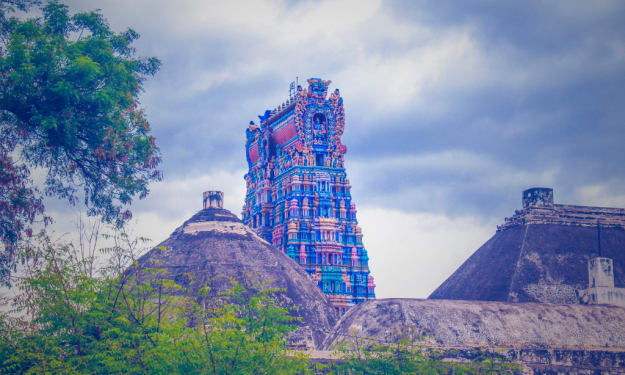
The Kamakshi Amman Temple, located in the ancient city of Kanchipuram, Tamil Nadu, is one of the holiest and most revered shrines in India. Dedicated to Goddess Kamakshi, an incarnation of Parvati, this temple is a beacon of spiritual significance. While the central sanctum, where Goddess Kamakshi is enshrined, draws the majority of pilgrims, there are several other shrines within the temple complex that deserve exploration. These shrines, each with its unique spiritual importance, offer a deep dive into the rich cultural heritage and spiritual vibrancy of this sacred place.
By Sri Kamakshi Ambal Temple2 years ago in History
Waiting in Germany
December 26th, 1990 Hello, My Love, I am writing the day after Christmas, so I know you won't receive the letter for a while. I am so mad - the Army assured us our soldiers would have time with their families before deploying to Iraq for Desert Storm. We barely saw you from the beginning of November until you left Christmas week!!
By Andrea Corwin 2 years ago in History
What is Ramadan and how do Muslims observe the Islamic holy month?
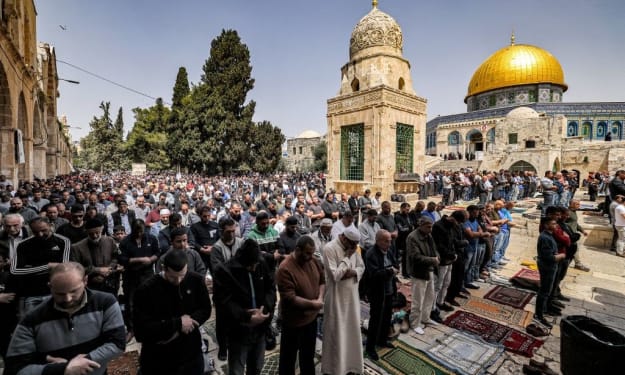
What is Ramadan and how do Muslims observe the Islamic holy month? Ramadan is the holiest month in the Islamic calendar a period of spiritual reflection self discipline and devotion. It is observed by millions of Muslims worldwide who fast from dawn to sunset refraining from food drink and other physical needs during daylight hours. However Ramadan is much more than just abstaining from food it is a time of increased worship charity self improvement and community bonding. The essence of this sacred month lies in deepening one's relationship with God seeking forgiveness and purifying the heart and soul. Fasting known as sawm is one of the Five Pillars of Islam making it a fundamental religious obligation for adult Muslims with exceptions for children the elderly pregnant or nursing women travelers and those who are ill. The fast begins before sunrise with a pre dawn meal called suhoor and it is broken at sunset with iftar, the evening meal. Traditionally Muslims break their fast with dates and water followed by a meal that varies based on cultural and regional traditions.
By Adnan Rasheed2 years ago in History