Places
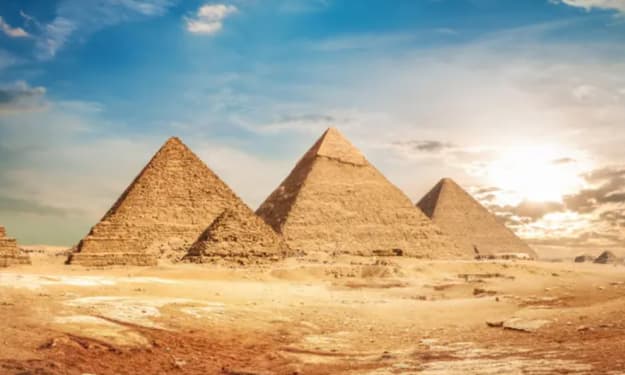
Ancient Egyptian pyramids thought to contain only the elite may also hold low class laborers.
Ancient Egyptian pyramids thought to contain only the elite may also hold low class laborers. The ancient Egyptian pyramids have long been regarded as monuments to the elite serving as grand tombs for pharaohs and high ranking officials. However recent archaeological discoveries challenge the notion that these structures were exclusively for the ruling class. Evidence suggests that the pyramids may also contain the remains of low-class laborers shedding new light on the social dynamics and burial practices of ancient Egypt. This revelation reshapes our understanding of how the civilization honored not just its rulers but also the workers who played a crucial role in constructing these massive edifices. For centuries the prevailing belief was that only the pharaohs and the elite were entitled to elaborate burials within the pyramid complexes. These towering structures built primarily during the Old Kingdom period were designed as eternal resting places for the kings, ensuring their passage to the afterlife. The intricate burial chambers filled with treasures and elaborate carvings were thought to be reserved for those of noble birth. However excavations near the Giza pyramids have provided compelling evidence that suggests otherwise.
By Adnan Rasheed2 years ago in History
Alice and the Enchanted Rabbit Hole
Alice had always been an inquisitive youngster. She was engrossed in the wind's whispers, the leaves' dance, and the enigmatic world around her as other kids engaged in typical games. But the day she found a weird rabbit hole caught her off guard.
By MD.ATIKUR RAHAMAN2 years ago in History
Top Benefits of Choosing Coach Hire in Leeds
Leeds, a vibrant city rich in culture, history, and stunning landscapes, is a popular destination for everything from corporate events to family outings. Whether you’re planning a school trip, a wedding, or simply a group adventure, transportation logistics can make or break your experience. That’s where coach hire in Leeds comes to the rescue. It offers a convenient, cost-effective, and eco-friendly way to move groups efficiently while enhancing comfort and enjoyment.
By william9092 years ago in History
The Elamites
Beneath the passage of time lies the ancient Elamites, one of history's most intriguing civilizations. Thriving in the rugged highlands of the Iranian plateau, they exerted influence that extended well beyond their own territory, significantly impacting the cultural and political dynamics of Mesopotamia and adjacent regions. However, despite their importance, the Elamites often remain eclipsed by their more renowned neighbors—the Sumerians, Babylonians, and Assyrians.
By A História2 years ago in History
"Beneath the Sands of Time: The Controversial Discovery of a Subterranean Metropolis Under Egypt’s Pyramids"
The Eternal Allure of Egypt’s Mysteries The Great Pyramids of Giza, guardians of the desert for over 4,500 years, have long captivated humanity. These colossal structures, aligned with celestial precision, are testaments to the sophistication of ancient Egyptian civilization. Yet, as modern technology peels back layers of sand and stone, a provocative theory has emerged: beneath the pyramids and the Sphinx lies a sprawling subterranean network—a “hidden city” that could redefine Egyptology. This claim, however, has ignited fierce debate among experts, pitting traditional archaeologists against interdisciplinary researchers armed with radar scans and AI-driven simulations.
By Nada soliman2 years ago in History
Çatalhöyük
Approximately 12,500 years ago, the Earth experienced a significant transformation known as the Neolithic Revolution. This crucial change signified humanity's shift from a lifestyle of nomadic hunting and gathering to the establishment of agricultural communities, fundamentally reshaping the planet's climate, ecosystems, and social dynamics. In Anatolia, present-day Turkey, one of the most extraordinary examples of this transformation is Çatalhöyük, an extensive proto-city that provides an exceptional insight into early human civilization.
By A História2 years ago in History
A Morning of Second Chances
When Mia opened her eyes, the sun had just barely risen. The first rays of dawn streamed through the curtains, illuminating the room with a gentle, golden glow. For Mia, this morning was not just another day; it was the start of a second chance, one she had been waiting for for years but never imagined would ever materialize. The previous few years had been a haze of lost opportunities, unfulfilled promises, and errors that followed her down paths she never intended to take. However, this morning felt different, as though the world had exhaled, giving her a breath of fresh air and a moment of clarity that she had not experienced in a long time.
By MD SHAMIM RANA2 years ago in History
Roman Girls and Marriage in Ancient Rome
Roman Girls and Marriage in Ancient Rome Marriage in ancient Rome was not just a personal union but a crucial social legal and political institution. Roman girls particularly those from elite and middle class families were often married at a very young age. While the legally acceptable age for marriage was twelve the actual age varied based on social status and family decisions. The marriage system in ancient Rome reflected the patriarchal structure of society where marriages were arranged primarily for social alliances rather than personal relationships.
By Adnan Rasheed2 years ago in History
Why Was Thailand Never Colonized?
Countries across Asia have had quite a complicated relationship when it came to European powers throughout colonial times, with France colonizing what is now Laos, Cambodia, and Vietnam. Britain would control present-day India, Pakistan, Sri Lanka, Bangladesh, Malaysia, Myanmar, Singapore, Hong Kong, and Borneo. The Dutch held Indonesia, and after the Spanish left, the Philippines would become a colony of the United States. But one country would stand out, remaining fully independent during colonial times, the country of Thailand. Known as the Kingdom of Siam until 1939, there were many factors that allowed the country to continue its self-governance. One example is simply due to the geographical location of the kingdom. Situated between French Indochina and British-ruled Burma, Siam would serve as a buffer state by default. Frankly, the Europeans were almost glad to have Siam separate the two colonies, as it helped avoid the trouble of border disputes and allowed Siam to steer clear of direct conflict with the Europeans.
By Jacob Newson2 years ago in History