Perspectives
Beneath the Surface: The Kolar Gold Fields Story
The Gold Mine That Yielded 800 Tons: Discovered by a British East India Company Officer Just 90 kilometers away from the bustling city of Bengaluru lies Kolar, home to India’s largest gold mine—an underground marvel that has fascinated historians, geologists, filmmakers, and economists alike. Known as the Kolar Gold Fields (KGF), this mine has not only played a significant role in India's mining history but has also become a symbol of ambition, struggle, and forgotten glory. The Genesis of Kolar’s Golden Era Although industrial-scale gold mining in Kolar began in the 1880s, the stories surrounding the region's riches stretch back centuries. During its peak, more than 800 tons of gold were extracted from its depths, though that accounted for just 2% of the world’s gold production at the time. The mining site boasted an astonishing 1,360 kilometers of underground tunnels, dug approximately 3 kilometers below the surface, making it the second deepest mine in the world during its operational years. Ancient Roots and Cultural Lore Historian Bridget White, in her book "Kolar Gold Field Down Memory Lane", suggests that gold was mined here as far back as the Gupta period in the 5th century. Some researchers believe that even the ancient Indus Valley Civilization may have exploited the region’s golden potential. Venkataswamy’s book, Kolar Gold Mines, published by the Geological Survey of India, further strengthens this belief. The region changed hands between several ruling dynasties over time—Ganga, Chola, Hoysala, and the Vijayanagara Empire—before eventually coming under the rule of the Bijapur Sultanate, and later, Hyder Ali and Tipu Sultan of Mysore. Discovery by the British The turning point came after Tipu Sultan’s death in the Fourth Anglo-Mysore War, when the British East India Company began surveying Mysore. A British officer, John Warren, was tasked with geological surveys. During his travels to the Erakonda Hills, he heard of gold being extracted from soil and rock in areas like Argowan and Marikuppam. The local Theru and Dheda communities, skilled in primitive gold extraction, assisted him. Warren decided to study the soil samples and employed 12 local laborers for the task, three of whom received a silver coin as daily wages—a considerable amount for the time. To encourage further exploration, Warren announced a reward for anyone who could locate potential gold reserves. One man from Warangal took the challenge seriously and began digging at an ancient mining site. His gamble paid off—he discovered a significant quantity of gold. The gold samples were sent to Madras (now Chennai) for quality testing, where they were found to be of exceptionally high grade. Despite the findings, the British government initially showed little interest in investing in mining operations. The Birth of an Industry Enter Michael Lavelle, a soldier stationed in Bengaluru. When he heard of the gold discovery, he sought permission to mine the area. After several attempts, he was finally granted the license in 1875. However, he transferred his rights just a year later. A group of investors soon pooled together £5,000 and formed the Kolar Concessionaires. At first, their efforts yielded little, but eventually, gold production increased. Later, major entities such as the Chennai and Oorgaum Company, the Mysore Mines Company, and Nandi Durga invested in the site. A pivotal figure during this boom was Captain Plummer, who explored deeper into the Marikuppam region. His efforts bore fruit when he discovered nearly 6,000 ounces of gold in one location. To support mining and logistics, a meter-gauge railway track was built between Bengaluru and Kolar in 1894. Initially, miners used lanterns and torches, but soon electricity was brought in from the Shivanasamudra Dam (completed in 1902), making Kolar one of South India’s first electrified towns. Life in the Mines As mining operations expanded, thousands of workers, particularly from tribal communities in Tamil Nadu, were brought in. Working conditions were perilous, and safety measures were minimal, leading to numerous fatalities. During World War II, more than 32,000 workers were employed in the mines. However, after Independence in 1947, the situation began to change. When Hanumanthaiah became Chief Minister of Mysore, he strongly advocated for the nationalization of Kolar’s mines. On 28 November 1956, under the leadership of S. Nijalingappa, the mines came under state control, and operations were handed over to a new public sector undertaking, Kolar Gold Mining Undertakings (KGMU). Despite this shift, the output began to decline. Between 1956 and 1962, gold worth ₹20 crore was extracted, but the cost of operations continued to rise. From Boom to Bust Eventually, the state government handed over the mine’s management to the Central Government. In 1972, the Ministry of Mines established India Gold Mines Limited to take over operations. Despite significant efforts, the output continued to decline. By the late 1990s, gold yield had dropped drastically—from 14 grams per ton of ore to just 4 grams. The final blow came in 1998, when it was confirmed that the gold reserves were depleted. In 2001, the central government officially shut down the mine, ending over a century of glory. Roughly 3,800 workers protested the closure, but their efforts were in vain. Cultural Legacy Kolar Gold Fields didn’t just shine underground—it also became a source of fascination in Indian popular culture. Blockbuster films like KGF and KGF 2 brought the tale to mainstream audiences, blending history with cinematic fiction. Recently, the Tamil film Thangalaan also dramatized the region’s mining history. Much like the mythical city of El Dorado, KGF became a symbol of hidden wealth and human ambition. It showcased not only the grandeur of India’s mineral wealth but also the complex intersection of colonialism, labor, and industrialization. Conclusion Today, Kolar stands as a ghost of its golden past. The tunnels lie abandoned, the equipment rusts in silence, and the workers who once dreamed of prosperity have long since dispersed. Yet, its legacy lives on—in books, in films, and in the memory of a time when the earth beneath Kolar truly glittered with gold. The story of Kolar Gold Fields is more than a tale of mineral wealth—it is a story of human endeavor, sacrifice, and the relentless pursuit of prosperity in the face of uncertain odds. It remains one of India’s most captivating chapters in the history of industrialization and colonial resource exploitation.
By Ikram Ullahabout a year ago in History
World’s Oldest Pyramid Built 25,000 Years Ago Was Not Made by Humans Archaeologists Claim
World’s Oldest Pyramid Built 25,000 Years Ago Was Not Made by Humans Archaeologists Claim In a groundbreaking claim that challenges everything we thought we knew about ancient civilizations and the timeline of human history archaeologists have unearthed what they believe could be the world’s oldest pyramid predating Egypt’s iconic pyramids by over 20,000 years. But what’s truly shocking is not just its age but the belief that it was not constructed by human hands. The site located in the heart of Indonesia’s Java island and referred to as Gunung Padang has long been a source of mystery and legend. For years local folklore spoke of a sacred mountain with unexplained energies and ancient secrets. Now with extensive carbon dating ground penetrating radar and 3D imaging researchers have uncovered a massive structure hidden beneath what was once believed to be a natural hill. And their findings are rewriting the pages of prehistory.
By Adnan Rasheedabout a year ago in History
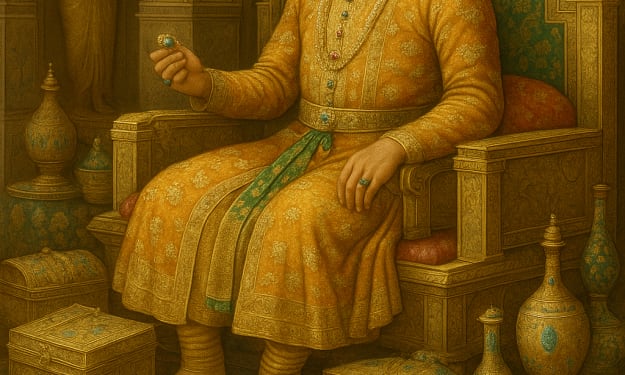
The Disappeared Gems of Emperor Jahangir: An Elusive Mughal Wealth Beyond Belief. AI-Generated.
The Golden Era of the Mughal Empire The Mughal Empire during the early 17th century was at the zenith of its splendor. Encompassing a vast expanse of the Indian subcontinent, it exhibited a thriving economy, a strong administrative framework, and luxurious courtly life. Jahangir, whose name translates to "Conqueror of the World," assumed the throne in 1605 after Akbar’s passing and governed for over twenty years. Unlike his predecessor, Jahangir was not a formidable military commander, yet he was a shrewd ruler and a fervent supporter of the arts. His court was populated by Persian painters, architects, and jewelers. During his reign, Mughal artistry attained unprecedented levels, with his palaces adorned with gemstones, pearls, and intricate gold craftsmanship. The Imperial Jewel Collection Jahangir’s wealth represented more than merely a token of royal affluenceit was a meticulously assembled collection of some of the most remarkable objects ever gathered in the subcontinent. These encompassed: The Timur Ruby, a substantial, crimson gem etched with the names of Mughal emperors. Thrones embellished with pearls and golden chests encrusted with emeralds and sapphires. Valuable jewelry, consisting of jeweled turban ornaments, anklets, rings, and ceremonial daggers. European artifacts, presented by foreign emissaries, such as mechanical clocks and Venetian glass. The emperor had a particular fondness for jade and rock crystal, commissioning inscribed wine vessels and dishes from craftsmen throughout Persia and Central Asia. Jahangir’s Affection for Opulence Jahangir was noted for his excessparticularly in wine and opium. He frequently hosted extravagant gatherings where the nobility exhibited their fortunes and competed in extravagance. Historical accounts describe evenings where carpets woven with gold thread were extended, and rosewater was poured from diamond-adorned ewers. His illustrious autobiography, the Tuzk-e-Jahangiri, expounds on his admiration for beauty and artistry. However, it also suggests an increasing disengagement from governance as his sons and nobles contended for power, notably Prince Khurram, who would eventually become Shah Jahan. The Enigma of the Vanished Wealth Following Jahangir's death in 1627, a fierce conflict for succession ensued. Shah Jahan triumphed, yet not without consequence. During the struggle for power, numerous jewels of Jahangir were plundered by rival factions. Some royal possessions were concealed by loyal supporters, while others were sold or lost during hurried retreats. In subsequent years, the treasure became increasingly scattered. As Shah Jahan constructed the Taj Mahal and Peacock Throne, he integrated some of his father’s jewels into his own collectionbut significant portions were never rediscovered. The circumstance deteriorated with the subsequent decline of the Mughal Empire. By the time of Aurangzeb's reign in the late 17th century, civil conflicts and the escalating menace from regional monarchies undermined the empire. European entities, particularly the British East India Company, capitalized on this frailty. Colonial Exploitation and Diminution The ultimate strike to Jahangir’s lost riches may have occurred during the British colonial era. After the British seized Delhi in 1857 subsequent to the Indian Rebellion, the Red Fort was plundered. Numerous royal relics, including manuscripts, jewels, and ceremonial objects, were either taken or exported abroad. Presently, various Mughal gemstones thought to originate from Jahangir’s epoch can be located in museums and private collections throughout Europe. The Timur Ruby, for example, is currently part of the British Crown Jewels collection, inaccurately classified as a ruby despite being a spinel. Could the Wealth Still Be Concealed? Scholars and treasure seekers have long pondered that a portion of Jahangir’s wealth was concealed during the succession conflicts and has yet to be retrieved. Folklore in northern India recounts tales of subterranean vaults near Agra and Lahore that remain sealed, filled with Mughal gold and emeralds. Unauthorized excavations have even taken place in the vicinity of Fatehpur Sikri and the ancient Mughal pathways. While no verified treasure has been discovered, remnantssuch as jeweled sword hilts or enameled ornamentsoccasionally appear in antique markets or during urban excavations. The Enduring Legacy of Jahangir’s Wealth Regardless of whether Jahangir’s entire treasure will ever be recovered, its influence on art and history is indisputable. His enthusiasm for collecting reshaped the Mughal aesthetic, merging Persian sophistication with Indian opulence. The art, architecture, and craftsmanship patronized during his rule remain among the most distinguished in South Asian history. In many respects, the lost wealth signifies not merely gold or jewelsit embodies a missing chapter of imperial aspiration, cultural integration, and regal magnificence.
By Say the truth about a year ago in History
Alexander the Great and the Indian Dragon: Legend, Mystery, or Forgotten History?
A Conqueror's Path Meets the Unknown Alexander the Great is one of history’s most legendary figures. Born in 356 BCE in Macedonia, his military campaigns that extended from Greece to Egypt, Persia, and as far as the borders of India. By the age of 30, he had conquered most of the known world. But it wasn’t just empires and armies he encountered along his path. According to a few ancient accounts, he may have come face-to-face with something far more mysterious, something that some describe as a dragon.
By The Secret History Of The Worldabout a year ago in History
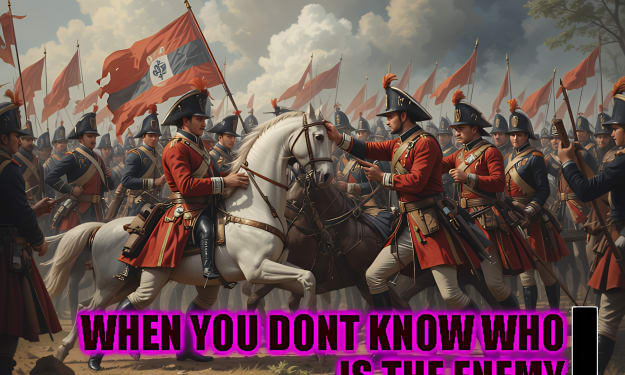
The Battle of Karansebes, 1788: The Austrian Army Accidentally Fighting Itself in the Chaos of War
Among the most bewildering and farcical episodes in military history, the Battle of Karansebes stands out as a stunning example of miscommunication, panic, and human error spiraling out of control. Fought during the Austro-Turkish War of 1787–1791, the event is infamous not for a valiant clash with the Ottoman enemy, but for a chaotic episode where an Austrian army ended up attacking itself. Taking place on the night of September 17–18, 1788, in what is now modern-day Romania, the so-called battle involved confusion, fear, and an abundance of alcohol - ultimately leading to hundreds of Austrian soldiers dead or wounded by friendly fire, long before the Ottomans even arrived.
By History Seekerabout a year ago in History
🌷 The Tulip Mania Bubble in the Dutch Republic, 1636–1637: When Tulip Bulbs Became the World's Most Valuable Commodities Before the Crash
🏩 Part 1: A Blooming Republic - The Dutch Golden Age and the Rise of the Tulip In the early 17th century, the Dutch Republic stood at the pinnacle of European power and prosperity. This confederation of provinces, recently liberated from Spanish rule after decades of conflict, had rapidly evolved into a formidable maritime, financial, and cultural powerhouse. The Dutch Golden Age, as historians now call it, was marked by explosive growth in global trade, scientific exploration, art, and banking.
By History Seekerabout a year ago in History
bangladesh turbulent half century form coups to cilmate shocks. AI-Generated.
Over the past fifty years, Bangladesh has gone through a complex and often turbulent journey. The country has repeatedly faced challenges such as political instability, military coups, natural disasters and climate change. However, despite the many adversities, Bangladesh has made incredible progress in development, poverty reduction and disaster management.
By shakil hasanabout a year ago in History
The Roux Where it Happened
James held the thick iron pan over the fire with practiced hands. As the butter melted, he mixed in the flour until the grainy texture gave way to a smooth paste. The deep, nutty aroma of the roux suffused the cramped kitchen and transported him back to the Champs-Élysées. James heaved a deep sigh. He never should have left Paris. There he was a free man. It was not an easy life, but at least it was his own.
By Alexander Not a Dumasabout a year ago in History
70 Rare Historical Photos That Shaped Global History – From Gandhi to Guevara, Einstein to Elvis
1. Madhubala – The Eternal Beauty Madhubala, often hailed as the most beautiful actress Indian cinema has ever seen, remains an enduring symbol of grace, charm, and cinematic brilliance. Her performances in classics like Mughal-e-Azam continue to mesmerize audiences decades after her untimely demise.
By Sujeet M Sonarabout a year ago in History