Perspectives
Whisper Of Rebellion
In the kingdom of Eldoria, a land renowned for its beauty and prosperity, whispers of discontent began to circulate through the bustling streets. King Aric, once a beloved ruler, had gradually turned tyrannical, imposing heavy taxes and cruel punishments on his subjects. As his grip tightened, a group of noble-hearted individuals secretly gathered to plot a coup against his oppressive regime. Among them was Lady Elara, a skilled diplomat with a heart for justice, and Captain Leonhardt, a courageous warrior who had sworn an oath to protect the people. They formed an unlikely alliance with Adeline, a brilliant strategist, and Rafael, a charismatic bard whose songs spread the message of hope. As days turned to weeks, their clandestine meetings grew in number and urgency. They devised a plan to rally the discontented citizens and overthrow King Aric's rule. Adeline meticulously mapped out the castle's layout, while Rafael's songs and stories ignited a spark of rebellion among the masses. The day of reckoning arrived, and the kingdom stood on the brink of change. The coup's orchestrators, now known as the "Liberators," executed their plan flawlessly. In the heart of the night, they infiltrated the castle, skillfully navigating its passages. Swords clashed, arrows flew, and the clash of ideals reached its crescendo. In the throne room, Lady Elara confronted King Aric, her voice unwavering as she recounted the suffering he had inflicted upon his own people. Captain Leonhardt stood by her side, his blade raised in defense of justice. The people's fervor echoed through the halls, and the tides of power began to shift. With the support of the citizens and the resilience of the Liberators, King Aric's forces were overwhelmed. As dawn broke, the tyrant's reign came to an end, and a new era of hope emerged. Lady Elara, known for her wisdom, was chosen as the kingdom's new leader, and the Liberators helped reshape Eldoria into a land where justice, compassion, and equality flourished. In the years that followed, the story of the coup became a legend, a testament to the strength of unity and the power of ordinary individuals who rose against injustice. The kingdom of Eldoria, once shrouded in darkness, now stood as a beacon of hope, reminding all that even in the face of tyranny, the spirit of rebellion could ignite a flame that would light the way to a brighter future.X
By Shedrach Ojodomo Attah3 years ago in History
China's Population Challenge: From Growth to Decline and Its Global Impact
China, often hailed as the world's manufacturing powerhouse, is facing a momentous demographic shift with far-reaching consequences for its economy and global influence. The nation's population, once booming, is now showing signs of decline. This development, which led to more deaths than births in 2022, is a critical turning point for a country that relies significantly on its vast population for economic growth.
By Vivian Yao3 years ago in History
Tracing Humanity's Spiritual Journey: The Ten Oldest Religions in Existence
Throughout human history, the quest for understanding life's mysteries and connecting with the divine has given rise to a multitude of religious beliefs and practices. Delving into the past, we uncover the ten oldest religions that have shaped cultures, societies, and individual lives for thousands of years.
By Sabuj Maity3 years ago in History
BRICS Expands
In a historic development that underscores the global influence of emerging economies, the BRICS alliance has taken a significant stride forward by welcoming six new members into its fold. Argentina, Egypt, Ethiopia, Saudi Arabia, the United Arab Emirates, and Iran have been formally accepted as part of the BRICS bloc, expanding the group's reach and potential. With membership set to become effective from January 1, 2024, the geopolitical landscape is poised for a transformative shift that will have far-reaching implications.
By Cornelius Prince 3 years ago in History
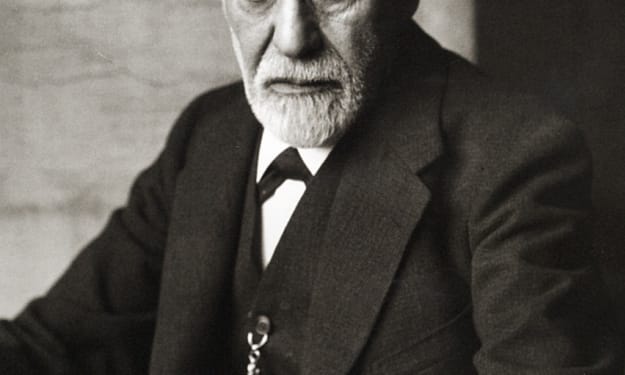
Sigmund Freud's Developmental Stages: Unraveling the Layers of Human Psyche
Sigmund Freud, a name synonymous with the realm of psychology, introduced groundbreaking theories that revolutionized our understanding of the human mind. One of his most influential contributions lies in the concept of developmental stages, a framework that delves deep into the intricacies of human psychological growth. As we journey through Freud's developmental stages, we uncover a tapestry of emotions, desires, and conflicts that shape our very essence.
By Lakshay Sharma3 years ago in History
Icebergs, Titanic and maritime safety practices
More than one hundred years ago, the Titanic collided with an iceberg and sank in the depths of the Atlantic Ocean. Out of the 2,240 people on board, only around 700 survived. Since then, this tragic event has inspired numerous movies, documentaries, and books. Despite our extensive knowledge about the ship and its passengers, there remains a dearth of information about the iceberg that led to this catastrophe. However, it is possible to piece together certain clues. Constructed by the White Star Line, the Titanic was the flagship of a new fleet of passenger ships. A colossal vessel, it stretched 883 feet in length and stood 175 feet tall. It boasted a range of amenities including cafes, a restaurant, a reading room, a Turkish bath, a gym, squash courts, and even a swimming pool. Safety was paramount, and the Titanic was ingeniously designed with watertight compartments to ensure buoyancy in case of accidents. Embarking on its maiden voyage on April 10, 1912, the Titanic's ill-fated collision with an iceberg occurred on the night of April 14. Icebergs, formed through calving, reveal merely a fraction of their actual size above water. Detecting them was a formidable challenge due to the absence of sophisticated equipment. The crow's nest crew had to rely solely on their unaided vision to spot potential dangers. On that fateful night, it was Frederick Fleet who noticed the iceberg and raised the alarm, albeit too late to avert the collision. Subsequent photographs taken on the same day provide some insight into the iceberg's appearance. Icebergs remain a contemporary hazard, and organizations such as the International Ice Patrol work diligently to track and prevent collisions. Initially, the most renowned iceberg's weight was a colossal 75 million tons. Over time, it gradually melted, and when it intersected with the Titanic, its weight had dwindled to a mere 1.5 million tons. During the lead-up to the collision, this iceberg likely experienced months of melting. Nevertheless, when the Titanic met its demise, this iceberg still retained its immense size. It extended 400 feet in length, with more than 100 feet of its surface visible above the water. Some theories suggest that a supermoon could have contributed to the Titanic's sinking. A unique lunar phenomenon occurred that night, the likes of which hadn't been witnessed in 1,400 years. Under ordinary circumstances, the iceberg might not have ventured so far south without significant melting and the loss of a substantial portion of its mass. The concept of a supermoon raises the possibility of an abnormally high tide, which could have propelled the iceberg away from the glacier at an unusually rapid pace. Upon impact with the iceberg, the force exerted was so immense that it led to the separation of different sections of the vessel, starting with the ship's lower structure. On the other hand, some experts attribute the vessel's breakage to the quality of the hull rivets. These rivets contained a high concentration of slag or smelting residue, which could have triggered the metal to fracture. Notably, the Titanic was marred by several shortcomings, commencing with its design. The supposedly watertight bulkheads were not adequately sealed at their uppermost parts. This deficiency facilitated the flow of water between compartments, ultimately contributing to the ship's sinking. Moreover, both the iron rivets and steel hull faced considerable damage due to the presence of elevated sulfur levels, frigid temperatures, and high speeds. These factors culminated in the shattering of the steel and the easy dislodgment of the rivets. Consequently, the Titanic sank a staggering 24 times faster than it might have, had it collided head-on with the iceberg instead of grazing its side. An intriguing aspect emerges regarding the lack of binoculars among the crew. Binoculars could have indeed aided in timely iceberg detection, possibly preventing the disaster. Curiously, the Titanic's binoculars were secured within a storage cabinet. Regrettably, only a solitary crew member possessed the key, and this individual was transferred off the ship shortly before its departure. The iceberg's substantial size and impact were key factors in the Titanic's tragic sinking. Although the exact dimensions of the iceberg remain uncertain, certain clues suggest it was sizeable and visible to the naked eye even in darkness. Despite the sorrowful fate of the Titanic, the lessons learned from this disaster have significantly enhanced maritime safety practices.
By Jaqueline Lirio3 years ago in History