Narratives
Mindfulness and Meditation at Kamakshi Amman Temple: A Path to Inner Peace
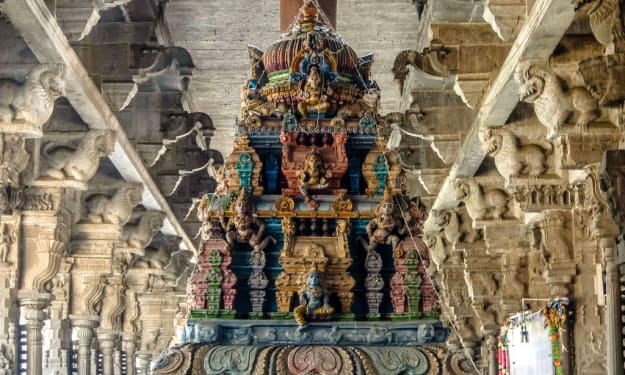
Introduction: The Spiritual Sanctuary of Kamakshi Amman Temple Kamakshi Amman Temple, located in the serene town of Kanchipuram, is more than just a religious site—it's a spiritual sanctuary that offers peace, healing, and a deep sense of connection with the divine. Revered as a center for devotion, the temple also plays a significant role in inspiring mindfulness and meditation practices among its devotees. Whether seeking solace or spiritual growth, many pilgrims visit Kamakshi Amman Temple to quiet their minds, connect with their inner selves, and embrace the practice of mindfulness.
By Sri Kamakshi Ambal Temple2 years ago in History
The Hola Massacre
Hola Exile Camp was in an arid, mosquito-infested area in the East of the colony near Garissa. By March 1959, it held about 1000 hardcore detainees some of whom had been brought in from Mageta Island where they had participated in a major riot. On March 3rd 1959, 88 of the Hola detainees were marched outdoors for the day’s labour which they refused to do. They politely stated that they were liberation detainees and not prisoners meaning they did not have to work. While this was true in the years prior, the ‘Cowan Plan’ was now in effect empowering the guards to compel them to work if need be.
By HINGES OF TIME2 years ago in History
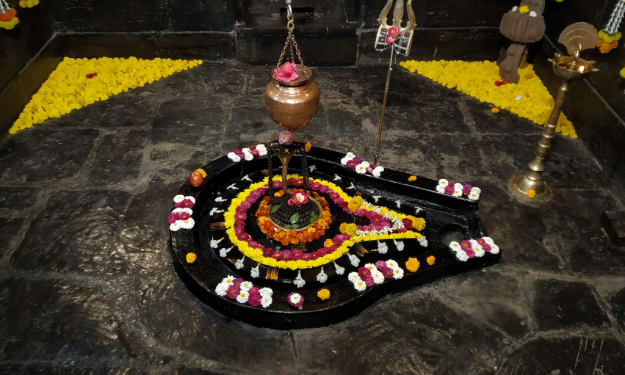
A Pilgrim’s Journey: Transformative Stories from Kamakshi Amman Temple
Introduction: The Pilgrimage That Changed Their Lives For centuries, Kamakshi Amman Temple in Kanchipuram has been a sacred destination for thousands of pilgrims. Known for its divine aura and the loving presence of Goddess Kamakshi, the temple serves as a place of peace, healing, and transformation. People from all walks of life visit, each seeking something different—a blessing, guidance, or spiritual healing. What binds all their experiences together is the profound change they undergo during their pilgrimage.
By Sri Kamakshi Ambal Temple2 years ago in History
The Power of Self-Editing: A Writer's Epiphany
What is Self-Editing? At its core, self-editing is the process of revising your own work to improve clarity, coherence, style, and accuracy. Unlike initial drafts that are often raw and filled with imperfections, self-editing is about refining and polishing those ideas. It involves analyzing everything from sentence structure to word choice, pacing, and overall flow.
By Malik Kashif2 years ago in History
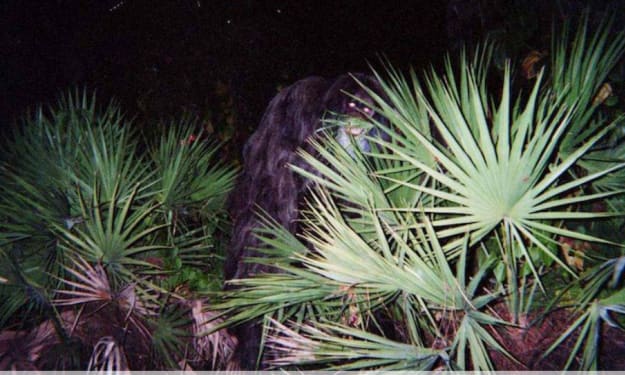
Florida's Elusive Bigfoot and the Mystery Behind its Existence
The Skunk Ape is little known but is a creature strange enough to be known as the Bigfoot of Florida, as sightings have been reported for decades. Described as an enormous, hairy beast, standing seven feet tall and tipping the scales at up to 500 pounds, it has captured the imagination of residents and visitors alike.
By Rohitha Lanka2 years ago in History
Whispers of the Unseen: The Enigmatic World of Jinn in Arabic Culture
In the heart of the Arabian desert, where the golden sands stretch endlessly and the stars illuminate the night sky, there exists a world unseen by human eyes. This is the realm of the Jinn, mysterious beings woven into the fabric of Arabic culture, folklore, and religion. Their stories, passed down through generations, are as vast and intricate as the desert itself. To understand the Jinn is to delve into a world where the lines between reality and myth blur, and where the unseen forces of nature and the supernatural coexist.
By Mosap Homa2 years ago in History
Temples in the City: Balancing Tradition and Modernity in Urban Spaces
Temples in Urban Areas: Preserving Tradition Amidst Modernization In the ever-evolving landscapes of urban cities, where skyscrapers, shopping malls, and busy streets dominate, temples stand as pillars of tradition and spiritual sanctity. While the world around them becomes increasingly modernized, temples continue to offer a serene refuge for those seeking solace, peace, and divine connection.
By Sri Kamakshi Ambal Temple2 years ago in History
The Cosmic Connection: How Kalachakra Shapes the Spiritual Journey at Sri Kamakshi Ambal Temple
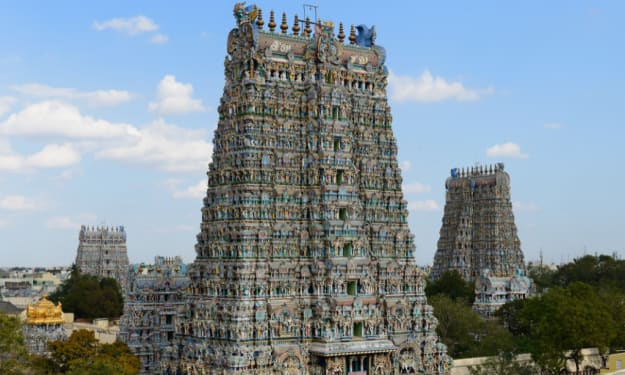
In the heart of Kanchipuram, one of the seven Moksha-puris (sacred cities) of India, lies the magnificent Sri Kamakshi Ambal Temple. This ancient temple, dedicated to Goddess Kamakshi, is not just a place of worship but also a sacred space where the concept of cosmic time, known as Kalachakra, is deeply embedded in its architecture, rituals, and spiritual practices. The idea of Kalachakra refers to the cycle of time, representing the cyclical nature of the universe and life.
By Sri Kamakshi Ambal Temple2 years ago in History
The Nomadic Empire
For millennia, the vast expanse of the Asian steppes has been a crucible of human history. Its strategic location and abundant resources made it a prize fiercely contested by numerous ancient peoples. Among these, the Scythians stand out as one of the most influential civilizations, leaving an indelible mark on both Asia and Europe. Their nomadic lifestyle, warrior culture, and intricate artistry not only defined their own era but also shaped the civilizations that followed. This is the story of how the Scythians, a people of the open plains, became a force to be reckoned with, defying empires and leaving a legacy that endures to this day.
By A História2 years ago in History
The last days of the Neanderthals.
The last days of the Neanderthals. The story of the Neanderthals is one of survival adaptation and ultimately extinction. For thousands of years they thrived across Europe and parts of Asia coexisting with early Homo sapiens before vanishing from the fossil record around 40,000 years ago. Their disappearance has long puzzled scientists sparking debates over the causes and consequences of their extinction. However recent research has painted a more nuanced picture of their fate revealing that Neanderthals were not a primitive dead end in human evolution but rather a sophisticated and resilient species that left an enduring legacy in modern human DNA. Neanderthals evolved from a common ancestor shared with Homo sapiens roughly 500,000 years ago. While some researchers suggest Homo antecessor as this ancestor the exact lineage remains debated. What is certain is that Neanderthals adapted to the harsh climates of Ice Age Europe and Asia developing robust physiques suited for cold environments. Their short stocky bodies helped retain heat and their large nasal cavities warmed the air they breathed. These adaptations allowed them to hunt large Ice Age mammals like mammoths and woolly rhinoceroses proving their ability to survive in extreme conditions.
By Adnan Rasheed2 years ago in History
The Story of Ramayana (Short and Simplified)
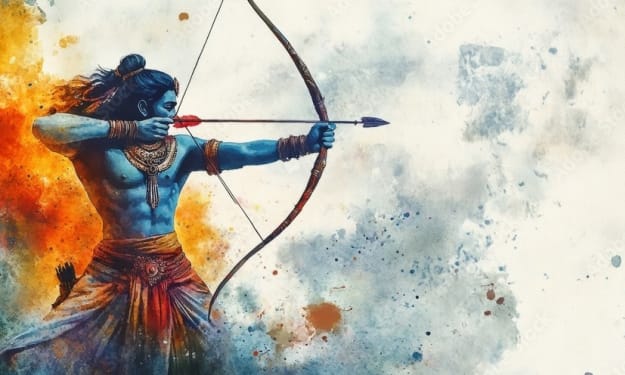
1. The Beginning: Vishnu’s Promise Long ago, Swayambhu Manu , the first human being, performed intense penance (tapasya ) for 1,000 years to please Lord Vishnu. When Vishnu appeared, Manu expressed his desire to have Vishnu as his son. Vishnu agreed but explained that he would incarnate on Earth whenever Dharma (righteousness) was threatened by evil forces. He declared:
By Sujeet M Sonar2 years ago in History