Narratives
British Soldiers Defeated a Tank with a Bagpipe
On the morning of June 6, 1944—D-Day—the beaches of Normandy erupted in fire, fury, and metal. Allied soldiers stormed ashore under a relentless hail of German machine gun fire, mortar blasts, and chaos. Yet among the smoke and death, something surreal happened on Sword Beach: a lone man in full Scottish Highland dress, kilt fluttering in the wind, calmly strode across the sand playing a set of bagpipes.
By History Seekerabout a year ago in History
A Friend of Queen Nanny. Content Warning.
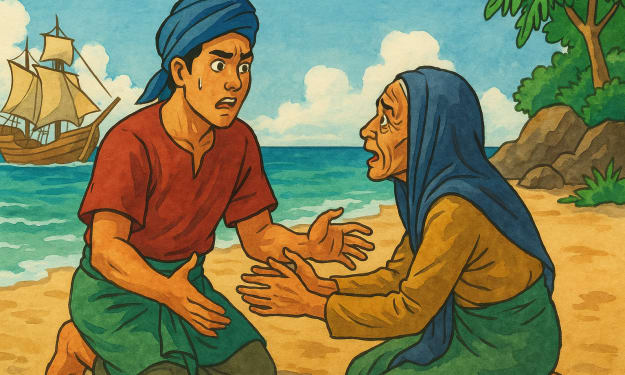
Disclaimer: This is a work of fiction loosely based on historical events. There are gruesome scenes of death and dying I have seen suffering and affliction by the hands of others, and still I rise. Not just I who rise, but my brothers and sisters too. The ones who came before and the ones to come after. My story does not begin with me, for I am merely a lowly Jamaican Canadian woman of this century. My story begins long ago, to a time that far precedes my existence. Allow me to introduce, Akhiza Sheba, my ancestor.
By Natassia Lawrenceabout a year ago in History
Step Inside 6 Luxury Ranches Across America: Where Opulence Meets the Wild West
Step Inside 6 Luxury Ranches Across America: Where Opulence Meets the Wild West The allure of the American West has long captivated those seeking adventure, tranquility, and a connection to nature. However, a new breed of high-end retreats has emerged for those who desire the rustic charm of ranch life without sacrificing luxury. These luxury ranches combine Western heritage with five-star amenities, ranging from sprawling estates in Wyoming to chic hideaways in Texas. Here, we take you inside five of the most exclusive ranches across the U.S., where wide-open spaces meet world-class hospitality.
By parves mosharafabout a year ago in History
Inside the Room Where They Tried to Erase 1619
I was in the Roosevelt Room the day they decided to declare war on history. It was a humid August afternoon in 2020, and most of us in the Comms team had just come from a COVID briefing that had, as usual, gone off-script. Jared was pacing by the fireplace, half-scrolling through Twitter, half-listening. Stephen Miller was already seated, flipping through printed pages of what looked like an op-ed marked in red Sharpie. The president hadn’t arrived yet, which meant the tension could still pass as boredom.
By Lucas Diercouffabout a year ago in History
The Man Who Learned a Complete Language in 15 Days
In an era where learning a new language takes years of dedication, imagine mastering one in just 15 days. This is not a fictional tale but a true story from the golden age of Islam. One man, a devoted companion of the Prophet Muhammad (peace be upon him), learned an entirely new language in just over two weeks — an astonishing feat of intelligence, commitment, and divine inspiration.
By Keramatullah Wardakabout a year ago in History
"Gadsby": A Wierd Novel Without the Letter "E" by Ernest Vincent Wright
"Gadsby": A Wierd Novel Without the Letter "E" by Ernest Vincent Wright The Inspiration and Origins of "Gadsby" The concept of constrained writing has fascinated authors for centuries, serving as a playground for linguistic experimentation. Among the most iconic examples is "Gadsby," a novel that boldly omits the letter 'e'—the most commonly used letter in English. Written by American author Ernest Vincent Wright in 1939, "Gadsby" stands as a cultural and literary marvel, symbolizing that language, despite its complexity, can be bent and shaped by sheer ingenuity and discipline.
By History Seekerabout a year ago in History
🐸Australia Lost a War against the Cane Toads
🐸Australia Lost a War against the Cane Toads Origins of the Invasion – A Misguided Introduction In the early 20th century, Australia's sugar cane industry faced a significant threat from cane beetles, which were devastating crops in Queensland. In an attempt to control these pests, 102 cane toads (Rhinella marina) were imported from Hawaii in June 1935 and released into the fields of northern Queensland. The hope was that these toads would prey on the beetles and protect the sugar cane. However, this biological control strategy was based on limited understanding of the toads' behavior and ecology. The cane toads did not significantly impact the beetle population, as they preferred other prey and could not reach the beetles high on the cane stalks. Instead, the toads found the Australian environment highly conducive to their survival and reproduction, leading to an unforeseen ecological disaster.
By History Seekerabout a year ago in History