Narratives
Top Story
Top Story – A Story of Courage and Voice By Kelly Yang Narrative-style summary (800+ words) Mia Tang was no stranger to speaking up. After all, she’d helped run a motel, exposed unfair labor practices, and stood up to racism—all before turning 13. But now, she was about to face something even more intimidating: the world of professional journalism.
By Akhtar Ali about a year ago in History
The Fisherman. Runner-Up in History Would’ve Burned This Page Challenge.
Un, Deux, Trois, Quatre, Cinq… The Fisherman felt the cold water of the channel still clinging to his catch’s smooth scales. It was healthy, meaty—a good day's catch. His little woven carrying basket sat full when the Fisherman carved his path back to his humble home through the sandy beaches of the Norman shore like he did every day when the sea lay calm.
By Matthew J. Frommabout a year ago in History
The Mystery of Aramu Muru: The Stone Gate to the Gods
A Door in the Rock High in the rugged mountains of southern Peru, where Lake Titicaca kisses the clouds and ancient myths still linger in the wind, there is a doorway carved into solid rock. It leads nowhere, or so it seems. For centuries, legends have claimed it is much more than a dead end. They call it Aramu Muru, the Gate of the Gods.
By The Secret History Of The Worldabout a year ago in History
The Most Charming Mountain Towns in America
The Most Charming Mountain Towns in America: 800 Hidden Gems and Beloved Escapes America's mountain towns are some of the most breathtaking and idyllic getaways in the country. They are tucked away among towering peaks, surrounded by lush forests, and full of small-town charm. These charming locations offer the ideal combination of natural beauty and welcoming communities, whether you're looking for outdoor adventure, cozy cabins, or a tranquil getaway from city life. From the rugged Rockies to the serene Smokies, here are some of the most enchanting mountain towns across the United States that deserve a spot on your travel bucket list.
By parves mosharafabout a year ago in History
The Queer Genius Who Changed Art Forever
It was the summer of 1606. Across Italy, bounty hunters carried notices with a name etched in bold: Michelangelo Merisi da Caravaggio. Rome had sentenced him to death for murder. His patrons had vanished. His friends had scattered. But in churches across the city, his paintings still standout, terrifying, transcendent, too real to ignore. Even as he fled through the ports of Naples, the island of Malta, and the dark corners of Sicily, Caravaggio was painting furiously. Each canvas was a cry of defiance. Each image a page they would try to burn.
By Strategy Hubabout a year ago in History
⛏️Venetian Glass Beads found in Alaska - Amazing archeological findings
Venetian glassmaking reached its zenith during the late Middle Ages and Renaissance, with the city of Venice becoming the epicenter of fine glass production. The island of Murano, in particular, became renowned worldwide for its advanced techniques, including cristallo (crystal-clear glass), millefiori (multicolored patterns), and elaborate formings.
By History Seekerabout a year ago in History
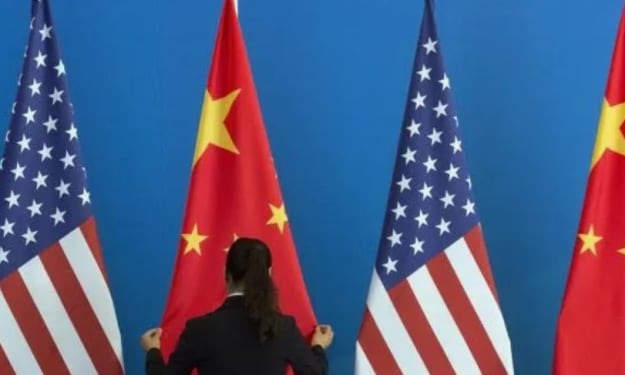
Donald Trump says US-China trade talks to be held in London on June 9
On June 9, the United States and China will hold a new round of high-level trade talks in London, according to Donald Trump. The former president made the surprising announcement in a post on social media in which he expressed optimism regarding the discussions. Trump asserts that the U.S. To resume negotiations aimed at resolving ongoing trade tensions, Treasury Secretary Scott Bessent, Commerce Secretary Howard Lutnick, and Trade Representative Jamieson Greer will meet with their Chinese counterparts, led by Vice Premier He Lifeng. After a period of renewed hostilities marked by new tariffs, export restrictions, and diplomatic strain, this meeting represents a significant step in efforts to stabilize economic relations between the world's two largest economies. Analysts view the decision to hold the meeting in London as symbolic, suggesting an effort to include Europe's perspective in the dialogue and providing a neutral setting for discussions. China and the United States of America are still locked in a complicated economic dispute over everything from semiconductor exports to education visas to cybersecurity. Some of the tariffs that both sides imposed were temporarily eased by the Geneva Agreement, which was reached earlier this year. However, tensions have persisted, with each side asserting that the other has broken the agreements made within that framework. The United States' export controls on cutting-edge semiconductor technologies are anticipated to be one of the most pressing topics under discussion in London. Chinese access to AI chips and related technologies developed in the United States has been restricted by both the Trump administration and the Biden administration. Beijing has been enraged by these actions, which Beijing claims are discriminatory and disrupt global supply chains. These actions are meant to safeguard national security and innovation in the United States. China responded by imposing stricter licensing requirements for the export of rare earth minerals, which are essential components of electronic devices and electric automobiles. U.S. officials see the regulations as an attempt to weaponize supply chain dependencies, despite Beijing's insistence that they are for the protection of national resources. Washington has demanded that China's application of these rules be more transparent and predictable. The recent U.S. visa restrictions that target Chinese graduate students in sensitive fields like robotics, aerospace, and quantum computing are another source of contention. Beijing has vehemently rebuked the move, claiming that it is politically motivated and detrimental to academic exchange. As part of any larger trade agreement, it is anticipated that the Chinese delegation will demand the removal of these restrictions. Domestic pressure is exerted on both governments to achieve measurable outcomes. Farmers and manufacturers in the United States are pleading with the government to reduce tariffs that have hampered exports and increased costs. As a result of having less access to Western investment and technologies, Chinese businesses are experiencing difficulties. The economic stakes are high, and if nothing is done, new retaliatory measures could be taken. The news of the talks in London has spooked the markets. While some investors appreciated the chance to talk, others are still skeptical of any long-term advances. Negotiations in the past have frequently ended without significant progress, and trust between the two countries remains low. The decision to hold the meeting in London also reflects larger geopolitical considerations. A chance to demonstrate diplomatic outreach is provided by holding talks in the United Kingdom, given that Washington and Beijing are competing for influence in Europe. Additionally, it demonstrates a willingness to cooperate with Western allies as stakeholders in the stability of global trade. In order to determine whether the two sides can make significant progress on the main issues, observers will closely monitor the situation. The key questions include whether the United States will loosen restrictions on exports, whether China will commit to fairer trade in rare earths, and whether both sides will be able to stop future crises involving students, intellectual property, and digital trade. The June 9 meeting may decide whether a more long-term agreement is possible or whether economic friction between the United States and China will grow. The deadline to extend the temporary tariff truce is fast approaching. Officials hope that direct engagement at the highest levels can pave the way for de-escalation while expectations are measured. London is the next stage in a global economic drama that is being watched by the entire world. Its outcome could have long-term effects on trade, innovation, and diplomacy.
By GLOBAL NEWSabout a year ago in History