Narratives
Heracleion: Egypt's Sunken Secret: The City the Gods Forgot
Beneath the Waves, a City Sleeps Located off the coast of modern-day Alexandria, at the meeting point of the Mediterranean's azure waters and the northern edge of Egypt, lies a forgotten city. Sunken beneath the waves for over a thousand years, Heracleion, known as Thonis by the Egyptians, was once a gleaming jewel of ancient power, wealth, and divine mystery.
By The Secret History Of The Worldabout a year ago in History
The Civilization of the Ottoman Turks: A Legacy of Courtesy, Wisdom, and Deep Spiritual Values
Throughout history, few civilizations have preserved a legacy as refined and spiritually grounded as that of the Ottoman Turks. Emerging from modest beginnings and growing into one of the most powerful empires the world has ever seen, the Ottomans left behind not just tales of conquest, but also rich traditions rooted in manners, respect, and subtle intelligence. Their daily lives, community practices, and hospitality customs paint a portrait of a people who lived with purpose, imbued with values of dignity, humility, and emotional intelligence. Let us journey into the cultural soul of the Ottomans—a civilization where every gesture had meaning, and every action reflected wisdom. --- Hospitality: A Silent Language of the Heart Hospitality in Ottoman culture wasn’t merely about offering food or drink—it was a deeply symbolic interaction, a respectful dialogue between host and guest without words. When a guest arrived at an Ottoman home, they were offered two simple things: a cup of Turkish coffee (qahwa) and a glass of plain water. If the guest reached for the water, the host would immediately understand that the visitor might be hungry, and without asking or embarrassing the guest, they would begin preparing a meal—often their finest, even if they had little themselves. However, if the guest chose coffee, it was understood they were there just for conversation and did not wish to eat, allowing the host to continue the visit in a lighter, more social tone. This silent understanding showcased not only hospitality but also respect for the dignity and unspoken needs of others. --- Floral Symbols: Messages Without Words Ottomans used flowers as a subtle language outside their homes, offering passersby unspoken but powerful messages. A yellow flower placed outside the home signaled that someone in the house was ill. This gentle indicator advised visitors to speak softly, avoid noise, and, if appropriate, come in to inquire about the patient's health. A red flower suggested that there was a young woman of marriageable age in the home. It was a community-based warning to avoid inappropriate or vulgar language near the house. It was also a welcome signal for those who intended to propose marriage—an invitation to knock respectfully. These flower signs reflect the social responsibility and moral boundaries that governed Ottoman neighborhoods. There was no need for confrontation, no boards or notices—civility was coded into aesthetics. --- The Double Door Hammer: Gender Sensitivity Another beautiful and thoughtful tradition was the use of two hammers or knockers on the doors of Ottoman homes: One was larger and heavier, meant to be used by men. The other was smaller and lighter, designated for women. When a man knocked using the large hammer, a male member of the household would come to answer. If the smaller hammer was used, it signaled a female visitor, prompting a woman from the household to attend the door. Such practices weren’t just cultural quirks—they showed a profound respect for modesty, boundaries, and gender ethics in the public and private spheres of life. --- Charity with Dignity: Anonymous Giving Perhaps one of the most awe-inspiring aspects of Ottoman culture was the way they handled charity. Giving was not for show, recognition, or public praise—it was quiet, respectful, and anonymous. Wealthy individuals would go to local vendors—such as vegetable sellers or grocers—and open anonymous tabs (accounts). These tabs were meant to cover the costs of food or supplies for any poor person who came in need. When a poor person arrived to buy something, the shopkeeper would provide the items free of charge, telling them nothing of the benefactor. The giver never met the receiver. The dignity of the poor was preserved, and the reward was left entirely to Allah. Later, the wealthy individual would return quietly and clear the tab, expecting nothing but the satisfaction of helping a fellow human being. This practice is a testament to the Ottoman spirit of silent service—a value deeply embedded in Islamic teachings. --- Adab with the Prophet (PBUH): A Unique Expression of Love The Ottomans were not just polite—they were spiritually refined. One such example is how they treated the age of the Prophet Muhammad ﷺ. The Prophet (peace be upon him) passed away at the age of 63. Among devout Ottoman Turks, if an elderly person had surpassed this age and was asked how old they were, they would not say “I am 65 or 70.” Instead, they would reply: > “Son, I have crossed the limit.” This was not out of superstition but out of deep reverence and spiritual love for the Prophet ﷺ. They felt it inappropriate or audacious to say they had lived longer than the Messenger of Allah. Such subtleties reveal the depth of Ottoman adab (etiquette)—a love that shaped their language, actions, and worldview. --- The Reason Behind Ottoman Decline: A Loss of Values For centuries, the Ottoman Empire stood as a beacon of Islamic civilization, a model of balanced power, religious freedom, intellectual progress, and moral living. So what led to its fall? According to many historians and cultural observers, the empire did not collapse due to lack of might but due to internal betrayal, loss of spiritual values, and Western conspiracies that targeted the Ottoman identity. As their traditions of generosity, modesty, and spiritual discipline eroded, so did the strength of their unity. Greed, political manipulation, and abandonment of their own cultural wisdom opened the doors for the empire’s eventual fragmentation. --- What We Can Learn Today The lessons from Ottoman civilization are not confined to history books. They remain relevant today in a world that is often rushing, indifferent, and transactional. When we offer a guest water or tea, we can remember their method of listening with the heart, not the ears. When we give in charity, let us give with dignity, not display. When we speak of modesty and social respect, we can adopt symbolic, gentle ways rather than aggressive or legalistic ones. When we reflect on our Prophet ﷺ, we can ask whether we love him with such sensitivity and manners as the Ottomans did. --- Conclusion: A Civilization Built on Wisdom The Ottoman Turks left behind a civilizational blueprint where values were lived, not just preached. Their culture reminds us that true greatness lies not only in power or architecture, but in the way a society treats its guests, respects its women, protects its poor, and honors its prophets. In an age where modern life often celebrates speed, fame, and self-promotion, the Ottoman legacy calls us back to simplicity, meaning, and sincerity—a beautiful tale of literature, love, and light that the world should never forget.
By Ikram Ullahabout a year ago in History
The Day Iceland's Women Brought the Country to a Halt
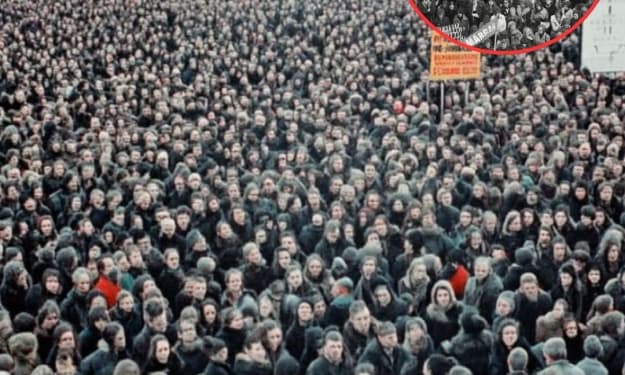
On October 24, 1975, Iceland experienced a day that would go down in history—not just for the nation, but for the global movement for gender equality. In a bold and unprecedented act, 90% of Iceland’s women walked off their jobs, put down their household tools, and refused to care for children. Offices, schools, nurseries, shops, and factories were brought to a near-standstill. Streets filled with women of all ages carrying signs, chanting slogans, and standing shoulder to shoulder in peaceful defiance. This was not just a protest; it was a nation-wide awakening. The event became known as the “Women’s Day Off” (Kvennafrídagurinn in Icelandic), and its impact was immediate and powerful. Organized by a coalition of women's rights groups and supported by grassroots movements, the strike was not just about equal pay. It was about visibility. It was about making the invisible labor of women visible by removing it altogether—for just one day. In 1975, despite Iceland's reputation for being socially progressive, gender inequality remained a deeply rooted issue. Women were paid significantly less than men, had limited representation in politics, and were still expected to carry the full weight of housework and childcare. Though many women worked outside the home, their contributions were undervalued both in the workplace and within the home. The goal of the strike was simple yet profound: show the country what a single day without women looked like. And the country noticed. Airports shut down. Banks closed early. Newspapers couldn’t be printed. Male teachers had to bring their children to school, only to discover they had to return home because there were no female staff to care for the students. Even radio and television programs were disrupted. The burden of unpaid labor—usually shouldered by women—suddenly became very visible to everyone, especially to men who had never considered it before. One of the most remarkable aspects of the strike was its peacefulness and unity. Thousands of women poured into the streets of Reykjavik, with over 25,000 gathering at Arnarhóll hill in the capital city. Considering the country’s population was just around 220,000 at the time, this turnout was monumental. Women from all walks of life—teachers, nurses, shopkeepers, housewives, students—came together in solidarity. Many men supported the cause as well, recognizing that gender equality would benefit the nation as a whole. The strike was so effective that it didn’t just stir public conversation—it sparked legislative and cultural transformation. In the years following, Iceland passed several new laws aimed at improving women’s rights, including stronger protections against workplace discrimination and more support for women in politics and education. But perhaps the most symbolic and lasting effect of that day came five years later. In 1980, Iceland elected Vigdís Finnbogadóttir as its president—the first woman in the world to be democratically elected to lead a country. Her victory wasn’t just a political milestone; it was a direct consequence of the movement that had taken root in 1975. Vigdís herself acknowledged that the Women’s Day Off had made her win possible. The strike had changed public perception, built momentum, and proven that women could lead at the highest level. Her presidency lasted 16 years, making her one of the longest-serving elected female heads of state in history. She became a symbol of progress not only for Iceland but for the world. And her legacy continues to inspire generations of women to take their place in leadership roles. Since then, Iceland has become a global leader in gender equality. It regularly tops the World Economic Forum’s Global Gender Gap Index, and it has implemented forward-thinking policies such as mandatory equal pay certification, generous parental leave for both mothers and fathers, and high representation of women in government and business. October 24 is now commemorated every year in Iceland as Women's Day, reminding the nation of the courage, unity, and power demonstrated on that cold autumn day in 1975. Over the years, women have continued to strike on this day to raise awareness about ongoing gender disparities, showing that the fight is not yet over. The story of the 1975 strike is not just about Icelandic women—it’s about the potential of collective action. It’s about what can happen when people unite around a cause that transcends politics or economics and speaks to the basic human principle of fairness. It proves that when women stop working, the world feels it—and when they stand together, they can change history. What began as a one-day protest became a permanent turning point in the nation’s journey toward equality. It was a moment when women stepped out of the background and into the spotlight—not to ask for change, but to demand it. And they didn’t just demand it—they achieved it.
By DigitalAddiabout a year ago in History
Mastering Marketing in the AI Era: The Must-Know Concepts Every Modern Student Should Learn
In a world of 3-second attention spans and infinite scrolls, teaching marketing has transformed from theory-driven lectures to dynamic, digital-first learning. If you're a student, teacher, or even a business owner trying to grasp the essentials — this guide breaks it all down.
By Waqas Ahmadabout a year ago in History
Why the US Dollar Is Falling by Record Levels in 2025
Why the value of the US dollar is falling at an unprecedented rate in 2025 During the first half of 2025, the value of the US dollar experienced one of its most significant declines in modern financial history. The dollar has experienced its worst first-half performance in more than five decades, falling more than 10% since January. Investors, economists, and policymakers around the world are concerned due to the steep decline. Understanding the causes of this unprecedented depreciation requires examining a combination of political, economic, and structural factors reshaping global markets.
By GLOBAL NEWSabout a year ago in History
Switzerland’s Incredible Bunker Network: Neutrality Backed by Total Preparedness
During the early hours of World War II, when Nazi forces stormed into Poland in 1939, Switzerland’s famed neutrality was shaken. In that instant, Swiss leaders understood that merely declaring neutrality would not guarantee safety from future threats. What followed was a strategic, national mission: to fortify the country’s borders and build an extensive—and remarkably discreet—network of bunkers. 🛡️ Why Such Drastic Measures? Switzerland’s geographical position in the center of Europe made it vulnerable despite its neutral stance. The sudden and forceful invasion of its neighbor Poland highlighted how quickly peace could be shattered. Swiss officials reasoned: Neutrality doesn’t grant immunity; vigilant preparation does. The Swiss embarked on a massive, multi-decade effort to turn their nation into a fortress—hidden in plain sight. --- 🔍 Disguised Protection: Sheltering in Plain View One of the most ingenious aspects of the Swiss plan was concealment. Bunkers were camouflaged with masterful creativity. They weren’t just vault-like structures in the middle of nowhere; they were hidden inside ordinary buildings—warehouses, schools, hospitals—or sculpted into natural rock formations deep within the Alps. From the outside, nothing looked out of place. Yet behind these façades, steel-reinforced concrete chambers awaited activation in times of crisis. This subliminal defense strategy meant Switzerland could stay functional and civilized—while retaining the capacity for national survival. --- 🌍 The Role of WWII & the Cold War World War II: The blitz of early-war Europe, with aerial bombings and fast-moving military columns, meant Switzerland had to be ready for surprise attacks. Cold War Era: With tensions between superpowers escalating, the threat of nuclear war loomed large. Swiss planners realized that conventional bunkers alone weren’t enough—air filtration systems, food and water stockpiles, and radiation protection had to be included. --- 📜 Key Legal Foundations 1963 Civil Defense Law: This legislation mandated that every new residential or commercial structure must include a nuclear shelter capable of protecting its inhabitants. Thus, bunkers became a de facto feature of Swiss construction. 1959 Constitutional Amendment: In a public vote, Swiss citizens enshrined civil protection as an inalienable constitutional right. Switzerland became one of the rare nations to guarantee its people’s safety at that scale. --- 📊 Scale of the Bunker System Today, Switzerland’s defensive network is staggering in scope: 360,000 bunkers—each built to withstand conventional bombs and nuclear fallout Capacity: Designed to shelter 8.6 million people Population: Switzerland’s current official population is about 8.6 million—meaning there’s literally a spare space ready for every citizen Most bunkers include: Air filtration systems to ensure breathable and safe indoor air during chemical, biological, or nuclear events Stockpiles of drinking water, non-perishable food, sanitation supplies Basic medical provisions, communication gear, and backup power sources --- 🏷️ A Lesson for the World Switzerland’s bunker program isn’t just national pride—it’s a powerful statement: > “Neutrality alone isn’t protection. Preparedness is.” In a world still threatened by war, terrorism, and potential nuclear escalation, Switzerland stands as a model of proactive resilience. Governments and citizens across the globe can learn from Swiss wisdom: peace is best maintained not by wishful declarations—but by tangible readiness. --- 🏛️ Congress of Preparation: A Timeline 1939: Operation Barbarossa and Warning from the East When Nazi Germany invaded Poland, Swiss authorities realized that neutrality does not prevent war from reaching your doorstep. The rapid collapse of a sovereign neighbor highlighted a chilling vulnerability. 1940s: WWII Fortification Ramps Up Under leadership like General Henri Guisan, Switzerland carved out defensive redoubts in the Alps, placing anti-tank tunnels and storing munitions—preparing for a potentially all-out invasion. 1950s-60s: Nuclear Age & Civil Protection Emerges Cold War paranoia prompted a seismic shift: from military fortifications to civilian shelters. The government created a national stockpile system, mobilized construction firms, and funded public campaigns. 1959: Constitutional Amendment Swiss voters backed the inclusion of civil defense as a constitutional principle. From now on, every citizen was legally entitled to protection. 1963: Shelter in Every Building The law went a step further—new constructions must include bomb- and fallout-resistant rooms. Architects and engineers began embedding shelters in design plans across the country. 1970s–1980s: Cold War Bunker Buildup Switzerland hit its peak bunker construction during these decades. Stockpiles were updated, equipment stored, and guidelines circulated widely—down to school lessons on how to survive inside a bunker. Post-Cold War: Maintenance & Modernization After 1991, the global landscape shifted—but Switzerland kept its system. Regular upkeep, volunteer drills, and incorporation of civil threats (like chemical, biological, or drone warfare) became priorities. --- 🏰 Inside a Typical Swiss Shelter A modern Swiss civil-defense shelter includes: 1. Blast Doors: Thick, rated for high-impact shockwaves and pressure 2. Air Systems: Multi-stage filtration, ensuring minimal pollen, toxin, or radiation entry 3. Food & Water Reserves: At least a couple of weeks' worth, updated quarterly 4. Sanitation Zones: Toilets, basic washing facilities, medical kits 5. Power Backup: Batteries or small generators, often with redundant systems 6. Communication Tools: Radios, intercoms, sometimes hard-line telephones 7. Ventilation & Cooling: To manage heat and humidity in crowded conditions 8. Information Materials: Instructions in Swiss languages—German, French, Italian, Romansh—on safety procedures, emergency exits, and hazards In many Swiss homes, this shelter is a simply reinforced basement room. In offices or public facilities, it might be a whole floor of enclosed space. In mountains, bunkers can span hundreds of meters into the rock, connected by tunnels and escape passages. --- 🌐 Global Inspirations & Takeaways 1. Prepared-neutrality: Nations can strive for peace while staying battle-ready 2. Civil resilience: Safety is a project that lasts generations—built into laws, society, and daily routines 3. Invisible readiness: Just because you can’t see it doesn’t mean it’s not there. Resilience thrives in plain view 4. Public trust in infrastructure: The Swiss system is backed by civic buy-in—from lawmakers to homeowners --- 🔍 Downsides & Maintenance Challenges While legendary in its foresight, the Swiss approach comes with costs: Construction cost: Embedding a shelter adds 1–2% to building budgets Upkeep needed: Systems must be tested regularly—especially ventilation and power supplies Relevance evolving: New threats like cyberattacks, drone terror, or pandemics require constant adaptation Mental bandwidth: Some argue that the focus on resilience may breed a culture of fear over trust --- ✨ Conclusion: A Swiss Legacy of Fortified Peace A nation that chose neutrality in 1939, recognizing soon after that neutrality wasn’t a shield by itself, set out to build an incredible legacy—a hidden, nationwide safety network engineered for worst-case scenarios. With 360,000 bunkers, constitutional rights, and legal enforcement, Switzerland didn’t just talk peace—it prepared for war with vigilance, technology, and silent infrastructure. Their message resonates today: Peace is not passive—it must be engineered, equipped, and embedded. In our world of unprecedented uncertainty, we need more than noble words. We need Swiss-level preparedness.
By Ikram Ullahabout a year ago in History
Condemned by a Lie: The Ricky Jackson Story and the 43 Years That Justice Forgot
> By Umair Ali Shah Yousafzai Introduction: When Truth Becomes the First Victim What does it mean to lose not just a year or a decade, but an entire lifetime — to a lie? What happens to the human soul when it is buried alive behind concrete and steel, screaming innocence into deaf ears for 43 unrelenting years? The story of Ricky Jackson isn’t a tale told to teach children moral lessons. It is the embodiment of a real-world tragedy, where justice failed so catastrophically that even an apology decades later sounds hollow. It is not only the longest wrongful imprisonment in American history; it is the chilling dissection of a justice system that sentenced an innocent teenager to death based on the coerced testimony of a frightened 12-year-old boy. --- An Ordinary Boy in Cleveland Ricky Jackson was just 18 years old in 1975 — a quiet, thoughtful African-American youth living in Cleveland, Ohio. He had never been arrested, never carried a weapon, never even held a criminal record. He lived in a modest neighborhood, with dreams no different from other boys his age: education, work, and family. But everything changed on a day that should have passed like any other. A local businessman named Harold Franks was shot and killed in broad daylight during an apparent robbery. The incident shocked the community. In the police department’s desperation to find someone to blame, a name was offered by a 12-year-old boy who hadn’t even witnessed the murder. That name was Ricky Jackson. --- A Murder, A Lie, and A Child’s Testimony Eddie Vernon was barely out of childhood when he was approached by police and persuaded — some would say coerced — into identifying Ricky Jackson as the shooter. No physical evidence connected Ricky to the crime. No fingerprints. No murder weapon. No surveillance. Nothing but the fragile words of a frightened boy. Years later, Vernon admitted: > “I didn’t see anything. The police threatened my family, told me they’d put my parents in jail if I didn’t talk.” But in 1975, his word was gold. It was all the prosecution needed. It didn’t matter that other witnesses contradicted him. It didn’t matter that Ricky had an alibi. Vernon’s coerced statement became the scaffold on which Ricky’s fate was hung. --- The Trial: Theater of Injustice The trial was swift. No physical evidence was presented. No cross-examination of Vernon’s statement truly tested its validity. Ricky, along with two friends — Wiley and Ronnie Bridgeman — were sentenced. Ricky Jackson received the death penalty. He was 18. He had not yet attended college. He had never fallen in love. He had no children. And now, the state was going to kill him. But before the execution could be carried out, Ohio overturned the death sentence to life imprisonment. The reprieve wasn’t mercy. It was a new kind of suffering — the long, slow death of a man behind bars. --- From Death Row to Life Sentence: A Prisoner of Time For the next four decades, Ricky Jackson became a ghost within America’s prison system. He was moved from facility to facility. He missed the funerals of his parents. He never saw a computer, never used the internet, never walked into a supermarket again. He watched the world evolve through metal bars and razor wire — watched new presidents rise and fall, watched the Cold War end and 9/11 reshape history, all from within a concrete cage. But while his body was confined, his mind clung to hope. “I knew I was innocent,” he would later say in an interview with The Washington Post. “I couldn’t let go of that, or I’d go crazy.” Yet hope is not armor. It doesn’t keep out the dark. The nights were long. The guiltless solitude maddening. --- The Psychology of a Stolen Life What does 43 years in prison do to a human being? Psychologists describe wrongful imprisonment as a form of chronic trauma, similar to post-war PTSD but complicated by betrayal trauma — the deep psychic injury caused when the very institutions meant to protect you, turn against you. For Ricky Jackson, this betrayal was total. The court system. The police. The media. Even his own neighbors who believed the headlines more than his voice. Everyone walked away from him, except time — and even that, it seems, walked slower in his cell. He spent birthdays alone. Holidays watching TV news flashes from a flickering screen bolted to a prison wall. He wasn’t merely doing time — time was doing him. As he later told CBS News, > "The hardest part wasn’t the food, or the cold, or even the violence. It was waking up every day knowing that no one believed me… and wondering if they ever would.” --- 2011 – The First Crack in the Wall It took 36 years before the first sign of redemption appeared. Eddie Vernon, now in his late 40s, broke down. Years of guilt had gnawed at his conscience. Encouraged by a local pastor, Vernon came forward and admitted his testimony had been a lie — a lie told under police pressure, not malice. “I was just a scared little boy,” he said under oath. This single act of courage — the reversal of a lie — shook the very foundations of Ohio’s justice system. The case was re-opened. And finally, for the first time in 37 years, someone listened to Ricky Jackson. --- 2014 – The Day the Sky Opened On November 21, 2014, Ricky Jackson walked out of prison a free man. There were no parades. No orchestras. Just a quiet Cleveland morning, the wind soft and cold, and the silence of a man tasting sunlight after four decades. He was 61. His hair was gray. His face had aged. He was no longer the young man wronged by the system — he was a living monument to how long justice can take to arrive. When asked if he felt hatred, he simply said: > “No. If I held onto hate, I’d still be in prison. Just a different one.” --- Forgiveness Over Fury Ricky’s refusal to embrace bitterness wasn’t naïve. It was radical. His strength wasn’t forged in fury, but in faith — not religious dogma, but a deeper, spiritual belief that forgiveness is freedom. Many exonerees become bitter, angry, even broken. But Ricky stood tall. He smiled in interviews. He talked about healing. He spent time with his siblings. He walked in parks and marveled at things people take for granted — the softness of carpet, the click of a smartphone, the taste of fresh fruit. He didn’t just get released. He re-learned how to live. --- The Legal Aftermath: Can Justice Be Priced? In 2016, the state of Ohio awarded Ricky Jackson a $1 million settlement under its wrongful imprisonment compensation program. But even the government admitted — no money could truly compensate for what had been stolen. As The New York Times wrote, > “This was not just the loss of years. It was the theft of a life.” That $1 million covered lost wages, emotional trauma, and punitive damages. But how do you put a price tag on never being a husband, never raising children, never hearing your mother’s voice again? For Ricky, the money was a symbolic apology. But no amount could erase the decades of injustice. --- America’s Shame: A Broken Justice System Ricky Jackson’s case is not an isolated tragedy. According to the National Registry of Exonerations, more than 3,400 people in the United States have been exonerated since 1989 — many of them Black men, many convicted based on flawed eyewitness testimony, police misconduct, or prosecutorial overreach. A study by the Innocence Project shows that false eyewitness identification accounts for nearly 70% of wrongful convictions later overturned by DNA evidence. Ricky's case adds a horrifying statistic: He spent more time behind bars than any other wrongfully convicted person in U.S. history. His story has become a textbook case in law schools, a subject of documentaries (The Guardian, BBC, PBS), and a haunting reminder that the legal system is only as just as those who operate it. --- 🕊 The Role of the Media: Silenced Then, Shouted Now In 1975, when Ricky Jackson was first arrested, the media reported it as an open-and-shut case. Local Cleveland headlines ran with phrases like “Teen Accused in Fatal Robbery” and “Quick Arrest After Shooting”. There was no in-depth investigation. No challenge to the lack of physical evidence. No empathy for a young man with no prior record. He was Black, poor, and accused — and that was enough. It took decades for the media to revisit his story. When the truth finally emerged, national outlets like The New York Times, BBC, The Guardian, CNN, and NPR covered the injustice. Documentaries followed. Podcasts interviewed Ricky. Legal journals dissected the case. But the media was late. Too late. For 43 years, it had ignored him — and that silence was complicity. In an interview with NPR, Ricky put it plainly: > “If someone had just listened back then… really listened… maybe all of this could’ve been avoided.” The media's redemption, much like the justice system’s, came long after the damage was done. --- The Innocence Projects: Saving Lives in the Shadows Ricky Jackson owes his freedom not just to Eddie Vernon’s confession, but to the relentless efforts of organizations like the Ohio Innocence Project. These nonprofits, often underfunded and overworked, have dedicated themselves to correcting wrongful convictions through new evidence, DNA testing, and legal appeals. Without their advocacy, Ricky’s case might have remained buried — like hundreds of others still lost in legal purgatory. Their work reminds us of one chilling truth: For every Ricky Jackson who gets justice, there may be ten more who never will. --- Psychological Fallout: Life After a Life Lost (Your chosen core theme — expanded further here) The release from prison did not end Ricky’s sentence. For many exonerees, life outside is a different kind of prison. The world they return to has changed beyond recognition. Technology is baffling. Old friends are gone. Social trust is shattered. The smallest tasks — using a microwave, unlocking a smartphone — feel foreign. Ricky spoke about this in a 2017 The Atlantic feature: > “I didn’t know what a debit card was. I didn’t know how to cross the street without looking over my shoulder. Even in freedom, I felt like a prisoner.” He struggled with anxiety, depression, insomnia. Prison had reprogrammed his instincts. Freedom, once longed for, felt overwhelming. Therapists describe this as institutional PTSD — the brain’s adaptation to long-term survival in a hostile environment. Years of hyper-vigilance, suppressed emotions, and rigid routines leave permanent marks on the psyche. Yet, Ricky did not let it break him. He faced his trauma like a veteran returning from a battlefield — scarred, but not surrendered. --- Faith and the Human Spirit: A Quiet Revolution Ricky never publicly aligned with a religious denomination, but his language revealed something deeper — a spiritual resilience forged in solitude. He once said: > “When you’re in a cell alone, you start talking to yourself. But if you talk long enough, you start hearing answers. Maybe they’re your own voice. Maybe they’re God’s. But they keep you sane.” Faith — whether in God, justice, or one’s own soul — was Ricky’s companion when the world forgot him. He did not turn to hatred or revenge. He turned inward, and what he found was strength. --- When a Nation Apologizes Too Late The government of Ohio issued a formal apology to Ricky Jackson. It came with a settlement check and some public acknowledgment of its mistake. But justice delayed is justice denied. No amount of money, no legal brief, no governor’s signature can return the 15,000 days that Ricky spent confined — days when he could have been a father, a friend, a free man. As The Guardian wrote in its editorial on the case: > “The apology is polite. The injustice was barbaric.” --- Lessons for the World: Truth, Justice, and the Power of a Single Lie This story is not just American. It is universal. It speaks to every nation where power overrides truth. Where the poor are expendable. Where the law serves convenience, not conscience. Ricky Jackson’s tragedy is a mirror — held up to us all. The most terrifying thing about this case is how easy it was to ruin a life: One false witness. One negligent investigation. One rushed trial. And four decades gone. It is a warning to courts, police, media, and society at large — that truth must never be hurried, that justice must never be assumed, and that no lie is ever small when it costs a man his future. --- Final Reflections: Let No Other Ricky Jackson Be Forgotten Ricky Jackson is free now. He smiles in photographs. He speaks at schools. He mentors at-risk youth. He is trying to build a life from ashes. But behind that smile is the echo of stolen time. He is not just a man. He is a symbol. Of injustice survived. Of forgiveness chosen. Of a system that must do better. We owe him more than headlines. We owe him change. Because somewhere, right now, another 18-year-old boy sits in a cell — innocent, unheard, and condemned by a lie. May we find him before it's too late. --- 📚 References & Sources: The New York Times: “Freed After 39 Years, Ricky Jackson Reflects on Injustice” (2014) BBC News: “Wrongfully Jailed Man Free After 39 Years” (2014) The Guardian: “The Longest Wrongful Imprisonment in US History” (2015) NPR: “Ricky Jackson Speaks After 43 Years in Prison” (2016) The Atlantic: “Psychological Toll of Wrongful Convictions” (2017) Ohio Innocence Project: Legal documentation and case archive National Registry of Exonerations: Official record of U.S. wrongful convictions ---
By Umair Ali Shah about a year ago in History
10 Forgotten Events That Changed the World
History is full of dramatic moments—wars, revolutions, discoveries—that everyone learns about in school. But some pivotal events that reshaped societies, politics, and cultures remain largely forgotten. These forgotten events that changed the world may not make headlines or history textbooks, but their impact echoes through time. Here are ten lesser-known events that quietly altered the course of history.
By Muhammad Asimabout a year ago in History
The Future of the USA: Challenges, Change, and a New American Dream
The Future of the USA: Challenges, Change, and a New American Dream The United States of America has always been a land of ambition — a place where dreams are chased, ideas are born, and change is constant. But as we step deeper into the 21st century, the future of the USA is more uncertain, complex, and exciting than ever before.
By Ali Asad Ullahabout a year ago in History