Narratives
Hidden Histories: Unearthing the British Museum's Looted Artifacts
Welcome to the captivating world of the British Museum, a place that stands as a testament to the ebb and flow of human history. As you step through its grand entrance, you are greeted by a treasure trove of knowledge spanning an impressive two million years. This colossal repository of culture and heritage draws in countless visitors, earning its title as the world's largest museum dedicated to world history. Behold, within these hallowed halls, an awe-inspiring collection of over eight million artifacts from lands near and far, each whispering tales of civilizations long past. Among the stars of this illustrious museum are the time-honored relics that beckon from the museum's must-see list. Imagine gazing upon the enigmatic Easter Island sculpture, a venerable thousand-year-old artifact, or marveling at the intricate bronze sculpture depicting the Hindu deity Shiva. These treasures are only the beginning of an enchanting journey that lies ahead. However, as you traverse the museum's labyrinthine corridors, a shadow of contention emerges. A conundrum comes to light, epitomized by the pathway you tread. A stark revelation emerges—almost half of the dozen exhibited pieces along this route are mired in disputed ownership. The British Museum, in its earnest pursuit to showcase the diversity of humanity's heritage, finds itself entangled in a web of controversy. Indeed, a poignant debate has risen, casting a spotlight on the question of whether cultural artifacts should remain ensconced within the halls of Western museums or return to the embrace of their home countries. The discourse surrounding the rightful ownership of these treasures has ignited a fervent discussion, where perspectives clash and passions run deep. To better understand this narrative, let us delve into the historical tapestry of the British Empire, which, in the late 1600s, embarked on an unprecedented expansion across continents. It soared to majestic heights, becoming the unparalleled dominion that spanned a quarter of the globe's landmass and population. As the empire extended its reach, it harvested not only resources and wealth but also cultural heirlooms from lands far and wide. In 1753, the British Museum was founded, a sanctuary to house these marvels, a true embodiment of human endeavor. The collection flourished with each passing decade, embracing new acquisitions, legal and undisputed, like the venerable two-thousand-year-old Roman base, a relic of ancient grandeur bequeathed to the museum by a noble duke in the year 1945. Yet, the heart of the matter resides in the pieces shrouded in ambiguity and dispute. As you step through the museum's entrance, your gaze falls upon the Rosetta Stone, a relic entwined with intrigue. Acquired by British troops from the French in Egypt, this ancient slab serves as a bridge to deciphering the enigmatic script of the past. A few paces onward, the Parthenon sculptures beckon, extracted from the Acropolis in Athens by a British lord and carried across continents to their present abode. Venture further, and you encounter the enigmatic Benin bronzes, captivating in their diversity. These treasures, hailing from the Kingdom of Benin in present-day Nigeria, encompass a spectrum of artistic expression, from engraved ivory tusks to resplendent brass sculptures and intricate plaques. This once-thriving kingdom thrived in the 1500s, its artistry a mirror reflecting its political and social narrative. Professor Chika Okekeyagulu, an art historian hailing from Nigeria and a professor at Princeton University, unravels the story of these bronzes, attesting to their role as visual chronicles of a society that lacked a conventional written script. However, a somber chapter unfurled in 1897. European colonial powers, fueled by a feverish quest for dominion, cast their gaze upon Africa. The "Scramble for Africa" saw these powers partition the continent into spheres of influence, with Benin falling under the British domain. A tragic turn of events led to the "Benin Disaster," a collision of cultures and interests that claimed lives and loyalties. In response, a punitive expedition ensued, leading to the pillaging of Benin's treasures, a calculated endeavor that saw the British soldiers claim thousands of artifacts as their spoils. Photographs from that epoch capture the systematic dismantling of palace plaques, a chilling testament to a civilization erased. The aftermath bore witness to a once-thriving kingdom reduced to ruins, as the echoes of a colonial conquest reverberated through time. The indomitable spirit of the Benin people endured, culminating in Nigeria's eventual independence in 1960. Yet, the echoes of the past endured, as the artifacts that bore testament to Benin's legacy remained dispersed across the globe, locked within the vaults of Western institutions. Flash forward to the year 1995, a poignant moment where firsthand encounters with these artifacts evoke a sense of pride and longing. Dr. Chika Okeke-Agulu reminisces about his inaugural visit to the British Museum, a journey that spanned continents and emotions. The magnificence of these artifacts is juxtaposed against the bittersweet reality—while a privileged few traverse oceans to bear witness, countless others are denied this privilege, forever distanced from their heritage. March of 2000 marked a pivotal juncture as Benin's royal family voiced their plea for the return of unlawfully taken cultural property. A symbolic gesture, an olive branch extended across time, and yet the response remained incomplete. The British Museum, restrained by a governmental act, stood steadfast in its stance, refusing to relinquish its hold. The essence of their commitment reverberated in their words—"We don't restitute, but we are absolutely committed to lending as widely as possible." A glimmer of change emerged in the form of a grandson's noble gesture, as artifacts from the 1897 expedition were returned to the Benin royal family. The year 2007 bore witness to the birth of the Benin Dialogue Group, a consortium embarking on a complex journey toward reconciliation. Western museums that housed the bronzes and representatives from the Nigerian government engaged in earnest conversations, seeking a resolution that remains elusive to this day. But this narrative extends beyond the walls of the British Museum. It is a tale interwoven with threads of colonial power that stretch across epochs and continents. These contested artifacts symbolize more than just physical objects; they represent the intangible essence of cultural and historical identity. The quest for restitution is a testament to the enduring spirit of nations, demanding recognition, and a reclaiming of what was lost. In the words of Dr. Chika Okeke-Agulu, this endeavor is a long-term project, a pursuit that stretches beyond individual lifetimes. The time has come to embark on the arduous journey of cultural reconstitution, a journey that commences in the present, with an unwavering commitment to forging a path toward reconciliation. As we contemplate the stories encapsulated within these artifacts, let us collectively embrace the responsibility to honor their origins and the vibrant legacies they encapsulate. In conclusion, the British Museum stands as a microcosm of a global narrative, a place where history converges, and voices echo through time. Its vast halls hold not only artifacts but also echoes of debates, passion, and the longing for justice.
By Shubham Bajaj3 years ago in History
Why America's police looks like soldiers?
On a balmy June 1st, a protest surged near the iconic White House, brimming with voices raised in peaceful unity. Yet, the scene shifted swiftly as a formidable contingent, adorned in helmets, riot shields, rifles, and even tear gas canisters, moved to confront the demonstrators. The figures in this mix of authoritative presence included a fusion of police and military personnel - Secret Service agents, vigilant Park Police, the steadfast National Guard, the specialized forces of the Prison system, and the vigilant local law enforcement from a neighboring county. The intriguing aspect here is discerning who among these figures represents the police force. This task, however, is made perplexing due to an evolving and unsettling resemblance between America's police officers and its armed forces. Taking a stroll back to the 1980s, the appearance of American police officers was notably distinct. The United States' crime rate danced through fluctuations, with President Reagan's call to arms against drug-related issues. An initiative was launched to bridge the military and police forces, particularly in the context of the War on Drugs. The sentiment was echoed through Congress, paving the way for a series of legislative acts. These acts aimed at granting police access to military installations and equipment, National Guard support in drug-related operations, joint training of military and police personnel, and ultimately, the provision of surplus military equipment to police departments, free of charge - an initiative soon christened as the 1033 program. Through this program, police departments acquired an array of resources - from assault rifles resembling M16s to imposing armored trucks, even venturing into grenade launchers. These changes, however, did not merely affect the inventory of police arsenals; they catalyzed a transformation in the very essence of how police operated. A striking shift was observable in the frequency of SWAT team deployments. In a telling contrast, departments that called upon these specialized units around once a month during the 1980s found themselves engaging them more than 80 times annually by 1995. The majority of these deployments centered on drug-related search warrants, often employing forceful entry strategies commonly referred to as "no knock warrants." As a consequence, the image of the police force began to morph into that of an occupying military presence - a shift highlighted in a 1997 article likening the police to an "occupying army." A pivotal moment unfolded in 1997 when a bank robbery in North Hollywood thrust the limitations of the police's armament into stark relief. Two armed robbers had automatic rifles and protective body armor, whereas the police officers responding did not. The outcome was a harrowing confrontation that left a dozen officers injured. The aftermath of this incident sparked a fervent demand for improved weaponry, most notably the inclusion of assault rifles like the AR-15. This plea resonated not only in California but reverberated across the nation from Florida to Connecticut. Simultaneously, the 1033 program was broadened, eliminating the prerequisite for equipment to be used solely in drug enforcement operations. Consequently, even university police departments gained access to surplus military armament, for any purpose they deemed necessary. A former Connecticut police chief recollected being offered an astonishing array of equipment, including tanks and bazookas. Regrettably, the precise extent of these equipment loans remains elusive due to inadequate record-keeping until 2015. However, data regarding the equipment retained by police departments each year it was provided reveals a steady expansion throughout the 1990s and 2000s. A notable inflection point coincided with the winding down of the Iraq War in 2011. With the military's vast inventory of equipment suddenly available, police departments had access to a surplus of armament, even acquiring Mine Resistant Ambush Protected Vehicles (MRAPs) - equipment that would soon attract substantial scrutiny. In the summer of 2014, the 1033 Program burst into the national spotlight following the tragic shooting of Michael Brown, an unarmed black teenager, by a police officer in Ferguson, Missouri. The ensuing protests were met with a heavily militarized response, triggering widespread concern. Amidst this turmoil, then-President Obama issued an executive order aimed at curbing the 1033 Program. However, this attempt at reform was short-lived, as the subsequent administration under President Trump rolled back these changes, albeit at a time when the program's significance had already begun to wane. A closer examination reveals that by 2016, the program's focus had shifted. Smaller police departments emerged as the primary beneficiaries of MRAPs, indicating a trend toward independent procurement. Today, the adoption of military gear by police is no longer tethered to a single government program; it has become a fundamental aspect of their self-identity. Arthur Rizer, a former military and civilian police officer turned researcher, delves into the psychological impact of such a transition. A poll he conducted among police officers unveiled that while the majority had no qualms about using military-grade equipment, they did acknowledge that it altered their mindset and behavior, often resulting in heightened aggression and assertiveness. While there have been instances where the deployment of such equipment proved advantageous, such as the Orlando police's use of an armored vehicle during the Pulse Nightclub shooting in 2016, these instances are the exception rather than the norm. Today, a substantial portion of this military equipment is relegated to the domain of SWAT teams executing drug-related search warrants. Notably, many of these operations employ no-knock warrants - the same approach that led to the tragic death of Breonna Taylor in Louisville. In contemplating this issue, the confluence of military and police roles raises disconcerting questions. A military force is tasked with safeguarding the collective "us" from perceived external threats, while a police officer should ideally represent a reassuring presence within the "us." Yet, as law enforcement officers increasingly embrace the mantle of soldiers, this distinction blurs. In this context, a poignant question emerges: what purpose does an assault rifle serve in the face of a protest? The analogy of providing a hammer to someone and then expecting them not to view everything as a nail becomes eerily relevant. In essence, the transformation of America's police officers into a militarized force is a multifaceted narrative that intertwines political initiatives, shifting ideologies, and societal perceptions. It underscores the intricate dance between maintaining public safety and preserving the essential fabric of a community. As the nation grapples with this evolving paradigm, the need for a delicate equilibrium becomes ever more pronounced.
By Shubham Bajaj3 years ago in History
Impeachment saga: Edo PDP flays Shaibu, passes vote of confidence on Obaseki. Content Warning.
As the break between Lead representative Godwin Obaseki and his debuty, Philip Shaibu, proceeds, the initiative of the Edo State People groups Leftist faction (PDP), over the course of the end of the week passed a demonstration of positive support on Lead representative Obaseki, similarly as it reprimanded the agent lead representative for hauling his head to court over a hypothesized prosecution process without depleting the party's inner question goal instrument.
By Great Bright3 years ago in History
Debunking common misconceptions about the middle ages
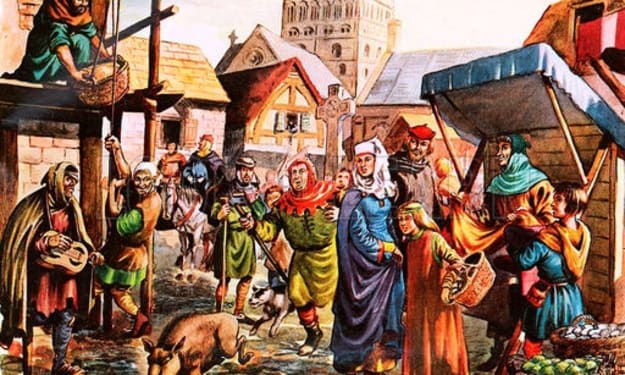
The Middle Ages, a captivating epoch often painted with broad strokes of misinformation, beckons us to delve deeper into its intricate tapestry. A time when knights in shining armor supposedly battled dragons, where ignorance reigned supreme, and hygiene was nearly non-existent. Yet, as we peel back the layers of myths that have shrouded this era, we find a more nuanced and fascinating narrative that defies these simplistic notions.
By Anita Nelima3 years ago in History
How America became a Superpower?
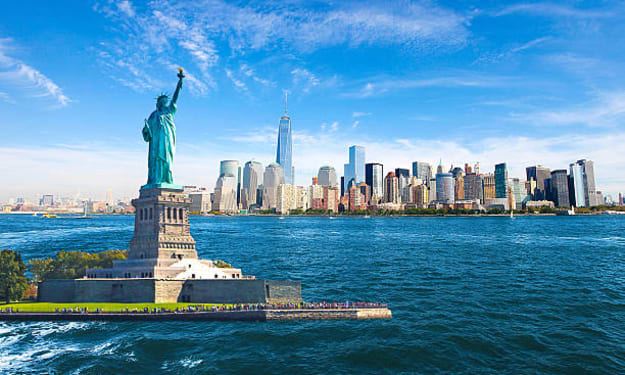
The United States, a formidable global force today, boasts an impressive military presence, boasting over 800 military bases and accounting for a significant 37% of the world's military spending. This dominance has positioned the U.S. as a leader in an intricate interconnected global system, fostering an era of unparalleled prosperity and notably low levels of conflict. However, to truly comprehend America's paramount role on the global stage and the reasons behind its pivotal status in world politics, we must journey back to the nation's origin—a time when America held no claims to being a global power. During its nascent years, the United States experienced a gradual expansion in both geographical reach and influence across North America. This expansionist fervor culminated in the nation reaching the Pacific Ocean, a period characterized by the tragic displacement and loss of life among the indigenous populations inhabiting the continent. Nevertheless, the question of whether America should extend its boundaries beyond the Pacific and Atlantic oceans sparked a substantial debate among early Americans. The aftermath of the Civil War marked a turning point, as prominent figures like post-war Secretary of State Seward championed the idea of transforming America into a global powerhouse. While Seward managed to push through the acquisition of Alaska from Russia, his efforts to purchase Greenland, Iceland, and territories in the Caribbean faced Congressional opposition. This divergence of opinions mirrored the broader sentiment among Americans, with some harboring anti-imperialist sentiments, fearing increased involvement in global politics and potential challenges integrating populations from what they perceived as "inferior" races. The late 1800s marked a transformative period as the industrial revolution spurred remarkable economic growth. This economic boom necessitated a more centralized state and bureaucratic apparatus to manage the burgeoning economy, effectively consolidating power within the federal government. This concentration of power empowered expansionist presidents, most notably William McKinley, to exert influence on the global stage with relative ease. The pivotal moment arrived in 1898 when President McKinley propelled the United States into war with Spain, centering on the island of Cuba. Despite fervent opposition, the United States emerged victorious, acquiring Puerto Rico, Guam, and the Philippines, thereby marking a significant leap in its global standing. Subsequent years saw the U.S. annexing Hawaii, Wake Island, American Samoa, and even taking control of the Panama Canal Zone and sending troops to the Dominican Republic. This period of rapid territorial expansion solidified the United States' status as a truly global power. Moreover, the U.S. began flexing its influence to safeguard its growing commercial and military interests worldwide, establishing friendly regimes in nations such as Nicaragua and playing a prominent role in international diplomacy concerning Western engagement in China. World War I underscored the nation's elevated influence, as American intervention played a decisive role in ending the conflict. President Wilson's participation in the Paris Peace Conference and his initiation of the League of Nations showcased America's most ambitious foreign policy endeavor at the time—an initiative aimed at fostering global peace and cooperation. However, the United States' internal isolationist sentiment hindered its full commitment to the League. The Great Depression and the rise of Hitler steered U.S. focus towards its own region. Yet, America's deepening entanglements on the global stage made complete isolationism an unattainable goal. The looming threat of the expanding Japanese empire, which directly endangered American interests and assets, forced the United States into World War II following the devastating Pearl Harbor attack. World War II irrevocably transformed America's global presence. As the sole major power to emerge economically unscathed, the U.S. held unique leverage in shaping the post-war world order. To prevent future conflicts, it played a pivotal role in establishing the United Nations, a forum designed to prevent wars of conquest and facilitate diplomatic resolutions. Beyond the UN, a notable gathering of delegates from 44 Allied nations convened in Bretton Woods, New Hampshire, crafting the Bretton Woods Agreement—a framework for a global financial system to avert another Great Depression and world war. This laid the groundwork for institutions such as the World Bank and the International Monetary Fund, solidifying America's commitment to addressing global challenges. However, the Soviet Union's contrasting perspective initiated a new dynamic. The Cold War sparked a global struggle, leading the United States to adopt a containment strategy against the spread of communism. This required constant exertion of influence worldwide, often manifesting in unlikely alliances with countries such as Saudi Arabia, Israel, and South Korea. The Cold War era saw the United States intervening, sometimes discreetly, in numerous disputes to thwart Soviet influence. Whether it meant supporting friendly dictators or arming rebels, the U.S. found itself deeply involved in a complex web of alliances and relationships spanning the globe.
By Shubham Bajaj3 years ago in History
The Israel-Palestine conflict: a brief, simple history
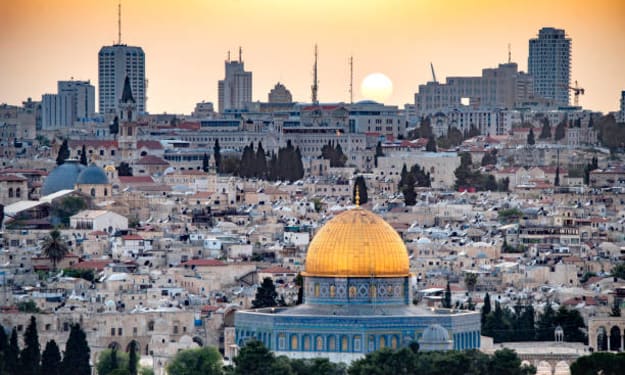
The Israel-Palestine Conflict: Unraveling the Myths and History The Israel-Palestine conflict is often shrouded in misconceptions, with some falsely believing it to be an age-old feud rooted in religious hatred. In reality, this complex issue primarily revolves around two groups vying for the same land, a struggle that emerged just over a century ago in the early 1900s. At that time, the region we now refer to as Israel-Palestine was under Ottoman rule, encompassing a diverse population of Muslims, Christians, and a small Jewish minority, coexisting relatively peacefully. Amidst these dynamics, two significant shifts were unfolding. First, the people of the region started to develop a distinct national identity, transforming from ethnic Arabs into Palestinians. Simultaneously, the Zionist movement gained traction among Jews in Europe, asserting that Judaism was not solely a religion but a nationality deserving of a homeland. After enduring centuries of persecution, many Jews saw a Jewish state as their only safeguard, with the Middle East serving as their historic homeland. The early 20th century saw a substantial influx of European Jews into the region, especially after World War One and the collapse of the Ottoman Empire. The British Mandate for Palestine was established, and tensions escalated as Jewish immigrants settled into farming communities. This influx led to mounting friction between Jews and Arabs, culminating in acts of violence perpetrated by both sides. The British, initially allowing Jewish immigration, began to limit it in response to escalating tensions. The Holocaust, a tragic event that galvanized global support for a Jewish state, further intensified the conflict. In 1947, the United Nations approved a partition plan, envisioning separate Jewish and Arab states, with Jerusalem designated as an international zone. Israel declared independence, and neighboring Arab states, viewing the plan as another form of colonialism, declared war in a bid to establish a unified Arab Palestine. Despite prevailing against the odds, Israel's territorial expansion beyond the UN-designated borders and the displacement of Palestinians created a refugee crisis. The Arab-Israeli conflict was born, with Israel controlling most of the territory, except for Gaza and the West Bank. The 1967 war led to Israel's occupation of these Palestinian territories, including Jerusalem, further deepening the divide. The subsequent years saw the establishment of the Palestinian Liberation Organization (PLO), initially aiming to eliminate Israel but later accepting the idea of a two-state solution. Violence erupted, and the Intifada, meaning "uprising" in Arabic, brought both Palestinians and Israelis to the brink. In this tumultuous era, Hamas emerged in Gaza, advocating for Israel's destruction and further complicating the situation. The Oslo Accords in the early 1990s marked a significant step towards peace, establishing the Palestinian Authority to govern certain areas. However, hard-liners on both sides sabotaged progress, and the failure of peace negotiations led to a more pessimistic outlook. The Second Intifada, marked by intensified violence, shaped a new reality. Israel's focus shifted from solving the conflict to managing it through walls and checkpoints, while Palestinians felt trapped under a growing occupation. Israel's withdrawal from Gaza in 2005 gave rise to Hamas, further fragmenting Palestinian leadership. Gaza was subjected to a stifling blockade, contributing to soaring unemployment and deteriorating living conditions. Today, settlements continue to expand in the West Bank, stifling Palestinian communities and generating tension, while periodic conflicts between Gaza-based groups and Israel result in devastating losses for Palestinians. While the majority of Israelis have grown apathetic to the ongoing conflict, the occupation remains a festering wound that cannot be ignored forever. The current status quo is unsustainable, with the occupation's instability foreshadowing a potentially darker future. The conflict's trajectory is uncertain; it may lead to a Third Intifada or a collapse of the Palestinian Authority. Nevertheless, one thing is clear: the status quo cannot persist, and the need for a resolution is more pressing than ever. In conclusion, the Israel-Palestine conflict is not an ancient feud driven by religious animosity, but rather a modern struggle rooted in a century-old clash of identities and national aspirations. The evolution of this conflict has seen numerous turning points, from the emergence of distinct national identities to failed peace negotiations and the persistent challenge of managing the occupation. As the conflict persists, the urgency for a comprehensive and lasting solution becomes increasingly evident, and the world watches with bated breath to see what the future holds for this deeply entrenched and complicated situation.
By Shubham Bajaj3 years ago in History
Why America still uses Fahrenheit?
"Alexa, what's the weather today?" If you're in the US, you're likely to receive a response in Fahrenheit. While virtually every country on Earth has embraced Celsius for temperature measurements, the US still holds onto Fahrenheit. This peculiar choice often prompts raised eyebrows and bemused comments. But it's not just a matter of meteorological semantics. The Fahrenheit system has deep historical roots that have both shaped and hindered progress. Let's delve into the tale of Fahrenheit, its origins, its global impact, and the ongoing debate over adopting the metric system. The Birth of Fahrenheit: In the early 18th century, measuring temperature was a disorganized affair. It was a German scientist, Gabriel Fahrenheit, who brought order to this chaos by inventing the mercury thermometer in 1714. Fahrenheit devised a scale that assigned freezing and boiling points to water at specific numbers, with the freezing point at 32 degrees and the boiling point at 212 degrees. He even added the average human body temperature at 96 degrees. This scale gained popularity, particularly after Fahrenheit's formal induction into the British Royal Society, where it found its place as a standard within the British Empire's extensive territories. Metric System's Rise: As the British Empire expanded, it carried the Fahrenheit system along with other Imperial measurements across the globe. Meanwhile, the metric system gained traction during the French Revolution, driven by the need for national unification. By the mid-20th century, Celsius, a unit of the metric system, gained favor in many English-speaking countries. In 1975, the US attempted to make the switch, enacting the Metric Conversion Act. This led to initiatives like the Interstate 19 metric highway sign, connecting Arizona to Mexico. However, resistance and a lack of enforcement eventually led to the disbandment of the United States Metric Board in 1982. The Struggle to Change: Despite attempts to promote metrication, the US clung to its familiar Fahrenheit system. This resistance persists, even as the global community increasingly embraces the metric system. The US's dual-system approach poses challenges for education, where students must learn two sets of measurements, and for businesses that must manufacture products for both domestic and metric markets. The consequences are more serious than mere inconvenience—medical dosage errors caused by conversion mistakes lead to thousands of unintentional medication overdoses every year. The Economic Conundrum: The argument for adopting the metric system is compelling—streamlined education, simplified commerce, and enhanced public health. Yet, the US hesitates due to the perceived financial burden of change. The cost of converting infrastructure, education materials, and public understanding is substantial. Without concrete evidence of economic benefits, the reluctance to transition remains strong. The question lingers: Is the expense of conversion justified by the potential gains? As the US continues to straddle two measurement systems, the debate over Fahrenheit versus Celsius persists. The historical legacy of Fahrenheit's invention and its integration into the British Empire has cemented its place in American culture. However, the global momentum towards the metric system raises questions about the costs and benefits of holding onto the Fahrenheit scale. While Celsius may seem more intuitive and widespread, the financial implications of change require careful consideration. So, for now, 77°F remains 25°C only in the eyes of those who choose to convert. Whether the US will eventually join the rest of the world in adopting the metric system remains a decision yet to be made. Like what you read? Consider liking and subscribing for more! :)
By Shubham Bajaj3 years ago in History
From spy to President: Rise of Mr. Putin
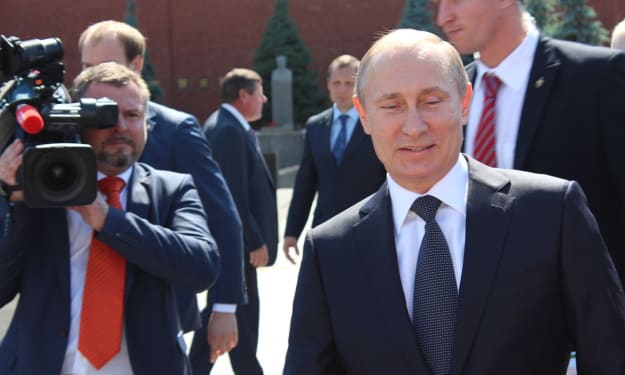
To truly grasp the extent of Putin's influence, we must rewind to a tumultuous era in Russian history – the aftermath of the Soviet Union's collapse. As the Berlin Wall crumbled, a young Putin found himself serving as an undercover spy in East Germany for the Soviet security agency, the KGB. The disintegration of the Soviet Union birthed 15 new nations, including the Russian Federation, which Putin viewed as a staggering loss of two million square miles of territory. He lamented the displacement of countless compatriots beyond Russian borders, labeling it a profound geopolitical calamity.
By Shubham Bajaj3 years ago in History
Why Believing in Love Matters
In a world filled with complexities and uncertainties, one timeless truth stands tall: the power of love. Beyond the doubts and cynicism that may cloud our hearts, believing in love remains a beacon of hope, illuminating the path to happiness, growth, and the deepest human connections.
By Marco Sella3 years ago in History
Rohtas Fort. Content Warning.
Introduction: Nestled amidst the undulating landscape of northern Pakistan, Rohtas Fort stands as a testament to the confluence of history, architecture, and military strategy. Overlooking the city of Jhelum in the Punjab province, this UNESCO World Heritage Site serves as a monumental tribute to the vision of its creator, Sher Shah Suri. today we embark on an immersive journey into the heart of Rohtas Fort, unraveling its historical significance, the reasons behind its construction, the meticulous building process, and the indelible legacy it has left behind.
By Shams Ul Qammar3 years ago in History
FORTRESS LOVE
Fortress Love Chapter 1: The Enchanted Citadel In a distant land, nestled amidst lush green meadows and towering mountains, stood the magnificent Citadel of Amoria. This fortress, with its grandiose architecture and enchanting aura, held a magical secret known to only a chosen few.
By Eye Timothy3 years ago in History
Echoes of Friendship: A Serendipitous Encounter
The sun cast a warm, golden glow over the park as a gentle breeze rustled the leaves, creating a symphony of whispers. Sarah sat on a weathered bench, her eyes fixed on the pages of a well-worn novel. She was absorbed in the story, the world around her fading into the background. Lost in the world of words, she didn't notice the figure approaching until a soft voice disrupted her reverie.
By Muhammad Abubakar3 years ago in History