Narratives
2023 Women's World Cup
In the summer of 2023, the world held its breath as anticipation for the Women's World Cup reached its crescendo. The stage was set, and nations from every corner of the globe converged in a celebration of unity and competition. This tournament wasn't just about soccer; it was about breaking barriers, shattering glass ceilings, and inspiring generations to come. The opening ceremony was a dazzling spectacle of color, culture, and music, reflecting the diversity of the participating nations. As the national anthems echoed through the stadium, a sense of camaraderie and fierce determination emanated from the players. Each team had a unique story, a narrative woven with dedication and passion. Among them was Maya Rodriguez, the captain of the underdog team from a small South American nation. With fiery determination in her eyes and a heart full of dreams, she led her team onto the field with grace and humility. Maya's journey was a testament to the power of perseverance. Growing up in a neighborhood where soccer was seen as a "boys' game," she had faced numerous challenges. But Maya never let the world's expectations define her. Through her grit and relentless pursuit of excellence, she had become a role model for young girls everywhere. As the tournament unfolded, the world watched in awe as underdogs triumphed over giants and thrilling comebacks left stadiums echoing with cheers. The passion of the players was palpable, transcending language barriers and cultural differences. The tournament was a canvas upon which tales of strength, resilience, and unity were painted with every pass, every goal, and every victory. In the knockout stages, the intensity heightened. The air was electric with anticipation as the quarterfinals approached. Maya's team had defied all odds to reach this stage, and the world held its breath as they faced off against a perennial powerhouse. The match was a rollercoaster of emotions, with Maya's team displaying unwavering resolve. In the final minutes of the game, Maya herself launched a free-kick into the net, securing a historic victory that sent shockwaves across the soccer world. But the Women's World Cup was about more than just the game; it was about breaking down barriers that had confined women in sports. The stands were a sea of colorful flags, faces painted in solidarity, and chants echoing gender equality. The stands were filled with young girls who saw their heroes on the field, and in their hearts, they knew that no dream was too big to pursue. As the tournament approached its climax, the final match was a breathtaking showdown between two teams that had earned their spot on the grandest stage. The world watched as the players poured their hearts onto the field, leaving nothing behind. The match was a masterpiece of skill, determination, and teamwork. When the final whistle blew, confetti rained down, and tears of joy flowed freely. The trophy was lifted, but it wasn't just a piece of metal; it was a symbol of triumph, unity, and empowerment. The Women's World Cup of 2023 had etched its place in history, not only for the soccer played but for the legacy it had created. And as the sun set on the tournament, Maya Rodriguez stood proudly, her team beside her, watching the fireworks light up the night sky. The journey had been long and challenging, but they had left an indelible mark on the world. The passion, dedication, and unwavering spirit displayed by these women had transcended the boundaries of the game, inspiring a generation to believe in the power of their dreams.
By Haryourmiedey Abdulsamad3 years ago in History
Israeli settlements, explained!
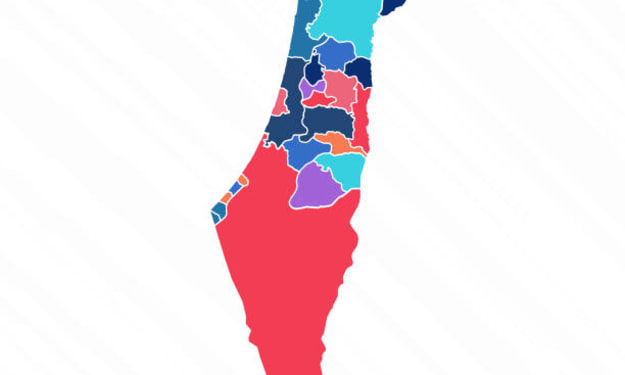
Driving through what might be one of the world's most peculiar landscapes, I find myself traversing the border between Israel and the West Bank. A glance at the map reveals a puzzle of Palestinian towns painted in green and Israeli settlements in blue. This region is often thought of as Palestine, yet what's intriguing is that almost a fifth of the three million inhabitants here are Jewish Israeli citizens. These Israelis, known as settlers, call the West Bank home while holding Israeli citizenship. As I journey along, I am witnessing the juxtaposition of two distinct nations intertwined by decades of conflict. Embarking on a quest to understand this complex panorama, I explored 15 settlements scattered across the West Bank, engaging with individuals who made the bold decision to relocate to this disputed territory. To unravel the origins of this intricate scenario, we must turn back the clock to 1948, a time when the land appeared markedly different. In those days, Great Britain held sway over this expanse. Faced with mounting tensions between Jews and Arabs, the United Nations collaborated with Britain to partition the land into separate states - Israel for Jews and Palestine for Arabs. The Jewish population embraced the proposal, heralding their independence. However, the Arab nations viewed this plan as another manifestation of European colonialism, rejecting it and subsequently engaging in war with Israel. Emerging victorious from the conflict, Israel exceeded the borders outlined by the UN. Amid peace negotiations, a ceasefire line materialized, etched in green ink and soon known as the Green Line. This demarcation was not a formal border, but rather a line separating Israel from the section now controlled by Jordan, which had seized it during the war. The land west of the Jordan River, thus acquired, earned the moniker "West Bank." The fragility of the ceasefire endured until 1967, when Israel found itself embroiled in another war with its Arab neighbors. While territorial expansion was not the objective, Israel rapidly advanced beyond the Green Line, capturing significant tracts of land, including the entirety of the West Bank. This victory posed a crucial question: should Israel incorporate the West Bank, extending Israeli citizenship and voting rights to its 1.1 million Arab inhabitants? Alternatively, should the land be returned to Jordan or given to the Palestinian people to establish their own state? This quandary ignited fervent debates within Israeli political circles. For many, the recent military triumph was perceived as a divine indication that Jews were destined to return to the land brimming with ancient Jewish heritage, the hills of ancient Judea and Samaria, encompassing the entire West Bank. While the government deliberated, Israeli civilians embarked on a bold initiative, establishing homes within the West Bank without official authorization. This grassroots movement planted the seeds of the settler movement, reshaping the dynamics of the region. However, this initiative was met with international disapproval. As settler numbers swelled, the UN issued a resolution decrying the settlements as an impediment to achieving lasting peace in the Middle East. The world witnessed the emergence of two narratives: one emphasizing Jewish civilians populating largely vacant plots of land infused with historical and spiritual significance, and the other, the predominant perspective, portraying settlers as expanding their nation through colonization. Despite global condemnation, the settler population burgeoned. Over ensuing decades, various factions within the Israeli government rallied behind the movement, channeling public resources and authorizing construction. Aiding the expansion of settlements, the Israeli housing ministry and military devised blueprints for West Bank development. Roads traversing the region facilitated movement between settlements and mainland Israel. Construction permits multiplied, and planned communities sprouted across the West Bank. From a fringe movement, settlers evolved into an integral facet of Israeli society, backed by state support. In the 1980s and 1990s, settlement activity surged, weaving these settlements around existing Palestinian towns, sparking tensions and protests. Recognizing the unsustainable nature of the situation, President Bill Clinton, Prime Minister Yitzhak Rabin, and Palestinian leader Yasser Arafat brokered the Oslo Accords in the mid-1990s. These agreements divided the West Bank into three areas: Area A granted Palestinians control over security and governance, Area B yielded Palestinian administrative power but retained Israeli security presence, and Area C remained under complete Israeli control, housing the settlements. These developments have given rise to the current state of affairs. Israelis enjoy convenient access between mainland Israel and the West Bank, traversing well-maintained roads known as "flyovers" that bypass Palestinian villages. Palestinians, on the other hand, often encounter roadblocks and checkpoints, hampering their movement. Yet, a more substantial challenge confronting Palestinians is the impact of fragmented land on their economy. The fertile agricultural land, water, and mineral resources concentrated in Area C sustain the majority of the West Bank's economy. Limited access to these resources has stifled Palestinian businesses and economic growth. An event in 2005, where Israeli Prime Minister Ariel Sharon uprooted 8,500 settlers from the Gaza Strip, reignited settler fervor. Witnessing fellow Israelis evicted from their homes galvanized the settler community, prompting further expansion efforts in the West Bank. Today, these settlers reside in established communities complete with schools, hospitals, and even a university. As thoughts turn towards resolving this intricate conflict, the idea of a two-state solution, granting Palestinians their own state within the West Bank region, emerges as a common proposal. However, the evolving settlement landscape, particularly within Area C, complicates this path. These settlements, far from being temporary encampments, have evolved into thriving communities. In conclusion, the West Bank's unique tapestry of settlements and Palestinian towns stands as a testament to the enduring complexities of the Israeli-Palestinian conflict. It is a landscape where historical narratives, religious ties, and contemporary political considerations converge, yielding a remarkable tableau that continues to shape the destiny of this region.
By Shubham Bajaj3 years ago in History
Ghana: The Home of Lake Volta, the World's Largest Man-Made Lake
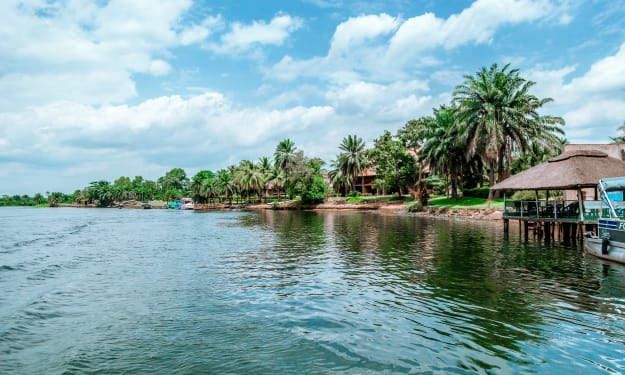
Ghana is a country in West Africa that is known for its rich culture, history, and natural beauty. One of the most impressive natural features in Ghana is Lake Volta, the largest man-made lake in the world by surface area.
By NII LANTEY PARKER3 years ago in History
HOW CRUISE SHIPS GOT SO BIG
In the realm of watercraft, there exist small and large boats, and then there are the truly massive vessels, such as the MSC Meraviglia. This cruise ship was constructed in Saint-Nazaire, France in 2017 and was christened by Sophia Loren. It is the largest cruise ship to have ever docked in New York City, boasting an impressive array of amenities, including a water park, rope course, spa, mall, arcade, bowling alley, casino, gym, two theaters, five pools, nine restaurants, 23 bars, and 19 floors, with enough space to accommodate 5,655 passengers and 1,536 crew members. Cruise ships are the largest passenger vessels ever built, capable of transporting an entire small town's worth of people in a single vehicle. However, their appearance differs greatly from the transatlantic ships of a century ago.
By Austine Ochieng 3 years ago in History
FIFA's Tarnished Legacy: Unraveling the Corruption Behind the World Cup
On a chilly December 2nd in 2010, the world of football held its breath as the International Federation of Association Football, known as FIFA, gathered in picturesque Switzerland. This momentous gathering was convened to unveil the future hosts of the prestigious 2018 and 2022 World Cup tournaments. An illustrious audience had assembled, reflecting the political might and fervor behind their respective bids. The scene was set with notable figures like former U.S. President Bill Clinton, a vocal advocate for the U.S. bid, and Prince William championing England's cause. The Dutch Prime Minister and former Belgian Prime Minister stood united with a joint bid. In this room pulsating with power, the fate of nations hung in the balance, all hinging on the decisions of a group that held the key to the World Cup's future. These were the 22 FIFA officials vested with the authority to select the host nations, the custodians of destiny steering the course of international football. Yet, as the story unfolds, we'll come to realize that even these guardians of the game were not immune to the allure of abusing their power. The moment arrived, and the announcements echoed through the air like seismic ripples, revealing the chosen hosts. "Ladies and gentlemen, the 2018 FIFA World Cup will be organized in Russia, and the 2022 FIFA World Cup is awarded to Qatar." The room erupted with a mixture of emotions, from jubilation to bewilderment. Little did anyone know that this seemingly triumphant moment would send shockwaves through the world of football, unravelling a tale of corruption and scandal that would mar the very essence of the beautiful game. The journey of FIFA began humbly in the early 20th century when football had already established itself as a beloved sport, particularly in Europe and South America. FIFA was formed in 1904 by officials in France to oversee competitions between national teams and promote the sport. The desire to emulate the success of the Olympics led to the creation of the first World Cup in 1930, hosted by Uruguay. The selection process for the host was veiled in the guise of a democratic vote, concealing the influence of a select few behind closed doors. As the World Cup found its way onto television screens, it underwent a metamorphosis, evolving from a regional event into a global phenomenon. Countries clamored for the prestige and honor that came with hosting the tournament, propelling FIFA into a position of immense wealth and power. The burgeoning profits became the lifeblood of the organization, controlled by a small group known as the Executive Committee (ExCo), who wielded the authority to distribute funds among member nations. However, beneath the surface of the World Cup's success, a culture of corruption began to fester. FIFA leaders started using illicit means to consolidate and extend their influence, culminating in the decision to shift the voting power from the FIFA Congress to the ExCo. This pivotal move concentrated immense power in the hands of a few, creating an environment ripe for corruption to thrive. The turn of the 21st century saw FIFA's bidding process evolve into a high-stakes arena, where nations vying for the opportunity to host the World Cup indulged in a frenzied display of promises and lavish gestures. The 2006 World Cup bid marked the first glaring evidence of under-the-table deals, with Germany's victory marred by allegations of bribery. The trend continued, tainting subsequent bids and eventually culminating in the controversial selection of Russia and Qatar as hosts for 2018 and 2022 respectively. Russia and Qatar emerged as winners not solely based on merit, but rather on their ability to flex political muscle and financial prowess. Russia showcased its formidable resources and influence, while Qatar harnessed its wealth and ambition to embark on a staggering infrastructure overhaul. Both nations exploited the lack of accountability and transparency within FIFA's structure, playing a sophisticated game of power politics to secure their hosting rights. The aftermath of these selections saw FIFA plunge into a whirlpool of scandal and controversy. Arrests, indictments, and investigations laid bare the rampant corruption that had infiltrated the organization's highest echelons. The ensuing chaos culminated in Sepp Blatter's ignominious departure from the presidency of FIFA, symbolizing a pivotal moment in the unraveling of the institution. Amidst the turmoil, FIFA attempted to restore its tarnished reputation by reinstating the Congress's authority in the host selection process. However, the damage was done, and questions lingered about the moral integrity of hosting decisions that had favored wealth and power over principles. The legacy of the 2018 and 2022 World Cup host selections serves as a stark reminder of the darker side of the beautiful game. It highlights the pitfalls of unchecked power, the allure of under-the-table dealings, and the precarious balance between ambition and ethics. As the world tunes in to witness the spectacle of the World Cup in Russia and Qatar, the shadows of controversy loom large, casting a long shadow over an event that was once the epitome of sporting excellence. In retrospect, the 2018 and 2022 World Cup hosting decisions stand as cautionary tales, reminding us of the imperative to safeguard the integrity of the beautiful game. The lessons learned from this tumultuous chapter in FIFA's history serve as a call to action for transparency, accountability, and a renewed commitment to the principles that have made football a unifying force across borders and cultures. The road to redemption may be arduous, but it is a journey that the world of football must undertake to ensure that the spirit of the game remains untarnished for generations to come.
By Shubham Bajaj3 years ago in History
Why queen Elizabeth 2nd was the queen of 15 countries!?
On November 30th, 2021, history was made as Barbados proudly emerged as the world's newest republic. With a resounding declaration, the transformation was solidified: "From this day and forever, declare Barbados a parliamentary republic." This pivotal moment marked the culmination of a journey that saw Barbados unfurl its own flag, symbolizing the end of a colonial era spanning over 350 years and dissolving its ties to the British royal family. What added an intriguing layer to the event was the presence of none other than Prince Charles, who acknowledged, "It was important that I should join you to reaffirm those things which do not change." Prince Charles's words held a deeper significance, encompassing the essence of the transition. Although Barbados had stepped away from being a realm of the British Crown, it chose to maintain its membership in the Commonwealth—a conglomerate of nations primarily composed of former British colonies. A moment of transformation was unfolding, one that required a closer look at the intricate relationship between the British Empire and the Commonwealth of Nations. Travel back to 1926, the year Queen Elizabeth II entered the world stage. At that time, the British Empire exerted dominion over nearly a quarter of the global population through its sprawling colonies. This immense reach was built upon refined systems designed to control and exploit wealth and resources across the colonies. Consider the case of Barbados, where descendants of those kidnapped from Africa were exploited on sugar plantations, or delve into South Africa, where a wealth of diamonds was extracted from local mines. The early 20th century witnessed the initial ripples of change in the colossal British Empire. Countries such as Australia and Canada transformed into British dominions, relinquishing direct rule by Britain while maintaining symbolic allegiance to the Crown—a concept termed the British Commonwealth. This new form would later serve as the blueprint for the empire's evolution. As Queen Elizabeth ascended the throne in the 1950s, the world was in flux. Post-World War II, Britain's economy faltered, and independence movements surged across the empire. Struggles for sovereignty unfolded in places like India, where leaders fought for self-governance, and in Kenya, where millions resisted British rule, even enduring internment camps. Recognizing the inevitability of decolonization, the monarchy shifted its focus toward relevance. While Queen Elizabeth did not personally attend the lowering of the British flag, her family did. Prince Philip participated in ceremonies marking the independence of former colonies, including Kenya. Other royals, such as Lord Mountbatten, were also part of this symbolic transition, as seen in India. India's trajectory took an intriguing turn as it chose to become a republic and sever ties with the monarchy. In response, the British Commonwealth underwent a transformation of its own, rebranding itself as the Commonwealth of Nations. This evolution allowed countries to join as members even if they were no longer under the queen's rule. Meanwhile, newly independent nations opted to retain the queen as their ceremonial head of state, establishing a diverse mix of monarchies and republics, all presided over by the queen. In this intricate landscape, the monarchy adapted and thrived, expanding its reach through royal tours that echoed the imperial tradition. As the British empire decolonized, the monarchy remained a global entity. Fast-forward to today, where approximately a third of the world's population resides in a Commonwealth nation. This intriguing alliance extends beyond former British colonies, as countries find value in the political platform it offers, connecting them to influential diplomatic players like the UK, India, Canada, and even the Crown itself. The transition to the next head of the Commonwealth, King Charles III, carries a hint of irony. While the British empire gave birth to the Commonwealth, the future leadership of the organization is not bound by colonial origins. Anyone has the potential to lead, indicating that the Commonwealth's evolution may be guided by those very colonies it was designed to unify. The recent passing of Queen Elizabeth II triggered periods of mourning across Commonwealth nations. Her remarkable ability to unite diverse nations provided a buffer against the darker chapters of British history, such as slavery. However, the monarchy can no longer evade these discussions, as the collective reckoning with colonial legacies prompts introspection on the monarchy's role within the Commonwealth. These conversations underscore a pivotal shift in power dynamics. Former British colonies now hold considerable influence within the Commonwealth. The question that looms large is the collective vision of these nations. What aspirations and goals will guide the future of this diverse union? The journey from colonialism to republics within the Commonwealth is a complex narrative, one that reflects not just a shift in political landscapes, but also the aspirations of nations bound by shared histories.
By Shubham Bajaj3 years ago in History
Fueling Dependence: Germany's Reliance on Russian Gas
On April 8th, 2022, a significant event unfolded in the realm of international relations as the European Union (EU) took a decisive step by imposing its fifth round of sanctions against Russia. This marked a notable development in a complex web of diplomatic interactions. A notable quote emerged amidst this decision, capturing attention: "And, ladies and gentlemen, I think that measures on oil, and even gas, will also be needed sooner or later." This seemingly cryptic statement, "even gas will also be needed sooner or later," was carefully noted for its implications – suggesting a potential course of action in the future while hinting at the timing being not quite immediate. This move was part of a series of actions taken by the EU in response to the ongoing conflict in Ukraine. Over the course of this period, sanctions had been artfully designed to restrict the flow of Russian money and goods. Various segments of the Russian economy felt the impact, with the EU targeting not just banks and companies, but also specific individuals who were instrumental in shaping the nation's policies. It was a chess game played out on the global stage. However, a striking aspect of these sanctions was their restraint when it came to the realm of natural gas, a vital resource. The European Union relied on gas for almost a quarter of its energy needs, and nearly half of that gas came from Russia – a country renowned as the world's leading gas exporter. The intricate network of pipelines facilitating this exchange formed a vital link in the energy chain. Notably, Germany, boasting the EU's largest economy, stood as a primary recipient of Russian gas. As the gears of diplomacy turned, Germany found itself in a unique position. Despite the geopolitical tensions and the economic sanctions being imposed, the country continued to forge an energy relationship with Russia. This was particularly evident in the staggering sum of approximately 220 million euros per day that Germany paid Russia for its gas supply, a sum that could support various facets of a nation's infrastructure. Germany's reliance on Russian gas was borne from a historic trajectory that found its roots in the aftermath of World War II. In the mid-20th century, West Germany embarked on a remarkable journey of recovery and growth. Amidst this ascent, an insatiable demand for energy emerged, a need that was met by the vast natural gas reserves discovered in the heart of western Siberia, part of the erstwhile Soviet Union. The late 1960s witnessed a pivotal shift in West Germany's foreign policy, characterized by a doctrine known as Ostpolitik. This doctrine emphasized dialogue and cooperation with the Eastern Bloc, a policy that paved the way for a monumental energy agreement between West Germany and the Soviet Union. In this historic pact, the Soviet Union promised to supply natural gas to West Germany, while West Germany reciprocated by providing high-quality steel pipes to extend the gas pipelines – a classic example of the proverbial "you scratch my back, I'll scratch yours." It's important to comprehend the unique dynamics of piped natural gas – a regional commodity with transportation intricacies. Unlike its fossil fuel counterparts, coal and oil, which can traverse oceans, piped natural gas's movement is tied to the geography of pipelines. These pipelines are not ephemeral conduits; they are substantial, long-term investments that shape energy landscapes for decades. Hence, gas agreements became more than transactions; they were pathways that bound nations together. The 1980s saw the Soviet Union establishing a comprehensive network of pipelines, solidifying its position as a significant gas supplier to Europe. By the 1990s, Germany was receiving 40% of its gas from Russia, a statistic that bore testimony to the effectiveness of the agreement. However, the geopolitical landscape underwent tectonic shifts with the collapse of the Soviet Union. Russia, emerging as the successor state, took over the extensive pipeline network, but the new configuration meant that gas routes ran through newly independent Ukraine. To safeguard against potential disruptions in supply routes, Russia embarked on an ambitious endeavor – building alternative pipelines. By 1999, a pipeline running through Belarus was operational. In 2005, the Nord Stream pipeline, meandering along the Baltic Sea, was initiated, providing a direct route to Germany. These infrastructural marvels were supplemented by pipelines within German territory and the establishment of gas storage facilities, such as the impressive storage site that ranked among the largest in Western Europe. The intricate gas network underscored Russia's energy influence over Europe, a fact that manifested vividly in the gas price negotiations of 2008. An impasse led to a gas cutoff to Ukraine, which inadvertently impacted the flow of gas to multiple European nations. This episode illuminated the extent to which gas flows could be wielded as a geopolitical tool. The subsequent years brought forth another ambitious project – Nord Stream 2. An investment exceeding 11 billion dollars, this pipeline aimed to mirror the original Nord Stream, doubling the capacity of gas transport to Germany. As this project took shape, 2014 ushered in another seismic shift – Russia's annexation of Crimea and its intervention in Eastern Ukraine. In response, the EU responded with sanctions, leading certain countries to distance themselves from Russian gas. In contrast, Germany continued to bolster its gas imports, thereby emphasizing its energy reliance on Russia. Fast-forward to the present, and the situation has gained a heightened sense of urgency. As Russia's actions in Ukraine stir global outrage, Germany finds itself in a conundrum. The clamor for a change in energy dependency has grown louder, yet the path forward is riddled with complexities. Piped gas, woven into the fabric of German infrastructure, presents a formidable challenge to replace. While renewables remain the ultimate goal, the transition to such alternatives demands substantial time and resources, with an estimated completion date far into the future. In this intricate dance of geopolitics and energy, Germany stands at a crossroads. Public sentiment urges action against Russian gas, yet economic realities loom large. A potential boycott could ripple through the economy, with potential job losses numbering in the hundreds of thousands. Despite this, Germany has begun taking cautious steps. The once-proposed Nord Stream 2 pipeline has been abandoned, and measures to reduce dependence on Russian gas have yielded a modest 15% reduction. Germany has even taken control of a subsidiary of Russia's Gazprom, signaling a more assertive stance. However, the complexities persist. Germany's intertwined energy relationship with Russia isn't one easily untangled. The nation finds itself ensnared in a web spun from decades of energy agreements, geopolitical considerations, and economic pragmatism. As the world watches, the story unfolds with implications that extend beyond energy – a tale of diplomacy, resilience, and the intricate balance between power and dependence.
By Shubham Bajaj3 years ago in History