Narratives
Philadelphia Plane Crash 2025
On the morning of March 15, 2025, a tragic plane crash occurred near Philadelphia International Airport, shocking the nation. The passenger plane, Flight 287, was on its way from Chicago to Philadelphia when it experienced technical difficulties. Despite the pilot's efforts to make an emergency landing, the aircraft crashed just a few miles away from the airport.
By Farhan Sayed2 years ago in History
U.S. Defense Agency Bans Black History Month and Other Special Observances.
U.S. Defense Agency Bans Black History Month and Other Special Observances. Washington D.C The U.S Defense Intelligence Agency DIA has officially suspended all activities and events related to Martin Luther King Jr. Day Black History Month Juneteenth LGBTQ Pride Month Holocaust Remembrance Day, and other special observances. This move is in compliance with an executive order signed by President Donald Trump aimed at eliminating diversity equity and inclusion DEI programs across the federal government. This information was revealed in an internal memo obtained by NBC News. According to the directive 11 different observances and related activities have been banned. Additionally all employee networking groups and affinity groups have been immediately put on hold. These groups which have long existed in federal agencies were intended to create a supportive and inclusive work environment. The DIA has not yet commented on this decision but the directive has sparked concern among federal employees. Last week the Department of Justice DOJ also issued a memo to its staff announcing the shutdown of all DEI programs. The DOJ justified the decision by claiming that such programs were dividing Americans based on race wasting taxpayer money and fostering unfair discrimination. Similarly the Centers for Medicare & Medicaid Services CMS informed its employees that all affinity groups, also known as Employee Resource Groups ERGs were being disbanded and that all special observances had been canceled. This crackdown on DEI initiatives is a key priority for the Trump administration which has positioned itself against government led diversity programs. On his first day in office President Trump signed an executive order mandating the termination of all discriminatory DEI policies programs and activities within the federal government.
By Adnan Rasheed2 years ago in History
Plane Crashes
A plane crash is a very serious accident that happens when an airplane fails to land safely or falls from the sky. While modern airplanes are very safe, crashes still happen due to different reasons. Some plane crashes are small, while others are big and cause major loss of life and damage.
By Farhan Sayed2 years ago in History
The Seven Wonders of the Ancient World
Long before the rise of culture and civilization as we know it, humanity has always been driven by the desire to leave behind reminders of our existence. Throughout history, grand architectural masterpieces have been uncovered—symbols of the thoughts, beliefs, and artistic prowess of the civilizations that built them. Today, we embark on a journey through time to explore the legendary Seven Wonders of the Ancient World.
By A História2 years ago in History
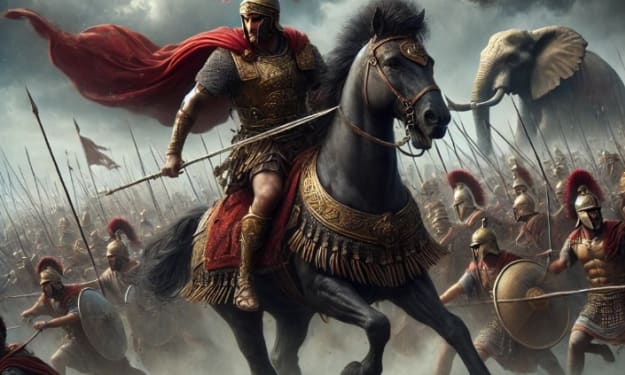
The War Tactics of Alexander the Great – A Legacy of Military Genius
The War Approach of Alexander the Great: A Study of His Aggressive Genius Introduction Alexander the Great, the allegorical baron of Macedonia, is generally hailed as one of history’s greatest aggressive commanders. His appropriate brilliance, cardinal foresight, and avant-garde battlefield assignment accustomed him to beat all-inclusive territories, addition from Greece to India. The foundations of his success lay in his able formations, appalling warships, aristocratic cavalry, and acclimatized infantry. This commodity explores Alexander’s war tactics, including his use of phalanx formations, argosy warfare, army maneuvers, and the role of his infantry in battle. 1. The Phalanx Formation: The Backbone of Alexander’s Army One of the best able aggressive approach acclimated by Alexander was the Macedonian phalanx, which was aboriginal developed by his father, Baron Philip II. This accumulation was composed of heavily armed infantrymen (phalangites) able with the sarissa, a continued extra about 18–22 anxiety in length. Key Features of the Phalanx Formation:
By Say the truth 2 years ago in History
Past the Edges of Mankind. Content Warning. AI-Generated.
Presentation The year 2153 denoted a defining moment for humankind. As the species extended its reach across the stars, the revelation of a puzzling sign from the far-off planet Gliese-581g cast a shadow over human advancement. This sign was not irregular, it was a code. Furthermore, its most surprising disclosure was an incomplete match to the human genome. A specific group of researchers and specialists was dispatched, determined to explore, yet what they found on Gliese-581g was past whatever they might have envisioned. It wasn't simply a sign it was a message from the universe, containing mysteries that could reclassify humankind's position in the universe. Part I: The Sign In the flawless, glass-walled gathering room of Argus Station, Dr. Aarav Mehta, a senior astrophysicist, remained before his group. Holographic information streams drifted around him, throbbing with faint light. "This," Aarav started, highlighting a waveform, "is the sign we've captured from Gliese-581g. It's organized, deliberate. What's more, this section" he focused on a succession of numbers"coordinates a piece of the human genome related to cognizance." The room was quiet. Dr. Lin Wei, a geneticist, inclined forward, her forehead sewn with concern. "Is it safe to say that you are recommending some extraterrestrial insight encoded in this? What's more, that it's connected with us?" Aarav faltered. "That is precisely the exact thing I'm recommending. The grouping originates before humankind by essentially a billion years, in light of its rot signature. Whatever conveyed this message had some awareness of us or made the circumstances for us to exist." EVA-9, the station's high-level simulated intelligence, rang in. "Signal beginning affirmed: Gliese-581g. The likelihood of an insightful plan surpasses 98.7%. Mission boundaries refreshed." The gravity of the disclosure settled over the room like a tempest cloud. Mankind's spot in the universe was at this point not a philosophical inquiry, it was a logical reality. Part II: The Excursion The Athena, mankind's most exceptional investigation vessel, was sent off in no time. Installed were eight group individuals, including Aarav, Lin, and EVA-9, whose brain center was coordinated into the boat's frameworks. As the Athena moved toward Gliese-581g following quite a while of movement, Aarav pored over the decoded signal. Its layers uncovered dazzling intricacies of conditions outside human ability to understand, schematics for innovations light-years ahead, and, most stunningly, an example indistinguishable from the hereditary marker for mindfulness. "Maybe they're talking straightforwardly to us," Aarav mumbled, situated in the perception deck. Lin went along with him, her look fixed on the world materializing. "Or on the other hand, getting back to us back," she said unobtrusively. The boat's plunge carried them to an infertile spread of Gliese-581 g's surface, where spiked rock developments encompassed a transcending metallic monolith. Its smooth, consistent surface beat faintly, as though alive. Part III: The Revelation Venturing onto the outsider soil, the group felt an illogical draw toward the pillar. EVA-9 checked the construction. "Organization: obscure composite. Mature: around 1.3 billion years. Energy source: dynamic." "Billion?" Lin murmured. "That is more seasoned than multicellular life on the plane." Aarav moved toward the monolith, his hand shuddering as he contacted its surface. A low murmur resounded through the air, and an entryway showed up, dissolving as though the design had been sitting tight for them. Inside, the monolith uncovered an office of drifting 3D images worlds, DNA strands, and what gave off an impression of being a nitty-gritty guide of the human mind. At its middle was a translucent gadget lying on a platform. As Aarav went after the precious stone, the chamber loaded up with light, and a voice reverberated to them. "You are the climax of our plan." The words were not verbally expressed they were felt, as though engraved straightforwardly onto their awareness. "Who are you?" Aarav thought, realizing the substance could hear him. "We are the Planners," the voice answered. "We cultivated life across universes, installing possible inside your hereditary code. Humankind is perhaps our best examination." Part IV: The Disclosure The designers uncovered a story spreading over ages. They had dispersed life all through the universe, designing species with the ability to develop and adjust. Humankind, they made sense of, was not remarkable however, it was excellent. "However, why get in touch with us now?" Lin asked so anyone might hear. "Why uncover yourselves?" Another 3D image showed Earth, encompassed by throbbing red waves. "Your species has arrived at a basic point," the Planners cautioned. "Your innovation has outperformed your insight. Whenever left uncontrolled, you will annihilate yourselves and weaken the texture of your cosmic system." Aarav's chest was fixed. "Why not help us? Guide us?" "We don't intercede," the Planners answered. "We notice and record. Your predetermination is your own to shape or to waste." The light darkened, and the visualizations blurred, leaving the group in dazed quietness. The pillar's entryway resumed, as though encouraging them to leave. Aarav took the glasslike gadget, detecting it held answers humankind frantically required yet additionally the heaviness of a horrendous obligation. Part V: The Return On board the Athena, the group investigated the precious stone's items. It contained progressive information on clean energy advancements, solutions for illnesses, and schematics for quicker-than-light travel. In any case, it likewise included terrible forecasts: natural breakdown, rising conflicts, and mass elimination except if humankind shifted its course. "We can't hush up about this," Lin contended during a strained gathering. "This information could save billions of lives." Aarav shook his head. "Or then again it could undermine everything. Envision the turmoil assuming individuals learned we were designed that our reality isn't special." EVA-9, ever the fair onlooker, offered a sobering viewpoint. "Mankind's solidarity lies in its ability for decision. Utilize this information admirably, or risk satisfying the modelers' admonition." The discussion went on as the Athena rushed back toward Earth, conveying the precious stone as well as the heaviness of its suggestions. Epilogue Upon their return, the group introduced their discoveries to a select gathering of pioneers and researchers. Responses went from doubt to stunningness to fear. At last, the choice was made to deliver just divvies of the information to the general population, while the full truth stayed ordered. Aarav, be that as it may, felt the heaviness of the Modelers' advance notice. Late around evening time, he would look at the stars, replaying their last words to him: "Your fate is your own to shape." Humankind remained at an intersection, its future unsure. Could it ascend to live up to the Planners' assumptions or fall under the heaviness of its own pride? As the stars squinted in the limitless obscurity, Aarav murmured to himself, "Perhaps we were intended to transcend. Perhaps that is the genuine test." Also, some place, in the tremendous field of the universe, the Planners watched, holding back to check whether their most prominent trial would succeed or, on the other hand, if it, as well, would be lost to the ages.
By SUDHIR MALLICK2 years ago in History
Researching the Seven Wonders of the World: 2025 Variant. Content Warning. AI-Generated.
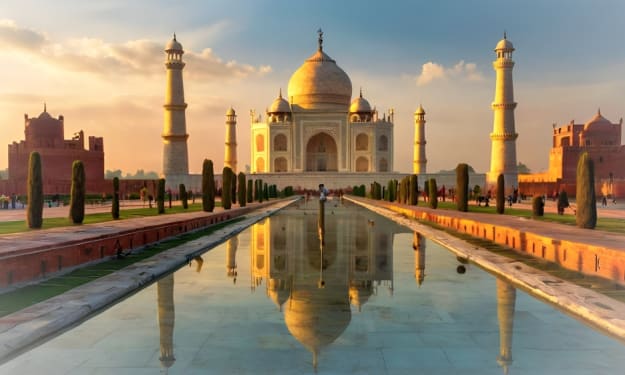
The Seven Wonders of the World are a celebration of human ingenuity, primary brilliance, and social heritage. These well-known achievements have gone all the way and continue to excite huge numbers of visitors reliably. In 2025, these marvels stay as stunning as anybody would envision, displaying the rich history and achievements of old developments. This article takes an all-around adventure through all of these marvels, exploring their significance, history, and why they continue to stand apart for the world. 1. The Taj Mahal, India The Taj Mahal, one of the most seen pictures of warmth, is arranged in Agra, India. Worked on by Mughal Head Shah Jahan in memory of his loved companion Mumtaz Mahal, this white marble mausoleum required 22 years (1632-1653) to wrap up. The Taj Mahal is a UNESCO World Heritage Site and addresses the apex of Mughal designing, uniting Persian, Indian, and Islamic styles. Designing and Significance The Taj Mahal's optimal equity, flighty carvings, and the shimmering appearance in the Yamuna Stream make it a showstopper. Its central vault climbs to a degree of 73 meters, flanked by four thin minarets. The trim work, including semi-important stones, and the calligraphy on the section entryway add to its innovative charm. In 2025, the Taj Mahal continues to draw countless visitors for its structural greatness as well as concerning the huge heartfelt story it addresses. Visitors are particularly enamored by the daybreak and sunset seas, which wash the marble in tones of pink, orange, and gold. 2. Christ the Deliverer, Brazil Staying on Mount Corcovado in Rio de Janeiro, Christ the Hero is a 30-meter-tall figure of Jesus Christ, with arms outstretched in an enticing embrace. This renowned Craftsmanship Deco milestone, completed in 1931, addresses concordance, trust, and the sparkle of Brazilian culture. Valid and Social Impact Arranged by Brazilian expert Heitor da Silva Costa and carved by French skilled worker Paul Landowski, the model was worked on for more than nine years. Made of developed concrete and soapstone, Christ the Guardian Angel dismisses Rio, offering widely inclusive points of view on the city and Guanabara River. In 2025, the figure continues to fill in as a picture of certainty for Christians, generally speaking, and an exhibit of Brazil's social person. The model is edified around nighttime, making a shocking sight that ought to be noticeable from quite far off. 3. Machu Picchu, Peru Machu Picchu, much of the time implied as the "Lost City of the Incas," is a fifteenth-century fortress arranged in the Andes Loads of Peru. Perched at a height of 2,430 meters, this archaeological site displays the creativity of the Inca human advancement. Planning Miracle Worked without the use of mortar, the stones of Machu Picchu fit so precisely that even current fashioners are befuddled by the craftsmanship. The site consolidates safe havens, decks, and water channels, all created as one with the incorporating scene. Machu Picchu's significance lies in its ability to connect visitors with an unfortunately missing advancement. In 2025, it remains a rundown of should-dos and objectives for pilgrims searching for experience, history, and shocking points of view. The first light over the site is particularly spellbinding, drawing picture takers and trailblazers from across the globe. 4. Chichen Itza, Mexico Chichen Itza, arranged on the Yucatán Expanse of land in Mexico, was an unquestionable city of the old Mayan human advancement. Among its many plans, the Asylum of Kukulcán, generally called "El Castillo," is the most well known. This step pyramid reflects the significant level of cosmic data on the Mayans. Inestimable Significance El Castillo is arranged with the goal that all through the spring and pre-winter equinoxes, the play of sunshine and shadow makes the misdirection of a snake slithering down the pyramid's means. This characteristic element is the Mayans' significant perception of heavenly turns of events. In 2025, Chichen Itza continues to dazzle visitors with its blend of legends, science, and plan. The site is in like manner a social area of interest, working with events and celebrations that honor Mayan customs. 5. Colosseum, Italy The Colosseum in Rome, Italy, is a helping-through picture of the superbness of the Roman Domain. Worked some place in the scope of 70 and 80 Advancement, this colossal amphitheater could arrange up to 50,000 spectators and worked with gladiatorial difficulties, public scenes, and sensational shows. Plan Brilliance The Colosseum is a planning wonder, featuring a staggering plan of underground sections, stowed-away entrances, and lifts that were used to coordinate elaborate events. Its layered visitor plan ensured clear points of view for all spectators, an arrangement that continues to influence current fields. In 2025, the Colosseum stays as an exhibit of Roman turns of events and adaptability. It is maybe Italy's most visited achievement, drawing history aficionados and designing sweethearts from around the world. 6. Petra, Jordan Known as the "Rose City" in view of its pink sandstone facades, Petra is an irrefutable and archeological supernatural occurrence arranged in southern Jordan. At the point when the capital of the Nabataean Domain, Petra is renowned for its stone-cut plan and significant level water the board structure. A Blend of Nature and Designing The Safe (Al-Khazneh) is Petra's most famous plan, cut directly into the stone face. Various highlights consolidate the Order, the Distinguished Entombment chambers, and the Siq a restricted ravine that fills in as the city's principal section. In 2025, Petra stays a picture of human cleverness and change. Visitors are drawn to its harsh greatness and real significance, making it one of the Middle East's most cherished achievements. 7. Staggering Mass of China, China Broadening more than 21,000 kilometers, the Great Wall of China is the longest man-made structure on earth. Worked in excess of years and years to protect China from northern intruders, the wall is a miracle of old military planning. Tirelessness Through Time The wall explores mountains, deserts, and fields, showing the confirmation and imagination of the Chinese public. Key sections, such as Badaling and Mutianyu, have been restored and are accessible to explorers, offering amazing points of view and legitimate encounters. In 2025, the Exceptional Wall continues to address China's rich social heritage and stays a must-visit objective for explorers searching for a more significant perception of history. End The Seven Supernatural Occurrences of the World are not just underlying and planning achievements; they are, in like manner, windows into the past, reflecting the dreams, convictions, and advancements of outdated developments. In 2025, these marvels continue to persuade wonderment, attracting a colossal number of visitors and filling in as a badge of what mankind can achieve. Exploring these wonders is a different option from a journey; an experience interfaces us with history, culture, and the enduring soul of human imagination. Whether it's the genuine allure of the Taj Mahal, the captivated allure of Machu Picchu, or the heavenliness of the Unique Mass of China, these wonders assist us with recalling the greatness and assortment our world holds.
By SUDHIR MALLICK2 years ago in History
Magic in Ancient Egypt: A Divine Force Intertwined with Life
Introduction Magic, known as heka in ancient Egyptian culture, was more than a mystical practice—it was a cornerstone of existence. Unlike in many later societies where witchcraft was feared or persecuted, the Egyptians revered magic as an integral part of their daily lives, religion, and understanding of the universe. They believed that magic was not only a gift from the gods but also the force that sustained the cosmos and bridged the realms of the mortal and the divine.
By Sajjad Rana Hussain2 years ago in History
Afghanistan: A Nation of Resilience and Transformation
Officially known as the Islamic Emirate of Afghanistan, this landlocked nation has a population of 43.3 million, making it the 36th most populous country in the world. Covering an area of 652,000 square kilometers, Afghanistan ranks 41st in terms of size globally.
By Sajjad Rana Hussain2 years ago in History
The Origins of Love: A Journey Through Time and Emotion
Love is one of the most complex and profound emotions experienced by humans. It has inspired countless works of art, literature, and music, transcending cultures and generations. But where does love come from? What are its origins? To understand love, we must journey through the realms of biology, psychology, and history, uncovering how this powerful emotion has shaped humanity and continues to define our existence. #### **The Biological Roots of Love** From a biological perspective, love is deeply rooted in our evolutionary history. Scientists believe that love evolved as a survival mechanism, fostering bonds that ensured the continuation of our species. In the earliest human societies, pair-bonding and attachment were essential for raising offspring and providing protection. Love, in this context, was not just an emotion but a tool for ensuring the survival of families and communities. The brain plays a central role in love, with specific chemicals and regions driving the experience. The "love cocktail" includes neurotransmitters like dopamine, oxytocin, and serotonin. Dopamine is associated with pleasure and reward, creating the euphoric feelings of romantic attraction. Oxytocin, often called the "love hormone," fosters bonding and trust, particularly in long-term relationships and between parents and children. Serotonin contributes to feelings of happiness and well-being, stabilizing emotional connections. These chemical processes underscore the biological importance of love, but they do not fully capture its depth and diversity. Love is more than a biological response—it is also shaped by our minds, cultures, and histories. #### **The Psychological Dimensions of Love** Psychology offers another lens through which to understand the origins of love. Renowned psychologist John Bowlby developed the theory of attachment, which explains how early relationships with caregivers influence our capacity to love. Bowlby identified three attachment styles—secure, anxious, and avoidant—that shape how we form bonds throughout life. For instance, children who experience secure attachments with their caregivers are more likely to develop healthy, loving relationships as adults. On the other hand, those with anxious or avoidant attachment styles may struggle with trust, intimacy, or emotional regulation. These patterns reveal how love is deeply influenced by our early experiences and psychological makeup. Additionally, psychologist Robert Sternberg proposed the Triangular Theory of Love, which identifies three components of love: intimacy, passion, and commitment. Different combinations of these elements give rise to various types of love, from romantic love to friendship and familial love. This theory highlights the multifaceted nature of love and how it evolves over time. #### **The Historical and Cultural Evolution of Love** Love has not always been understood or expressed in the ways we recognize today. Its meaning and significance have evolved across cultures and historical periods. In ancient civilizations, love was often intertwined with mythology and spirituality. The Greeks, for example, identified different types of love, including **eros** (romantic or sexual love), **philia** (friendship or affectionate love), and **agape** (selfless, unconditional love). These distinctions reflect the diverse ways in which love was experienced and valued in their society. The medieval era introduced the concept of courtly love, characterized by chivalry and idealized romantic devotion. This notion of love was often unattainable, serving as a source of inspiration for poets and artists. During the Renaissance, love became more humanized, celebrated as a natural and essential aspect of life. In modern times, love has taken on new meanings, influenced by societal changes, technology, and globalization. Today, love is often seen as a personal journey, emphasizing self-discovery and authenticity. However, it remains deeply connected to cultural norms and values, varying widely across the globe. #### **Love Beyond Romantic Relationships** While romantic love often dominates discussions, it is only one form of love. The origins of love can also be traced to the bonds of family, friendship, and community. Parental love is one of the earliest and most universal forms of love. From the moment a child is born, the connection between parent and child lays the foundation for emotional and social development. This love is often marked by sacrifice, patience, and unconditional support. Friendship, too, is a vital expression of love. It transcends biological ties, offering companionship, trust, and mutual respect. In many cultures, friendships are as significant as familial relationships, providing emotional support and a sense of belonging. Community and altruistic love reflect a broader sense of connection. Acts of kindness, compassion, and service demonstrate our capacity to love beyond our immediate circles. This form of love has been a driving force behind social movements, charitable efforts, and humanitarian work throughout history. #### **The Spiritual and Philosophical Perspectives** Spirituality and philosophy have long sought to understand the nature and origins of love. Religious traditions often describe love as a divine force or a reflection of the sacred. For example, Christianity emphasizes agape love, urging followers to love others selflessly and unconditionally. Similarly, Buddhism teaches **metta** (loving-kindness) as a practice of compassion toward all beings. Philosophers have also grappled with the meaning of love. Plato viewed love as a pursuit of beauty and truth, leading individuals to higher understanding. For existentialists like Jean-Paul Sartre, love was seen as a way of finding meaning in an uncertain world. These spiritual and philosophical perspectives remind us that love is not only an emotional or social construct but also a profound existential experience. #### **Love in the Modern World** In today's fast-paced, technology-driven world, the nature of love continues to evolve. Online dating, social media, and global connectivity have transformed how people form and maintain relationships. While these changes offer new opportunities, they also present challenges, such as maintaining authenticity and navigating virtual interactions. Despite these shifts, the essence of love remains unchanged. It is a force that unites, heals, and inspires. Whether expressed through a simple act of kindness, a lifelong partnership, or a shared vision for a better world, love continues to be a cornerstone of human existence. #### **Conclusion** The origins of love are as complex and multifaceted as the emotion itself. Rooted in biology, shaped by psychology, and enriched by culture and spirituality, love transcends time and space. It is a universal force that binds us to one another, to the world around us, and to the very essence of life. By exploring the origins of love, we gain a deeper appreciation for its power and significance. Love is not merely an emotion—it is a fundamental part of what it means to be human. As we navigate the challenges and opportunities of the modern world, love remains our greatest strength, reminding us of our shared humanity and our boundless capacity for connection.
By Nora Ariana2 years ago in History
Colombia
Colombia is a vibrant and diverse country in South America. Known for its rich culture, beautiful landscapes, and warm people, Colombia has much to offer. It is a country full of history, art, and nature, making it a popular destination for tourists and a place of pride for its citizens.
By Farhan Sayed2 years ago in History
The Sunken Wealth: Treasures of the Deep
"Lost Treasures Below the Waves: The Gold and Argent of the Deep" For centuries, endless treasures accept been absent below the world’s oceans, active with alveolate ships, abysmal cities, and abandoned civilizations. From charlatan hoards to colonial riches, these treasures are not alone of immense budgetary amount but additionally represent alluring capacity of history. Today, with avant-garde technology, campaign abide to bare these underwater treasures, sparking admiration and concern about the belief they hold. This commodity delves into the history of absent underwater gold and silver, notable discoveries, the estimated absolute net worth, and the advancing efforts to balance these admired riches. A Glimpse into the Past: How Treasures Were Lost The ocean has claimed its allotment of treasures throughout history. Storms, wars, and animal absurdity led to the biconcave of ships burdened with gold, silver, and added adored items. Here are some of the best accepted sources of absent underwater treasures: Trade Routes and Shipwrecks: During the Age of Analysis (15th–18th centuries), European admiral transported all-inclusive amounts of gold and argent from the Americas to Europe. Many ships fell victim to storms, pirates, or abyssal errors, biconcave with their cargo. Pirates and Plunder:
By Say the truth 2 years ago in History