Modern
India vs Pakistan Military Power in 2025: Strength, Strategy & Hope for Peace
India vs Pakistan Military Power in 2025: Strength, Strategy & Hope for Peace India and Pakistan — two border nations with a shared heritage but turbulent relationship. Over the decades, the world has watched these two nations battle, negotiate, and build themselves as powerful forces in South Asia. As we approach 2025, one question remains: How strong are these nations militarily now and in what direction are they headed?
By MD MORSADUL ISLAMabout a year ago in History
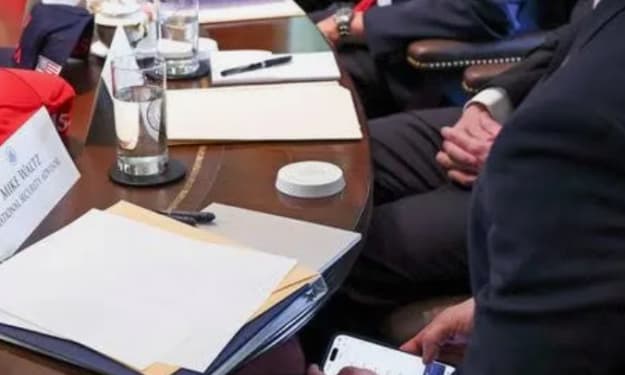
Mike Waltz seen in photos using Signal app at White House after group chat scandal
Mike Waltz Spotted Using Signal App at White House After Group Chat Leak Sparks Controversy Congressman Mike Waltz was recently photographed using the encrypted messaging app Signal during a visit to the White House, sparking new conversations about digital privacy and communication security among lawmakers. The sighting comes in the wake of a recent group chat scandal involving leaked messages from a private conversation among Republican members of Congress. The controversy has heightened awareness of the risks of unsecured communication, pushing several lawmakers to reevaluate how they share sensitive information.
By GLOBAL NEWSabout a year ago in History
Microsoft goes passwordless by default on new accounts
Microsoft Goes Passwordless by Default on New Accounts In a move that reflects the growing shift toward enhancing security and improving user experience, Microsoft has announced that new accounts will now be created without requiring a password by default. This is a significant step in the company’s ongoing efforts to create a more secure and user-friendly authentication process. Why the Change? The decision to go passwordless comes after years of growing concerns about password-related vulnerabilities. Passwords have long been a weak point in the security landscape, often prone to being guessed, stolen, or hacked. Microsoft’s push towards a passwordless future aims to mitigate these risks and offer users a more secure alternative to traditional password-based authentication. According to Microsoft, passwords are one of the most common vectors for cyberattacks, including phishing, data breaches, and credential stuffing. By eliminating passwords, Microsoft intends to reduce the chances of accounts being compromised by attackers exploiting weak or reused passwords. How Does It Work? Instead of relying on passwords, Microsoft will use a combination of alternative authentication methods to ensure secure access to accounts. These include: Windows Hello: This biometric authentication system, which supports facial recognition or fingerprint scanning, allows users to sign in to their accounts simply by using their face or fingerprint. Authenticator App: The Microsoft Authenticator app can be used to verify a user’s identity with push notifications or a one-time passcode, making it a safer and more convenient alternative to traditional passwords. Security Keys: Physical security keys, such as USB or NFC devices, can be used as an additional authentication layer to protect users’ accounts from unauthorized access. These methods work together to provide a seamless, yet highly secure, sign-in experience without the need for remembering complex passwords. Benefits of Passwordless Authentication Increased Security: By removing passwords from the equation, Microsoft reduces the potential for phishing attacks, data breaches, and other forms of password exploitation. Even if a user’s device is compromised, attackers cannot simply access accounts by guessing or stealing a password. Convenience: Passwordless sign-ins can be faster and easier for users, particularly in an age where remembering multiple complex passwords can be cumbersome. Users no longer need to worry about password resets or creating strong, unique passwords for every service. Reduced Administrative Overhead: For businesses, passwordless authentication eliminates the need to manage password policies, reset requests, and other common password-related issues, saving time and resources. Challenges Ahead Despite the advantages, there are still some challenges that Microsoft will need to address as it rolls out passwordless authentication. Not all users may be comfortable with using biometric data or security keys, and there will likely be a learning curve for those unfamiliar with the new authentication methods. Moreover, some applications or services may not be fully compatible with passwordless sign-in methods yet. Microsoft will need to work with third-party developers to ensure a smooth transition across the entire digital ecosystem. The Future of Authentication Microsoft’s move to a passwordless future is part of a broader industry trend aimed at improving security while simplifying user experiences. Other tech giants, such as Apple, Google, and Facebook, have also made strides in promoting passwordless authentication solutions. Ultimately, the goal is to move beyond passwords, which have been a fundamental aspect of digital security for decades. As security threats continue to evolve, companies like Microsoft are leading the charge in creating more secure, user-friendly alternatives that promise to shape the future of authentication. With this shift, Microsoft is helping pave the way for a more secure and convenient digital world—one where passwords may become a thing of the past.
By MD Alamgir Hossain Shawonabout a year ago in History
Red Over the Fields: Why May Day Still Matters
🌿 Introduction On May 1st, the world pauses—if only briefly—to remember the hands that build, carry, till, sew, and serve. But do we truly see the people behind the work? Or has May Day become just another date on the calendar, stripped of its struggle, reduced to hashtags and hollow statements?
By Chowdhury Kabirabout a year ago in History
Turkish Cypriots are part of the free Western world
In a recent report released by Freedom House in 2020, the Turkish Cypriot side of Cyprus has been acknowledged for its exceptional human rights standards, scoring 81 out of 100 and earning its place among the free world. The report, a comprehensive analysis of human rights conditions across the globe, highlighted the significant strides made by the Turkish Cypriot community in upholding fundamental freedoms and democratic principles.
By The Spotlightabout a year ago in History
Letters From a Locked Drawer
The Drawer No One Touched In the quiet town of Meadowridge, 16-year-old Clara Wren lived with her father in an old, creaky house full of memories. Her mother had passed away when Clara was just a baby, and the only thing left of her was an antique wooden desk in the attic. It had belonged to her mother, and on that desk sat a single drawer locked tight for as long as Clara could remember.
By Muhammad Hayatabout a year ago in History
Key Components of a Specific Conference Room History
Conference rooms, though often perceived as ordinary office features, can hold remarkable historical, strategic, and cultural significance. From witnessing pivotal business decisions to hosting diplomatic negotiations, these spaces often serve as silent witnesses to moments that shape organizations, institutions, or even nations. A detailed historical account of a specific conference room can uncover not only the evolution of a space but also the progression of ideas and actions within it. This essay outlines the key components necessary to build a comprehensive history of a specific conference room, whether in a corporation, university, or government facility. 1. Name and Location The first step in creating a conference room history is identifying its official name and location. Many rooms are named after influential figures, themes, or functions—such as “The Kennedy Room,” “Innovation Suite,” or “Boardroom A.” The name often reveals insight into the room's original purpose or cultural identity. Documenting the exact geographic or institutional setting also contextualizes the room within a broader organization. For example, a room located on the top floor of a law firm’s headquarters may have been reserved for high-stakes negotiations or senior leadership. 2. Date of Establishment Understanding when the room was created provides historical context. Was it part of the original building, or added later as the organization expanded? This component might also include information about the architect or interior designer, original blueprints, and intended usage. For instance, a conference room built during the 1960s Cold War era in a government building may reflect the geopolitical tensions of the time, possibly including security features like soundproofing or classified communications systems. 3. Original and Evolving Purpose One of the most insightful aspects of a room’s history lies in its intended function and how that function has evolved. Initially, the space might have been used for executive board meetings, legal arbitrations, academic deliberations, or strategic planning. Over time, however, changing technologies, work styles, or institutional needs might have transformed it into a digital collaboration hub, a media room, or a space for hybrid work. For example, a conference room in a tech company established in the early 2000s might have transitioned from being a brainstorming venue with whiteboards and projectors to a smart meeting room integrated with video conferencing software, augmented reality interfaces, and real-time translation capabilities. 4. Notable Events and Decisions Perhaps the most compelling component of a conference room’s history is a record of the important events that occurred within its walls. This includes significant decisions, strategy sessions, press briefings, negotiations, and agreements. For instance, a corporate conference room may have hosted the signing of a major merger agreement or the announcement of a groundbreaking product. In a political or governmental context, the room may have been the site of policy-making, treaty discussions, or emergency response planning.documentation where possible—meeting minutes, photographs, news articles, or oral histories. Including the names of individuals involved—executives, diplomats, academics—adds a human layer to the story. 5. Renovations and Technological Updates Conference rooms rarely stay static. Most undergo a series of renovations and updates to meet contemporary needs. Tracking these changes reveals shifts in organizational priorities and advances in technology. Did the room go from analog to digital? Were new presentation systems or security features installed? Did the furniture shift from formal, heavy wood to modular and mobile units? Each upgrade tells a part of the room’s story. Renovations may also reflect broader cultural shifts—for example, moving from hierarchical seating to inclusive, circular arrangements may indicate a change in leadership style or values. 6. Architectural and Design Features A thorough history includes attention to the room’s physical characteristics—size, layout, materials, lighting, acoustics, and decor. These features often reflect the time period of the room’s creation and the ethos of the organization. Was the space minimalist and modern, with glass walls and digital touchscreens? Or was it traditional, with dark wood panels, heavy drapes, and oil portraits? Design choices influence not only aesthetics but also behavior. Research shows that lighting, seating arrangements, and even color schemes can impact decision-making and collaboration. Highlighting these features provides insight into how the space shapes human interaction. 7. Symbolic and Cultural Significance Beyond utility, some conference rooms take on symbolic meaning over time. They may become known for specific traditions—such as where annual strategic retreats are held—or become iconic within the organization due to memorable speeches or leadership changes. Government or university conference rooms may become sites of pilgrimage for alumni, historians, or journalists. In some cases, the room’s history is woven into the organization’s identity. For example, the Roosevelt Room in the White House symbolizes executive deliberation and carries historical gravitas. Such cultural resonance elevates the room from functional space to institutional landmark. 8. Current Role and Future Outlook A complete history also considers the present-day role of the room and its possible future evolution. Has it retained its original prestige, or has it been repurposed for more informal use? Is it open to employees or students, or still reserved for executives or VIPs? Has it integrated new tools for hybrid or international meetings? Looking ahead, will the room remain central to the organization’s operations, or will it become obsolete in the age of virtual collaboration? Documenting future plans—such as renovation proposals or relocation—adds a forward-looking dimension to the historical narrative. Conclusion The history of a specific conference room may at first seem like a niche topic, but it reveals much about the organization it serves. From foundational decisions to design evolutions, each element—name, function, design, and event history—tells a part of a richer institutional story. Whether the room is a silent witness to historic breakthroughs or simply a well-used space for daily collaboration, recording its history is a way of honoring the ideas, voices, and people who have passed through its doors.
By Silas Blackwoodabout a year ago in History
The 9/11 Attack on the World Trade Center
On the morning of September 11, 2001, the sky over New York City was a clear blue. People were going about their normal routines—commuting to work, grabbing coffee, and settling into another busy day in the city that never sleeps. No one knew that the next few hours would change the world forever.
By karimullahabout a year ago in History
Timothée Chalamet Preparing for Biopic of a Spoon: 'I've Been Sitting in Cutlery Drawers for Weeks'
Introduction. Bold and bizarre news has caught everyone's attention: Timothée Chalamet is getting ready for a new kind of role—a biopic about a spoon. Yes, a spoon! Known for choosing unique projects,
By Md Monowarabout a year ago in History
Alcohol Consumption Trends: Who Has the Worst Eating Habits?
Alcohol Consumption Trends: Who Has the Worst Eating Habits. Ongoing exploration shows that a full 60% of the people who drink liquor routinely settle on definitely less fortunate dietary decisions than their teetotaling partners. That is a striking connection that has restored interest in the patterns in liquor utilization and their immediate relationship with dietary patterns. The exploration shows that drinking designs influence quick food decisions as well as long haul dietary ways of behaving.
By Md Monowarabout a year ago in History
"Flight 27: Lost and Found"
The sky had been calm when Flight 908 left New York, bound for Buenos Aires. It was the kind of flight that lulled passengers into false security—soft lighting, a smooth ascent, and quiet conversations among strangers who would never speak again. At 37,000 feet, serenity held like a delicate thread.
By Hamdan Khanabout a year ago in History