Modern
Violet Jessop: The Woman Who Defied the Odds at Sea
Violet Jessop, affectionately dubbed “Miss Unsinkable,” was a remarkable figure whose life story resonates with adventure, resilience, and determination. A trained nurse and stewardess, Jessop faced unimaginable trials at sea and lived to tell the tale. Her experiences aboard notorious ocean liners like the Titanic, Britannic, and Olympic provide a stark glimpse into maritime history's perilous past. This article delves into her life, reflecting on her extraordinary experiences and the unwavering spirit that allowed her to devote her life to the sea.
By DigitalAddiabout a year ago in History
20 Secrets of the City That Never Sleeps
New York City. Even the name sounds electrifying. Millions of people dream of visiting this unstoppable city, and countless others dream of conquering it. Yet beneath its towering skyline and endless streams of yellow taxis lie fascinating secrets that most tourists and even some lifelong residents don’t know.
By Echoes of Lifeabout a year ago in History
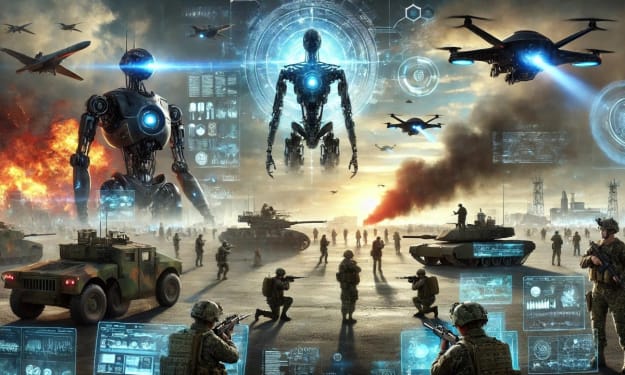
AI vs. Humans: How Smart Weapons Changed the Face of World War 2025
AI vs. Humans: How Smart Weapons Changed the Face of World War 2025 In the history of warfare, every era has brought new weapons that changed the battlefield—spears and swords, muskets and cannons, tanks and missiles. But in 2025, the world saw the rise of a new kind of weapon: one that could think. Powered by artificial intelligence, these smart weapons reshaped war as we knew it. It was no longer just nation versus nation. It became AI vs. Humans, and the world would never be the same.
By Ali Asad Ullahabout a year ago in History
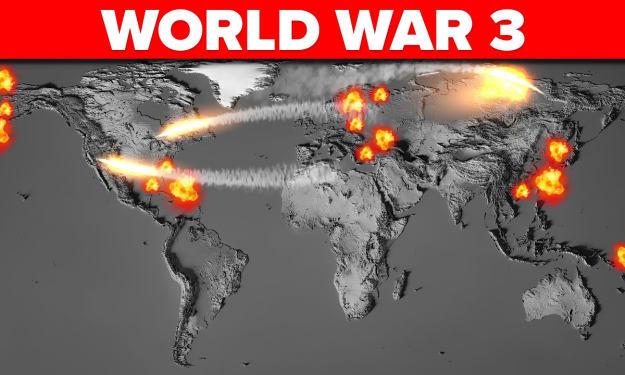
Taiwan, Ukraine, or the Middle East: Which Flashpoint Led to World War III?
Taiwan, Ukraine, or the Middle East: Which Flashpoint Led to World War III? For years, global leaders warned of the possibility of a third world war. Tensions were rising, alliances shifting, and technology advancing at a pace far faster than diplomacy. But no one could predict exactly where the first spark would ignite the flames of a global conflict. In the end, three major flashpoints—Taiwan, Ukraine, and the Middle East—stood on the edge. Each had the potential to trigger a war unlike anything the world had seen before. But which one actually did?
By Ali Asad Ullahabout a year ago in History
The Invisible War: How a Virus Became World War 3
The Invisible War: How a Virus Became World War 3 The war did not begin with bombs. There was no sound of fighter jets in the sky. No cities were flattened by tanks. The enemy was silent. Invisible. It came in the breath, in a cough, in a handshake. In the year 2020, the world thought it was facing a health crisis. But deep beneath the surface, something far darker was happening. COVID-19 was not just a virus. It was the start of the third world war.
By Ali Asad Ullahabout a year ago in History
The Drone War: How Ukraine and Russia Are Redefining Modern Warfare
Drones and the Future of Global Warfare The Growing Importance of Drones in Modern Warfare: Ukraine-Russia Conflict Following a large-scale drone attack by Ukraine on Russian targets, the global significance of drones in warfare has dramatically increased. Both Ukraine and Russia are utilizing a mix of purpose-built military drones and commercially available drones to support their military strategies. Military Drones Used by Ukraine and Russia Ukraine's primary military drone is the Turkish-made Bayraktar TB2 This drone is about the size of a small aircraft, equipped with high-resolution cameras, and can be armed with laser-guided bombs. According to Jack Watling from the Royal United Services Institute (RUSI), a UK-based defense think tank, Ukraine started the war with fewer than 50 Bayraktar TB2 drones. On the other hand, Russia is using a simpler model known as the Orlan-10. Russia began the war with several thousand of these drones, but due to the intensity of the conflict, it’s believed that only a few hundred remain operational today. How Effective Are Military Drones? Drones have proven to be highly effective in locating enemy positions and guiding artillery fire. Watling states that once a target is identified using the Orlan-10, Russian forces can strike within three to five minutes. Without the drone’s assistance, such a strike could take 20 to 30 minutes. In the past, identifying enemy locations required sending in special forces, which involved significant human risk. Now, drones reduce this risk considerably, as the threat is limited to the loss of equipment rather than human lives. In the early weeks of the war, Ukraine's Bayraktar drones received widespread praise. However, many of these drones have since been shot down by Russian air defenses. Watling explains that these drones are relatively large, slow, and fly at medium altitudes, making them easy targets for modern air defense systems. Commercial Drones in the War Military drones like the Bayraktar TB2 are expensive, with a single unit costing nearly $2 million. Due to this, both sides—especially Ukraine—are increasingly turning to commercial drones like the DJI Mavic 3 which costs around $2,000. A Ukrainian drone manufacturer estimates that the country’s armed forces operate around 6,000 drones, although this figure is difficult to verify. Commercial drones can be modified to carry small bombs and are primarily used for direct attacks on enemy troops and vehicles. Since Ukraine lacks the same level of ammunition as Russia, using drones for target identification helps them use their existing artillery more efficiently. However, commercial drones are much less capable than military-grade ones. For instance, the DJI Mavic has a range of just 30 kilometers and can fly for only 46 minutes. Cheaper models have even more limited capabilities. Counter-Drone Defenses Russia has developed a multi-layered defense system to counter both military and commercial drones. These include radar systems and electronic warfare equipment designed to jam drone communications. One such weapon is the Stupor rifle which emits electromagnetic pulses that interfere with GPS navigation, effectively disabling commercial drones. Russia also employs online systems like Aeroscope which can detect the communication link between commercial drones and their operators. These systems can either neutralize drones mid-flight or force them to return to their base. They can also prevent drones from transmitting surveillance data. Russian reports suggest that the average Ukrainian drone lasts barely a week in combat before being lost or destroyed. Drone Suppliers and Foreign Support According to the White House, Iran has been supplying Russia with Shahed military drones which were previously used by Houthi rebels in Yemen to strike targets in Saudi Arabia and the UAE. From 2022 to 2023, the United States provided Ukraine with more than 700 "Switchblade" kamikaze drones. These drones are equipped with explosives and can loiter in the air until they find a target to destroy. Communication and Logistics SpaceX owned by Elon Musk, has supplied Ukraine with its Starlink satellite communication system. This system provides a secure link between commercial drone operators and their drones, improving battlefield coordination and control. Meanwhile, DJI the Chinese drone manufacturer, has suspended drone sales to both Russia and Ukraine. In a recent move to expand their drone fleet, Ukraine has appealed for crowdfunding to purchase 200 new military drones. Written by Hashim khan
By Real contentabout a year ago in History
The Evolution of Tank Design: From WWI to Modern Day
The Evolution of Tank Design: From WWI to Modern Day The tank, a symbol of mechanized warfare and military innovation, has undergone a remarkable transformation since its inception during World War I. Originally developed as a solution to the brutal stalemates of trench warfare, the tank has evolved through continuous technological advancements and battlefield experiences to become a highly sophisticated weapon system integral to modern armed forces. This evolution reflects not only improvements in engineering and firepower but also changing tactical doctrines and the shifting nature of warfare itself.
By Ali Asad Ullahabout a year ago in History
The Evolution of Military Technology Between WWI and WWII
The Evolution of Military Technology Between WWI and WWII The period between World War I and World War II was one of profound transformation in military technology, strategy, and global power dynamics. While World War I had introduced the world to mechanized warfare on an unprecedented scale, the interwar years saw nations around the globe rushing to analyze lessons learned, innovate, and prepare for the conflicts they feared would erupt again. This era was marked by rapid technological advancements that fundamentally reshaped the way wars were fought, laying the groundwork for the devastating battles of World War II.
By Ali Asad Ullahabout a year ago in History
Is World War III Really Coming in 2025? Analyzing Global Tensions
Is World War III Really Coming in 2025? Analyzing Global Tensions In the ever-shifting landscape of international relations, the specter of a third world war looms as a persistent, albeit nebulous, possibility. The year 2025 has surfaced in geopolitical discourse as a critical juncture, fueled by escalating tensions among global powers, intensifying proxy conflicts, and rapid technological advancements in warfare. Yet, amid the cacophony of speculation and alarmism, it is imperative to dissect the underpinnings of these tensions with rigor and nuance, moving beyond sensationalism to understand whether a full-scale global conflagration is indeed imminent or merely an extrapolation of contemporary anxieties.
By Ali Asad Ullahabout a year ago in History
The Beauty of New York: A City of Timeless Wonders and Endless Change
The Beauty of New York: A City of Timeless Wonders and Endless Change By Ali Asad Ullah I still remember the first time I stepped onto the streets of New York City. The air buzzed with a strange energy — a mix of hope, chaos, and possibility that you could feel pulsing beneath every footstep. Coming from a quieter place, it was overwhelming at first. The towering skyscrapers seemed to touch the clouds, the cacophony of voices, horns, and footsteps merged into a strange kind of music, and every corner seemed to whisper a story.
By Ali Asad Ullahabout a year ago in History
Midnight Thunder: The B-2 Bombers That Struck Iran’s Nuclear Heart
Midnight Thunder: The B-2 Bombers That Struck Iran’s Nuclear Heart June 22, 2025 — 1:07 AM. Above the desolate mountains of central Iran, silence ruled the sky. No engines roared, no radar alarms blinked. Tehran slept under stars it couldn't see. And then came the ghosts.
By Ali Asad Ullahabout a year ago in History