Modern
The Sweet and Sticky History of Fun, Part 2: The 1970s
Fog Horn Blast 🚨 Welcome to the 1970s... A decade of polyester leisure suits, lava lamps, and a suspicious number of products shaped like avocados. While adults were wrestling with the Vietnam War aftermath, an energy crisis, and Richard Nixon’s resignation, kids were too busy losing their minds over exploding candy and board games that either tested your brain or unleashed absolute plastic chaos on the dining room table.
By The Iron Lighthouseabout a year ago in History
Reichstag to MAGA: Unveiling the Alarming Parallels Between Nazi Germany and Trump's America
Introduction History serves as both a mirror and a warning. The rise of Nazi Germany in the early 20th century and the political landscape of Donald Trump's America in the 21st century offer strikingly similar narratives. While the contexts differ, the methods employed to consolidate power, manipulate public perception, and suppress dissent exhibit disturbing parallels. This article delves into a comparative analysis of key events and strategies from Nazi Germany and Trump's America, highlighting the unsettling similarities in their approaches to governance, propaganda, and societal control.
By No One’s Daughterabout a year ago in History
The Sweet and Sticky History of Fun, Part I: The 1960s
Fog Horn Blast 🚨 The 1960s were a decade of civil rights marches, psychedelic rock, men in skinny ties debating nuclear war, and astronauts trying not to get incinerated on the launch pad. But for millions of kids sprawled out on shag carpet in wood-paneled basements, the real battle of the decade was between Chutes and Ladders and Candy Land. Forget the space race; this was the snack race, and it involved dice, spinners, and enough artificial sugar to power a Saturn V rocket.
By The Iron Lighthouseabout a year ago in History
Nepal’s Turning Point: Youth Protests, Political Collapse, and the Struggle for Reform
In recent weeks, Nepal has been facing one of the most intense political and social crises in its modern history. What started as a series of anti-corruption protests led mainly by young people has now grown into a nationwide movement that has shaken the country’s leadership and institutions. With the resignation of Prime Minister KP Sharma Oli and a rapidly rising death toll, Nepal stands at a critical turning point. Background of the Protests The protests began as a response to deep-rooted corruption, unemployment, and frustration over poor governance. Nepal’s younger generation, often referred to as Gen Z, has been particularly vocal in demanding accountability and transparency from their leaders. Many youths argued that the government failed to create opportunities for education and jobs, leaving them without a hopeful future. The movement quickly gathered momentum as thousands of students, activists, and ordinary citizens joined demonstrations across the country. Social media played a huge role in mobilizing support, despite government attempts to impose restrictions. Escalation and Violence As the protests spread, the government responded with heavy-handed measures, including curfews, internet blackouts, and the deployment of security forces. Reports from various media outlets confirmed that clashes between protesters and police turned violent. According to Al Jazeera and UN News, at least 51 people were killed in the unrest, while thousands of prisoners who had earlier escaped during the chaos remain unaccounted for. The rising death toll further inflamed public anger. Citizens accused the authorities of using excessive force instead of addressing the protesters’ demands. International organizations also raised concerns about human rights violations and called for dialogue rather than violence. Resignation of the Prime Minister Amid mounting pressure, Nepal’s Prime Minister KP Sharma Oli stepped down from office. His resignation marked a dramatic shift in the political landscape, as it came during the peak of the crisis. Critics argue that his government’s failure to respond effectively to public concerns about corruption and economic stagnation fueled the unrest. The resignation, however, did not immediately calm the situation. Protesters continued to demand structural reforms, accountability for deaths, and a new political vision that prioritizes the younger generation’s future. Role of the Army With increasing instability, the government called in the Nepalese Army to restore order. Soldiers were deployed to the capital Kathmandu and other major cities to secure government buildings and prevent further violence. While this move temporarily reduced large-scale clashes, it also raised fears that Nepal could slide into authoritarianism if civilian voices are suppressed. International Response The international community has been closely monitoring the crisis. The United Nations urged Nepal’s leadership to respect human rights and open channels of dialogue with citizens. Neighboring countries, particularly India and China, are watching closely since Nepal’s stability directly impacts the region. The United States and European Union also expressed concern and called for peaceful solutions. The Youth Movement One of the most significant aspects of this crisis is the central role of Nepal’s youth. This movement reflects a generational shift where young citizens are no longer willing to accept corruption and poor governance as a norm. Their activism highlights both frustration and hope — frustration with the past but hope for a better political future. Social media has given these young voices a platform to spread their message far beyond Nepal’s borders. Hashtags, videos, and live updates have ensured that the world is paying attention. Possible Consequences The immediate consequence of the crisis is political uncertainty. With the resignation of the Prime Minister, the country must now form a new government capable of addressing citizens’ concerns. Failure to do so may result in further unrest. Economically, the protests have disrupted trade, tourism, and daily life. Nepal, already struggling after the COVID-19 pandemic, faces challenges in stabilizing its markets and attracting foreign investment. Socially, the crisis has deepened divides between generations, political classes, and ordinary citizens. If reforms are not introduced, mistrust between the public and government could grow stronger. Looking Ahead Nepal now faces two possible paths: 1. Reform and Dialogue → The new leadership listens to citizens, implements anti-corruption measures, and creates opportunities for youth. 2. Continued Unrest → If demands are ignored, the protests may intensify, leading to more instability and potential international intervention. Conclusion Nepal’s protests are more than just an outburst of anger; they represent a struggle for accountability, dignity, and a better future. The youth-led movement has proven that even in a small country, the voices of ordinary people can challenge powerful leaders and force change. The coming months will be crucial in determining whether Nepal moves toward stability through reform or plunges deeper into turmoil.
By Javed Khan about a year ago in History
Conservative Activist Charlie Kirk Shot Dead in Utah, Nation Reels from Shock
Conservative activist and founder of Turning Point USA, Charlie Kirk, was shot and killed during a campus event at Utah Valley University on Wednesday evening. Authorities confirmed that the gunman was immediately taken into custody, but the motive behind the attack remains under investigation.
By Lynn Myersabout a year ago in History
Eastern Europe at a Tipping Point: Drone Incursions, Military Drills, and Growing NATO Tensions
Eastern Europe at a Tipping Point: Drone Incursions, Military Drills, and Growing NATO Tensions Eastern Europe is entering one of its most precarious moments since the Cold War. In recent weeks, Russian drone incursions into Polish airspace, NATO warplanes being forced to intercept hostile drones, and large-scale Russian-Belarusian military exercises have fueled a surge of alarm across the continent. The events have raised questions about the durability of Europe’s defenses, the unity of NATO, and the potential for a direct clash between Russia and the alliance.
By Wings of Time about a year ago in History
The Towns That Time Zones Forgot: Where Lunch Happens Twice and Nobody Knows What Day It Is
Fog Horn Blast 🚨 There are some towns in America where you can walk out of a gas station, cross the street to a diner, and discover you are now one hour older. You didn’t drink too much coffee. You didn’t step into a black hole. You simply had the misfortune (or delight) of visiting one of America’s most chronologically confused communities... those precariously perched on the jagged seams of our nation’s time zones.
By The Iron Lighthouseabout a year ago in History
The Birth of a Nation: A Story Etched in Ink
History is not merely about dates and events—it is about the quiet courage of individuals who dared to dream beyond their time. The sepia-toned image of America’s founding fathers, gathered around a wooden table as they crafted and signed the Declaration of Independence, captures one such defining moment. It is more than just an artistic portrayal; it is the visual embodiment of sacrifice, vision, and unity.
By Fazal wahid about a year ago in History
Beyond the Basics: Discover the Hidden Meanings of Angel Numbers 1212 and 1234
You’ve likely heard about the famous angel numbers like 111 or 444, but what about the sequences that seem to follow a specific pattern, like 1212 or 1234? These ascending and repeating numbers carry a deeper, more structured message from the universe. They are not just random signs; they are a clear indication of a step-by-step process unfolding in your life. This article will explore the unique and powerful messages behind these two sequences, showing you how they are a roadmap for your spiritual and personal growth.
By Sthephanieabout a year ago in History
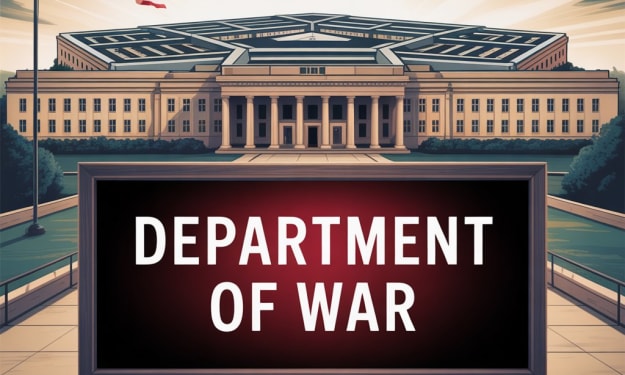
From Defense to War: The Symbolism Behind America’s Renaming Decision
.In recent days, reports surfaced that former U.S. President Donald Trump approved a symbolic decision to rename the Department of Defense as the Department of War. While this change may appear to be a simple alteration of terminology, it carries profound implications for how America views its military role in the world and how global audiences perceive U.S. policy. The renaming has sparked debate about history, symbolism, and the future direction of U.S. defense strategy. A Historical Background The U.S. military establishment has not always been called the Department of Defense. In fact, from 1789 to 1947, the agency responsible for military affairs was officially named the Department of War. This term was widely used during America’s early history, covering conflicts such as the Civil War and both World Wars. It was only after World War II and the creation of new institutions like the National Security Council and the Central Intelligence Agency that the U.S. restructured its military leadership. In 1949, the Department of War was renamed the Department of Defense, reflecting a shift in language from offensive warfare to a focus on protection and deterrence. The word “defense” suggested that the United States would use its military power primarily to safeguard itself and its allies, not to pursue aggressive war. This rebranding was part of a broader attempt to present America as a global leader for peace in the post-war era. Why Rename It Back? President Trump’s reported decision to revert to “Department of War” seems to be more than a cosmetic change. There are several possible reasons behind this move: 1. Symbolic Honesty: Critics of the Department of Defense have long argued that despite its peaceful name, the U.S. military has been heavily engaged in offensive operations around the world, from Iraq to Afghanistan. Renaming it as the Department of War could be seen as a way of being more transparent about its true role. 2. Historical Tradition: By restoring the original name, Trump may have wanted to connect with America’s past identity, emphasizing strength and military dominance rather than soft diplomacy. 3. Political Messaging: The change could also serve as a political statement to rally nationalist sentiment, projecting the image of America as a strong, unapologetic power in a competitive global order. Implications of the Name Change Although the renaming is symbolic, symbolism in international relations can have significant consequences. 1. Domestic Perceptions For the American public, the shift from “Defense” to “War” sends a very different message. The term “war” implies aggression, conflict, and readiness to fight, whereas “defense” suggests protection and security. Such a change may alarm citizens who prefer to see their military as a protective force rather than an offensive one. 2. Global Perceptions Internationally, the decision could raise concerns among U.S. allies and rivals alike. Allies may feel uneasy about the United States presenting itself as more war-oriented, while adversaries could interpret the change as a sign of increased aggression. This shift in language could complicate diplomatic relations. 3. Strategic Messaging Language often shapes strategy. By adopting the word “war,” the U.S. government may unintentionally reinforce the idea that conflict is central to its global role. This could affect how military planning is approached, prioritizing force projection over diplomacy. 4. Psychological Impact The name change may serve as a reminder of the reality of global power struggles. At the same time, it risks framing international relations through the lens of permanent conflict rather than cooperation. Advantages and Risks Like any decision, renaming the Department of Defense carries both benefits and risks. Advantages: Greater honesty about the military’s global role. Revival of historical tradition. Stronger nationalistic appeal to certain groups. Risks: Negative reaction from citizens who value peace-oriented language. Strained relations with allies who prefer cooperative approaches. Heightened global tensions if rivals perceive the U.S. as preparing for more wars. A Broader Reflection on Power This decision highlights an important reality: nations often define themselves not only by their actions but also by the words they use. The shift from “Defense” to “War” represents more than just terminology—it reflects a worldview. If nations see themselves as locked in constant conflict, then policies will follow that perspective. Conversely, framing military power as defensive can encourage diplomacy and restraint. For a globalized world where cooperation is essential—whether in trade, climate change, or technology—presenting one’s military as primarily for “war” may undermine long-term trust. Conclusion The renaming of the U.S. Department of Defense back to the Department of War carries heavy symbolic weight. While some may view it as a bold return to historical roots or a more honest description of America’s military role, others see it as a dangerous signal of aggression in an already tense world. Ultimately, the words a nation uses to describe its institutions influence both domestic and international perceptions. Whether this change leads to greater transparency or fuels greater mistrust, only time will tell. What is certain is that the debate reminds us of the power of language in shaping not just politics, but the course of global affairs.
By Javed Khan about a year ago in History
If World War 3 Started Tomorrow: The First 24 Hours Explained
Introduction: The Question We Fear Most For decades, experts and ordinary people alike have asked a haunting question: *what if World War 3 began tomorrow?* Most discussions focus on the weapons or alliances involved, but few stop to imagine how the first **24 hours** would feel for ordinary citizens. Those first moments would define not just the war itself, but the survival of billions.
By Wings of Time about a year ago in History