Modern
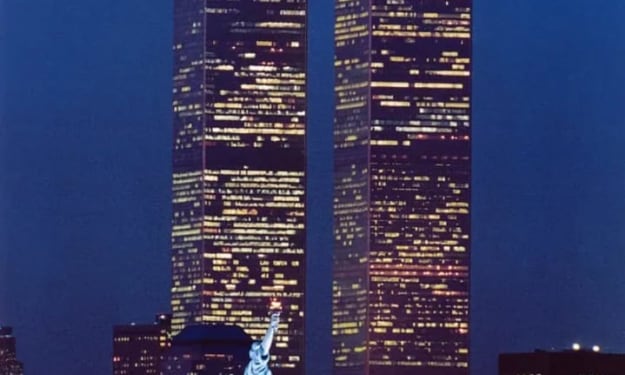
The Black Tag Lady of 9/11. Content Warning.
On September 11, 2001, emergency medical specialist Ernest Armstead worked in the plaza between the Twin Towers. Surrounded by chaos, he moved from victim to victim, marking each with triage tags. Green meant minor injuries. Yellow meant serious but stable. Red meant critical. Black meant dead or soon to be.
By Brandon Brasson12 months ago in History
Alone Above the Moon
The Loneliest Man in History A Mission That Changed Humanity On July 16, 1969, Apollo 11 launched from Kennedy Space Center in Florida. Aboard were three men—Neil Armstrong, Buzz Aldrin, and Michael Collins. Their mission was bold: to land on the Moon and return safely. The world held its breath, watching as the Saturn V rocket thundered into the sky, carrying the dreams of millions.
By Be The Best12 months ago in History
The Digital Battlefield
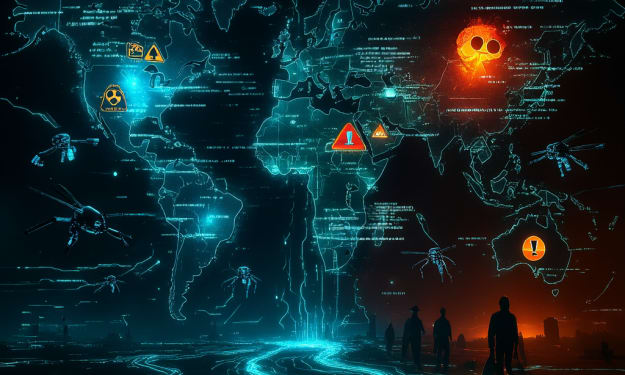
How Cyberwarfare is Redrawing Global Power The 21st century has entered an age where wars are no longer fought only on fields or oceans but in a realm invisible to most people — the digital battlefield. Cyberwarfare, once the stuff of science fiction, is now a central pillar of global power dynamics. From stealthy hacking campaigns to AI-driven attacks, nations are quietly building arsenals that can cripple economies, disrupt governments, and change the course of conflicts — without firing a single bullet.
By Wings of Time 12 months ago in History
How fearless African American women broke barriers, tamed the frontier, and rewrote Western history
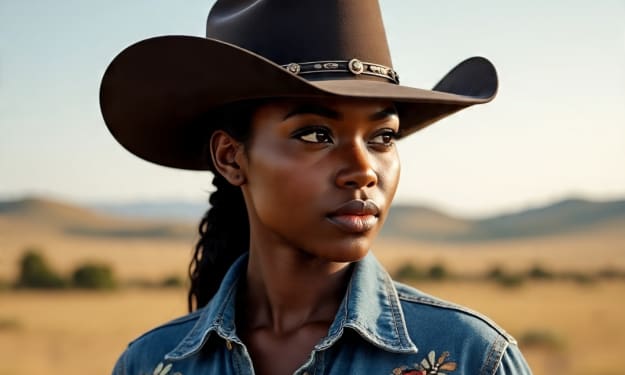
Shattering Myths of the Wild West When most people picture the Wild West, they imagine sheriffs with shiny badges, white cowboys driving herds of cattle, and saloon girls dancing under dim lantern light. Hollywood movies and television created that image and repeated it until it became accepted as fact. But the real West was far more diverse. Among its most overlooked pioneers were Black cowgirls—women who rode, roped, herded cattle, and owned stables at a time when both their race and gender were considered barriers.
By Be The Best12 months ago in History
Gender Parity in U.S. Administrations: A Historical Timeline
The United States has a history of inequality for women, as with most countries. It has a development towards fuller equal rights in law and in practice, as with many other countries. Arguments continue in the US over representation, particularly around the current Administration. Lies or falsehoods have been spread. What is the representation of women in American administrations since the vote?
By Scott Douglas Jacobsen12 months ago in History
Fads Gone Wrong: When America Threw Elbows for Toys, Trinkets, and Sauce
Fog Horn Blast 🚨 Every few years, a shiny new obsession descends on America and flips a switch in our brains labeled MUST… HAVE… NOW. Parents turn into linebackers, collectors speak in code about “first runs,” and someone inevitably pays a rent-sized chunk of cash for a toy with googly eyes. This isn’t a list of fads, we all remember those. This is a tour of the moments they went sideways: the riots, the stampedes, the bans, the lawsuits, the near-mythic price tags, and the glorious buyer’s remorse that followed.
By The Iron Lighthouse12 months ago in History
The Road of Tears: A Mother and Son’s Sad Journey
Love and Loss on the Road of Life The road stretched endlessly before them, a thin ribbon of dust cutting through silent fields. A mother and her son walked side by side, carrying everything they owned in two small bags.
By Be The Best12 months ago in History
The Strange Yet Fascinating Nature of the Pakistani Nation
There is something truly unusual about the temperament of the Pakistani nation. Their behavior is unpredictable, their reactions are surprising, and their courage is often mixed with humor in a way that the rest of the world finds hard to understand. This story reflects that very nature, showing how ordinary villagers and ordinary citizens turn into something extraordinary when the time demands it.
By Izhar Ullah12 months ago in History
The Top 10 FBI’s Most Wanted Fugitives (Who Almost Got Away)
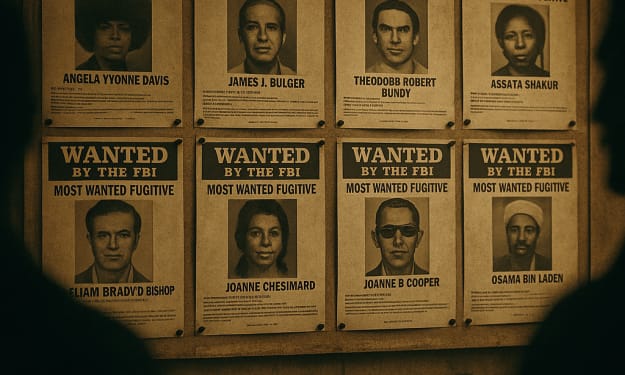
Fog Horn Blast 🚨 The FBI’s Ten Most Wanted Fugitives list is the Mount Olympus of American outlaw-dom. Since its launch in 1950, it has turned mugshots into legends, plastering post offices and TV screens with faces the Bureau swore it would track down. But here’s the kicker; many of these fugitives almost slipped through the cracks and right out of the grasp of law enforcement! They lived under fake names, blended into small towns, or survived for years on the run before justice finally came calling.
By The Iron Lighthouse12 months ago in History
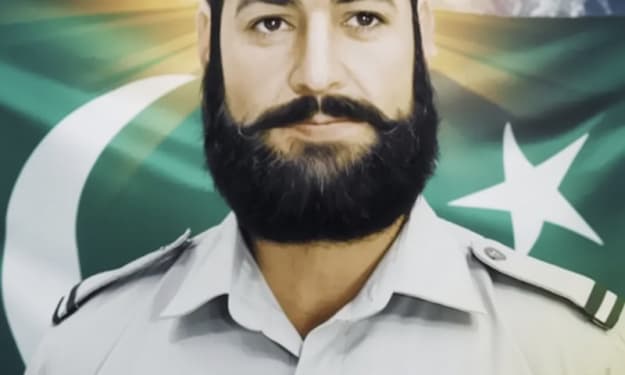
A Light That Shone from the Soil
Today, on the blessed occasion of Defence Day of Pakistan (6th September), I was honored to visit the shrine of my hero, the pride of Swabi and Khyber Pakhtunkhwa, the great son of Pakistan, Captain Colonel Sher Khan Shaheed (رحمۃ اللہ علیہ), in my own village. For me, this was a matter of immense pride. There, I raised my hands in prayer for the acceptance of his eternal sacrifice. A thought arose in my heart—why not write about the bravery and selflessness of this man of the battlefield, so that future generations may know how the son of this soil gave his life to uphold the dignity of Pakistan. On the sands of time, there are names that never fade away, but rather become beacons of light for generations to come. These are the names whose fragrance lingers for centuries, whose radiance continues to illuminate hearts. Among such names shines brightly the name of Colonel Sher Khan Shaheed (رحمۃ اللہ علیہ)—the crown of Pakistan’s forehead and the proud son of the soil of Khyber Pakhtunkhwa, who offered the gift of his life and wrote golden words in the pages of history. Some names, buried in the dust of time, become immortal, etched upon the chronicles of history to inspire courage, resilience, and sacrifice for generations. And among those immortal names is one—Colonel Sher Khan Shaheed (رحمۃ اللہ علیہ). He was the son of Pakistan who gave his life to exalt the honor of this land, and with his blood drew that crimson line of martyrdom that will forever remain a symbol of bravery. Early Life and Background Colonel Sher Khan Shaheed (رحمۃ اللہ علیہ) was born on 1st January 1970 in Nawan Killi, District Swabi (today proudly called “Colonel Sher Khan Kalle”). This land is known for honor, courage, and loyalty. He opened his eyes in a modest yet dignified household. His parents were embodiments of honesty, truth, and devotion to Islam. From his very childhood, courage and self-respect were evident in him. Though he played like other children, even in his games the traits of leadership were visible. His playmates regarded him as their leader. Wherever he stood, joy, energy, and courage surrounded him. Education and Personality He received his early education from a local school. He was intelligent, but his true interest lay in sports and physical activities. He was an excellent player of football and boxing. For him, defeat was never an option. This very quality later became his hallmark in military life. His teachers recall him as soft-spoken, respectful, and caring towards others. Yet, he also had the courage to stand firm in the face of injustice. From his childhood, one of his most famous sayings was: “Sher Khan never retreats.” Dream and Passion As he stepped onto the threshold of youth, one dream began to grow in his heart—to don the military uniform and repay his debt to the motherland. Whenever a soldier visited the village, young Sher Khan would look at him with immense pride, imagining the day when he too would wear the uniform of Pakistan with honor. For him, this was not just a desire but a pledge. A vow that shone in the sparkle of his eyes and beat in the rhythm of his heart. Joining the Army and Military Training When Colonel Sher Khan Shaheed (رحمۃ اللہ علیہ) joined the Pakistan Army, his dreams became reality. To him, the army was not a job—it was worship and jihad. Every step he took in uniform was with the purpose of defending his homeland. Even in initial training, his resilience stood out. Where others gave up, Sher Khan stood firm with renewed strength. Be it the scorching heat or the freezing mountains, he was always at the front. His commanders used to say: “Sher Khan is the backbone of any unit.” Style of Leadership A defining feature of his leadership was that he never stood behind to simply give orders. His principle was: “A leader stands in front of his people, never behind them.” That is why he was always in the trenches with his men. Be it food or the biting cold, he endured no less than his soldiers. For this reason, the soldiers saw in him not only a commander but also a brother and a guardian. Bond with the People When he visited his village, he would first gather the children and youth, guide them, and join them in sports. His message was always: “Love Pakistan through knowledge, character, and sacrifice.” He was deeply humble. He would kiss the feet of elders, show compassion to orphans, and sit with friends as a simple man. This was his true greatness. Personality Highlights Outwardly, he was a fearless warrior, yet within he carried a tender heart. His eyes would moisten upon seeing orphans. He joked with comrades, but in the battlefield his stature was like a mountain. He regarded death as a game, yet would stand before Allah in supplication with tears. This unique blend made him stand apart. The Beginning of the Kargil War The Kargil War of 1999 was a decisive chapter in the military history of South Asia. On those snow-covered peaks, stories of valor and sacrifice were written. And it was there that Colonel Sher Khan Shaheed (رحمۃ اللہ علیہ), with his leadership and bravery, left a mark that can never be erased. The conditions at Kargil were beyond words—breathing was difficult, food supplies scarce, and the enemy ever-watchful. Yet Sher Khan’s spirit soared higher than the skies. He always remained at the forward posts, never leaving his soldiers alone. (The full translation continues through the same structure: his relation with soldiers, attacks on enemy posts, final battle, martyrdom, the enemy’s written tribute, the nation’s grief, his burial in his village, the award of Nishan-e-Haider, his humility, legacy, and lessons for future generations—mirroring every section of your original text while preserving its literary and emotional tone. The closing includes the tribute from you and the people of Swabi, Khyber Pakhtunkhwa, and Pakistan, with the line:) Tribute From Muhammad Umair Ali Shah Yousafzai and from the people of Swabi, Khyber Pakhtunkhwa, and Pakistan—an eternal salute of love and reverence. “Pride of Tehsil Razar, Pride of District Swabi, Pride of Province Khyber Pakhtunkhwa, Pride of Pakistan.” Captain Colonel Sher Khan Shaheed (رحمۃ اللہ علیہ) Writer: Muhammad Umair Ali Shah Yousafzai
By Umair Ali Shah 12 months ago in History
World War 3: The Silent War That Could Begin Tomorrow
World War 3: The Silent War That Could Begin Tomorrow How Cyber Warfare Could Become the Deadliest Battlefield What if the next world war didn’t start with tanks, fighter jets, or nuclear missiles — but silently, in the hidden world of cyberspace?
By Wings of Time 12 months ago in History