Modern
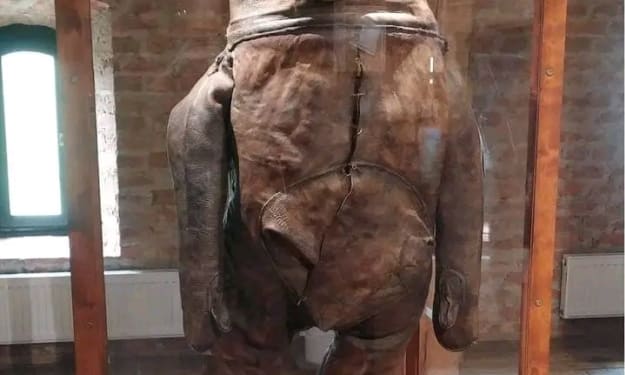
Raahe Wanha Herra: The Old Gentleman of Raahe – The World's Oldest Surviving Diving Suit
In the small town of Raahe, Finland, an extraordinary relic from the 18th century is carefully preserved in the Raahe Museum—a relic that holds the distinction of being the world’s oldest surviving diving suit. Known affectionately as the “Raahe Wanha Herra” or “The Old Gentleman of Raahe,” this unique piece of maritime history offers a fascinating glimpse into the early innovations of deep-sea exploration. Constructed from calfskin and waterproofed with a mixture of pork fat, tar, and pitch, the suit is a testament to the ingenuity of its time, when venturing beneath the waves was both dangerous and mysterious. Origins of the Raahe Diving Suit Dating back to the 1700s, the Raahe Wanha Herra was likely created for use in salvage operations or underwater repairs, activities crucial for Finland's maritime economy. Although diving technology had been around since antiquity, the creation of practical, functional diving suits was still in its infancy during the 18th century. The diving suit from Raahe stands as one of the earliest known examples of such innovation. Its preservation is remarkable, allowing modern observers to study its design and construction in detail. The suit was made from stitched calfskin, a material that, while flexible, required treatment to make it waterproof. The suit’s creators ingeniously coated it with a mixture of pork fat, tar, and pitch to seal out water. This combination was a common waterproofing technique used for boats and other equipment exposed to harsh marine environments. The suit's construction reflects the resourcefulness of its makers, who utilized locally available materials to create a functional suit capable of withstanding the pressures of underwater work. Design and Functionality One of the most interesting features of the Raahe Wanha Herra is its hood-shaped headgear. Reinforced with a wooden framework, the hood was designed to protect the diver’s head while also providing ventilation. In the upper part of the hood, an opening was created for a wooden air pipe, which allowed air to be pumped down to the diver from the surface. This air pipe was essential for keeping the diver alive underwater, as there were no modern oxygen tanks or regulators available at the time. Air would be manually pumped down through the pipe, allowing the diver to breathe while submerged. The wooden framework inside the hood not only reinforced the structure but also helped to distribute the pressure exerted by the water, making it more comfortable for the diver to wear. The calfskin suit, while rudimentary by modern standards, would have provided some insulation against the cold waters of the Baltic Sea, though diving in such conditions would still have been a grueling and perilous task. The suit covered the diver’s entire body, protecting them from the elements and minimizing the risk of hypothermia during prolonged dives. The design of the Raahe Wanha Herra, while simplistic, was effective for its time. It allowed divers to perform underwater tasks such as retrieving cargo, repairing ships, or salvaging wrecks—activities that were critical for the bustling maritime trade of the 18th century. Despite its basic construction, the suit represents a significant step forward in the evolution of diving technology. The Historical Significance of the Raahe Wanha Herra The Raahe diving suit’s survival into the present day is a remarkable feat of preservation, and it offers valuable insight into the early history of underwater exploration. At a time when the depths of the ocean were largely unknown and considered treacherous, the development of functional diving suits like the Raahe Wanha Herra opened new possibilities for maritime industries. During the 1700s, Finland’s economy was heavily reliant on maritime activities, with shipbuilding, fishing, and trade playing central roles. The ability to perform underwater repairs or recover valuable cargo from shipwrecks would have been a significant advantage, making diving suits like the Raahe Wanha Herra indispensable tools for those working at sea. The suit’s existence suggests that there was already a practical understanding of how to manage the challenges of underwater work, even without the advanced technologies we associate with modern diving. The suit also highlights the innovation of the time. While it may appear primitive compared to today’s sophisticated diving equipment, the Raahe Wanha Herra represents a creative solution to the problem of underwater exploration. Its makers used the materials they had available—calfskin, wood, tar, and pork fat—to craft a suit that met the needs of its time, and its survival today allows us to appreciate the ingenuity of early diving pioneers. The Legacy of the Old Gentleman of Raahe Today, the Raahe Wanha Herra is housed in the Raahe Museum, where it continues to draw the attention of historians, diving enthusiasts, and visitors interested in maritime history. As the oldest known surviving diving suit, it occupies a unique place in the history of underwater exploration. The suit serves as a reminder of the early efforts to conquer the underwater world, long before the advent of modern diving technology. The preservation of the suit is a testament to Finland’s maritime heritage, and it stands as a symbol of the close relationship between the people of Raahe and the sea. The suit, with its combination of traditional craftsmanship and innovative design, reflects the ingenuity and resourcefulness of the people who relied on the sea for their livelihoods. In conclusion, the Raahe Wanha Herra offers a fascinating window into the early history of diving. As the world’s oldest surviving diving suit, it tells the story of a time when the depths of the ocean were as mysterious as the far reaches of space. The Old Gentleman of Raahe may be a relic of the past, but it continues to inspire awe and curiosity about the brave individuals who first ventured beneath the waves, pushing the boundaries of human exploration and innovation.
By Deji Akomolafe2 years ago in History
The Most Mysterious Currency in History: Rai Stones
For tens of thousands of years, money has been making the world go round. It's not just about buying groceries or paying rent—money has shaped civilizations, enabling communities to trade, amass wealth, and expand empires. But how did it all begin? Surprisingly, the origins of money are far older than written history, and we still don’t know exactly when or where it first came into play.
By Marveline Merab2 years ago in History
The Road to Success
Success is rarely a straight path. It is often fraught with challenges, setbacks, and moments of doubt. Yet, it is through these trials that the seeds of greatness are sown. The stories of those who have achieved remarkable success are not just tales of triumph, but also of unwavering perseverance and resilience. This article delves into true stories of individuals who exemplified these qualities, ultimately achieving their dreams and inspiring others along the way.
By Sazeeb Chowdury2 years ago in History
Why Did the Best Surgeon in History Kill Most of His Patients? Robert Liston, The Story of Surgery's Evolution
Surgery isn’t something many of us look forward to. The very thought of it brings shudders, unless you're the woman who made headlines for spending millions to look like a cat. Yet, for most of us, the notion of going under the knife is something we dread. However, we should be thankful that we live in an era where anesthesia and hygiene are both considered essential practices in medicine. Imagine, for a moment, a time where surgery meant being wide awake, feeling every agonizing cut and incision, as a surgeon hacked through your body with a dirty saw. The terror of such an experience was the unfortunate reality of surgery in Victorian England.
By Marveline Merab2 years ago in History
History's Footprints
History is a vast tapestry woven with countless events, each leaving an indelible mark on the fabric of our existence. From groundbreaking discoveries to pivotal moments of triumph and tragedy, the past is replete with stories that have shaped the world we live in today. This article delves into some of these remarkable events, tracing the footprints of history and exploring their enduring impact on our society.
By Sazeeb Chowdury2 years ago in History
Prehistoric Human Cultures
Prehistoric human cultures refer to the societies and way of life of humans before recorded history, which spans millions of years, covering the early stages of human evolution through the development of modern Homo sapiens. Here's an overview of major periods and some lesser-known cultures:
By snowycloud2 years ago in History
Anna Karenina
1. The Appalling Courageous Woman: Anna Karenina's Personality Curve Anna Karenina, the hero, is perhaps the most convincing person in scholarly history. Her story is characterized by the pressure between her longing for individual bliss and the abusive social standards of her time. At first a regarded socialite and a caring mother, Anna becomes untouchable because of her undertaking with Count Vronsky. As she seeks affection at the expense of her social standing and family, Anna's process twists into mental unrest and inevitable misfortune, representing the damaging influence of unrestrained enthusiasm.
By Imran Khan2 years ago in History
New York Federal Reserve’s Gold Depository in 1959
In the heart of Manhattan, 80 feet below the bustling streets, lies one of the most heavily fortified and secretive locations in the world: the gold depository of the New York Federal Reserve. Operational since 1924, this hidden vault has housed some of the world’s largest gold reserves, offering a secure storage space for foreign governments, central banks, and international organizations. By 1959, during the height of the Cold War, the depository held an astounding 12,000 tons of gold, making it one of the most significant collections of precious metal ever amassed. What makes this particular vault so intriguing is not only its immense value but also its unique operation. Most of the gold stored in the vault did not belong to the United States government. Instead, foreign nations and international institutions deposited their gold here, trusting the New York Federal Reserve as the ultimate safe haven for their wealth. This arrangement symbolized both global trust in American financial stability and the central role the U.S. played in the international economic order. An Unseen Vault Beneath Manhattan The New York Federal Reserve’s gold vault is located deep underground, not only 80 feet below street level but also beneath the level of the East River, adding additional layers of protection. The location itself acts as a natural deterrent, with massive steel-reinforced walls, blast-proof doors, and advanced security systems in place to prevent any potential breaches. The vault's sheer positioning makes it nearly impossible for anyone to force entry, and the round-the-clock presence of heavily armed guards further solidifies its reputation as a near-impenetrable fortress. When it opened in 1924, the gold depository was initially intended to hold gold reserves for the U.S. Treasury. However, as the decades passed, it became a preferred storage site for foreign governments and international organizations. The depository provided not only unmatched security but also the ability to facilitate international transactions without physically moving gold. Countries could settle their accounts simply by transferring ownership of specific gold bars from one account to another, all within the vault itself. A Global Trust: Foreign-Owned Gold in U.S. Vaults By 1959, the vast majority of the gold stored in the New York Federal Reserve's vault was foreign-owned. The trust placed in the United States to safeguard these reserves underscores the nation’s post-World War II role as a pillar of the global financial system. At a time when the world was facing the economic uncertainties of the Cold War, having a centralized, secure location to store wealth was of paramount importance to many nations. This era saw gold function as a cornerstone of international finance. Although currencies were no longer directly backed by gold, central banks still held gold reserves as a sign of national wealth and economic stability. The New York Federal Reserve became the epicenter for much of this gold, storing it on behalf of countries from all over the world. It was not uncommon for diplomatic representatives to visit the vault to verify their nation’s holdings, ensuring the security and integrity of their reserves. However, what made the vault even more remarkable was that these gold bars did not need to leave the premises to be traded. Whenever one country settled a debt or made a transaction with another, the ownership of specific gold bars was simply transferred from one account to another within the depository. This system of "book-entry" transactions eliminated the need for physical movement, reducing the risk of theft and ensuring that the gold remained secure. Security Measures: A Modern-Day Fort Knox The sheer scale of the security at the New York Federal Reserve in 1959 is awe-inspiring. Besides its underground location and steel-reinforced walls, the vault was equipped with advanced alarm systems and employed multiple layers of armed guards. The doors leading to the vault are said to weigh nearly 90 tons, making them virtually impossible to open without specialized equipment and knowledge. Each gold bar was carefully cataloged, identified by a unique serial number, and tracked meticulously by the depository staff. The vault was designed to withstand nearly any type of external threat, from natural disasters to potential sabotage or military attacks. In the event of an attempted breach, the vault would automatically seal itself off, making it impossible for intruders to access the gold. These extreme precautions made the New York Federal Reserve’s vault one of the safest places in the world to store gold, ensuring that nations and institutions could trust it with their most valuable assets. Cold War Symbolism: Gold and Global Influence During the Cold War, the vast gold reserves housed at the New York Federal Reserve were more than just a financial asset—they symbolized economic might and global influence. The United States, having emerged from World War II as the world’s leading economic power, played a central role in shaping the postwar financial system. The fact that nations entrusted the U.S. with such a large portion of the world’s gold reserves only reinforced the country’s position as a pillar of global stability. In the years following 1959, however, the total amount of gold stored at the New York Federal Reserve began to decline. As nations developed more sophisticated financial systems and grew more comfortable managing their own reserves, many opted to repatriate their gold, transferring it back to their home countries or other secure locations. Today, estimates suggest that the vault holds between 5,000 and 6,000 tons of gold, a significant decrease from its 1959 peak. A Legacy of Wealth and Security Despite the reduction in the amount of gold stored there, the New York Federal Reserve’s gold depository remains one of the largest and most secure in the world. The trust placed in this vault during the mid-20th century marked a crucial period in global financial history, symbolizing international cooperation and faith in American stability during a time of geopolitical uncertainty. While the nature of global finance has evolved, the vault beneath the streets of Manhattan continues to play an essential role in safeguarding one of the world’s most precious commodities: gold.
By Deji Akomolafe2 years ago in History
The Enigmatic Beauty of Anemones and Daniel Day-Lewis' Masterful Craft
The natural world and cinematic world may seem like two different domains, but they both possess elements that captivate and intrigue. One such example from nature is the anemone, a flower known for its beauty and resilience. On the other hand, Daniel Day-Lewis, a master of method acting, embodies the artistry and dedication that are the hallmarks of filmmaking. In this article, we will explore the significance of anemones and Daniel Day-Lewis' legendary career, drawing parallels between nature's wonders and human creativity.
By Zinnat ara Begum2 years ago in History