Modern
Fulwell Acoustic Mirror. Top Story - November 2024.
Remembrance Day feels like an appropriate time to look back at an unlikely piece of military history on Wearside. The Fulwell Acoustic Mirror might not look like much, but the stark concrete slab played a key role in air defence 15 years before Radar was implemented.
By Andy Potts2 years ago in History
The Rise and Fall of Route 66
Route 66, often called the “Main Street of America” or the “Mother Road,” once served as a vital artery of American culture and travel. Established in 1926, this iconic highway stretched over 2,400 miles from Chicago, Illinois, to Santa Monica, California. Route 66 symbolized freedom, mobility, and the spirit of exploration for nearly half a century. Yet, in the 1980s, this beloved route was largely decommissioned and replaced by a more modern interstate system, marking the end of an era and leaving many of its towns and businesses abandoned. Understanding why Route 66 was abandoned involves exploring how it rose to prominence, the challenges it faced, and how changing times led to its gradual demise.
By In Conspiracy We Trust2 years ago in History
Trump Tower: An Architectural Icon
Trump Tower: An Architectural Icon Trump Tower is one of the most recognizable skyscrapers in New York City, located on Fifth Avenue in Manhattan. Built in the 1980s, this mixed-use building combines luxury residential apartments, retail spaces, and office units, all in one structure. The tower has been associated with both glamour and controversy over the years and has become a symbol of Donald Trump’s real estate empire. Here’s a detailed look at its architecture, history, controversies, and cultural impact.
By Mahalakshmi2 years ago in History
She Was This World
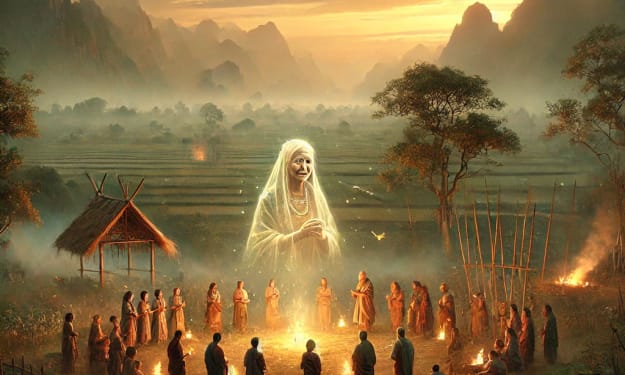
In a small village nestled between vast fields and towering mountains, lived an old woman named Meera. The villagers lovingly called her “Mother Meera.” Her eyes sparkled with wisdom, her face lined with years of laughter and sorrow. Despite her age, Meera held an unbreakable bond with nature. She knew every tree, every river, and every bird that nested in the area. For the villagers, she was as much a part of their world as the land itself. Youngsters would visit her often, curious about the stories she told. They’d sit by the river as she spoke of how everything was interconnected. “The world,” she would say, “breathes and lives just as we do. She feels, she hurts, and she loves.” One summer, as the land faced an unbearable drought, the rivers dried up, and the fields turned barren. The villagers struggled, crops withered, and even the birds stopped singing. Fear spread throughout the village. People began to despair, and their usual bright spirits dimmed. They approached Meera, hoping she could bring them some solace or guidance. Meera observed the worried faces around her. “There is a way to save this land, but you must trust me,” she said softly. The villagers listened intently as she explained, “The world, this land, has always protected and nurtured us. Now, it is time for us to give back.” Meera then shared a ritual—an ancient one she had learned from her ancestors. Each family was to offer a small sacrifice, a token of gratitude, back to the land. It didn’t have to be much; a handful of seeds, a flower, a cup of water—something simple, yet sincere. While some villagers were skeptical, others were desperate enough to try. So, each night, they gathered at the heart of the village, where Meera led them in the ritual. Families would offer their little gifts, burying them in the ground with a silent prayer. Over time, the villagers began to see changes—not in the land, but in themselves. The despair started to lift, replaced by a sense of unity, hope, and gratitude. One night, during one of these gatherings, a young girl named Asha approached Meera with tears in her eyes. “Mother Meera, will this really work? Can we save our world?” Meera knelt beside her and placed a gentle hand on Asha’s shoulder. “My dear,” she whispered, “She was this world. She lives within each of us, in every breath and every heartbeat. The love we give will eventually be returned.” The ritual continued, and over the weeks, the land itself seemed to respond. Small patches of green began appearing around the village, little springs of water bubbled from hidden sources, and birds returned to the trees. The villagers’ spirits soared, feeling as if the land was coming back to life. One evening, as the villagers prepared for their nightly ritual, they noticed Meera wasn’t there. Concerned, a few villagers went to her small hut and found her lying peacefully on her bed, a gentle smile on her face. Meera had passed away that evening, her last breath leaving just as the sun set. The villagers mourned, yet they knew she had given them something eternal. As they buried her near the heart of the village, they felt her presence lingering around them. They realized that she was no longer just a part of their memories but a part of their world, living on in every blade of grass, every drop of water, every breath of air. From that day on, the villagers continued the ritual, not out of desperation, but out of love. They understood now that the world was not just something outside them but something within them. Meera had become the world she always loved, the spirit of the land that would forever guide and protect them. And whenever the wind whispered through the village or the river flowed gently by, the villagers felt Meera’s spirit—always there, always watching, as the eternal mother of their world.
By Hridoy Hasan2 years ago in History
No Time for Sorrow
Mara was a medical caretaker — a title she'd worn proudly once. Be that as it may, presently, she felt more like a scrounger. Supplies were waning, and she expected to return food and medication once again to the facility. She lacked the opportunity and energy to contemplate the companions she'd lost, or the patients she wasn't ready to save. There was no time for anguish. Consistently spent grieving was a second squandered, and in circumstances such as these, seconds could mean endurance. She rushed through the vacant roads, her heart beating as she dodged into the back streets, staying away from watches. Each corner brought another risk, each shadow could conceal somebody standing by to snare her. Mara's brain was well-honed, working out each move. She didn't permit herself to choose not to move on, to ponder the countenances she'd once known or the recollections she'd appreciated. They were covered now, locked away in some piece of her brain that she was unable to bear to get to. Not at present. As she approached the center, Mara saw a young man, no more seasoned than twelve, sitting by a heap of rubble. His face was smeared with soil, and his eyes were empty, empty such that somebody who had seen a lot of it could be. Mara felt an ache in her chest, a glimmer of sympathy she hadn't permitted herself to feel in weeks. She realized she ought to continue to move — her provisions were required back at the facility — however, something made her interruption. The kid didn't gaze upward as she drew nearer; he was gazing at his hands, which gripped a little, messy toy — a reminder of a day-to-day existence before the conflict. She hunched next to him, delicately putting a hand on his shoulder. "Are you alone?" she asked delicately. The kid gazed upward, and briefly, Mara saw the profundity of his anguish. His lips shuddered, however, he gestured. She didn't have to inquire as to whether he had family. She knew the response as of now; she had seen that look too often. The inclination to help him was overpowering. In any case, Mara's brain was at battle with her heart. She didn't have the assets to take on someone else, particularly not a youngster who might require security. The center was at that point packed, and every patient was barely surviving. She was unable to allow herself to be answerable for another life. Not when so many others were relying upon her. "I… I don't have any place to go," the kid said, his voice scarcely over a murmur. Mara gulped, the contention seething inside her. The consistent piece of her brain shouted that she was unable to take him with her. Yet, something more profound, something more human, overwhelmed that rationale. "Accompany me," she said at last, realizing that this choice could cost her and others. "I'll take you someplace safe." The kid didn't grin or say thanks to her; he essentially gestured, like he'd lost the capacity to expect much else. Together, they advanced back to the center. Mara kept a tight hang on his hand, her faculties increased. She examined the roads, alert for any indication of risk. The facility was concealed in the cellar of an old emergency clinic building. It was dull, cold, and squeezed, yet it was a shelter. Inside, volunteers moved discreetly, keeping an eye on the injured and the debilitated. The space was loaded up with the aroma of germ-killers and the low mumbles of patients. Mara directed the kid to a corner where an improvised bed lay. She gave him a little slice of bread and a taste of water, the main arrangements she could save. As she went to leave, the kid got her hand. "Will… will you return?" Mara faltered, feeling a peculiar feeling of obligation for him. "I'll be here," she guaranteed, however, she couldn't say whether it was a commitment she could keep. In this world, conviction was an extravagance she was unable to bear. The hours obscured into one another. Mara treated injuries, watched out for fevers, and held the hands of those whose time was getting ceaselessly. She lacked the opportunity and energy to think, process, or lament. The essence of the withering tormented her, however she constrained herself to keep on track. Every life was a sign of why she was unable to permit herself to feel. Sorrow would just dial her back, and she was unable to bear the cost of that. Days passed, and the kid remained close by, helping in little ways — getting water, consoling more youthful youngsters, and figuring out how to change basic dressings. Mara could see the versatility working in him, and in some little way, it gave her expectations. Perhaps, she thought, they could endure this together. In any case, she held her feelings under tight restraints, reluctant to allow herself to become connected. Each bond was a potential injury, another misfortune in the works. One night, as Mara was keeping an eye on a patient, she heard a stunning blast close by. The walls shook, dust tumbling from the roof. The patients and volunteers crouched together, dread obvious in their eyes. Mara's heartbeat, and without precedent for months, she felt genuine fear. She looked around, looking for the kid, yet he was no place to be seen. Alarm flooded inside her. Disregarding her security, she darted into the passage, calling out to him. She went through the hallways, her psyche dashing. She had sworn not to mind, not to give anybody access, but rather she understood, at that time, that she had fizzled. She minded profoundly, and the prospect of losing him tore at her heart. At last, she found him close to the entry, assisting a harmed man with limping to somewhere safe and secure. Alleviation washed over her, and she maneuvered him into her arms, holding him firmly. "Never run off that way," she murmured, her voice stifled with feeling. The kid saw her, shock in his eyes. "I thought… I figured you couldn't have cared less." Mara dealt with a powerless grin. "I lack opportunity and willpower to mind," she expressed, attempting to conceal reality, however, the untruth felt empty. The conflict had stripped her of numerous things, however, it hadn't taken her mankind. Not totally. She understood, with a combination of trouble and acknowledgment, that regardless of how enthusiastically she attempted, she was unable to protect herself from pain or love. It was essential for what her identity was, a section she couldn't just stop. The days became hazier, and the difficulties just increased. Yet, Mara and the kid confronted them together, tracking down comfort in one another's presence. They figured out how to track down little snapshots of satisfaction amid the bedlam, and in those minutes, Mara permitted herself to trust. She realized the street ahead would be hard, yet she additionally knew that, as long as they had one another, they would continue to push ahead. There was no time for melancholy, yet maybe, quite possibly, there was the ideal opportunity for trust.
By Hridoy Hasan2 years ago in History
THE LEGACY OF MOORISH SPAIN
The Queen of Castille sits regally on a somewhat bewildered-looking white steed, crown perched prominently on her head. Her eyes are drawn to the ochre-coloured castle gleaming brightly in late November sunlight on a distant hill. Her husband, the King of Aragon, leans forward on his horse with his hand out ready to accept the hefty keys reluctantly proffered by the last Nasrid ruler of the final bastion of Moorish rule in Al Andalus, Boabdil. Though spared the humiliation of kissing the monarch’s hand, the Moor's eyes seem to be silently pleading, “Remember what you promised.”
By Kimberley Silverthorne2 years ago in History
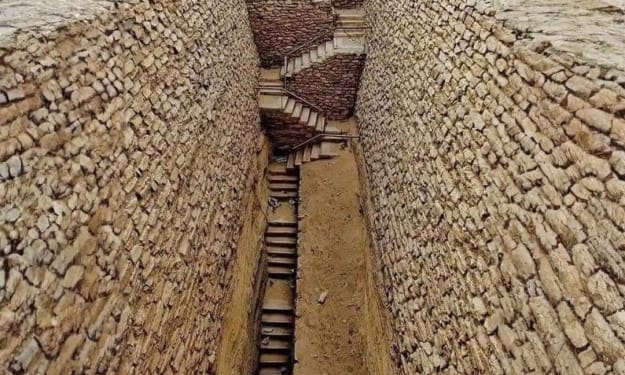
Steps Through Time: The Secrets of Pharaoh Djoser’s Tomb in Saqqara
The ancient Egyptian civilization remains one of the most mysterious and fascinating periods in history. With its monumental structures, intricate beliefs about life and the afterlife, and astounding advances in art, architecture, and science, this civilization still captivates our imaginations. Among the most impressive relics of ancient Egypt is the 4,800-year-old staircase leading to the southern tomb of Pharaoh Djoser in Saqqara, Egypt. These steps, which descend into the earth, do not merely represent a pathway; they are a window into a lost world of architectural genius, religious rituals, and beliefs that helped shape one of history's most influential cultures.
By Taimur Kazmi2 years ago in History
Women on the throne.. Sirimavo Bandaranaike, the first female ruler in modern times
Former Sri Lankan President Sirimavo Bandaranaike is a figure that history will remember for a long time. She is the first woman in the world to assume the presidency of a country without a hereditary system in the modern era. She led Sri Lanka during difficult times in its history, and had many orientations and many enemies and opponents. She was followed by a number of women who were able to assume the presidency in their countries.Birth and upbringing
By Kisama Riyo 2 years ago in History
The world's first wooden satellite launched into space
In a groundbreaking move for space exploration and sustainability, the world’s first wooden satellite was successfully launched into space. This remarkable achievement marks a significant milestone in both the field of aerospace engineering and the drive toward greener space technologies. The innovative satellite, known as WISA Woodsat, is a symbol of how sustainable materials can shape the future of space exploration.
By Zinnat ara Begum2 years ago in History