Modern
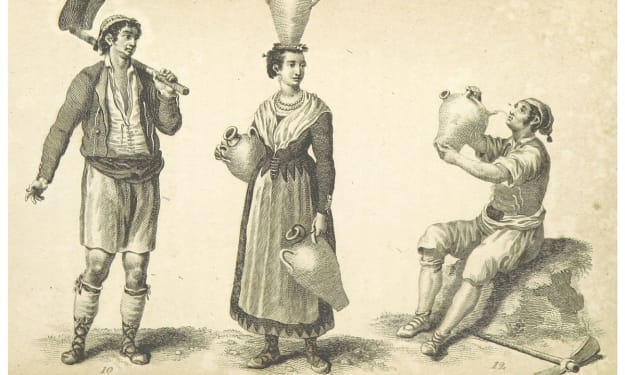
Forgotten Trades of Rural Spain
Driving through much of rural Spain today, it’s hard to picture what it looked like before the mid-20th century. The silent streets, main squares, local fountains and fields have little left to show for their industrious past beyond the lined worn faces of the old men assembled on stone benches watching the cars pass through their village. Tourists on their way to a hiking route may stop, take a photo or two, maybe pop into the local museum, but the scythes, threshing sledges and washing boards hanging on the wall are only a superficial reminder of its rich historic traditions.
By Kimberley Silverthorne2 years ago in History
The State of Critical Thinking in Modern Politics:
Introduction In a society where democracy relies on informed decisions, are we truly engaging in critical thinking, or has independent thought been overshadowed by emotional influence and party loyalty? The health of democracy depends on the ability of voters to question, analyze, and reflect—qualities that are increasingly at risk in today’s political landscape.
By T. E. Door2 years ago in History
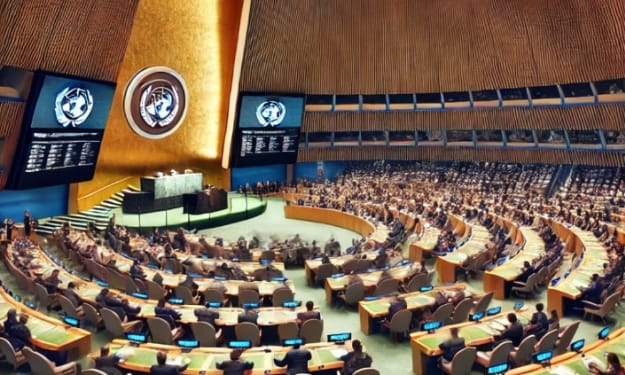
Understanding the Power of the Veto: How It Shapes Global Decisions at the UN
Hello everyone, today let’s dive into an important affair that shapes all-embracing backroom and all-around decision-making: veto power. You adeptness accept heard this appellation in the news, abnormally back discussions about the United Nations (UN) and above all-embracing resolutions appear up. But what absolutely does it mean, and why should you affliction about it? Let me explain.
By Say the truth 2 years ago in History
Fulwell Acoustic Mirror. Top Story - November 2024.
Remembrance Day feels like an appropriate time to look back at an unlikely piece of military history on Wearside. The Fulwell Acoustic Mirror might not look like much, but the stark concrete slab played a key role in air defence 15 years before Radar was implemented.
By Andy Potts2 years ago in History
The Rise and Fall of Route 66
Route 66, often called the “Main Street of America” or the “Mother Road,” once served as a vital artery of American culture and travel. Established in 1926, this iconic highway stretched over 2,400 miles from Chicago, Illinois, to Santa Monica, California. Route 66 symbolized freedom, mobility, and the spirit of exploration for nearly half a century. Yet, in the 1980s, this beloved route was largely decommissioned and replaced by a more modern interstate system, marking the end of an era and leaving many of its towns and businesses abandoned. Understanding why Route 66 was abandoned involves exploring how it rose to prominence, the challenges it faced, and how changing times led to its gradual demise.
By In Conspiracy We Trust2 years ago in History
Trump Tower: An Architectural Icon
Trump Tower: An Architectural Icon Trump Tower is one of the most recognizable skyscrapers in New York City, located on Fifth Avenue in Manhattan. Built in the 1980s, this mixed-use building combines luxury residential apartments, retail spaces, and office units, all in one structure. The tower has been associated with both glamour and controversy over the years and has become a symbol of Donald Trump’s real estate empire. Here’s a detailed look at its architecture, history, controversies, and cultural impact.
By Mahalakshmi2 years ago in History
She Was This World
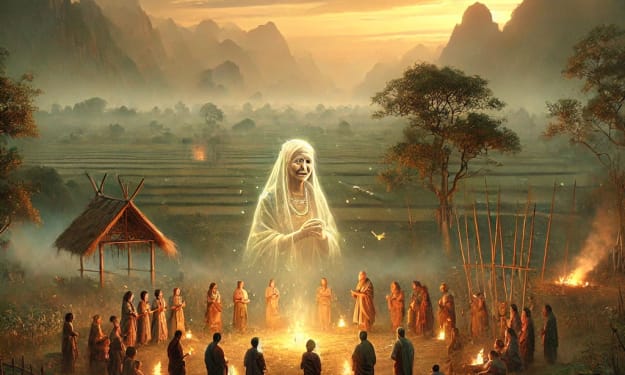
In a small village nestled between vast fields and towering mountains, lived an old woman named Meera. The villagers lovingly called her “Mother Meera.” Her eyes sparkled with wisdom, her face lined with years of laughter and sorrow. Despite her age, Meera held an unbreakable bond with nature. She knew every tree, every river, and every bird that nested in the area. For the villagers, she was as much a part of their world as the land itself. Youngsters would visit her often, curious about the stories she told. They’d sit by the river as she spoke of how everything was interconnected. “The world,” she would say, “breathes and lives just as we do. She feels, she hurts, and she loves.” One summer, as the land faced an unbearable drought, the rivers dried up, and the fields turned barren. The villagers struggled, crops withered, and even the birds stopped singing. Fear spread throughout the village. People began to despair, and their usual bright spirits dimmed. They approached Meera, hoping she could bring them some solace or guidance. Meera observed the worried faces around her. “There is a way to save this land, but you must trust me,” she said softly. The villagers listened intently as she explained, “The world, this land, has always protected and nurtured us. Now, it is time for us to give back.” Meera then shared a ritual—an ancient one she had learned from her ancestors. Each family was to offer a small sacrifice, a token of gratitude, back to the land. It didn’t have to be much; a handful of seeds, a flower, a cup of water—something simple, yet sincere. While some villagers were skeptical, others were desperate enough to try. So, each night, they gathered at the heart of the village, where Meera led them in the ritual. Families would offer their little gifts, burying them in the ground with a silent prayer. Over time, the villagers began to see changes—not in the land, but in themselves. The despair started to lift, replaced by a sense of unity, hope, and gratitude. One night, during one of these gatherings, a young girl named Asha approached Meera with tears in her eyes. “Mother Meera, will this really work? Can we save our world?” Meera knelt beside her and placed a gentle hand on Asha’s shoulder. “My dear,” she whispered, “She was this world. She lives within each of us, in every breath and every heartbeat. The love we give will eventually be returned.” The ritual continued, and over the weeks, the land itself seemed to respond. Small patches of green began appearing around the village, little springs of water bubbled from hidden sources, and birds returned to the trees. The villagers’ spirits soared, feeling as if the land was coming back to life. One evening, as the villagers prepared for their nightly ritual, they noticed Meera wasn’t there. Concerned, a few villagers went to her small hut and found her lying peacefully on her bed, a gentle smile on her face. Meera had passed away that evening, her last breath leaving just as the sun set. The villagers mourned, yet they knew she had given them something eternal. As they buried her near the heart of the village, they felt her presence lingering around them. They realized that she was no longer just a part of their memories but a part of their world, living on in every blade of grass, every drop of water, every breath of air. From that day on, the villagers continued the ritual, not out of desperation, but out of love. They understood now that the world was not just something outside them but something within them. Meera had become the world she always loved, the spirit of the land that would forever guide and protect them. And whenever the wind whispered through the village or the river flowed gently by, the villagers felt Meera’s spirit—always there, always watching, as the eternal mother of their world.
By Hridoy Hasan2 years ago in History