Modern
Unlock the World on a Budget: Your Guide to Affordable Travel Adventures
Budget Travel Hacks: How to travel the world without breaking the bank Hello friends, Find out how to save money on flights, accommodations, food, and activities, using all the budget-friendly travel secrets, tips, and tricks to make your dream vacation a reality. The call of the unknown whispers in your ear. Sun-kissed beaches, ancient ruins, and bustling cityscapes all dance before your eyes. But a nagging voice asks, "Can I afford this travel dream?" Ah, let me assure you that the answer is a resounding yes! With a dash of resourcefulness and the following treasure trove of budget hacks, you can transform the world into your playground without breaking the bank. That's it. This guide provides you with the knowledge and tools to become a budget travel ninja. We'll move forward with strategies on cheap flights, affordable accommodations, and yummy yet affordable food, and find free and entertaining things to do. We'll also review budget-friendly destinations and answer commonly asked questions to make you more confident as you navigate the world and also make you save money in your wallet. Beating the Airlines:
By Kalpesh Vasava2 years ago in History
The Historical story about Holy Makkah (mecca)
The Historical story about Holy Makkah (mecca) The historical backdrop of Makkah (Mecca) is rich and profoundly interlaced with strict and social importance. It is quite possibly of the holiest city in Islam and holds a phenomenal spot in the hearts of Muslims around the world. The following is an itemized verifiable record of Makkah, spreading over from its old starting points to its importance in Islamic history.
By Md. Didarul Alam2 years ago in History
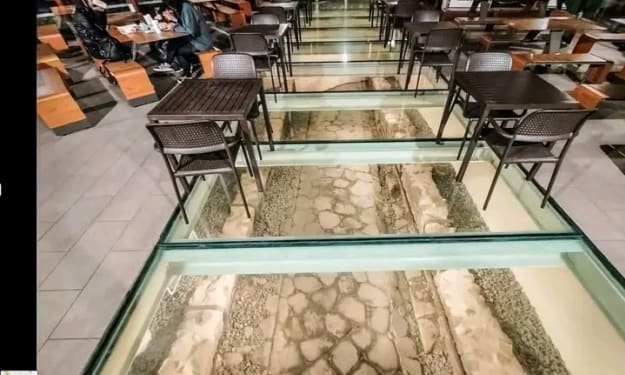
Ancient History Meets Modern Convenience: The Roman Road Beneath a McDonald’s in Marino, Italy
In the small Italian town of Marino, near Rome, history and modernity intersect in a surprising way. During construction work for a new McDonald’s restaurant in 2014, workers uncovered a remarkable archaeological site: a 45-meter-long stretch of an ancient Roman road. This discovery, complete with three skeletons found along the road’s edges, provides a unique glimpse into the daily life of ancient Rome. Today, thanks to an innovative restoration effort, visitors to this McDonald’s can dine with a direct view of the road through a specially designed glass floor. A Window to the Past The Roman road, believed to date back to the 2nd century BCE, is an extraordinary find. Roads like these were integral to the Roman Empire, enabling the efficient movement of soldiers, goods, and information across vast distances. This particular stretch of road, discovered beneath Marino, would have connected smaller towns and settlements to Rome, the empire’s bustling heart. Constructed using large basalt stones fitted together with precision, the road showcases the advanced engineering skills of the Romans. The remains of wheel ruts on the stones further attest to its heavy use over centuries. Alongside the road, three skeletons were discovered, likely of individuals who lived during the time the road was in use. Their presence adds a poignant human element to the archaeological site, serving as a reminder of the lives that unfolded along this ancient route. The McDonald’s Connection The discovery of the road posed a challenge for McDonald’s, which had planned to open a new restaurant at the site. Rather than abandoning the project or removing the archaeological remains, McDonald’s Italy decided to embrace the site’s historical significance. The company worked closely with Rome’s Superintendency for Archaeology, Fine Arts, and Landscape to ensure the road’s preservation. McDonald’s financed the entire restoration process, which included cleaning, repairing, and stabilizing the ancient road. To integrate the site into the restaurant, a glass floor was installed above the road, allowing customers to view the archaeological treasure while dining. This innovative solution not only preserved the road but also made it accessible to the public in an engaging and unexpected setting. A Unique Dining Experience Visiting the McDonald’s in Marino today offers a dining experience like no other. The glass floor provides a clear view of the Roman road, complete with its intricate stonework and visible wheel ruts. Informational displays near the site offer insights into the road’s history and significance, blending education with fast food in an unexpected way. This unique setup has turned the restaurant into a tourist attraction, drawing history enthusiasts and curious visitors from around the world. For many, the juxtaposition of an ancient Roman road with a modern McDonald’s embodies the layers of history that define Italy. The Importance of Preservation The project in Marino highlights the value of preserving archaeological sites, even in the face of modern development. Italy, with its rich history and countless archaeological treasures, faces a constant challenge in balancing urban growth with heritage conservation. McDonald’s decision to fund the restoration and incorporate the road into its restaurant serves as an example of how private companies can contribute to cultural preservation. By embracing the historical significance of the site, McDonald’s not only safeguarded an important piece of history but also created a unique feature that enhances its brand and draws customers. This approach has set a precedent for how modern development and heritage preservation can coexist. It demonstrates that with creativity and collaboration, ancient treasures can be integrated into contemporary spaces without compromising their integrity. What the Roman Road Tells Us Beyond its architectural significance, the Roman road in Marino offers a window into the daily lives of ancient Romans. Roads like these were the lifelines of the empire, facilitating trade, communication, and cultural exchange. They connected people across vast territories, enabling the Roman Empire to thrive for centuries. The presence of skeletons along the road adds another layer of intrigue. Were these individuals travelers who died along the route? Or were they buried there intentionally, perhaps as part of a ritual or tradition? These questions remain unanswered, sparking curiosity and inviting further study. A Fusion of Past and Present The Roman road beneath McDonald’s in Marino symbolizes the fusion of past and present that defines Italy’s cultural landscape. It is a reminder that history often lies just beneath the surface, waiting to be uncovered and appreciated. For visitors, the site offers a chance to reflect on the enduring legacy of the Roman Empire while enjoying a modern meal. It’s a testament to the resilience of history and the importance of preserving it for future generations. Conclusion The discovery of the Roman road in Marino is a story of unexpected intersections—between ancient history and modern commerce, between preservation and progress. By choosing to preserve and showcase the road, McDonald’s has turned its Marino location into more than just a fast-food restaurant; it has become a bridge between eras, inviting visitors to experience history in a new and accessible way. In a world where development often comes at the expense of cultural heritage, the Roman road beneath McDonald’s stands as a shining example of how the past can coexist with the present. It is a reminder that history is all around us, even in the most unlikely places.
By Deji Akomolafe2 years ago in History
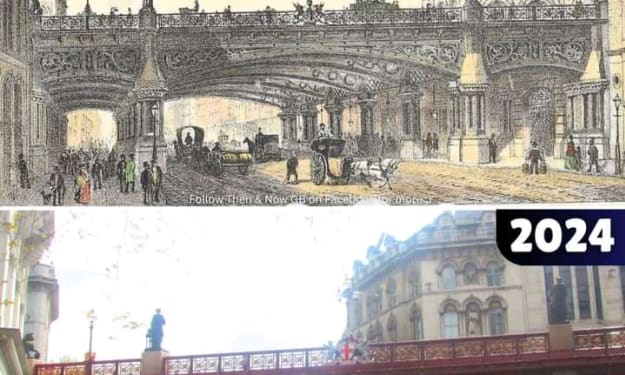
Holborn Viaduct: A Victorian Marvel Then and Now
Holborn Viaduct, an iconic example of Victorian engineering and architectural ingenuity, stands as a testament to London’s industrial age. Completed in 1869, this bridge transformed the city’s infrastructure by connecting two bustling areas, Farringdon and Holborn, over the River Fleet. An antique print of the viaduct from 1894 showcases its grandeur during the late 19th century, a time when it was a symbol of progress and innovation. Comparing this historic image to the structure as it exists today reveals the enduring legacy of this remarkable feat of engineering and its significance in London’s evolution. The Creation of Holborn Viaduct Holborn Viaduct was conceived as part of a broader plan to modernize London's transport and infrastructure during the Victorian era. At the time, the rapid growth of the city created challenges for urban planning. The River Fleet, which had become heavily polluted and was more of a hazard than a benefit, needed to be covered, while the steep valley it formed disrupted traffic flow between central London and its suburbs. Designed by Sir William Haywood, Holborn Viaduct was built to address these challenges. The viaduct is not just a bridge but a raised roadway supported by a series of iron arches and adorned with striking ornamental details. Stretching 1,400 feet and reaching a height of approximately 80 feet above Farringdon Street, it provided a seamless connection for pedestrians and vehicles alike, bypassing the valley below. The construction of the viaduct was a massive undertaking, involving the demolition of existing buildings and the use of innovative techniques for the time. The final design incorporated both function and form, with pedestrian walkways, iron parapets, and grand staircases connecting the street level to the lower roads. At its official opening in 1869, Queen Victoria herself attended the inauguration, further cementing the viaduct’s importance in the eyes of the public. A Glimpse Into 1894 The antique print of Holborn Viaduct from 1894 offers a fascinating snapshot of its original Victorian splendor. The intricate ironwork of the arches and balustrades, the stately street lamps, and the elegant statues at its corners all reflect the era’s emphasis on combining utility with aesthetic beauty. The print captures a busy scene, with horse-drawn carriages and pedestrians making their way across the viaduct, embodying the vibrancy of late-19th-century London. During this time, Holborn Viaduct was more than just a piece of infrastructure—it was a symbol of modernity. It represented the Victorian ethos of progress, where advancements in engineering and technology were celebrated and integrated seamlessly into daily life. Holborn Viaduct Today Over 150 years later, Holborn Viaduct continues to serve as a vital part of London’s transport network. While its role has evolved with the city, the structure remains remarkably well-preserved. The ironwork, which was a hallmark of Victorian craftsmanship, has been meticulously maintained, and the four bronze statues representing Commerce, Agriculture, Science, and Fine Arts still stand at its corners, each a nod to the values that shaped the Victorian era. Modern vehicles have replaced horse-drawn carriages, and the surrounding skyline has changed dramatically, with towering skyscrapers and modern architecture dominating the area. Yet, the viaduct retains its historical charm, acting as a bridge between London’s past and present. In recent years, efforts to preserve and celebrate London’s Victorian heritage have brought renewed attention to structures like Holborn Viaduct. Restoration projects have ensured that its ornate features remain intact, and its significance as a piece of historical infrastructure is recognized by residents and visitors alike. Engineering and Architectural Significance Holborn Viaduct is more than just a practical bridge; it’s an enduring example of Victorian engineering. The use of cast iron and the emphasis on decorative elements reflect the design philosophy of the time, where beauty and functionality went hand in hand. The viaduct also demonstrates how engineering solutions were integrated into urban planning to solve real-world problems, such as improving traffic flow and covering unsanitary waterways. Its innovative design, which included dedicated pedestrian walkways, set a precedent for future urban infrastructure projects. The viaduct’s combination of utility and grandeur influenced other cities in Britain and abroad, serving as a model for urban development in the late 19th and early 20th centuries. A Living Connection to the Past Standing on Holborn Viaduct today, one can almost hear the echoes of 19th-century London—the clatter of horse hooves, the chatter of pedestrians, and the hum of a city on the brink of modernity. The viaduct’s ability to retain its historical essence while adapting to contemporary needs is a testament to its timeless design. For those with an appreciation for history, visiting Holborn Viaduct offers a unique opportunity to witness a piece of Victorian London that has endured the test of time. Comparing the 1894 print to the present day highlights the balance between preservation and progress that defines the city’s approach to its heritage. Conclusion Holborn Viaduct is not just a bridge; it’s a story of London’s transformation, a relic of Victorian ingenuity, and a functional piece of infrastructure that continues to serve its purpose. From the bustling scenes captured in the 1894 print to its current role in the heart of a modern metropolis, the viaduct bridges the gap between past and present. As we walk its length today, we are reminded of the vision and ambition of the engineers and architects who built it. Holborn Viaduct stands as a proud symbol of a bygone era, yet it remains as relevant as ever—a testament to the enduring legacy of Victorian innovation.
By Deji Akomolafe2 years ago in History
1,000 Days of War
Cartoon explainer: The rockets are labeled with the Russian words that Putin consistently uses to describe his goals for the Ukrainian war: denazification, demilitarization of Ukraine and protection of civilians in Eastern Ukraine. The last rocket has its true goal - "re-Sovietization."
By Lana V Lynx2 years ago in History
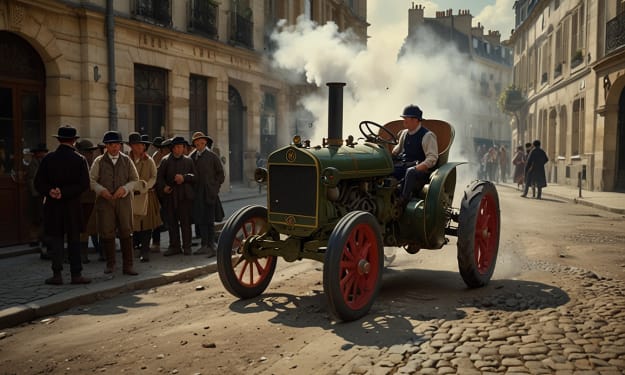
The First Automotive Accident in the World: Historical Incident in Transport Modes
The first known car accident occurred in 1771. Modern road safety and automobile engineering as we know it today has only one particular day to its past. And that was the steam-powered tractor designed by Nicolas-Joseph Cugnot, the first automobile, crashing on the streets of Paris. It is rather difficult to imagine an automobile accident in a time when cars such as we understand them did not exist. Actually, the steam contraption, invented by Cugnot was one of the crucial moments in modern history. And the accident, though minor, became an historical event.
By Abhay kumar chauhan2 years ago in History
10 Miraculous Breakthroughs Shattering Incurable Disease Barriers. AI-Generated.
For decades, certain diseases have cast a long shadow, deemed untreatable and leaving patients with limited hope. But recent advancements in medical research are challenging these notions, offering groundbreaking therapies that rewrite the narrative on once-incurable illnesses. This article explores 10 of the most remarkable breakthroughs that are revolutionizing treatment for these seemingly insurmountable conditions.
By David Andrews2 years ago in History
Ayatollah Ali Khamenei: Iran's Supreme Leader and His Resilient Legacy
Ayatollah Ali Khamenei has been Iran's Supreme Leader since 1989. He sits atop this country with huge influence in this country's government, military, and institutions of faith. Most of this nation's foreign and domestic policy undertaken is through the leadership adopted by Ayatollah Ali Khamenei. His longevity and influence have placed him at the heart of the country's politics.
By Abhay kumar chauhan2 years ago in History
Ukrainian Theatre of National Identity - Russia's Nationalist Problem
With that said, I want to set the stage for the rest of this thesis by calling to attention what I will refer to as Soviet Russia’s “Nationalist Problem.” In a multinational empire, assembled after years of war, civil war, and rebellion, the main concern of the Soviet Union was to make the mechanism of a socialist nation function. Political policies were tried and tested in the early years of the USSR. After the nation had stabilized, for example, a policy of Ukrainization was implemented in the Ukrainian lands, offering the Ukrainian people educational and cultural autonomy. This policy was reversed under Stalin, who instead persecuted Ukrainians who explored ideas related to the nation and criticism of the USSR. Culture and politics were inextricably intertwined; in Russia, theate and theatrical spectacles were explored as strategies to propagandize the public into a sense of Soviet pride. Because the arts were so linked to the political mechanism at the time, an artist operating outside or against that political mechanism was subject to excommunication, imprisonment, and/or death. One political party—the Communist Party—dominated, and lack of membership to it was a fast track to pariah status.
By Steven Christopher McKnight2 years ago in History
The Mystery of the Pingyan Giant Footprint: Fact or Fiction?
For centuries, people have been fascinated by stories of giants. Different cultures have shared legends about huge human-like beings, like the Titans in Greek myths or the Nephilim in the Bible. These stories have sparked our imagination and curiosity. But finding real evidence of giants has always been challenging and controversial. This changed for some people when a massive footprint was discovered in the remote village of Pingyan, China, sparking debates about whether it could be proof of giants.
By Muhammad Waseem 2 years ago in History
The Most Fascinating Unsolved Mysteries of History
Throughout history, countless events and phenomena have puzzled historians, scientists, and the general public. While many questions have been answered with time and research, some mysteries remain unsolved, offering glimpses into the unknown. These enigmas not only challenge our understanding of the past but also inspire endless theories and speculation. Here, we explore some of the most fascinating unsolved mysteries in history.
By Marius Lungu2 years ago in History