Modern
LOUIS LEAKEY'S CONTROVERSIAL LEGACY
Despite having a meticulous 1400-page work about the Kikuyu people written, Jomo Kenyatta beat Louis Leakey by having the first Kikuyu ethnographic book Facing Mount Kenya, printed in 1938. As a PhD holder, Leakey could not help but hold resentment for Kenyatta who was now a published author (without even having a degree) while his own magnum opus gathered dust in a safe. Leakey was considered by many others but mostly himself as the expert on Kikuyu knowledge. Its as though he owned that knowledge and it was only his to disseminate. In fact, Leakey believed Kenyatta had plagiarized some of his material on circumcision rites without acknowledgement.
By HINGES OF TIME2 years ago in History
Crazy Inventions That Actually Existed
Throughout time, there have been many inventions that have shaped and changed everyday life as we know it, forever: The automobile. The Microwave. The smartphone. It's hard, almost unfathomable to imagine life and society without these.
By Jasmine Aguilar2 years ago in History
How Japan’s Aging Population is Driving Technological Advancement
How Japan’s Aging Population is Driving Technological Advancement Discover how Japan’s aging crisis is fueling world-changing innovations in robotics, healthcare, and AI — transforming elderly care into a global model of technological progress.
By MystiTech Hub2 years ago in History
The World’s Most Disliked Countries in 2024 – Understanding the Global Perception
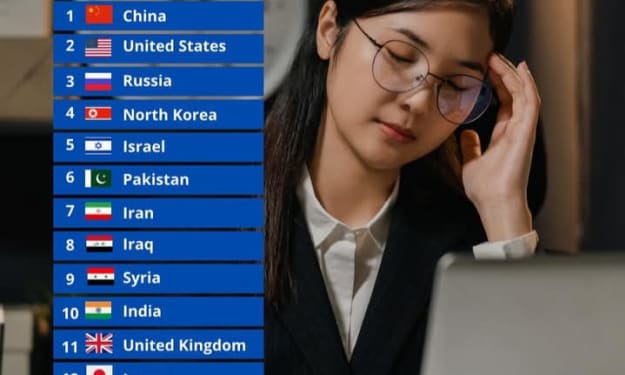
Introduction In a time when the world is more interconnected than ever, global perception carries significant weight. Nations are judged not just by their policies or leaders but by their international behavior, media portrayal, and historical context. A recent global survey conducted by the International Statistics Organization in 2024 has revealed a list of the 15 most disliked countries in the world. While such lists spark heated debate, they also invite deeper reflection. Why are some countries so disliked? Is it due to politics, war, culture, or something more complex? Let’s explore the reasons behind this ranking and the broader implications of such global opinions. The 2024 List: Top 15 Most Disliked Countries 1. China 2. United States 3. Russia 4. North Korea 5. Israel 6. Pakistan 7. Iran 8. Iraq 9. Syria 10. India 11. United Kingdom 12. Japan 13. Saudi Arabia 14. Germany 15. Nigeria This list might raise eyebrows, but it reflects a global sentiment shaped by many interconnected factors. --- Geopolitical Power and Controversy The countries at the top—China, the United States, and Russia—are not just global superpowers but also frequent players in international conflict and political manipulation. Their foreign policies often create division. China's aggressive stance in the South China Sea, surveillance concerns, and treatment of minority populations (like the Uyghurs) has drawn global criticism. The U.S. is frequently disliked for its military interventions, perceived cultural dominance, and polarizing foreign policy. Meanwhile, Russia’s war in Ukraine and its authoritarian internal politics have severely damaged its global image. These countries’ roles in world affairs naturally place them in the spotlight—making their actions highly scrutinized and often controversial. --- Human Rights and Authoritarianism Many nations on this list have been repeatedly criticized for their human rights records. North Korea, known for its closed society, lack of freedoms, and dictatorship, faces near-universal condemnation. Iran and Saudi Arabia, despite their unique cultural and religious heritage, are often accused of oppressing women, silencing dissent, and restricting freedoms. Even democratic nations like India and Israel face accusations—India for increasing religious intolerance and suppression of minority voices, and Israel for its ongoing conflict with Palestinians. Global audiences tend to react strongly to perceived injustices, especially when these issues dominate international headlines. --- Wars, Terrorism, and Instability Countries like Iraq, Syria, and Pakistan have been at the center of regional and global conflicts for decades. Although many of their people are victims of violence and foreign intervention, these nations are often associated with terrorism, war, and instability. Western media, in particular, has played a significant role in reinforcing these perceptions. Nigeria, too, suffers from internal conflicts and extremist groups like Boko Haram, which adds to its unfavorable image internationally. It’s important to note that public opinion doesn’t always distinguish between governments, radical factions, and ordinary citizens—an unfortunate generalization that fuels misunderstanding. --- Colonial Legacy and Cultural Clashes The presence of the UK, Germany, and Japan on this list may seem surprising at first glance. However, the colonial history of the United Kingdom and Germany's 20th-century wars still cast a long shadow. Japan, while technologically advanced and peaceful today, faces criticism from its Asian neighbors for failing to fully reckon with its World War II past. In addition, cultural friction plays a role in how certain populations view others. When traditions, values, or ideologies clash, mutual respect often gives way to mistrust or even resentment. --- The Role of Global Media Perception is powerfully shaped by media narratives. News outlets, social media, and film industries play a massive role in influencing how one country sees another. For example, Hollywood often portrays certain regions (especially the Middle East or Asia) through a lens of conflict, extremism, or backwardness. Likewise, state-run media in various countries may intentionally paint other nations as enemies or threats, reinforcing public fear and animosity. This cycle of media-driven judgment has created deep stereotypes—some of which are far removed from the actual experiences of those living in these nations. --- Perception vs. Reality It’s crucial to understand that public perception doesn’t always reflect the truth. Most people in these countries live normal lives, seek peace, and want progress. The dislike toward a country often stems from the actions of a government, specific policies, or dominant media portrayals—not the culture or people as a whole. Such rankings, while useful for discussion, can also reinforce harmful stereotypes if not handled with care. They remind us how easy it is to judge from afar—and how important it is to approach international opinions with nuance. --- Conclusion The 2024 list of the most disliked countries is not just a popularity chart—it is a mirror reflecting how deeply intertwined our world has become. Political decisions, historical grievances, media influence, and cultural differences all contribute to global opinion. While some criticism is justified, other elements are rooted in misunderstanding or bias. To build a more compassionate and informed world, we must look beyond headlines and recognize the complexity within each country. After all, a nation is more than its politics—it’s its people, its history, and its hope for the future.
By Insect Legends2 years ago in History
Houston Stuns Duke in Final Four Comeback to Reach NCAA Championship
SAN ANTONIO — In a thrilling Final Four showdown, Houston pulled off an incredible comeback to defeat Duke 70-67, overcoming a 14-point deficit in the final eight minutes. With this stunning victory, the Cougars are now set to face Florida in the NCAA Championship game on Monday night.
By Muhammad Hayat2 years ago in History
Opera’s Latest Browser Is Here to Make Your Internet Experience Less Stressful
# The Most Recent Version of Opera's Browser Is Here to Make Your Internet Experience More Stress-Free Endless tabs, intrusive advertisements, privacy concerns, and slow load times can transform a straightforward search into a frustrating experience in today's fast-paced digital world. The most recent version of Opera's browser aims to change that by introducing features that simplify online activities and alleviate stress. ## A smoother, faster browsing experience Opera has been praised for its speed and effectiveness for a long time, and the most recent version takes performance to new heights. Pages load faster and are protected from annoying pop-ups and data-hungry scripts thanks to an integrated "ad blocker" and "tracking protection." Opera's Turbo Mode, which compresses data to speed up browsing on slow connections, is another feature of the browser that makes it ideal for travelers or users with limited bandwidth. ## **Built-In Tools to Reduce Clutter**
By MD SHADIKUL ISLAM2 years ago in History
Godse vs. Gandhi: Ideologies and Assassination
Introduction to the Tragic Day On January 30, 1948, Mahatma Gandhi's life was abruptly ended by Nathuram Godse, who fired three bullets into the leader who had been pivotal in India's struggle for freedom. This act turned Godse, a staunch Hindu nationalist, into a permanent villain in history’s eyes, often labeled merely as the murderer of a saint. Yet, the complexity of his motivations and the historical context that catalyzed such drastic actions demand a deeper examination. Was Godse merely a cold-hearted assassin, a disenfranchised patriot, or a symbol of a nation struggling to find its identity post-independence?
By Jai Kishan2 years ago in History
"Beneath the Sands of Time: The Controversial Discovery of a Subterranean Metropolis Under Egypt’s Pyramids"
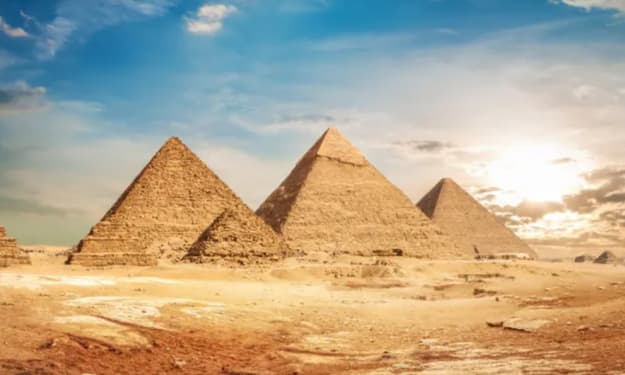
The Eternal Allure of Egypt’s Mysteries The Great Pyramids of Giza, guardians of the desert for over 4,500 years, have long captivated humanity. These colossal structures, aligned with celestial precision, are testaments to the sophistication of ancient Egyptian civilization. Yet, as modern technology peels back layers of sand and stone, a provocative theory has emerged: beneath the pyramids and the Sphinx lies a sprawling subterranean network—a “hidden city” that could redefine Egyptology. This claim, however, has ignited fierce debate among experts, pitting traditional archaeologists against interdisciplinary researchers armed with radar scans and AI-driven simulations.
By Nada soliman2 years ago in History
A Promise in the Morning Rain
Everything seemed to be cleansed by the early rain, and the world outside shone in the resulting gentle light. I met him in the little village of Windmere, which was tucked away on the outskirts of a mile-long forest. Instead of being a torrential downpour, the rain was a light mist that left the ground smelling delicious and damp. The world seemed to be waiting for something to happen, as seen by the unusually calm streets.
By MD SHAMIM RANA2 years ago in History