Medieval
King Charlemagne
Charlemagne, born into the influential Carolingian dynasty, ascended to the throne as King of the Franks and Emperor of the Romans. His parents, Pepin and Bertrada, played significant roles in the Frankish kingdom and the Holy Roman Empire. The exact year and circumstances of Charlemagne's birth are subjects of debate, adding mystery to his early life. Charlemagne's birthplace remains a mystery, with various locations suggested, including Liège, Herstal, Aachen, Düren, Gauting, Quierzy, Mürlenbach, and Prüm. As the eldest of three children who reached adulthood, Charlemagne shared a special bond with his mother, which influenced his upbringing and education. The division of the Frankish Kingdom among Clovis’s sons resulted in fierce competition and bloodshed. The distribution of the king's inheritance among his sons led to frequent conflicts and power struggles, jeopardizing the unity of the Frankish realm. Real political authority was held by the Mayor of the Palace, who had significant influence over the distribution of privileges and favors. Tensions between the Merovingian Kings and the Mayors of the Palace paved the way for Charlemagne's ancestors to rise to power. Pepin of Herstal's triumph in the Battle of Tertry in 687 solidified Austrasia as the dominant force in the Frankish Kingdom. The Carolingian family, starting with Pepin's descendants, became the driving force behind the throne in Francia, utilizing royal resources to establish control over the realm. Pepin's ascent to power was further bolstered by support from the Pope.
By Isaac Ekow Anyidoho2 years ago in History
King Mansa Musa
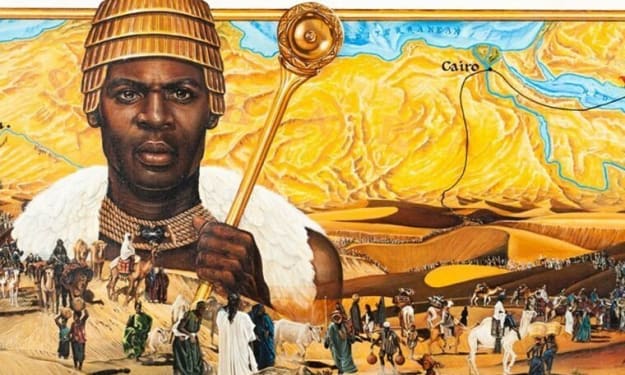
Kankan Musa was born circa 1280 in the Mali Empire. His family lineage played a crucial role in the establishment of the Mali Empire. Mansa's ascension to power was closely tied to the history of the Malian Empire and West Africa. The decline of the Ghana Empire and the rise of the Mali Empire were significant events. The Ghana Empire's decline was attributed to droughts, civil conflicts, and alternative trade routes. The Sosso Empire flourished under the rule of Sumaoro Kante, taking advantage of Ghana's decline and expanding its territories. Sundiata Keita unified the Malinke kingdoms, defeated Sumaoro, and founded the Mali Empire. Sundiata's legacy includes his military prowess, strong leadership, and the establishment of laws and agricultural techniques. Mansa Uli expanded the Mali Empire, undertook a pilgrimage to Mecca, and passed away shortly after his return. Muhammad led expeditions for exploration and trade. Muhammad ordered a fleet of ships to sail west on an exploration mission, but only one ship returned, reporting powerful currents resembling a river. Despite the failure of the first expedition, Muhammad led a second voyage in 1312 with hundreds of vessels equipped with provisions for survival. Musa became the Mansa of the Malian Empire in the early 1310s. Musa's rise to power was linked to the disappearance of Mansa Muhammad's fleet into the Atlantic Ocean, leading to various historical hypotheses.
By Isaac Ekow Anyidoho2 years ago in History
Mr. Nostradamus
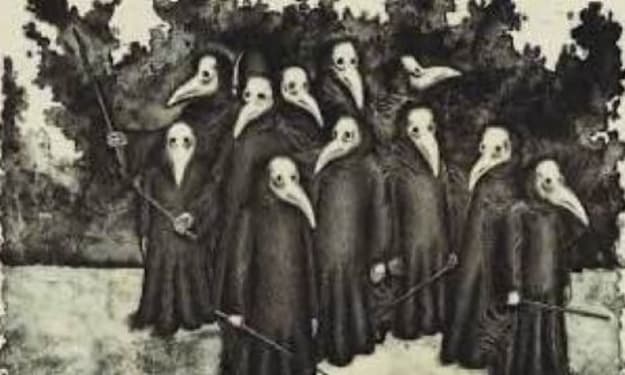
Nostradamus was born in 1503 in the southern region of France to a family that may have had Jewish roots. His father, Jaume or Jacques de Nostredame, worked as a notary, while his mother, Reyniére, was a descendant of a well-known physician. The Nostredame family encountered pressure to convert to Christianity due to the persecution of Jewish individuals in France. Nostradamus was influenced by Kaballah, which had a strong presence in Jewish communities in Spain and southern France during the twelfth and thirteenth centuries. Scholars have observed the impact of Kaballah on Nostradamus's later writings. In his efforts to combat the plague, Michel used 'rose pills' and implemented sanitation practices. The 'rose pills' consisted of a mixture of rose petals, sawdust from green cypress trees, cloves, calamus, and lign-aloes. Additionally, he promoted sanitation measures such as the prompt removal and burial of bodies, maintaining clean surfaces, and ensuring adequate ventilation. Accused of heresy in France, Nostradamus traveled to Italy and established connections in the printing industry. He eventually settled in Salon-de-Provence, married a wealthy widow, and embarked on his writing career by releasing his first publication, an almanac featuring astrological forecasts.
By Isaac Ekow Anyidoho2 years ago in History
Here come the Jews
The name ISRAEL first appeared on the Merneptah Stele, which documented Pharaoh Merneptah's triumph over the Libyan invaders and a small campaign in Canaan. The inscription revealed Israel as a well-established neighbor and a threat to Egypt's power. It is a historical misconception that Hebrew slaves lived in Egypt; they resided in the northern Delta area. Prompted by Yahweh, Moses asked the pharaoh to release the Israelites, demonstrating his power through miracles. Moses destroyed the Golden Calf for breaking the Commandments. The origins of the Israelites can be traced back to ancestors Jacob and Esau, with encounters with extraterrestrial beings. The cult of Yahweh, originally a minor deity in Canaan, has a name shrouded in mystery, speculated to be of non-terrestrial origin. The cult evolved from being a minor deity to being revered as the Only God in the Canaanite pantheon. Early Jewish history shares similarities with other ancient myths and the establishment of social structure. The Babylonian creation myth is similar to Genesis 1, emphasizing creation from water, light, and divine order. The early Jews organized in tribes led by a patriarch, prioritizing family and tribe structure before settling in Canaan.
By Isaac Ekow Anyidoho2 years ago in History
The Samurai
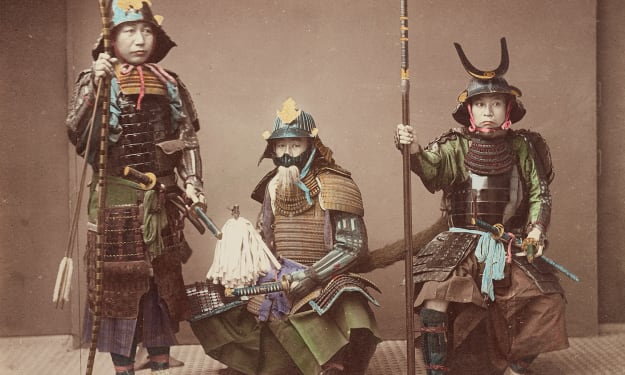
When most people think of samurai, they envision stoic warriors epitomizing honor, integrity, and martial prowess. While this image is captivating, it oversimplifies the complex reality of the samurai’s role in Japanese society. To understand the samurai’s true legacy, we must explore their origins, rise to power, and evolution through different historical periods.
By Horace Wasmore2 years ago in History
The Black Samurai Yasuke
In the late 16th century, Japan was a land of intense conflict and political upheaval. Amidst this chaos, an extraordinary individual emerged—a mysterious black man named Yasuke, who would become the first foreigner to achieve the esteemed status of samurai. Yasuke's journey from obscurity to legend is a remarkable tale of courage, intrigue, and cultural fusion.
By Horace Wasmore2 years ago in History
Life History of Galen of pergamum
life History of Galen of pergamum. Galen was a son of a wealthy architect ,born in 129 in pergamum ,which was the site of a magnificent shrine of the ancient healing god asclepius. Galen was motivated to study medicine due to the influx of many roman royalties coming to his hometown to receive healing from asclepius. at 16, Galen started learning medicine, he studied in smyrna and alexandria in Egypt, which was then the greatest medical centre of the ancient world .
By ReadShakurr2 years ago in History
why the dark ages were the wrong time to be alive
The Dark Ages were a brutal period, marked by marauding knights, scholarly killers from Oxford, staggering homicide rates, Viking savagery, and impoverished peasants driven to madness, sometimes literally dancing to their deaths. In this harsh era, even hairdressers doubled as amateur surgeons, performing grisly amputations.
By Shinzou Wo sasageyo2 years ago in History
The Curious History of Mortsafes: Guarding the Dead from Body Snatchers
Wandering through old cemeteries, you might stumble upon graves with eerie, cage-like structures surrounding them. These are not relics of a bygone era meant to keep zombies from rising from their graves. Instead, they are known as mortsafes, and they have a very different purpose rooted in the macabre history of the 18th and 19th centuries. The Rise of Body Snatching In the 18th and early 19th centuries, the demand for cadavers in medical schools in England and Scotland skyrocketed. With the advancement of medical science and the establishment of anatomy schools, the need for bodies for dissection and study became urgent. Unfortunately, the legal supply of bodies, primarily from executed criminals, was insufficient to meet this demand. This shortage gave rise to a grisly profession: body snatching. Also known as resurrectionists, body snatchers exhumed fresh corpses from their graves and sold them to medical schools for a handsome profit. The practice was illegal and deeply disturbing to the public, but the high demand and lucrative rewards made it a thriving underground industry. The Advent of Mortsafes To combat the rampant body snatching, people began taking measures to protect the graves of their loved ones. Enter the mortsafe. First appearing around 1816, mortsafes were designed to prevent body snatchers from accessing and stealing the bodies buried within. These devices came in two primary styles: Iron Cage Frames: These were cage-like iron frames that fit snugly around the coffin itself. The iron bars formed a barrier that body snatchers would find extremely difficult, if not impossible, to breach without attracting attention or spending an inordinate amount of time. Heavy Iron Sheaths: The second style was a more robust and heavier structure, also made of iron, that slid over the coffin like an over-coffin or sheath. This type was even more formidable, providing a nearly impregnable defense against would-be resurrectionists. Both types of mortsafes were often locked in place, further ensuring the security of the grave. These devices were not intended to remain in place permanently. They were usually installed for a few weeks to a few months until the body was sufficiently decomposed to be of no use to medical schools, at which point they could be removed and reused. The Mechanics and Installation of Mortsafes The process of installing a mortsafe involved several steps. After the coffin was lowered into the grave, the iron cage or sheath was positioned over it. In the case of the iron cage frame, the bars were either welded together or locked in place with a padlock. The heavier iron sheath required more effort to install due to its weight and size but offered unparalleled protection. These devices were often rented from blacksmiths or specialized craftsmen who manufactured them. Some churches and cemeteries even owned mortsafes that they would lend to families in need. This communal approach helped alleviate the financial burden on grieving families while ensuring that graves were protected from body snatchers. Mortsafes and Public Sentiment The use of mortsafes reflects the public's intense fear and revulsion towards body snatching. The idea that a loved one's grave could be desecrated and their body stolen for profit was abhorrent to many. Funerals and burials were deeply significant, and the sanctity of the grave was paramount. The installation of mortsafes provided peace of mind to families, knowing that their deceased relatives would remain undisturbed. The presence of mortsafes also served as a deterrent. The sight of these formidable structures signaled to body snatchers that the grave was well-protected, encouraging them to look elsewhere for easier targets. This, in turn, helped reduce the overall incidence of body snatching in areas where mortsafes were commonly used. The Decline of Body Snatching and Mortsafes By the mid-19th century, the practice of body snatching began to wane. Several factors contributed to this decline. The Anatomy Act of 1832 in the United Kingdom played a crucial role. This legislation allowed medical schools to obtain unclaimed bodies from workhouses and hospitals, providing a legal and steady supply of cadavers for dissection. With the new law in place, the demand for illegally obtained bodies diminished significantly. Additionally, advances in cemetery security, such as watchtowers and hired guards, further discouraged body snatchers. The combination of legal reforms and improved security measures rendered the mortsafe increasingly obsolete. Mortsafes Today Today, mortsafes can still be found in some older cemeteries, serving as historical curiosities and reminders of a darker period in medical history. These iron structures stand as testament to the lengths to which people went to protect their deceased loved ones from the clutches of body snatchers. They also highlight the intersection of medical science, law, and societal values during a time of rapid advancement and change. For those with an interest in history and the macabre, visiting cemeteries with mortsafes can provide a fascinating glimpse into the past. These relics offer a tangible connection to the stories of fear, protection, and the ongoing struggle to balance the needs of science with the respect for human dignity. Conclusion The story of mortsafes is a compelling chapter in the history of medical science and societal response to body snatching. These iron guardians of the grave symbolize a period when the sanctity of burial sites was fiercely defended against the encroaching needs of medical advancement. While the practice of using mortsafes has long since faded, their presence in cemeteries continues to intrigue and remind us of the enduring human need to protect and honor the dead.
By Deji Akomolafe2 years ago in History
Japan
Japan resisted two Mongol invasions, with the ruler Hojo Tokimune defending the country. The role of Japanese mythology and propaganda in justifying imperial rule is evident, as well as the arrival of new people and the influence of other civilizations. Queen Himiko played a significant role in ruling Yamatai and had diplomatic relations with China, and her burial mound, the Hashihaka kofun, is located in Nara Prefecture. Women held high status and repeatedly entered the chronicles as monarchs in ancient Japan.
By Isaac Ekow Anyidoho2 years ago in History
THE RICHEST MAN IN HISTORY . AI-Generated.
## The Richest Person in History: A Deep Dive into Wealth and Influence ### Introduction The concept of wealth has fascinated humanity throughout history. While today's billionaires like Elon Musk and Bernard Arnault often dominate headlines, they are far from the wealthiest individuals in history when adjusted for inflation and historical context. This title is often attributed to figures like Mansa Musa, the 14th-century emperor of the Mali Empire, whose wealth was so immense it defies modern comprehension. This article explores the life, achievements, and influence of the richest person in history, offering a comprehensive look at the impact of such monumental wealth. ### Mansa Musa: The Wealthiest of All Time #### Early Life and Ascension to Power Mansa Musa, also known as Musa I of Mali, was born around 1280 and came to power in 1312. He ascended to the throne following the abdication of his predecessor, Mansa Abu-Bakr II, who embarked on a voyage across the Atlantic Ocean. Musa inherited an empire that was already prosperous, but under his reign, it reached unprecedented levels of wealth and influence. #### The Mali Empire At its height, the Mali Empire encompassed a vast region of West Africa, including parts of modern-day Mali, Senegal, Gambia, Guinea, Niger, Nigeria, Chad, and Mauritania. The empire's wealth was primarily derived from its abundant natural resources, particularly gold and salt. Mali controlled nearly half of the Old World's gold supply, making it the leading economic power of its time. #### Pilgrimage to Mecca Mansa Musa's pilgrimage to Mecca in 1324 is one of the most legendary events in history. His caravan reportedly included 60,000 men, including 12,000 slaves who each carried four pounds of gold bars, and 80 camels carrying between 50 and 300 pounds of gold dust each. The sheer scale of this journey and the lavish distribution of gold along the way significantly impacted the economies of the regions he visited, particularly in Cairo, Medina, and Mecca. Musa's generosity caused gold to devalue in Cairo for over a decade. ### Wealth and Legacy #### Net Worth Estimating Mansa Musa's net worth in modern terms is challenging due to the differences in economies and currencies. However, some estimates place his wealth in the range of $400 billion to $500 billion in today's dollars, making him the richest person in history. #### Contributions to Education and Culture Mansa Musa's reign was marked by significant cultural and educational advancements. He transformed Timbuktu into a thriving center of learning and culture. The city became home to the University of Sankore, one of the earliest universities in the world, attracting scholars from across Africa and the Middle East. Musa's patronage of education and the arts helped cement the Mali Empire's legacy as a beacon of knowledge and culture. ### Influence and Impact #### Economic Influence Mansa Musa's wealth had a profound impact on the economies of the regions he interacted with. His distribution of gold during his pilgrimage caused temporary inflation but also stimulated economic activity. His investments in infrastructure, such as building mosques, libraries, and universities, fostered economic growth and cultural development in Mali and beyond. #### Political and Social Influence Mansa Musa's pilgrimage not only showcased his immense wealth but also established Mali as a significant power in the Islamic world. His interactions with other Muslim leaders and scholars strengthened diplomatic ties and facilitated cultural exchanges. The introduction of Islamic architecture and education in Mali under Musa's reign had long-lasting effects on the region's cultural and religious landscape. ### Comparisons to Other Historical Figures #### Augustus Caesar Another contender for the title of the richest person in history is Augustus Caesar, the first Roman emperor. Augustus' wealth was derived from his control over the vast resources of the Roman Empire. Some estimates place his net worth at around $4.6 trillion in today's dollars, though this figure is highly speculative and based on the valuation of the entire Roman Empire's assets. #### John D. Rockefeller In more recent history, John D. Rockefeller, the American industrialist and founder of Standard Oil, is often cited as one of the wealthiest individuals. At his peak, Rockefeller's fortune accounted for about 1.5% of the U.S. economy, translating to around $400 billion in today's dollars. His influence extended beyond his wealth, as he played a crucial role in shaping the modern petroleum industry and philanthropy. ### Challenges and Controversies #### Mansa Musa Mansa Musa's wealth and generosity were not without their challenges. The devaluation of gold in regions he visited highlighted the potential negative effects of sudden wealth influxes on local economies. Additionally, maintaining control over a vast and diverse empire posed significant administrative challenges, though Musa's effective governance largely mitigated these issues. #### Augustus Caesar Augustus faced numerous challenges, including political rivalries and maintaining control over a vast empire. His wealth and power were built on the back of military conquests and political maneuvering, which often led to social unrest and conflict. Despite these challenges, Augustus' reign marked the beginning of a long period of relative peace and prosperity known as the Pax Romana. #### John D. Rockefeller Rockefeller's business practices, particularly the monopolistic tactics of Standard Oil, were highly controversial. His company's dominance led to public outcry and legal battles, culminating in the 1911 Supreme Court decision to break up Standard Oil into smaller companies. Despite these controversies, Rockefeller's legacy as a philanthropist remains significant, with his foundations funding numerous educational and medical advancements. ### Conclusion The title of the richest person in history is not merely a measure of financial success but also a reflection of influence, vision, and legacy. Mansa Musa, with his unparalleled wealth and contributions to education and culture, stands out as a monumental figure in history. His reign illustrates the profound impact that immense wealth can have on societies and economies, both positively and negatively. Comparing Musa to other historical figures like Augustus Caesar and John D. Rockefeller provides a broader perspective on the nature of wealth and power across different eras. Each of these individuals leveraged their fortunes to shape their respective worlds, leaving legacies that continue to influence modern society. The stories of these extraordinary individuals remind us that true wealth extends beyond mere financial assets. It encompasses the ability to inspire, innovate, and create lasting change. As we continue to study and learn from their lives, we gain valuable insights into the dynamics of wealth, power, and human achievement throughout history.
By Mbeha maliwa 2 years ago in History