Medieval
The Wars of the Roses (1455-1487): A Bloody Struggle That Shaped England’s Future
The Wars of the Roses (1455-1487): A Bloody Struggle That Shaped England’s Future The Wars of the Roses were a series of brutal civil wars that tore England apart for over three decades. Fought between two noble houses, the House of York and the House of Lancaster, the conflict was over the throne of England. The name derives from the symbols of the rival factions: a red rose for the Lancastrians and a white rose for the Yorkists. This article will delve into the causes, events, and consequences of the Wars of the Roses, as well as their lasting impact on England’s history.
By 💓 Pulse of Stories 💓2 years ago in History
Hannibal’s Campaign Across the Alps (218 BCE): A Military Masterpiece That Changed History
Hannibal’s Campaign Across the Alps (218 BCE): A Military Masterpiece That Changed History The campaign of Hannibal Barca across the Alps is one of the most audacious and legendary events in military history. Leading a diverse army through treacherous terrain, Hannibal managed to take the fight to the heart of the Roman Republic during the Second Punic War (218–201 BCE). This feat was not just a geographical crossing but a brilliant military strategy that disrupted Rome’s dominance. In this article, we will explore the motivations, challenges, and consequences of Hannibal’s campaign while highlighting its long-lasting significance.
By 💓 Pulse of Stories 💓2 years ago in History
The Slave Revolt Led by Spartacus (73-71 BCE)
The Slave Revolt Led by Spartacus (73-71 BCE): A History of Resistance and Courage The slave revolt led by Spartacus in the 1st century BCE remains one of the most remarkable events in ancient history. Even after more than 2,000 years, this revolt continues to capture the attention of historians and history enthusiasts alike. In this article, we will delve into the Spartacus-led slave revolt, analyzing its causes, progression, Spartacus’ role as a leader, and the outcomes of this historic uprising.
By 💓 Pulse of Stories 💓2 years ago in History
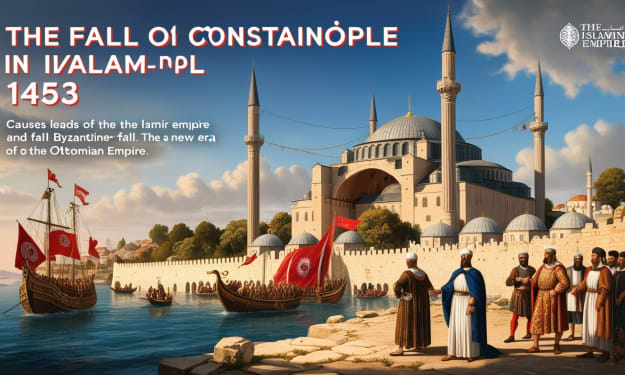
The Fall of Constantinople (1453)
The Fall of Constantinople (1453) Introduction to the Fall of Constantinople The Fall of Constantinople in 1453 stands as one of the most significant events in Islamic and world history. This event marked the end of the Byzantine Empire and the beginning of a new era for the Ottoman Empire. In this article, we will delve into the causes leading to the fall, the events surrounding it, and the key figures who played pivotal roles in achieving this monumental victory.
By 💓 Pulse of Stories 💓2 years ago in History
Bamburgh Castle: England’s Majestic Coastal Fortress
Perched dramatically atop a basalt outcrop overlooking the rugged Northumberland coastline, Bamburgh Castle is a sight to behold. For over 1,400 years, this imposing structure has stood as a sentinel, guarding the coast and bearing witness to the ebb and flow of English history. From its beginnings as an Anglo-Saxon stronghold to its role as a royal sanctuary, Bamburgh Castle is more than just a fortress; it is a treasure trove of history, archaeology, and legend. A Fortress of the Ages Bamburgh Castle's origins can be traced back to the 6th century, during the reign of the Anglo-Saxon kings. Originally known as Din Guarie, it served as the seat of the kings of Northumbria. The fortress was a crucial defensive structure, its location offering sweeping views of the North Sea and the surrounding landscape. This vantage point not only made it a formidable bastion but also a symbol of power and resilience. The castle we see today has evolved significantly from its early wooden construction. It was rebuilt in stone by the Normans after the Norman Conquest of 1066, ensuring its longevity. Over the centuries, Bamburgh Castle has undergone numerous renovations, each adding to its grandeur and historical significance. A Beacon of Anglo-Saxon Archaeology Bamburgh Castle is widely regarded as one of the top ten Anglo-Saxon archaeological sites in the world. Excavations conducted at the site have uncovered a wealth of artifacts that shed light on the lives of its early inhabitants. Among the most remarkable finds are intricate metalwork, tools, and even evidence of sophisticated medical practices. One of the most famous discoveries is the Bamburgh Sword, a pattern-welded blade that highlights the craftsmanship and technological prowess of the Anglo-Saxons. These findings not only enhance our understanding of early medieval life but also solidify Bamburgh Castle’s status as a key site for historical and archaeological study. A Royal Refuge During Turbulent Times Bamburgh Castle's history is deeply intertwined with the tumultuous events of medieval England. During the Wars of the Roses, the castle served as a sanctuary for King Henry VI. Following his deposition by Edward IV, Henry sought refuge within its fortified walls. The castle’s strategic location and formidable defenses made it an ideal haven in times of conflict. However, even Bamburgh was not invincible. In 1464, it became the first English castle to succumb to artillery fire during the siege led by Edward IV’s forces. This event marked a turning point in military history, demonstrating the growing dominance of gunpowder weaponry over traditional fortifications. Legends and Mysteries Like any castle with such a storied past, Bamburgh is steeped in legend and mystery. One of the most enduring tales is that of the Laidley Worm, a fearsome dragon said to have terrorized the region. According to local folklore, the dragon was actually a cursed princess who was eventually freed by a heroic knight. While the story is purely mythical, it adds an enchanting layer to the castle’s rich tapestry of history. Another intriguing aspect of Bamburgh Castle is its connection to St. Aidan, a pivotal figure in the spread of Christianity in Northumbria. It is said that St. Aidan died leaning against a wall in the castle, which later became a site of pilgrimage. Today, visitors can see a chapel dedicated to him within the castle grounds. Bamburgh Castle Today In modern times, Bamburgh Castle has transitioned from a military fortress to a cultural and historical landmark. It remains privately owned by the Armstrong family, who have meticulously restored and maintained the castle. Open to the public, it offers visitors a chance to step back in time and experience its grandeur firsthand. The castle’s 14 public areas include a medieval kitchen, an armory, and the opulent King’s Hall, where you can marvel at exquisite Victorian restoration work. The castle also hosts events, from historical reenactments to weddings, making it a vibrant part of the community. For those with an interest in archaeology, the Bamburgh Research Project provides opportunities to participate in ongoing excavations. This initiative continues to uncover new insights into the castle’s past, ensuring that its story remains dynamic and evolving. Why Visit Bamburgh Castle? Bamburgh Castle is more than just a fortress; it is a living museum that tells the story of England’s past. Its dramatic setting, coupled with its historical and archaeological significance, makes it a must-visit destination for history enthusiasts and casual travelers alike. Whether you are drawn by its connection to Anglo-Saxon kings, its role in medieval warfare, or its legendary tales, Bamburgh Castle offers a captivating journey through time. Standing on its battlements, gazing out at the endless expanse of the North Sea, it is easy to see why this fortress has captured the imagination of visitors for over a millennium. Final Thoughts Bamburgh Castle is a testament to the resilience and ingenuity of those who built and preserved it. As you wander through its halls and explore its grounds, you are not just witnessing history; you are walking in the footsteps of kings, warriors, and dreamers who shaped the destiny of England. If you’re planning a trip to Northumberland, don’t miss the opportunity to experience this iconic landmark. Bamburgh Castle isn’t just a place—it’s an unforgettable story waiting to be discovered.
By Deji Akomolafe2 years ago in History
The Sword in the Stone: The Mysterious Legacy of Galgano Guidotti
Tucked away in the scenic hills of Tuscany lies a relic steeped in mystery and legend: a sword embedded in stone. While tales of swords in stones often evoke King Arthur and Excalibur, this particular story is grounded not in myth, but in the life of Galgano Guidotti, a 12th-century knight turned saint. His life and the enduring presence of his sword have fascinated historians, skeptics, and pilgrims for centuries. The Transformation of Galgano Guidotti Born in 1148 near Chiusdino, Tuscany, Galgano Guidotti was the epitome of a medieval knight—wealthy, skilled in combat, and accustomed to a life of indulgence and violence. However, his life took a dramatic turn after experiencing a series of divine visions, one of which featured the Archangel Michael. These visions compelled him to renounce his worldly possessions and embrace a life of peace and devotion. In 1180, Galgano retreated to Monte Siepi, a hill not far from his hometown, to live as a hermit. It was here that the legend of the sword in the stone was born. The Sword and the Stone According to the story, upon reaching Monte Siepi, Galgano declared that abandoning his knightly pursuits was as difficult as splitting a stone. To symbolize his commitment, he drew his sword and attempted to drive it into the rocky ground. Miraculously, the blade sank effortlessly into the solid rock, forming a cross-like shape. This act symbolized his complete devotion to God and the renunciation of violence. The sword remains embedded in the stone to this day, housed within the Montesiepi Chapel, which was built in 1185 to honor Saint Galgano following his canonization. Skepticism and Scientific Validation For centuries, skeptics dismissed the story of the sword as a medieval fabrication, perhaps created to attract pilgrims and elevate the local church’s status. However, modern scientific investigations have added a fascinating twist to the tale. In 2001, a team of researchers analyzed the sword and determined that the metal indeed dates back to the 12th century, aligning with the timeline of Galgano Guidotti’s life. Ground-penetrating radar also revealed cavities beneath the rock, suggesting the possibility of an ancient burial site. While definitive answers remain elusive, these findings lend credence to the historical basis of the legend. The Legend of the Thief and the Skeletal Hands Adding another layer of intrigue to the story are two skeletal hands preserved on display near the sword. Local lore tells of a thief who attempted to steal the sacred relic. As he tried to remove the sword from the stone, he was attacked by a pack of wolves, which tore him apart before he could succeed. According to the tale, only his hands survived, serving as a grim warning to those who might disrespect the holy artifact. While the truth of this legend is difficult to verify, the skeletal hands have been examined by scientists, who confirmed they are human and of considerable antiquity, further deepening the mystery surrounding Monte Siepi. The Montesiepi Chapel: A Testament to Faith The Montesiepi Chapel, constructed in honor of Saint Galgano, is a stunning example of Romanesque architecture. Its circular design is symbolic of eternity and unity, and its interior features a striking blend of simplicity and spiritual significance. The chapel not only houses the sword in the stone but also frescoes by Ambrogio Lorenzetti, a master of the Sienese School. These paintings depict scenes from Galgano’s life, offering visitors a glimpse into the journey of a man who chose faith over material wealth. Nearby, the ruins of the Abbey of San Galgano add to the site’s mystical allure. Built by Cistercian monks in the years following Galgano’s canonization, the abbey was once a flourishing center of worship. Although it fell into disrepair during the 16th century, its open roof and Gothic arches create a hauntingly beautiful setting, particularly under the Tuscan sky. The Enduring Legacy of Saint Galgano Saint Galgano’s story is one of transformation, sacrifice, and faith. His decision to abandon his life as a knight and devote himself to God resonates with those seeking meaning beyond material pursuits. The sword in the stone serves as a powerful symbol of his commitment, while the legends surrounding the site capture the imagination of visitors from around the world. Even today, Monte Siepi remains a place of pilgrimage, drawing the faithful, the curious, and the skeptical alike. Whether you view the sword as a divine miracle or a historical anomaly, there’s no denying the profound sense of wonder it inspires. Visiting Monte Siepi: A Journey into History and Myth For travelers exploring Tuscany, a visit to Monte Siepi and the Montesiepi Chapel offers an unforgettable experience. The site’s serene beauty, combined with its rich history and captivating legends, makes it a destination unlike any other. As you stand before the sword embedded in stone, you can’t help but reflect on the life of Saint Galgano and the enduring power of his story. It’s a reminder that even in a world dominated by violence and greed, the human spirit can rise above and find peace in devotion and humility. So, the next time you find yourself in Tuscany, take a detour to Monte Siepi. Step into a world where history and myth intertwine, and let the legacy of Galgano Guidotti remind you that even the most unlikely acts of faith can leave an indelible mark on the world.
By Deji Akomolafe2 years ago in History
Sometimes Plastic, Sometimes Plants: Why Does Urfi Javed Wear Such Strange Clothes?
Urfi Javed is a name synonymous with boldness, creativity, and controversy in the Indian entertainment industry. Whether she’s draped in a dress made of plastic, adorned with leaves, or experimenting with an outfit crafted from safety pins, Urfi has a knack for turning heads. But her eccentric fashion sense often sparks a debate: Why does she wear such unconventional clothes? Is it a bid for attention, a statement of artistic expression, or something deeper? Let’s delve into the phenomenon of Urfi Javed and explore the reasons behind her unique wardrobe choices.
By Kamran Sunan2 years ago in History
Why Did the Fish Run Away in the Sea of Mumbai?
Mumbai, India’s vibrant metropolis, has long been celebrated for its bustling cityscape and its lifeline: the Arabian Sea. Beyond its aesthetic allure, the sea has historically been a cradle of biodiversity and a vital source of livelihood for millions. However, over recent years, an alarming trend has surfaced—the noticeable decline in fish populations near Mumbai’s coastline. Fisherfolk, marine biologists, and environmentalists are increasingly asking the same poignant question: Why are the fish running away?
By Kamran Sunan2 years ago in History
Would We Even Exist Without Wool? A Chilling Truth. AI-Generated.
The Baa-rilliant History of Wool: A Sheep-Shaped Saga of Survival The history of humanity is intricately woven with the woolly tale of sheep. From the frigid grip of the Ice Age to the bustling factories of the Industrial Revolution, sheep have provided us with more than just a delicious Sunday roast. Their fleece, a miraculous gift of nature, has been our steadfast companion in the eternal struggle against the cold, shaping our lives, our cultures, and even our very destinies. Imagine a world without the comforting warmth of a woolen sweater on a crisp autumn day. A world where shivering through winter was the norm, and fashion was limited to crude animal skins. This chilling reality could have been our fate had it not been for the ingenuity of our ancestors, who recognized the potential of sheep's fleece and harnessed its power to transform human existence. In the primordial dawn of humanity, when our ancestors huddled around flickering fires in ice-age caves, wool offered a lifeline against the unforgiving cold. Crudely fashioned into cloaks and rudimentary garments, it provided a crucial layer of insulation, allowing our species to venture further from the warmth of the hearth and explore the vast, icy landscapes. This newfound mobility opened up new hunting grounds, expanded our territories, and ultimately paved the way for the development of early civilizations. One can only imagine the struggles of our early ancestors without wool. Imagine trying to hunt woolly mammoths while wearing nothing but a fig leaf (or perhaps a particularly enthusiastic attempt at leaf-stitching). The sheer volume of shivering would have likely deterred even the most determined hunter. And let's not forget the social implications. Dating would have been a frigid affair, with courtship rituals consisting mostly of desperate attempts to huddle closer to the fire. As human societies evolved, so too did our appreciation for wool. In the Bronze Age, when artisans first mastered the art of metalworking, wool became a symbol of wealth and status. Sumptuous woolen robes, intricately woven with gold and silver threads, adorned the shoulders of kings and queens, while the common folk made do with coarser, less fashionable garments. Wool, once a simple necessity, had become a marker of social distinction, a testament to one's place in the hierarchical order of society. One can only imagine the fashion faux pas of the Bronze Age without wool. Imagine kings and queens shivering in their loincloths, trying to maintain their regal bearing while battling the elements. The concept of "royal chills" would have become a serious public health concern, leading to a booming market for "royal-sized" fur pelts (though the environmental impact would have been catastrophic). The Middle Ages, a period of knights and chivalry, saw wool take on a new role – that of a warrior's armor. Beneath the gleaming plate of a knight's armor, layers of woolen undergarments provided vital protection against the cold, damp conditions of the battlefield. These garments, often infused with herbs and spices to ward off infection, helped countless warriors survive the rigors of medieval warfare, ensuring the continuity of dynasties and the preservation of kingdoms. Without wool, medieval warfare would have been a truly miserable affair. Knights would have spent more time shivering than jousting, and battles would have been decided not by bravery but by who could find the warmest rock to huddle behind. The phrase "braving the cold" would have taken on a whole new, more literal meaning, and the concept of "chivalry" might have been redefined to include "finding the warmest spot on the battlefield." The Industrial Revolution ushered in a new era of prosperity, and with it, a revolution in the production of wool. The advent of mechanized looms and spinning machines transformed the wool industry, making woolen garments more affordable and accessible to the masses. For the first time, ordinary people could enjoy the comfort and warmth of woolen clothing, from sturdy workwear to cozy Sunday best. This democratization of wool not only improved the quality of life for millions but also fueled the growth of a thriving textile industry, creating jobs and driving economic progress. Imagine a world without cozy woolen socks on a cold winter's day. A world where your feet were perpetually frozen, and the joy of snuggling up in a warm blanket was a distant, unattainable dream. It's a chilling thought, indeed. Today, in the 21st century, wool continues to hold a place of honor in our lives. From the high-fashion runways of Milan and Paris to the cozy corners of our homes, wool remains a cherished material, prized for its natural beauty, exceptional warmth, and remarkable versatility. Whether it's a luxurious cashmere scarf, a handcrafted woolen rug, or a finely tailored suit, wool adds a touch of elegance and sophistication to our lives. But the story of wool is more than just a tale of fashion and comfort. It is a testament to the enduring power of nature, a reminder of our deep connection to the natural world, and a celebration of human ingenuity. By harnessing the gifts of nature, we have not only survived but thrived, transforming ourselves from nomadic hunter-gatherers into a global civilization. And at the heart of this remarkable journey lies the humble sheep, a creature whose fleece has warmed us, clothed us, and ultimately shaped the course of human history. So the next time you snuggle up in a warm woolen sweater, take a moment to appreciate the remarkable journey of this incredible material. And remember, without the humble sheep, humanity might still be shivering in caves, trying to invent a more efficient way to rub two sticks together.
By Vishnu venugopal 2 years ago in History
The Story of the Battle of al-Qadisiyyah: The Beginning of the Conquest of Persia
The Story of the Battle of al-Qadisiyyah: The Beginning of the Conquest of Persia Introduction The Battle of al-Qadisiyyah is one of the greatest battles in Islamic history, and represents a significant turning point in the Islamic conquests. This battle took place between the Muslims led by Saad ibn Abi Waqqas and the army of the Persian Sassanid Empire in 636 AD (15 AH). It ended with a crushing victory for the Muslims and paved the way for the complete conquest of Persia. In this article, we will review the details of the Battle of al-Qadisiyyah, its causes, events, results, and lessons learned from it.
By 💓 Pulse of Stories 💓2 years ago in History