Medieval
Orford Castle: A Journey Through Time from the 13th Century to Today
Perched in the serene Suffolk countryside, Orford Castle stands as a testament to England’s turbulent medieval past. Built between 1165 and 1173 under the orders of King Henry II, this iconic structure was more than just a symbol of power; it was a strategic masterpiece designed to consolidate the king’s control over rebellious lords and protect England’s coastline. While much of the original complex has been lost to time, the central keep remains remarkably intact, offering visitors a glimpse into its storied past. This blog explores the history of Orford Castle, its original 13th-century grandeur, and how its present-day remains reflect the enduring legacy of medieval England. --- The Origins of Orford Castle King Henry II ordered the construction of Orford Castle during a period of significant political unrest. The king faced ongoing resistance from powerful barons, some of whom had fortified their own castles to challenge royal authority. Orford Castle was strategically placed to strengthen the king’s influence in East Anglia and protect the coastline from potential invaders. Unlike many medieval castles, which were sprawling complexes with concentric defenses, Orford Castle’s design was unique. The heart of the fortress was its polygonal stone keep, a remarkable feat of Norman architecture. Standing over 90 feet tall, the keep was surrounded by an outer curtain wall and a moat, making it both a defensive stronghold and a visible symbol of the king’s authority. --- A Glimpse into 13th-Century Grandeur In its heyday, Orford Castle would have been an imposing sight. The polygonal keep, with its innovative design, featured three large turrets and one smaller one, providing both structural stability and panoramic views of the surrounding countryside and the North Sea. Inside, the keep was divided into multiple levels, each serving a specific purpose: - The Basement: Used for storage and essential supplies. - The Ground Floor: Housed the main entrance and a well for water access. - The Great Hall: A space for administrative duties, feasts, and gatherings. - Private Chambers: Reserved for high-ranking officials and visiting dignitaries. The interior walls were adorned with intricate stone carvings, reflecting both Norman artistry and the castle’s role as a royal residence. The castle also featured a chapel, emphasizing its role as a center for both governance and spiritual life. --- The Castle’s Role in History While Orford Castle was primarily a defensive structure, it also played a significant role in local governance and trade. The nearby port of Orford was a bustling hub of activity during the 12th and 13th centuries, and the castle served as a customs post, overseeing goods entering and leaving the region. Over the centuries, the castle witnessed moments of great historical significance. It survived the political upheavals of the Angevin period and remained an important royal stronghold during the reign of King John. However, as military technology evolved and coastal erosion affected the surrounding landscape, the castle’s strategic importance began to wane. --- Decline and Preservation By the 14th century, Orford Castle’s significance had diminished, and it gradually fell into disrepair. The surrounding curtain walls and other structures were dismantled, with their stones repurposed for other buildings. However, the central keep remained largely intact, thanks to its robust construction. In the 19th century, Orford Castle gained recognition as a historical landmark. Preservation efforts began to safeguard what remained of this medieval marvel. Today, the castle is managed by English Heritage and attracts thousands of visitors each year, eager to explore its rich history and architectural brilliance. --- The Castle Today: A Contrast to Its Past Walking through Orford Castle today, one can see the stark contrast between its current state and its 13th-century grandeur. While the surrounding curtain walls and moat have long since vanished, the central keep stands resilient against the test of time. Visitors can climb the winding stone staircase to reach the top of the keep, where breathtaking views of the Suffolk coastline await. The interior of the keep has been carefully restored, with exhibitions showcasing the castle’s history, its construction, and its role in medieval England. Modern technology has also been used to bring the castle’s past to life. Digital reconstructions and augmented reality experiences allow visitors to envision what Orford Castle might have looked like in its prime. These tools offer a fascinating glimpse into the lives of the people who once inhabited the fortress, from royal officials to local villagers. --- Why Orford Castle Matters Orford Castle is more than just a historic site; it is a symbol of England’s medieval heritage and the enduring legacy of Norman architecture. Its unique design, rich history, and picturesque setting make it a must-visit destination for history enthusiasts and casual travelers alike. The castle’s preservation is a testament to the importance of protecting cultural landmarks, ensuring that future generations can learn from and appreciate the past. As visitors wander through its ancient halls and gaze out over the Suffolk countryside, they are reminded of the resilience of human ingenuity and the stories that connect us to our ancestors. --- Conclusion From its construction in the late 12th century to its role as a historical monument today, Orford Castle has stood as a witness to centuries of change. While much of its original splendor has been lost, the surviving keep continues to inspire awe and curiosity. Whether you’re drawn to its architectural innovation, its fascinating history, or simply the stunning views from its rooftop, Orford Castle offers an unforgettable journey through time. It remains a powerful reminder of a bygone era and a cherished piece of England’s cultural heritage.
By Deji Akomolafe2 years ago in History
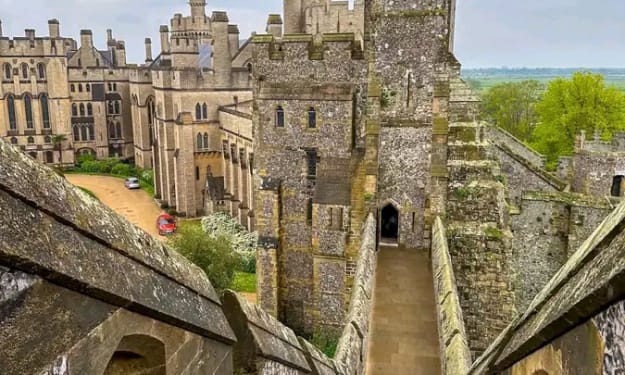
Arundel Castle: A Majestic Testament to England’s History
Nestled in the picturesque countryside of West Sussex, England, Arundel Castle is a magnificent medieval stronghold that has stood the test of time. Built in 1067 by Roger de Montgomery, the Earl of Arundel, this grand fortress has witnessed nearly a thousand years of history, serving as both a strategic defensive structure and a family residence. Today, Arundel Castle is one of the longest-inhabited castles in the United Kingdom, offering visitors a captivating journey through England’s rich past. --- A Castle Born in the Aftermath of the Norman Conquest Arundel Castle was established shortly after the Norman Conquest of 1066. King William the Conqueror granted the earldom of Arundel to Roger de Montgomery, one of his most trusted allies, who was tasked with fortifying the area. The original structure was a motte-and-bailey castle, a common Norman design featuring a wooden keep atop a man-made hill (motte) surrounded by a protective enclosure (bailey). Over the centuries, the wooden structure was replaced with stone, transforming Arundel into a formidable medieval fortress. The castle’s strategic location overlooking the River Arun allowed it to control key trade routes and defend against potential invaders. --- A Family Legacy Spanning Centuries Unlike many medieval castles, which fell into ruin or were abandoned, Arundel Castle has remained a family home for nearly a millennium. Since the late 11th century, it has been the seat of the Dukes of Norfolk, one of the most prominent noble families in England. The castle has undergone numerous renovations and expansions, reflecting the evolving needs and tastes of its inhabitants. The original Norman keep, towering over the castle grounds, is a striking reminder of its medieval origins. Meanwhile, later additions, such as the opulent interiors and beautifully landscaped gardens, showcase the influence of Gothic, Renaissance, and Victorian styles. --- Historical Highlights Arundel Castle has played a significant role in England’s history, serving as a backdrop to key events and hosting notable figures: 1. The English Civil War (1642–1651): During the tumultuous Civil War, Arundel Castle changed hands multiple times between Royalist and Parliamentarian forces. The castle suffered significant damage, particularly to its defenses, but was eventually restored in the 18th and 19th centuries. 2. Royal Visits: Over the centuries, the castle has hosted several monarchs, including Queen Victoria and Prince Albert, who visited in 1846. The grandeur of the castle impressed the royal couple, cementing its status as one of England’s finest estates. 3. World Wars: During World War II, parts of the castle were used by the British military. Its historical artifacts and priceless treasures were carefully safeguarded, ensuring their preservation for future generations. --- Exploring the Castle Today Arundel Castle is not just a historical relic—it is a vibrant attraction that invites visitors to explore its fascinating past and stunning surroundings. - The Norman Keep: One of the oldest parts of the castle, the keep offers panoramic views of the River Arun and the South Downs. Climbing its ancient stone steps is a journey back to the Norman era. - The State Rooms: The opulent interiors of the castle reflect its status as a ducal residence. Visitors can admire intricate woodwork, exquisite paintings, and historical artifacts, including suits of armor and medieval weaponry. - The Gardens: Arundel Castle boasts magnificent gardens that are a feast for the senses. The Collector Earl’s Garden, a contemporary reinterpretation of a Jacobean formal garden, features fountains, floral displays, and charming structures like the Oberon’s Palace. - Special Events: The castle hosts a variety of events throughout the year, including jousting tournaments, medieval reenactments, and seasonal celebrations, bringing history to life for visitors of all ages. --- A Timeless Treasure Arundel Castle’s enduring appeal lies in its ability to connect the past with the present. As one of England’s best-preserved castles, it offers a glimpse into the lives of the nobility, the strategies of medieval warfare, and the evolution of architectural styles over the centuries. What sets Arundel Castle apart is its status as a living history site. It remains the family home of the Duke and Duchess of Norfolk, blending centuries-old traditions with modern stewardship. This continuity makes Arundel Castle not just a monument to history, but a part of England’s cultural fabric. --- Plan Your Visit Arundel Castle is easily accessible and makes for a perfect day trip. Located in the heart of West Sussex, it is a short journey from London and other major cities in southern England. 📍 Address: Arundel Castle, Arundel, West Sussex, England 🕒 Opening Hours: The castle is typically open to visitors from spring to autumn, with specific dates and times varying each year. 💷 Tickets: Visitors can choose from various ticket options, including access to the gardens, the castle interiors, and the keep. Discounts are available for families, students, and groups. --- Conclusion Arundel Castle is more than a historic site; it is a symbol of resilience, heritage, and beauty. Whether you are a history enthusiast, an architecture lover, or simply seeking a day of exploration in a stunning setting, Arundel Castle offers an unforgettable experience. From its Norman origins to its role as a modern-day cultural landmark, Arundel Castle stands as a testament to England’s rich and layered history. A visit to this majestic castle is not just a journey into the past—it is a celebration of the enduring legacy of one of Britain’s most iconic fortresses.
By Deji Akomolafe2 years ago in History
The Strangest Stories in History: Discovering the Most Bizarre Events from the Past
In the beginning There are a lot of unusual things that have happened throughout history, as well as strange happenings and mysterious tales that almost seem too fantastic to be real. Individuals from all over the globe continue to be fascinated and perplexed by these peculiar tales from the past, which vary from ancient mysteries to contemporary riddles that have not been solved. For what reasons are some historical occurrences considered "strange"? Why is it that some events in history are relegated to the realm of fables, while others are relegated to the realm of obscurity?
By QuirkTales2 years ago in History
The Mongol Empire
The Mongol Empire: Reasons for Its Rapid Rise and Sudden Collapse The Mongol Empire is one of the largest empires in history, stretching from East Asia to Eastern Europe and controlling vast territories in the 13th century. Founded by Genghis Khan, who united the Mongol tribes under his leadership, the empire embarked on unprecedented campaigns of expansion. However, the empire experienced a rapid rise and a sudden collapse, making it a fascinating subject of study. In this article, we will explore the reasons behind the rise of the Mongol Empire and the factors that led to its collapse.
By 💓 Pulse of Stories 💓2 years ago in History
Northern Warriors
When we hear word Vikings, first thing that comes to mind is barbarian warriors with terrifying looks. But where are they actually from? Why are they called Vikings? The etymology of the word Viking is uncertain. There are many theories on what it means and how was it created. The Old Norse word víkingr usually meant “pirate” or “raider.” There are few approaches that we can undertake to try look closer on this word. According to Wikipedia: The essential three elements of the word "Viking" are: the original meaning, derivation or etymology (its medieval usage) and its current modern-day usage. According to some authors, these three elements are often confused in popular and scholarly discussions. Also, the etymology of the word has been much debated by academics, with many origin theories being proposed. (...) One theory suggests that the word's origin is from the Old English wicing and the Old Frisian wizing that are almost 300 years older, and probably derive from wic, related to the Latin vicus "village, habitation". Another less popular theory is that víking came from the feminine vík, meaning "creek, inlet, small bay". (...) Another etymology that gained support in the early 21st century derives Viking from the same root as Old Norse vika, f. 'sea mile', originally meaning 'the distance between two shifts of rowers'. (...) In the Middle Ages viking came to mean Scandinavian pirate or raider.
By Joanna Golczynska2 years ago in History
A Halloweenish Story about Pagans and the Catholic Church
I walked past a litany of ghosts, or more aptly, a series of children whose mothers cut two holes in a white blanket and mummies wrapped in gauze pads. Crisp blue skies yellowing and oranging and pinking into the horizon. And a jack-o-lantern in every third house. I could tell which homes had young children by how elaborate the decorations were and whether they were decorated at all. If I worked at the Census Bureau, Halloween decorations would've saved me a lot of time. Halloween also saved the Catholic Church a lot of time they would've spent killing pagans.
By Theodore Garp 2 years ago in History
Fascinating Tales from the Past: History's Hidden Gems.
1919's Great Molasses Flood Envision a sticky catastrophe of monumental scale! A huge tank of molasses in Boston exploded, unleashing a 15-foot tsunami that raced through the streets at 35 miles per hour. Out of 150 persons injured, 21 died in this strange disaster. It took weeks to clean up, and for decades thereafter, many said they could still smell molasses on hot days.
By Neli Ivanova2 years ago in History